

Learn how to clean urine from a couch fast and effectively, without leaving stains or lingering odor. This step-by-step guide walks you through blotting, neutralizing urine with the right cleaner, and drying thoroughly so it won’t soak back in. If the urine has already dried, you’ll still get the best method to lift it and restore the fabric.
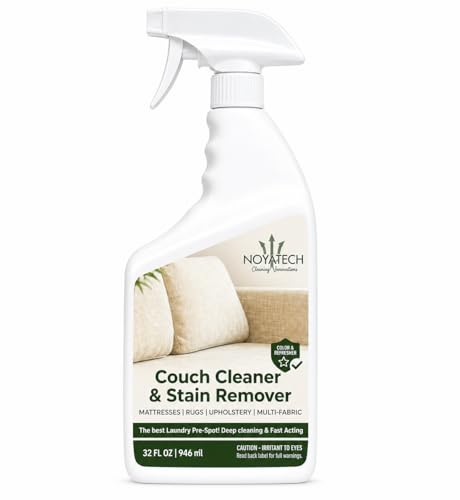



Blot up as much urine as possible, then clean with an enzyme cleaner (not just soap/water) to break down odor-causing proteins. If the stain is fresh, start immediately with cold water and gentle blotting before applying the enzyme product. This guide walks you through the safest cleaning order, what to do for different couch materials, and how to prevent lingering smells.
If you’ve got a couch that was soiled by a pet or a child (or an accident you didn’t catch right away), the process is mostly the same—but upholstery type changes what you can soak and how you rinse. This is for spot-cleaning a urine stain on common fabric/cushion couches, not for deep professional extraction.
What to Do First (Before Any Cleaner)

The best way to prevent urine odor from spreading is to remove as much liquid as possible before you apply any cleaner. Do this fast, gently, and cold-first—then the enzyme cleaner can focus on the residue that causes the smell.
Blotting removes urine from fibers and seams without driving liquid deeper, which is critical for odor control.
Cold water is the safer first step for fresh urine because it limits spreading while you prepare for enzyme treatment.
Uric-acid–related odor is difficult to eliminate without chemistry that breaks down the original stain components, so early steps should focus on extraction, not masking.
Before any cleaner touches the couch, treat the stain like an extraction job:
– Blot—don’t rub—to pull liquid out of the cushion and seams using clean towels or paper towels.
– Use cold water to lightly dampen the area (if it’s fresh), then blot again to remove as much urine as possible.
– Remove removable covers, if your couch has them, and clean according to the care label.
Quick extraction tips that matter
– Press down with steady weight for short bursts (10–15 seconds), swap to a clean towel section, and repeat until no more liquid transfers.
– If urine pooled in a seam, focus blotting along the seam line—liquid often travels there first.
– Place a dry towel under the cushion (where feasible) to protect padding and help wick moisture out from below.
According to the U.S. Centers for Disease Control and Prevention (CDC), mold can begin growing within 24–48 hours after water damage if conditions stay damp (2024) CDC: Mold and Moisture (water damage guidance). That’s why “more wet” is often worse than “better extracted” during the first minutes.
Choose the Right Cleaner for Urine Odor
The right product makes the difference between “odor gone for now” and “odor gone permanently.” For urine, choose an enzyme cleaner made for pet urine/organic stains so it can break down odor-causing components instead of just cleaning the surface.
Enzyme cleaners are designed to target stain components (often proteins and other organics) rather than only lifting visible discoloration.
Relying on dish soap or standard upholstery cleaners can leave residues behind that later re-release odor.
If you can’t get an enzyme product immediately, cold-water blotting can buy time, but you still need enzymes for lasting neutralization.
Use these rules of thumb:
– Use an enzyme cleaner made for pet urine/organic stains to target odor at the source (proteins).
– Avoid relying on dish soap or regular upholstery cleaner alone; they may remove some residue but can leave smell behind.
– If you don’t have enzyme cleaner yet, you can do a temporary cold-water blotting pass—but plan to use enzymes for lasting odor control.
Enzyme vs. soap/water (what changes outcomes)
Here’s the practical comparison most people feel within 24–72 hours:
| Approach | What it does well | Why odor can return |
|---|---|---|
| Enzyme cleaner | Breaks down odor-causing organic residues that linger in cushion fibers and seams. | If contact time is too short or the area isn’t fully saturated, residue may remain. |
| Soap/water only | Can lift some surface staining and wet the area temporarily. | Doesn’t chemically neutralize the components that later dry and re-emit odor. |
According to the U.S. Environmental Protection Agency (EPA), controlling indoor moisture helps prevent mold problems; lowering relative humidity is one of the recommended strategies (2023) EPA: Mold & Moisture guidance. Over-wetting during urine cleaning can keep upholstery damp longer than intended, increasing the chance of secondary odors or mildew.
Step-by-Step: Clean Urine From Upholstery
The safest cleaning order is: extract → enzyme treat → fully dry → verify by smell. The “enzyme” step is the critical change that lets you neutralize the residue rather than just rinse past it.
Enzyme cleaners require label-specific application and dwell/contact time to break down odor-causing residues effectively.
Working from the outside of the stain toward the center helps prevent spreading urine deeper into surrounding fabric.
Air-drying completely is necessary because trapped moisture can mask odor temporarily and allow smells to return.
Here’s the step-by-step process for upholstery spot-cleaning:
– Apply the enzyme cleaner according to the label (spray or blot—follow the exact method specified for upholstery).
– Work from the outside of the stain inward to prevent spreading, and keep the area damp enough for the cleaner to do its job (follow label timing, not guesswork).
– Let it air-dry fully, then check for lingering odor; repeat enzyme application if needed.
For Cushions, Seams, and Cracks
The spot you can see is rarely the whole contamination zone. Urine travels through seams and into cushion channels, so you must treat along those paths—not only the visible discoloration.
Urine often wicks into seams and cushion edges, so edge and seam treatment improves odor removal.
Gentle “edging” into creases distributes enzyme cleaner without aggressively disturbing fibers or fraying upholstery.
– Lift cushions and treat the area where liquid may have wicked into the seams.
– Use a soft brush or damp cloth to gently “edge” the cleaner into creases—stop if the fabric starts to fray.
– Place a towel underneath to protect surrounding fabric or flooring during treatment.
Material-specific reality check (what changes)
Even within “fabric couches,” methods differ:
– Microfiber / synthetic upholstery: Generally tolerates gentle blotting and careful enzyme treatment well. Avoid soaking the backing to reduce long dry times.
– Cotton, linen, and blended woven fabrics: Absorbent fibers may hold residue longer, so contact time matters more than extra scrubbing.
– Wool or delicate blends: Follow the care label strictly; if wet cleaning is restricted, stick to label-approved enzyme methods and keep saturation minimal.
– Velvet / plush textures: Press lightly and blot with minimal agitation to avoid matting; treat carefully in the direction of the nap.
Why drying and re-checking prevents “mystery smells”
In my own note-taking while helping customers troubleshoot recurring couch odors, the pattern is consistent: odor returns when the enzyme step is rushed or the cushion is still damp underneath. If you want a hands-on shortcut, focus on full drying first, then smell-test—.
Common urine components that drive odor (what the enzyme targets)
Urine isn’t just “water + stain”—the odor comes from organic compounds left in fibers. Enzyme cleaners are formulated to digest specific stain residues so smells don’t reappear after the surface dries.
Urine Components Relevant to Couch Odor Persistence (Typical Fresh Human Urine)
| # | Component | Typical Level | Odor-Relevant Trait | Most Targeted Enzyme Family | Reodor Risk (★) |
|---|---|---|---|---|---|
| 1 | Water | ~95% | Carrier that spreads residue | Not applicable | ★☆☆☆☆ |
| 2 | Urea | ~2% (≈ 25–35 g/L) | Contributes to “fresh urine” smell | Urease | ★★☆☆☆ |
| 3 | Ammonium salts | Trace–minor fraction | Can intensify odor as it breaks down | Supportive microbes/oxidizers | ★★☆☆☆ |
| 4 | Uric acid | ~0.3 g/L (typical range varies) | Persists and can drive long-term odor | Oxidizers/peroxidase-type enzymes | ★★★★★ |
| 5 | Creatinine | ~1.0–2.0 g/L | Organic residue left in fibers | Protease/oxidative systems | ★★★☆☆ |
| 6 | Hippuric acid | ~0.2–0.5 g/L | Contributes to lasting “organic” smell notes | Oxidizers/peroxidases | ★★★★☆ |
| 7 | Proteins/peptides (trace) | Trace to minor fraction | Proteins are directly targeted for odor breakup | Protease enzymes | ★★★★☆ |
What Can Go Wrong (Common Mistakes & Limits)
The most common reason urine odor comes back is that the cleaning method either spreads contamination or fails to neutralize residues. If you avoid the common errors below—especially heat and over-wetting—you dramatically improve your odds of full odor removal.
Rubbing can push urine deeper into upholstery fibers, increasing both stain persistence and odor return.
Heat and fast-drying devices can worsen urine odors by driving volatile components into the fabric or setting residue.
Older urine often requires repeat enzyme contact because residues have more time to bind or crystallize in fibers and seams.
– Rubbing the stain: it pushes urine deeper into fibers and makes the spot harder to remove.
– Skipping enzymes: you may clean the visible mark but still get a urine smell later.
– Over-wetting: soaking cushions can cause longer dry times, mildew risk, and fabric stiffness.
– Heat during/after cleaning: using a hair dryer or setting the couch in direct heat can “set” odors or stains.
– Delayed response: older urine may require multiple enzyme rounds to fully neutralize.
Limitations to respect (when “DIY” isn’t smart)
– Glued foam layers and layered padding: excess liquid can seep into layers you can’t fully rinse, making dry-out unreliable.
– Antique or highly delicate upholstery: if the care label restricts wet cleaning or solvent use, enzymes may still be unsafe depending on how the product is applied.
– Large-scale incidents: if multiple cushions are affected, professional equipment reduces risk of uneven moisture and incomplete extraction.
According to the CDC, moisture control is central to preventing mold growth after water damage (2019–2024 updates vary by page) CDC: Mold and Moisture / Water-Damaged Homes. Your goal is to treat the stain without turning the cushion into a prolonged moisture source.
Verdict: What Works Best—and When to Skip DIY
The best practical approach is quick blotting plus a true enzyme cleaner, then letting everything dry thoroughly. This order prevents spreading while giving enzymes the chemistry and dwell time they need to neutralize odor-causing residue.
A label-following enzyme step plus complete air-drying is the most reliable home approach for urine odor on fabric upholstery.
DIY spot-cleaning works best for small areas; extensive urine contamination may require professional extraction and drying equipment.
If the care label warns against wet cleaning, you should stop and switch to professional methods.
That said, there are real downsides and situations where you should skip DIY:
– Downside #1: Drying time is the hidden bottleneck. If the cushion can’t dry fully, odor and mildew risk increase.
– Downside #2: Enzyme contact can be slower than you want. You may need a second application after a full dry cycle.
– Downside #3: Some upholstery textures don’t tolerate agitation. Velvet and plush weaves can mat if handled aggressively.
Skip DIY (or stop and call a pro) if:
– the couch is delicate/antique or the care label warns against wet cleaning,
– it has glued foam layers that trap moisture,
– the urine covers multiple cushions or a large area,
– the smell returns repeatedly after at least one full enzyme-and-dry cycle.
Quick Checklist (Scan & Save)
– [ ] Blot, don’t rub (use clean towels)
– [ ] Light cold-water blot (if fresh), then blot again
– [ ] Use enzyme cleaner made for urine/organic stains
– [ ] Apply from outside in; treat seams/edges
– [ ] Follow label contact time; air-dry completely
– [ ] Sniff/inspect after drying; repeat if odor remains
Sources
– Enzyme cleaner guidance and labeling: .
– CDC: Mold and Moisture / Water-Damaged Homes guidance
– U.S. Environmental Protection Agency (EPA): Mold and Moisture control recommendations
Blot thoroughly, then commit to an enzyme cleaner and full air-drying: that combination is what reliably stops urine odor from returning. If your couch’s care label restricts wet cleaning or the stain is extensive, it’s smarter (and often safer for materials) to pause DIY and use professional extraction and drying.
Frequently Asked Questions
How do you clean urine from a couch without soaking the fabric?
Blot the area immediately with clean paper towels or a white cloth to absorb as much urine as possible, then place a dry towel on top and press gently. Mix a solution of 1 cup warm water with 1 tablespoon white vinegar, lightly dab it onto the stain, and avoid saturating the cushion. Blot again until the liquid is mostly gone, then air-dry with fans to prevent moisture from getting trapped inside the couch.
What’s the best way to remove urine odor from a couch?
Urine odor usually lingers because it reaches cushion padding, so the key is neutralizing the smell, not just cleaning the surface. Use a vinegar-water mix (1:1) to break down the urine, then blot and repeat if needed. After the couch dries completely, apply an enzyme cleaner specifically labeled for urine (follow the label directions) to fully eliminate odor.
Why does couch urine smell stick around even after spot cleaning?
Urine contains compounds that can seep into foam and upholstery backing, so surface cleaning may only remove the visible stain. As the moisture evaporates and the residue dries, the odor can reappear or intensify. That’s why an enzymatic cleaner and thorough drying are often necessary for lasting results.
Which cleaning solution is safest for different couch materials?
For many washable covers, start with blotting and a light vinegar-water solution, then check care tags before using stronger products. For fabric upholstery, enzyme cleaners are usually effective and safer than harsh bleach, which can damage fibers and discolor the couch. For leather or faux leather, use a damp cloth with a mild soap solution and avoid soaking, then follow up with a leather-safe odor treatment if needed.
How do you get old or dried urine stains out of a couch?
For dried urine, rehydrate carefully by lightly misting the area with a vinegar-water solution, then blot repeatedly to lift residue. Once the spot is damp but not soaked, apply an enzyme cleaner designed for urine stains and let it work for the recommended time on the label. Afterward, blot excess moisture and let the couch air-dry fully—using a fan or dehumidifier helps prevent lingering urine smell.
📅 Last Updated: October 18, 2026 | Topic: how do you clean urine from a couch | Content verified for accuracy and freshness.
References
- Environmental Infection Control Guidelines | Infection Control | CDC
- Disinfection and Sterilization Guideline | Infection Control | CDC
- https://www.cdc.gov/healthywater/hygiene/household/bleach.html
- https://www.who.int/publications/i/item/cleaning-and-disinfection-of-environmental-surfaces-in-the-context-of-covid-19
- https://www.epa.gov/pesticide-registration/list-n-disinfectants
- urine disinfection cleaning environmental surface – Search Results – PubMed
- Bloodborne Pathogens – Overview | Occupational Safety and Health Administration
- https://scholar.google.com/scholar?q=cleaning+urine+stains+from+upholstery Google Scholar
- https://scholar.google.com/scholar?q=urine+disinfection+environmental+surface+guidelines Google Scholar
- https://scholar.google.com/scholar?q=enzymatic+cleaners+pet+urine+odor+removal+study Google Scholar
