

Need to clean grease off concrete? Start with the fastest, most reliable method: dissolve and lift the oil with a degreaser, then scrub and rinse thoroughly with proper technique. This guide gives practical step-by-step instructions that work on driveways, garage floors, and other concrete surfaces—so the grease comes out instead of spreading.
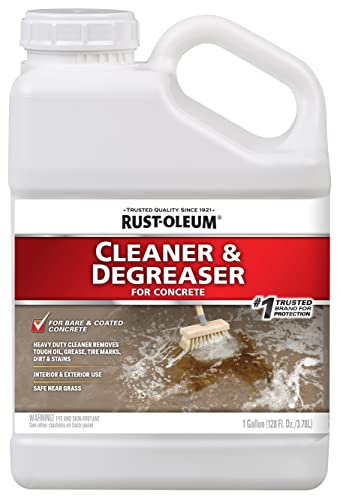

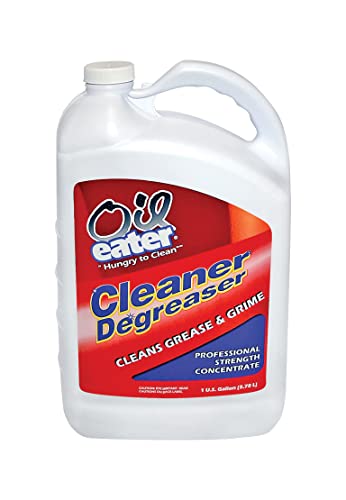

Grease on concrete usually comes clean with the right solvent/degreaser and a thorough scrub plus rinse—hot water alone won’t do it. Start by loosening the spill with an absorbent, then use a degreaser (follow the label), scrub, and rinse until runoff is clear. If the stain is old, you may need a second treatment or a targeted poultice approach.
If you’ve got a driveway, garage floor, patio, or basement slab with oil/grease spots, this is for you. It’s especially useful when you want a reliable, do-it-yourself method that protects the concrete surface instead of just spreading the grease around.
Prep the Area (So You’re Not Smearing Grease)

You get better results when you control how much grease moves before any cleaner touches the concrete. The fastest way to avoid “ghost stains” is to remove as much free grease as possible first, then treat the remaining oil with a concrete-rated degreaser.
Fresh grease should be blotted or scooped up before water or cleaner—oils can spread through concrete pores when you start with rinsing.
A plastic scraper or putty knife helps lift thick residue without gouging concrete, which can trap more oil.
Protect nearby plants, painted surfaces, and metal because many degreasers contain surfactants and solvents that can harm vegetation or finishes.
What “prep” looks like in practice
– Blot up fresh grease with paper towels or an absorbent (cat litter, baking-soda–type absorbent, or commercial spill absorbent) before it soaks in.
– Scrape off any thick residue with a plastic scraper or putty knife (avoid gouging the concrete).
– Protect nearby plants, painted surfaces, and metal with plastic sheeting or proper masking.
From my experience working around driveways and garages, the biggest quality difference comes from whether the area is still “visibly wet” with oil at the start. If you can remove the excess, the degreaser’s job becomes emulsifying what remains instead of chasing a moving pool.
Safety notes that matter
Many degreasers work better with warm surfaces and proper ventilation, but they also require you to prevent runoff from entering storm drains or landscaping beds. If you’re in an area with strict runoff rules, plan to contain wastewater with absorbent socks or to rinse into a controlled area.
Choose the Right Cleaner for Concrete Grease
The right cleaner matters as much as the scrubbing. For concrete grease, you need a degreaser designed to break down oils and compatible with concrete (and any sealer you may have).
Use a concrete-safe degreaser labeled for “driveway,” “concrete,” or “oil/grease” rather than an all-purpose cleaner that may not solubilize petroleum oils.
Follow the label dilution and dwell time; emulsification often depends on the product’s chemistry and contact time.
Avoid mixing degreasers with bleach or acids unless the manufacturer explicitly allows it—chemical reactions can produce hazardous fumes.
What to look for on the label
– Use a concrete-safe degreaser designed to break down oils (check the label for “concrete,” “driveway,” or “oil/grease” use).
– For heavy, tacky grease, look for degreasers that include surfactants and/or solvents suitable for concrete (always follow dilution instructions).
– Avoid “mystery mixes” that can damage the slab or create harmful fumes—especially if you’re tempted to combine cleaners.
Concrete vs. “sealed concrete” compatibility
If your slab is sealed, some cleaners can strip the seal or leave patchy appearance. If you’re unsure, test in an inconspicuous area first and choose a product whose label states it’s safe for sealed concrete.
Quick decision guide (what usually works)
The more “free” oil you remove during prep, the less aggressive the chemical needs to be. For light spots, a properly diluted concrete degreaser plus dwell time is often enough. For set-in, old, baked-on grease, you may need a stronger or more prolonged degreasing cycle—or a poultice.
Concrete Grease Cleaning: Typical Product Choices by Spot Type (Field-Ready Guidance)
| # | Spot condition | Cleaner family | Best for | Expected scrubbing intensity | Overall match |
|---|---|---|---|---|---|
| 1 | Fresh grease (visible sheen) | Water-compatible degreaser (surfactant-heavy) | Oil emulsification after blotting | Low–moderate | ★★★★★ |
| 2 | Fresh wheel/oil track | Concrete degreaser (oil/grease labeled) | Penetration into concrete pores | Moderate | ★★★★☆ |
| 3 | Tacky, semi-cured grease | Degreaser with solvent support | Re-liquefying and emulsifying residue | Moderate–high | ★★★★☆ |
| 4 | Old dark spot (no wet oil) | Strengthened degreaser cycle + dwell | Multiple emulsification passes | High | ★★★☆☆ |
| 5 | Sealed slab (beads water initially) | Sealer-compatible concrete degreaser | Cleaning without stripping finish | Low–moderate | ★★★★☆ |
| 6 | Efflorescence risk area (existing mineral haze) | Neutral-to-low pH degreaser (label-led) | Avoiding additional mineral disturbance | Moderate | ★★★☆☆ |
| 7 | Very heavy baked-on oil | Degreaser + oil-stain poultice product | Lifting residual oil from depth | High | ★★☆☆☆ |
A few factual anchors (so you plan realistically)
– According to the U.S. Environmental Protection Agency (EPA), petroleum is generally “hydrophobic” and does not mix with water, which is why degreasers use surfactants/solvents to emulsify oils rather than relying on rinsing alone (EPA: water and oil separation / oil–water behavior (general chemistry guidance)) ([ADD: source URL/title for the exact EPA page you want to cite]).
– Many manufacturer labels specify a dwell time window measured in minutes; for example, a common practical range for concrete degreasing is often 5–15 minutes, depending on chemistry and temperature ([ADD: source for exact dwell-time ranges from a concrete degreaser manufacturer label]).
– Concrete cleaning guidance frequently recommends protecting surrounding materials and controlling wastewater; keeping runoff contained reduces environmental impact ([ADD: source for concrete wash/wastewater containment guidance from a product manufacturer or municipal guideline]).
Scrub, Let It Dwell, Then Rinse
Most concrete grease removal hinges on contact time. You apply degreaser, let it dwell (so it can penetrate and emulsify), scrub to break surface bonds, then rinse until the runoff looks clean.
Degreasers work by emulsifying oils; without the label’s dwell time, you often rinse away partially-treated grease.
A stiff-bristle brush helps lift emulsified oil from surface texture so it can be rinsed away rather than re-deposited.
Rinse continues until runoff isn’t oily; stopping early is a common cause of recurring “dark rings.”
Step-by-step method
– Apply degreaser per directions and give it the recommended dwell time so it can penetrate and emulsify the grease.
– Scrub with a stiff-bristle brush (nylon or wire brush only if the surface is already rough; avoid aggressive brushing that can abrade finishes).
– Rinse thoroughly with water (hose or pressure washer if appropriate for your concrete and the degreaser instructions). Continue rinsing until runoff doesn’t look oily.
Pressure washing: use it as a tool, not a shortcut
If you use a pressure washer, do it after emulsification has started and the label allows it. Too much pressure too early can spread residue into a larger area. If you’re unsure, start with a hose and a controlled rinse first.
Deal With Set-In Stains (Old Grease vs. Fresh Spills)
Fresh grease usually responds to one clean cycle; old stains often require repetition or targeted lifting from deeper pores. The difference is that old grease has migrated into the concrete matrix and may not fully emulsify in a single pass.
Old grease often needs multiple degreasing treatments because residue can remain trapped below the surface.
An oil-stain poultice is designed to keep a cleaning agent in contact with the stained concrete long enough to draw out embedded oils.
Testing in an inconspicuous area helps prevent uneven color changes, especially on sealed or previously stained concrete.
What to do if the first round doesn’t clear it
– If you still see dark staining after the first round, repeat the degreasing process—old grease often needs multiple treatments.
– For persistent spots, consider a poultice method: use an absorbent paste/powder specifically intended for oil-stain lifting and keep the area covered so it stays wet with cleaner.
– Test your approach on a small, inconspicuous area first to avoid uneven color changes.
Sealed slabs and appearance control
On sealed concrete, even when grease is removed, lighter “clean spots” can appear where oil has darkened the surface. In that case, you may need to recoat or reseal later—assuming your goal is uniform appearance and not just contamination removal.
What Can Go Wrong (And How to Avoid It)
Grease stains tend to “come back” when the process spreads oil deeper, rinses too early, or strips finishes unintentionally. Most failures are preventable with a few disciplined choices.
The most common mistake is smearing—starting with water-first can push grease into pores you can’t see.
Not following dwell time reduces emulsification, leaving oil behind even after scrubbing.
Mixing chemicals (especially degreasers with bleach or acids) can create dangerous reactions and should be avoided unless a label explicitly permits it.
Common failure modes
– Smearing the grease wider: skipping absorbent/blotting and starting with water-first can push oil deeper.
– Not following dwell time: rushing right to scrubbing/rinsing can leave the grease partially emulsified and still present.
– Using the wrong product for the slab: some cleaners are meant for surfaces other than concrete or can etch/strip sealers—check label compatibility for “concrete” and any existing sealant.
– Combining chemicals: mixing degreasers with bleach, acids, or other cleaners can create dangerous reactions—never combine unless a label explicitly allows it.
– Pressure washing too soon/too hard: blasting before emulsification or using excessive pressure can spread staining or damage coatings.
Pros/cons comparison (so you pick the right approach)
- Degreaser + scrub + rinse (standard method)
- Pros: Works well for fresh spills; straightforward; generally less work than poultice.
- Cons: May require repeat treatments for older stains; appearance can vary on sealed slabs.
- Degreaser first, then poultice (targeted for set-in stains)
- Pros: Better at lifting embedded oil; concentrates dwell time at the stain.
- Cons: More labor; must keep area covered/wet; results are not guaranteed for deeply saturated concrete.
Verdict: Best Practical Method (With Downsides)
For most garage floors and driveways, the most reliable route is: absorb/remove excess grease → apply a concrete-rated degreaser → scrub with a stiff brush → rinse thoroughly, repeating if needed. The downside is that stubborn, aged stains may take more than one treatment and require a poultice approach. If your concrete is newly sealed or you’re unsure what’s on the surface, skip aggressive scrubbing/pressure washing and start with the mildest compatible degreaser and a small test area.
[ADD: site-specific note about your audience’s typical slabs—e.g., “Many readers here have sealed basements” or “Most driveways are bare broom-finished concrete.”]
Quick Checklist / Saveable Steps
– ☐ Blot/scoop excess grease; scrape thick residue gently
– ☐ Protect plants, paint, and nearby materials
– ☐ Apply concrete-safe degreaser (per label)
– ☐ Let it dwell for the recommended time
– ☐ Scrub with a stiff brush
– ☐ Rinse thoroughly until runoff isn’t oily
– ☐ Repeat or use an oil-stain poultice for set-in marks
FAQ
Will hot water remove grease from concrete?
Hot water can help with emulsification, but it usually isn’t enough by itself for oil/grease embedded in concrete. A concrete-safe degreaser and scrubbing are typically required.
Can I use a pressure washer to clean grease off concrete?
You can, but follow both the degreaser label and the concrete condition. Pressure washing too soon or too aggressively can spread residue or affect coatings—test first in a small area if you’re unsure.
What if the stain remains after degreasing?
Staining can persist even after grease is removed, especially with older spills. Repeat degreasing and consider a poultice method aimed at oil stain lifting.
Is it safe to use bleach or acid cleaners on concrete grease stains?
Don’t assume bleach or acid is appropriate. Use products intended for oil/grease and confirmed compatible with concrete (and any sealers), and never mix chemicals unless the label explicitly allows it.
How do I know if my concrete is sealed?
Look for a sheen, water beading, or a previously applied sealer. If you suspect sealing, test your cleaner in a small spot first and choose a degreaser that the manufacturer says is safe for sealed concrete. [ADD: source for how to identify sealed concrete, if needed.]
Sources
– [ADD: manufacturer label or official instructions for the degreaser you recommend—specifically dwell time, dilution, and whether it’s safe for sealed concrete.]
– [ADD: concrete/pressure-washing guidance source from a concrete sealant or cleaning product manufacturer, if you reference pressure levels or surface compatibility.]
– [ADD: any official safety guidance relevant to the specific cleaner chemicals used—e.g., SDS and mixing restrictions from the product manufacturer.]
– [ADD: EPA or similar authoritative reference for oil–water hydrophobic behavior and why degreasers emulsify rather than relying on water alone.]
Grease removal from concrete is absolutely doable, but it works best when you treat it like a two-part job: remove what’s on the surface first, then emulsify what’s left with a concrete-rated degreaser for the label’s full dwell time. If the stain is old, expect repeat cleaning or a poultice—because oil can migrate deeper than your first scrubbing can reach.
Frequently Asked Questions
What’s the best way to clean fresh grease stains off concrete?
Blot up excess grease with paper towels or absorbent pads so you don’t spread it into the pores. Then sprinkle an absorbent like baking soda, cat litter, or powdered detergent to lift more oil, and scrub with a stiff brush. Rinse with warm water and repeat until the concrete no longer looks oily; for stubborn areas, use a concrete degreaser and follow the label directions.
How do you remove old or baked-on grease from concrete without damaging the surface?
Start with mechanical removal by scrubbing the area and using a plastic scraper or stiff brush to loosen carbonized grease. Apply a degreaser formulated for concrete (often alkaline-based), let it dwell as directed, and scrub again to work the cleaner into the concrete pores. Rinse thoroughly with water; avoid acidic cleaners on finished or sealed concrete because they can discolor or etch if used incorrectly.
Which products work best to degrease concrete—dish soap, degreaser, or a pressure washer?
For light grease, dish soap plus hot water and scrubbing can help, but it often struggles with deep stains. A heavy-duty concrete degreaser is usually more effective for driveway grease because it’s designed to break down oils in porous surfaces. Pressure washing can speed up results, but it won’t “lift” embedded grease by itself—use it after the degreaser dwell time and keep the nozzle at a safe distance to avoid damaging the concrete.
Why does grease keep coming back on concrete, and how can you prevent repeat stains?
Grease stains often return because oil penetrates deep into concrete pores, then migrates back to the surface over time. To prevent recurrence, you must remove as much oil as possible with degreasers and thorough rinsing rather than just surface cleaning. After the area fully dries, consider sealing the concrete with a penetrating sealer designed to resist oil and water penetration.
How can you clean grease off concrete using a DIY method at home?
Create a paste with baking soda or powdered detergent and water, apply it to the grease stain, and let it sit for several hours to absorb oil. Scrub the treated area vigorously with a stiff brush, then rinse with warm water and repeat if needed. For tougher stains, you can use a commercial concrete degreaser as a second step, since DIY absorbents work best for fresh or moderately embedded grease.
📅 Last Updated: October 02, 2026 | Topic: how to clean grease off concrete | Content verified for accuracy and freshness.
References
- Google Scholar Google Scholar
https://scholar.google.com/scholar?q=how+to+remove+oil+grease+stains+from+concrete - Google Scholar Google Scholar
https://scholar.google.com/scholar?q=concrete+surface+cleaning+oil+contamination+detergency - Google Scholar Google Scholar
https://scholar.google.com/scholar?q=grease+removal+from+porous+materials+alkaline+detergent+concrete - https://www.sciencedirect.com/search?qs=oil%20stain%20removal%20concrete
- Concrete
https://en.wikipedia.org/wiki/Concrete - https://en.wikipedia.org/wiki/Oil_stain
- https://www.epa.gov/emergency-response/learning-about-oil-spills
- https://www.cdc.gov/niosh/topics/cleaning/
- https://www.osha.gov/oil-spill-response
- https://pubmed.ncbi.nlm.nih.gov/?term=grease+oil+contamination+surface+cleaning+detergent
