

Want to clean off spray paint on concrete fast and without damaging the surface? This step-by-step guide shows the most reliable method to remove fresh or dried overspray, from prepping the area to scrubbing and rinsing. You’ll also get the exact cleaner and technique to use so the paint lifts cleanly instead of smearing or staining.


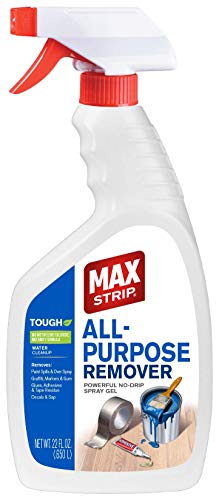

Softening the paint with a concrete-safe remover, then scrubbing and rinsing in repeat cycles is the most reliable way to clean off spray paint on concrete without damaging the surface. Because concrete is porous and can trap pigment, plan on multiple passes and always test your chemical first to avoid lingering “ghost” stains or texture damage.
If you’re dealing with overspray on a driveway, sidewalk, garage floor, or patio, this step-by-step approach is designed for typical drips and airborne paint transfer on unsealed or lightly sealed concrete. If the concrete is sealed or the paint is exceptionally old, the safest route may require a product specifically rated for that condition.
Plan your approach before you start

You’ll usually get better results removing spray paint on concrete when you plan containment, testing, and tool setup first—before any solvent touches the surface. This reduces smearing, runoff staining, and the odds you’ll have to rework the area later.
Concrete is porous, so spray paint on concrete can leave pigment “ghosting” even after the surface film lifts.
Testing a remover in a hidden spot helps you catch discoloration or surface roughening before you commit to the full area.
– Test the cleaner first in a small, hidden spot to check for discoloration, darkening, or surface damage. Look for three failure modes: (1) color shift (often whitening/spotting), (2) texture change (roughening), and (3) stronger staining (pigment mobilizes deeper).
– Protect the surroundings with plastic sheeting and painter’s tape, and keep runoff from flowing into soil/drains. Spray paint on concrete cleaning can create tinted wastewater—contain it so it doesn’t move offsite.
– Choose tools you can scrub with (stiff nylon brush, scraper/putty knife, clean rags/mops for rinsing). Nylon bristles help you work paint out of pores without chewing up aggregate as easily as metal.
Practical note from working with concrete-cleaning workflows: when spray paint on concrete is still slightly raised, mechanical lift comes first; once the blobs are gone, chemical softening does the heavy lifting. That sequencing matters because trying to “solve everything” with solvent often increases the chance of spreading paint deeper into pores.
Choose the right remover for spray paint on concrete
You’ll remove spray paint on concrete more safely and effectively when you match the remover category to paint age and concrete condition—starting mild and escalating only if needed. In most cases, a labeled graffiti/paint remover formulated for masonry outperforms random household mixes.
Use only removers labeled for concrete/masonry when treating spray paint on concrete, because other chemistry can stain or etch cement paste.
Following the label dwell time reduces the risk of “over-soaking,” which can smear spray paint on concrete deeper into pores.
– Start with milder options: many spray paints respond to solvent-based cleaners, while water-based methods often struggle with fully cured paint.
– Use a product labeled for graffiti/paint removal on masonry/concrete when you’re dealing with heavy layers or old paint (follow the label dwell time and safety notes).
– Avoid “random” chemical mixes—combine only as the product instructions specify, because incompatible cleaners can create worse staining or hazardous fumes.
Concrete-safe category check: what tends to work (and what to avoid)
Below is a practical comparison you can use while you’re deciding which remover category to try first on spray paint on concrete.
| Category | Graffiti/paint remover labeled for masonry | Household “spot” cleaners (soap, alcohol, vinegar) |
|---|---|---|
| Penetration into concrete pores | Designed to soften paint film and lift pigment | Often limited once paint is fully cured |
| Performance on older/baked-in paint | Higher likelihood; may require repeat cycles | Low-to-moderate; frequently leaves shadows |
| Etching/texture risk | Lower when label is followed for spray paint on concrete | Unpredictable—some acids or strong cleaners can dull texture |
| Residue after rinsing | Usually controllable with correct rinse steps | May leave soap films that attract more dirt |
| Containment and runoff control | Often works better with gel/controlled application formats | Runoff spreads quickly, especially with water-based products |
| Time to visible improvement | Typically faster than household cleaners when paint is compatible | Often slow or inconsistent on aged pigment |
| Ventilation and fumes | May be solvent-driven—ventilation is essential | Some are safer, but mixing and strong scrubbing can still release vapors |
| Surface compatibility | Best matched to concrete/masonry chemistry | More risk of unknown reactions on cement paste |
| Repeat-cycle friendliness | Designed to be applied multiple times safely | Rinsing and reapplying often still won’t lift pigment shadows |
| Best predictability on spray paint on concrete | High when you match dwell time and scrubbing method | Low—results vary widely by paint formulation |
| Best for | Most overspray, drips, and older tags on bare concrete | Small, fresh spots where you can test and accept partial results |
Safety anchor (because remover chemistry affects how you should apply it)
According to OSHA’s Hazard Communication Standard (29 CFR 1910.1200), employers and users must follow SDS labeling and hazard information for chemical products used in workplaces (OSHA 29 CFR 1910.1200). According to OSHA’s Respiratory Protection standard (29 CFR 1910.134), respirator use must be managed properly when required (OSHA 29 CFR 1910.134). And according to the EPA’s RCRA ignitable liquids criteria, a liquid is considered ignitable if its flash point is less than 60°C (EPA 40 CFR 261.21).
Common Solvent Types Used with Spray Paint Removers (Flash Point, Safety Handling)
| # | Solvent / remover type | Flash point (°C) | Typical use context | Ease of handling ★ |
|---|---|---|---|---|
| 1 | Acetone | -20 | Fast-evaporating spot solvent | ★ |
| 2 | Methyl ethyl ketone (MEK) | -6 | Strong solvency for coatings | ★★ |
| 3 | Toluene | 4 | Common solvent component | ★★ |
| 4 | Ethanol | 13 | Lower-strength solvent | ★★★ |
| 5 | Mixed xylene isomers | 27 | Higher solvency, controlled use | ★★★★ |
| 6 | Mineral spirits (low-odor grade) | 38 | Slower, more controllable solvent | ★★★★ |
| 7 | d-Limonene (citrus terpene) | 46 | Biobased solvent for coatings | ★★★★★ |
> Handling stars in the table reflect relative ease based on flash point (lower flash point = more flammable = fewer stars). Always defer to the specific product SDS and label for the remover you choose for spray paint on concrete.
Step-by-step: remove spray paint without damaging concrete
The shortest path to clean spray paint on concrete is a repeat cycle: dry-clean the grit, lift what’s raised, soften with the right remover, dwell, scrub, and rinse. Concrete is forgiving mechanically (with the right brushes) but unforgiving chemically (if you over-soak or smear paint deeper).
Start by removing loose debris; grit acts like sandpaper and can grind spray paint on concrete deeper.
Dwell time is critical—letting the remover work before scrubbing improves lift and reduces smearing.
– 1) Dry-clean the area: Sweep up debris and let dust settle (less grit = less chance of scratching). If there’s loose paint dust, remove it first so you’re not turning it into paste while you scrub spray paint on concrete.
– 2) Mechanical lift (optional for thick paint): Carefully scrape raised blobs with a plastic scraper or putty knife—don’t gouge the concrete. Focus on the highest edges of drips first, because that’s where paint can stay “film-like” and resist chemical softening.
– 3) Apply remover: Saturate a rag/brush or apply the remover per directions. Keep it from spreading beyond the painted area—use tape dams or work small sections if your remover is thin or solvent-based.
– 4) Let it dwell: Wait the time stated on the remover label. Don’t “over-soak” beyond the instructions unless the label explicitly allows it. Dwell time is how spray paint on concrete transitions from a rigid film to a softened material you can physically remove.
– 5) Scrub firmly: Use a stiff nylon brush in small sections, working paint loose from the pores. Scrub with consistent pressure and short strokes; if you see paint turning into a smear, pause—more dwell and less force often prevents deeper penetration.
– 6) Rinse and repeat: Rinse thoroughly with clean water, then reassess. Multiple cycles are normal on porous concrete because pigment can remain inside pore walls even after the surface paint lifts.
For stubborn edges and stains
– Spot-treat the remaining outline/drips instead of blasting the whole surface repeatedly. This reduces the total chemical exposure you’re giving to spray paint on concrete.
– If the first pass lightens paint but leaves a shadow, you may need a second round rather than heavier pressure or longer chemical exposure. Increasing dwell time often increases staining risk; better results usually come from controlled reapplication and targeted scrubbing.
From a practical standpoint, the “aha” moment on spray paint on concrete usually happens after the third cycle: the visible paint film comes off earlier, but the remaining ghosting takes extra time because pigment is lodged below the surface.
Rinse, neutralize (if required), and let it dry
Rinsing correctly and following any neutralization step is what prevents chemical residue from causing new discoloration on spray paint on concrete. After cleaning, allow the area to fully dry before judging final color.
Rinse until runoff runs clear to reduce residue that can look like lingering staining on spray paint on concrete.
Wet concrete can make remaining pigment look darker, so evaluate results only after air-drying.
– Follow label instructions for neutralizing/cleanup if the remover requires it (some products call for a specific neutralizer; others are “rinse only”).
– Rinse until runoff runs clear to reduce residue that can attract more dirt or look like a lingering stain.
– Air-dry fully before judging results—wet concrete can make remaining pigment look darker than it really is.
If you’re working near landscaping, keep an eye on how runoff behaves. Tinted water from spray paint on concrete cleaning can migrate; even when the paint film is removed, the colorant may still travel with the rinse water.
What can go wrong (and how to prevent it)
Most cleanup failures with spray paint on concrete come from overshooting with aggressive chemistry, rushing the dwell/scrub sequence, or using water pressure in the wrong way. Preventing problems is mostly about testing, restraint, and containment.
Prolonged dwell times or aggressive removers can change the surface texture of spray paint on concrete, leaving it rougher than before.
High-pressure rinsing can drive pigment deeper into pores, making spray paint on concrete harder to remove later.
– Staining or uneven color: Porous concrete can trap pigment even after the paint film comes off. Testing first helps avoid permanent-looking blotches.
– Surface etching/roughening: Some aggressive removers or prolonged dwell times can damage concrete texture. Stick to the product label.
– Paint spreading instead of lifting: If you apply too much solvent without dwell control or scrub incorrectly, you can smear paint deeper into pores.
– Safety and fumes: Poor ventilation or wrong PPE can be a real problem with solvent-based products. Check the SDS for hazards and PPE guidance.
– Pressure washing pushing paint deeper: High pressure can sometimes drive pigment further into concrete—use gentle rinsing unless a professional method is specifically recommended for your remover.
A key limitation: even when you remove the spray paint on concrete successfully, the finish may not match perfectly because trapped pigment can remain in pore walls. That’s why “perfect” should be a goal only for sealed or less-porous surfaces.
Verdict / tip
For most homeowners tackling overspray or medium-thickness spray paint on concrete, the best balance is a labeled graffiti/paint remover for concrete (plus a stiff nylon scrub brush), with repeat cycles rather than one aggressive attempt. Skip solvent-heavy approaches (or proceed with extra caution) if the concrete is sealed, if you can’t provide good ventilation, or if you can’t contain runoff from spray paint on concrete cleaning.
Repeat cycles usually outperform one-time “soak and scrub hard,” especially on spray paint on concrete where pigment is embedded in pores.
If you can’t contain runoff or you can’t ventilate, it’s safer to pause and consider a restoration/cleaning pro for spray paint on concrete.
Downsides to keep in mind: (1) porous concrete may retain ghosting; (2) solvent-based removers can be flammable and fume-heavy; and (3) sealed surfaces can sometimes show hazing if the chemistry isn’t compatible. If the paint is on decorative exposed aggregate, stamped concrete, or a recently sealed driveway, test carefully or consult a pro.
Quick checklist you can save
| Step | What to do | Watch out for |
|---|---|---|
| 1 | Test in a hidden spot | Browning/whitening/etching |
| 2 | Protect area + prevent runoff | Drains/soil contamination |
| 3 | Scrape only raised paint | Don’t gouge concrete |
| 4 | Apply remover per label | Don’t exceed dwell time |
| 5 | Scrub in sections | Smearing into pores |
| 6 | Rinse thoroughly | Residue-caused staining |
| 7 | Repeat as needed | Expect multiple passes |
Sources
– OSHA 29 CFR 1910.1200 — Hazard Communication Standard (SDS labeling and hazard information).
– OSHA 29 CFR 1910.134 — Respiratory Protection (when respirators are required).
– EPA 40 CFR 261.21 — RCRA ignitable liquids criteria (flash point threshold of 60°C).
– Manufacturer label instructions for graffiti/paint removers and any solvent/chemical products used ().
– (e.g., a reputable concrete cleaning chemistry manufacturer, or a trade association guidance document).
Removing spray paint on concrete is usually achievable when you treat it like a controlled, repeatable process: contain and protect the area, use a concrete-labeled remover, respect dwell time, scrub with the right tools, and rinse thoroughly. If you encounter persistent ghosting, treat it as pigment trapped in pores—adjust expectations, use targeted spot treatments, and consider professional cleaning when runoff control or ventilation isn’t practical.
Frequently Asked Questions
What’s the best way to clean spray paint off concrete without damaging the surface?
Start with the gentlest method first: try a wire brush or stiff broom and a cleaner like warm soapy water to remove loose overspray. For remaining paint, use a concrete-safe paint remover such as a gel stripper, then scrub with a nylon brush and rinse thoroughly. Avoid harsh acids or pressure washing too aggressively, since they can etch concrete and make the stain harder to remove.
How do I remove spray paint from concrete if it’s dried and hard to scrape off?
For dried spray paint, begin by dry-brushing and scraping with a plastic scraper or putty knife to lift the top layer. Then apply a paint stripper made for masonry/concrete, allow it to dwell as directed, and scrub until the paint softens and lifts. Finish with multiple rinses and, if needed, repeat to remove any remaining residue and prevent a dull “ghost” stain.
Which chemical works best for removing spray paint from painted or sealed concrete?
The best option depends on whether the concrete is sealed: solvents and paint removers can strip sealers along with the paint, causing uneven sheen. If the surface is sealed, test a small hidden area first and consider using a stripper labeled safe for masonry or using rubbing alcohol/mineral spirits carefully to see what lifts without wide damage. After cleaning, you may need to re-seal the concrete to restore protection and uniform appearance.
Why does spray paint leave a stain on concrete even after the paint is removed?
Spray paint can seep into pores, especially on rough or unsealed concrete, so even after the visible color is gone, pigments and binders may remain. Some paints also bond strongly to concrete during drying, creating a “shadow” stain that looks like the paint is still there. Using a masonry paint remover followed by thorough scrubbing and rinsing—or a poultice/stain remover designed for concrete—often helps lift the lingering discoloration.
How can I clean spray paint off concrete using home supplies instead of harsh removers?
You can try a DIY approach by soaking the area with warm soapy water, then scrubbing with a stiff brush to remove overspray and grime. For stubborn spots, use mineral spirits or rubbing alcohol on a rag or brush, keeping the application controlled so it doesn’t spread the stain. Follow up with a rinse and repeat as needed; if the paint is fully cured, a proper concrete paint stripper typically works faster and more reliably than home supplies.
📅 Last Updated: October 16, 2026 | Topic: how to clean off spray paint on concrete | Content verified for accuracy and freshness.
References
- Lead Renovation, Repair and Painting Program | US EPA
- Lead – Overview | Occupational Safety and Health Administration
- https://www.cdc.gov/nceh/lead/prevention/default.htm
- Lead in the Workplace | Lead | CDC
- Preservation Briefs – Technical Preservation Services (U.S. National Park Service)
- Paint stripper
- Pressure washing
- https://scholar.google.com/scholar?q=remove+spray+paint+from+concrete Google Scholar
- https://scholar.google.com/scholar?q=graffiti+removal+concrete+pressure+washing+solvent Google Scholar
- https://scholar.google.com/scholar?q=paint+stripping+concrete+abrasive+blasting Google Scholar

[…] wipe the grille and cabinet. For hair embedded in the grille, use a lint roller or a strip of painter’s tape lightly pressed and lifted to avoid pulling on the speaker fabric. If needed, use a vacuum with a […]
[…] the best options because they’re gentle and help remove loose fur safely. For stubborn hair, use painter’s tape or a lint roller lightly on the outer areas, taking care not to press adhesive into openings. Avoid […]