Cleaning Techniques for Bathroom Owners
You’ll want sturdy tools like a toilet brush, microfiber cloth, and gloves for efficient cleaning. To tackle soap scum, use a vinegar-water mix or baking soda for tough spots. Keep mold at bay by controlling humidity with ventilation or a dehumidifier. Wipe surfaces daily and sanitize fixtures regularly to maintain freshness. For eco-friendly care, try lemon juice or essential oils. Stick with these habits, and you’ll find your bathroom stays spotless and inviting—there’s more handy advice ahead to make it easier.
Essential Cleaning Tools for Every Bathroom
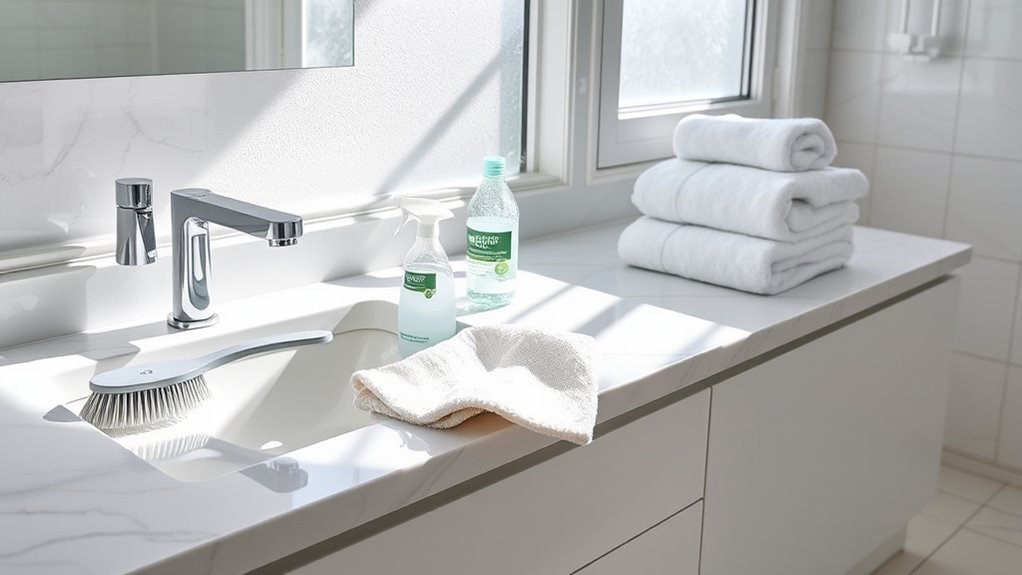
A well-stocked set of cleaning tools makes bathroom maintenance much easier. You’ll want a sturdy toilet brush to tackle the bowl efficiently, freeing you from lingering grime without fuss. Alongside it, a microfiber cloth is indispensable—it picks up dust, water spots, and residue quickly, leaving surfaces spotless with minimal effort. These tools give you the freedom to clean thoroughly and swiftly, so your bathroom feels fresh without eating up your time. Don’t forget gloves to protect your hands and a spray bottle for your favorite cleaner—these simple additions help you control your environment, making every cleaning session smoother. When you have the right tools at hand, maintaining a clean bathroom becomes less of a chore and more about reclaiming your time and space.
How to Remove Soap Scum Effectively
Soap scum can quickly dull your bathroom surfaces, making them look dirty even after a thorough cleaning. To regain your bathroom’s shine, mastering soap scum removal techniques is essential. Here’s how you can effectively tackle it:
- Use a mixture of white vinegar and water to break down soap scum naturally.
- Apply baking soda as a gentle abrasive to scrub away stubborn buildup.
- Try commercial soap scum removers designed for tough residues.
- Regularly wipe down surfaces after each use to prevent buildup.
- Use a squeegee on shower walls to minimize soap scum formation.
Best Practices for Mold and Mildew Prevention
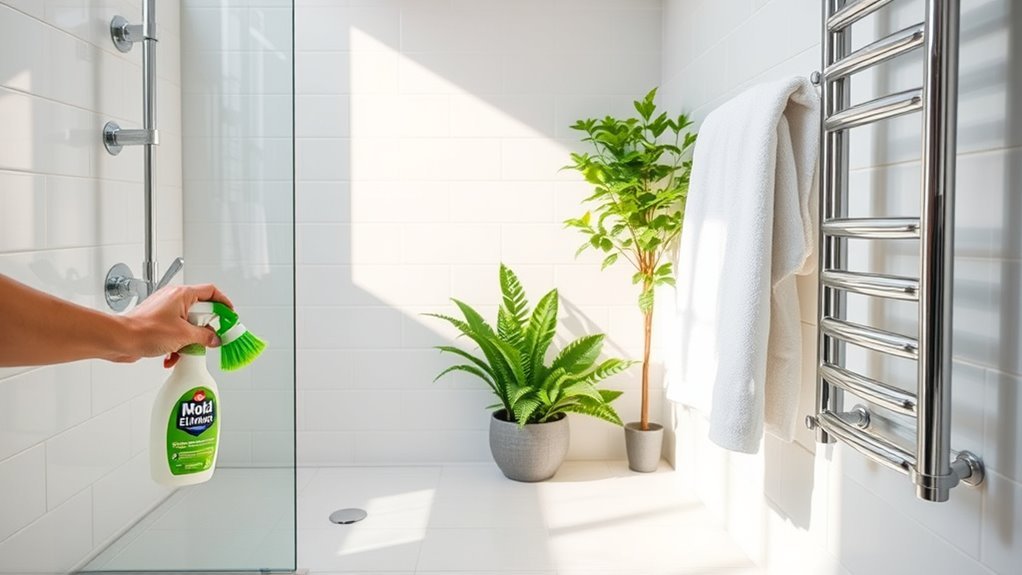
Although mold and mildew thrive in damp environments, you can prevent their growth by controlling moisture and improving ventilation in your bathroom. Start by using mold resistant paint on walls and ceilings; it creates a barrier that discourages mold spores from settling. Next, prioritize humidity control—install an exhaust fan or open windows during and after showers to reduce moisture buildup. Avoid leaving wet towels or bathmats lying around, as they encourage mold growth. You might also consider a dehumidifier if your bathroom tends to stay damp. By combining these steps, you maintain a fresher, healthier space where mold and mildew don’t stand a chance. Taking control of moisture means more freedom to enjoy a clean, comfortable bathroom without constant worry.
Daily Cleaning Habits to Maintain Freshness
To keep your bathroom fresh every day, you should quickly wipe down surfaces to prevent grime buildup. Make sure to ventilate properly by opening windows or using an exhaust fan to reduce moisture. These simple habits can stop odors and dampness before they start.
Quick Surface Wipe
When you make a quick surface wipe part of your daily routine, you’ll prevent grime and buildup from taking hold in your bathroom. This simple habit keeps your space feeling fresh and free without spending hours cleaning. Focus on surface cleaning with a microfiber cloth or disposable wipe for efficiency. Quick dusting removes particles that accumulate and dull the shine. Here’s how to maximize your daily wipe:
- Target high-touch areas like faucets and light switches
- Use a gentle all-purpose cleaner for safe, effective wiping
- Don’t forget the countertop and sink edges
- Wipe mirrors with a streak-free cleaner for clarity
- Dry surfaces to avoid water spots and streaks
Ventilation and Moisture Control
Keeping your bathroom surfaces clean is a great start, but managing ventilation and moisture plays a big role in maintaining that fresh feeling every day. You’ll want to make certain your ventilation systems are running properly—turn on fans during and after showers to reduce humidity. Good moisture management prevents mold and mildew, which can quickly ruin your space’s freedom and comfort. If you don’t have a built-in fan, consider installing one or opening a window to let damp air escape. Wiping down wet surfaces immediately after use also helps keep moisture in check. By making ventilation and moisture control part of your daily routine, you’ll enjoy a fresher, healthier bathroom without feeling trapped by lingering dampness or odors. It’s about freedom through smart habits.
Deep Cleaning Your Shower and Tub
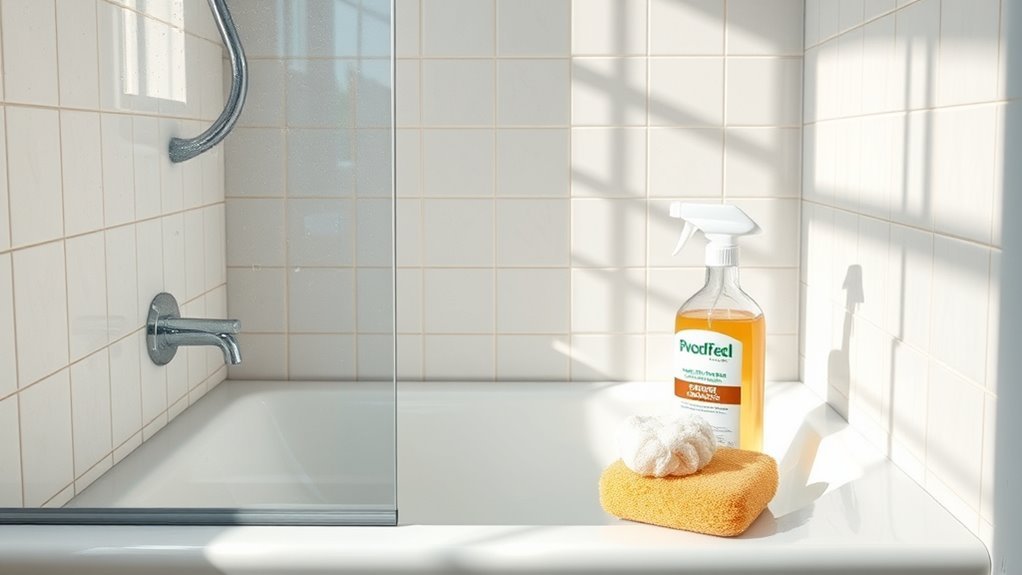
Although regular wiping helps, deep cleaning your shower and tub is essential to remove stubborn soap scum, mildew, and grime that build up over time. You want a fresh, inviting space where you can unwind without scrubbing stress. Start by removing your shower curtain to wash or replace it, preventing mold buildup. Next, grab a tub scrubber designed to tackle tough stains effortlessly. Here’s a simple routine to free your shower and tub from grime:
- Spray a mixture of vinegar and water for natural cleaning power
- Let it sit 15 minutes to break down soap scum
- Use your tub scrubber to scrub all surfaces, focusing on grout and corners
- Rinse thoroughly with warm water
- Hang the shower curtain to dry or replace if needed
This deep clean restores freedom to enjoy your bathroom sanctuary.
Tips for Sanitizing Bathroom Fixtures
Since bathroom fixtures are touched frequently, they can quickly become breeding grounds for germs. To keep your space safe and fresh, you need effective sanitizing techniques. Start by using a disinfectant spray or wipes specifically designed for bathroom use. Focus on high-touch areas like faucet handles, toilet flush levers, and shower knobs. Don’t forget to clean around the base where grime builds up. Regular fixture maintenance is key—cleaning once a week prevents buildup and reduces the chance of harmful bacteria spreading. Always follow product instructions to guarantee proper disinfection without damaging surfaces. By staying consistent with these simple steps, you maintain a hygienic bathroom environment, giving you the freedom to enjoy your space without worry.
Eco-Friendly Cleaning Solutions for Bathrooms
When you want a sparkling clean bathroom without harsh chemicals, eco-friendly solutions offer a safe and effective alternative. Using green alternatives not only protects your health but also respects the environment. You can easily embrace natural ingredients that work wonders on grime and germs.
Eco-friendly cleaning offers a safe, effective way to keep your bathroom sparkling without harsh chemicals.
Try these eco-friendly cleaning tips:
- Mix vinegar and water to tackle soap scum on tiles.
- Use baking soda as a gentle abrasive for sinks and tubs.
- Lemon juice helps dissolve mineral buildup and leaves a fresh scent.
- Castile soap is a versatile cleaner for multiple surfaces.
- Essential oils like tea tree or lavender add antibacterial properties and pleasant fragrance.
Organizing and Decluttering for Easier Cleaning
To make cleaning your bathroom quicker and less stressful, you’ll want to start by organizing and decluttering the space. Begin by evaluating what you truly need and use daily—this is key to effective decluttering strategies. Clear out expired products and items you rarely touch to free up space and reduce visual clutter. Next, optimize your bathroom storage by using shelves, baskets, or drawer dividers to keep essentials accessible yet contained. When everything has a designated spot, you’ll find wiping surfaces and tidying up much easier. Embracing a minimalist approach not only simplifies cleaning but also creates a calming environment, giving you the freedom to enjoy your bathroom without the burden of chaos. Consistency in these habits turns maintenance into a quick, stress-free routine.
Frequently Asked Questions
How Often Should Bathroom Rugs Be Washed?
Did you know your bathroom rug can harbor over 10 million bacteria per square inch if left unwashed? For a fresh, inviting space, you should stick to a rug washing schedule of every one to two weeks. Keeping this cleaning frequency guarantees your bathroom stays clean without feeling like a chore, giving you the freedom to enjoy a fresh, cozy rug without worrying about germs or odors taking over.
What Is the Best Way to Clean Bathroom Grout Lines?
When tackling grout cleaning, you’ll want to mix a paste of baking soda and water, then apply it to the grout lines. Let it sit for 10 minutes before scrubbing with a toothbrush to lift stains effectively. For tougher stain removal, a vinegar spray can help break down grime, but don’t overuse it to protect your grout. This way, you keep your bathroom fresh without feeling tied down by complicated routines.
Can Essential Oils Be Used Safely in Bathroom Cleaning?
You can definitely use essential oils safely in your bathroom cleaning routine! When you choose natural cleaning methods, essential oils offer both a fresh scent and antimicrobial benefits. Just make sure to dilute them properly with water or vinegar to avoid skin irritation or damage to surfaces. Embracing essential oil safety lets you enjoy a toxin-free, invigorating space while maintaining freedom from harsh chemicals. It’s a simple way to keep things clean and natural.
How Do I Prevent Rust Stains on Bathroom Fixtures?
You don’t want your bathroom fixtures looking like a rusty relic from the Wild West! To keep rust prevention on point, wipe down your fixtures regularly to remove water spots and moisture—rust loves hanging around wet places. Use a protective coating or wax for extra fixture maintenance, creating a barrier against water and air. And don’t let leaks linger; quick fixes mean your fixtures stay shiny and free, just like you want!
What Are the Best Practices for Cleaning Bathroom Vents?
You’ll want to prioritize vent maintenance to keep your bathroom’s air quality excellent. Start by turning off the fan, then remove the vent cover and clean it with warm, soapy water. Use a vacuum with a brush attachment to clear dust from the vent interior. Regularly doing this prevents mold and odors, giving you the freedom to breathe easy and enjoy a fresher space without hassle.