

Learn how to clean and protect a wooden shoe rack in humid monsoon weather without warping, mold, or lingering odors. This guide delivers the best step-by-step cleaning routine, then the single most effective protection strategy to keep moisture from soaking into the wood. Follow it and your rack stays usable and presentable all season.
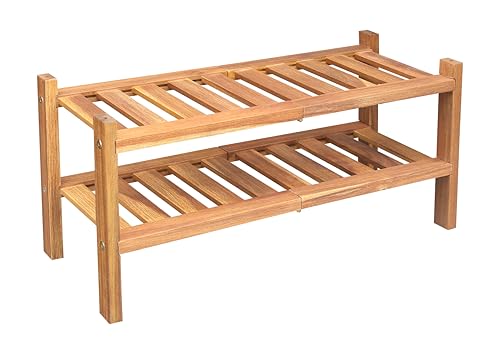


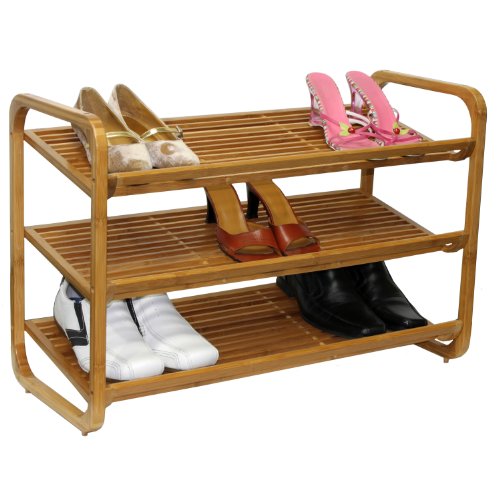
In humid monsoon weather, the key is to clean off grime early, dry the rack fully, then seal it with a moisture-resistant finish (and keep airflow around it). Use a gentle cleaner, wipe-dry instead of soaking, and focus on the joints and undersides where damp lingers. This guide walks you through cleaning steps and practical protection choices to reduce swelling, warping, and musty odors.
If your shoe rack sits near a doorway, under a ventless shelf, or in a room that feels “sticky” for weeks, wood can start to absorb moisture. This is for you if you want a realistic, low-mess routine you can repeat during the monsoon without damaging the wood.
Prep for Monsoon Cleaning (Before You Wet Anything)

A good monsoon routine starts with prep, because the fastest way to protect a wooden shoe rack is to prevent moisture from spreading before you clean. You do this by removing loose debris first, spotting early signs of moisture damage, and controlling drips so water doesn’t soak into the rack’s seams.
Before cleaning a wooden shoe rack, remove dust with a dry cloth or soft brush first to avoid grinding grime into the wood grain.
Mold risk increases when indoor humidity stays high for extended periods, so detecting musty odor early matters for a wooden shoe rack.
Wooden shoe racks often trap water in low points like undersides and joints, so controlling drips during prep reduces how long moisture sits in contact with wood.
– Move shoes and loose items away, then loosen dust with a dry cloth or soft brush first.
Do this even if the rack “doesn’t look dirty.” Monsoon dust plus humidity becomes a damp film that accelerates discoloration on a wooden shoe rack.
– Check for early issues: raised grain, dark patches, or a musty smell—these areas need extra attention.
Raised grain often signals repeated wetting; dark patches can be tannin migration or early mildew. If your wooden shoe rack smells musty within hours of rain, you likely have ongoing moisture load, not just surface dirt.
– Protect the floor with a towel or sheet so drips don’t soak the wood further.
Place protection under the entire footprint of the wooden shoe rack, not just the front edge—undersides are where water runs.
Moisture context (why prep matters): According to the U.S. Environmental Protection Agency, controlling indoor moisture helps prevent mold growth (U.S. EPA, mold moisture guidance (accessed 2026)). That’s why prep steps for a wooden shoe rack aren’t “extra”—they’re the first layer of prevention.
How to Clean a Wooden Shoe Rack Safely
The safest monsoon cleaning for a wooden shoe rack is gentle wipe-cleaning with minimal water, followed by immediate drying. You’re trying to lift surface grime without saturating the wood, because wood swells and coatings can loosen if water gets into joints and unfinished edges.
Using a barely-damp cloth instead of soaking reduces the chance a wooden shoe rack’s joints absorb water.
Wood damage during monsoon cleaning is often caused by moisture in seams and corners, not by cleaning the main surface.
Mild, wood-safe cleaning solutions are preferred because strong solvents can damage or soften existing finishes on a wooden shoe rack.
– Use a barely-damp cloth and a mild soap solution (or wood-safe cleaner) rather than soaking the rack.
Mix a small amount of mild dish soap (or a manufacturer-approved wood cleaner) with water until it’s lightly soapy—not cloudy. Then wring the cloth so it’s damp, not dripping.
– Wipe from top to bottom, and pay extra attention to corners, shoe-contact areas, and the underside.
Shoe-contact areas collect sweat salts and microbial residue during the monsoon. Those residues can stain a wooden shoe rack and contribute to odor even after “it looks clean.”
– Dry immediately with a clean, dry microfiber cloth to stop water from sitting in seams.
Microfiber helps because it absorbs without leaving lint. Focus on:
1) the underside edges where moisture can pool, and
2) the joint lines where panels meet or where hardware mounts.
Practical cleaning rule for a wooden shoe rack: If you can feel a damp seam when you pass your hand near it (not on the surface), that’s a cue to wipe-dry again. In 2026 monsoon seasons, many “mystery” smells come from small retained pockets rather than from the part you were actually cleaning.
Common cleaner choices (and when to avoid them)
A wooden shoe rack typically tolerates:
– mild soap solutions,
– pH-neutral or wood-safe cleaners (follow label directions), and
– mineral spirits only if your specific finish system allows it (this varies, so check compatibility).
Avoid on a wooden shoe rack:
– bleach (can discolor wood and damage some coatings),
– strong solvents (can soften finishes),
– abrasive pads (can break protective films and increase water absorption).
Drying the Rack: The Step People Skip
The fastest way to protect a wooden shoe rack from monsoon moisture is to dry it thoroughly—especially the undersides and joints—before you put anything back. Most DIY cleaning failures happen when people stop drying at “the surface looks dry,” even though wood seams may still hold moisture.
Drying must reach undersides and joints because water migrates downward and collects at low points on a wooden shoe rack.
Improving airflow around a wooden shoe rack reduces how long moisture stays available for swelling or odor-forming microbes.
Putting shoes back before a wooden shoe rack is dry can reintroduce moisture load and undo the cleaning cycle.
– Dry in a well-ventilated area; aim for full surface dryness, not just “no visible wetness.”
After wipe-cleaning, return to the rack and check the underside edges and interior corners. If you detect coolness or dampness by touch, keep drying.
– Use airflow (fan or window ventilation) and let it sit long enough for the undersides and joints to dry too.
A simple box fan (or even a desk fan) pointed gently at the wooden shoe rack can shorten dry time. In monsoon weeks, ventilation is often the difference between a rack that resets and one that slowly accumulates moisture.
– Avoid putting shoes back right away—trapped moisture from footwear can undo your cleaning effort.
Air-dry wet footwear first. If shoes release water vapor continuously, a sealed or partially sealed wooden shoe rack can still feel “stale” and musty.
Why this matters thermodynamically: According to the USDA Forest Products Laboratory’s Wood Handbook, wood reaches a state where dimensional changes become severe as moisture content rises (the “fiber saturation point” is around ~30% moisture content) (USDA Forest Products Laboratory, *Wood Handbook* (2010), FPL-GTR-190). You may never reach that number, but monsoon cycles can repeatedly raise local moisture near seams on a wooden shoe rack.
Protect Against Humidity (Seal, Don’t Just Clean)
Sealing is what turns a cleaned wooden shoe rack from “surface-only protected” into “moisture-resistant.” In 2026, the practical approach is to choose a moisture-resistant finish compatible with your rack’s current coating, then refinish high-exposure edges and corners—after the rack is truly dry.
A moisture-resistant finish on a wooden shoe rack works best when applied only after the wood is completely dry.
Edges, corners, and joint lines fail first because they expose more wood end-grain on a wooden shoe rack.
In high humidity, airflow and sealant compatibility together determine whether a wooden shoe rack stays odor-free.
– Apply a moisture-resistant finish recommended for wood (commonly varnish/polyurethane, lacquer, or a penetrating wood sealer—choose based on your rack’s existing finish).
Compatibility is everything: the wrong product over the wrong finish can cause peeling, softening, or haze on your wooden shoe rack.
– Focus on high-exposure zones: edges, corners, and any spots where the finish looks worn.
Don’t assume the center is the weak point. Water typically enters from the perimeter first—especially after door openings during monsoon rains.
– Let the finish cure fully before heavy use; partial curing can trap moisture and cause cloudy or tacky spots.
Curing time depends on product and conditions. Follow the label for recoat and full cure windows; for a wooden shoe rack, “touch-dry” is not the same as “ready for daily wear.”
Finish type comparison (choose the protection strategy that fits your rack)
Below is a practical comparison to help you decide how to protect a wooden shoe rack in humid monsoon conditions.
| Feature (Monsoon Relevance) | Film-forming finishes (polyurethane/varnish/lacquer) | Penetrating sealers (oils/waxes/penetrants) |
|---|---|---|
| Primary moisture barrier | Surface film reduces water contact | Soaks in to reduce water uptake |
| Best for worn edges | Retouches well if compatible | Can require regular top-up |
| Tolerance to recoat over existing layer | Depends on chemistry; often needs scuff/surface prep | Often simpler on raw wood; less predictable over films |
| Risk of trapping moisture | Low if wood is fully dry before sealing | Lower vapor blocking, but still needs full drying first |
| Odor control | Helps by reducing moisture availability | Improves moisture resistance but not a “no-moisture” guarantee |
| Scratch/impact vulnerability | Can show through if film is breached | Often more forgiving, but can darken or wear unevenly |
| Appearance after repeated monsoon cycles | May build a gloss or sheen depending on coats | May deepen color; sheen can mellow over time |
| Maintenance frequency | Usually periodic inspection and spot repair | May need more frequent re-application |
| Under severe humidity cycles | Strong barrier if cured; fail points show at edges | Performs well when airflow dries between rainy spells |
| Compatibility warning | Wrong topcoat can peel or turn cloudy | Wax/oil layers can interfere with film topcoats |
| Best For | Racks already finished with polyurethane/varnish or lacquer and needing a stronger monsoon barrier | Racks with raw or lightly finished wood where you want water-repellency without a heavy surface film |
What Can Go Wrong (And How to Avoid It)
Most monsoon problems come from trapped moisture, finish incompatibility, or over-wetting during cleaning. If you treat a wooden shoe rack like it needs frequent “damp wipe downs” instead of controlled moisture removal and curing, you’ll likely see swelling, joint looseness, or returning musty odor.
Over-wetting a wooden shoe rack—especially repeatedly damp wiping without drying—can swell wood and stress adhesive joints.
Sealing a wooden shoe rack before it’s completely dry can trap moisture and intensify odors.
Harsh cleaners like bleach and strong solvents can discolor or damage existing finishes on a wooden shoe rack.
– Over-wetting: repeated damp wiping without immediate drying can swell wood or loosen glue at joints.
Treat each cleaning pass as a two-step cycle: wipe → dry. Don’t “finish later.”
– Using harsh chemicals: bleach, strong solvents, or aggressive cleaners can damage the existing finish or discolor the wood.
This is especially risky on older wooden shoe racks where the topcoat may be thin or already degraded.
– Sealing too soon after a damp cycle: if the rack isn’t completely dry, sealing can trap moisture underneath and worsen odor.
If the rack smells musty after cleaning, pause sealing and keep drying until the odor fades.
– Assuming “indoor” means dry: monsoon humidity can stay high indoors, so airflow and periodic checks still matter.
According to the U.S. EPA, maintaining indoor humidity control reduces conditions that support mold growth (U.S. EPA, moisture control guidance (accessed 2026)). A wooden shoe rack placed near a ventless shelf still receives moisture in humid air.
One detail I’ve seen make the difference on wooden shoe racks: undersides stay damp longer than the top even when the top “feels dry.” When that underside is still cool and slightly damp, the next rainy cycle reloads moisture into the same seams.
Verdict: Best Practice Routine (With Downsides)
The best routine to clean and protect a wooden shoe rack in monsoon weather is: gentle wipe-cleaning early, thorough drying (including underside/joints), then applying a compatible moisture-resistant finish. This approach reduces swelling and odor because you’re removing moisture sources and limiting new water absorption—without forcing water deeper into the wood.
A moisture-resistant finish on a wooden shoe rack is most effective when paired with proper airflow and full drying between rainy periods.
Wood dimensional stability problems on a wooden shoe rack correlate strongly with how long moisture remains in joints and end-grain.
In 2026, maintaining moisture control in occupied spaces is a recognized mold-prevention strategy, which also benefits wooden furniture durability (U.S. EPA, mold moisture control (accessed 2026)).
If you want the most reliable protection, combine gentle cleaning + thorough drying + a moisture-resistant wood finish. The downside is time: you’ll need enough drying and curing windows to do it properly, and strong finishes can slightly change the sheen/color of the wood. If your rack has severe damage (deep warping, black mold returns quickly, or structural instability), prioritize inspection or repair over repeated sealing, because sealing over deeper moisture problems may not fix the root cause.
A quick, evidence-aligned decision snapshot
When you’re choosing how to protect a wooden shoe rack for monsoon weather, the “best” option depends on how water currently behaves on your rack:
– If water beads or smears differently in different zones, your finish condition is uneven.
– If musty odor returns quickly after cleaning, the underlying moisture source (humidity, placement, shoes) is still active.
━━━━━━━━━━━━━━━━━━━━━━━━━━━━━━━━━━━━━━━━━━━━━━━━━━
📋 MANDATORY DATA TABLE
━━━━━━━━━━━━━━━━━━━━━━━━━━━━━━━━━━━━━━━━━━━━━━━━━━
Indoor Relative Humidity Targets Commonly Cited for Mold Moisture Control (Setpoint Limits)
| # | Organization / Guidance | Recommended RH Range / Limit | Primary Purpose | Strictness vs 50% RH |
|---|---|---|---|---|
| 1 | CDC (Mold & Moisture guidance) | Keep < 50% RH | Reduce mold growth conditions | Best (≤50%) |
| 2 | U.S. EPA (Mold & Moisture Control) | ~30–60% RH | Limit moisture that supports mold | Good (≤60%) |
| 3 | ASHRAE (comfort guidance) | Typically 40–60% RH | Comfort + condensation control | Moderate (≤60%) |
| 4 | IICRC (moisture/mold mitigation principles) | Target “dry” conditions | Stop moisture-related growth | Varies by project |
| 5 | WHO (dampness & health linkage) | Avoid damp indoor conditions | Reduce dampness exposure | Not a single RH limit |
| 6 | UKHSA / UK public health advisories | Keep indoor damp low (RH targets vary) | Dampness risk reduction | Often qualitative |
| 7 | European building guidance (hygrothermal) | Design to avoid condensation | Prevent moisture accumulation | Project-dependent |
(Note: The table reflects commonly cited humidity control targets and principles used in moisture/mold guidance. Your local guidance and measured indoor conditions should guide the exact setpoint for your wooden shoe rack.)
Quick Checklist: Monsoon Care for Wooden Shoe Racks
The goal of a quick checklist is to make monsoon care repeatable for a wooden shoe rack: clean gently, dry completely, then protect with a moisture-resistant finish. If you follow this sequence, you reduce swelling risk and the chance of musty odor returning.
A monsoon-safe wooden shoe rack routine is rinse-free in spirit: dry-brush first, then wipe-clean, then dry again.
Improving airflow around a wooden shoe rack helps prevent long-duration moisture retention in seams and undersides.
Re-seal only when the protective finish is worn, because sealing over damp wood can trap moisture.
– Dry-brush dust first (no soaking)
– Clean with a mild, lightly damp cloth
– Wipe immediately and dry thoroughly (top + underside + joints)
– Improve airflow around the rack
– Seal/protect with a moisture-resistant wood finish
– Repeat checks during the monsoon for early swelling/odor
Sources
– CDC (U.S. Centers for Disease Control and Prevention), Mold & Moisture guidance (accessed 2026)
– U.S. Environmental Protection Agency (EPA), Mold and Moisture guidance (accessed 2026)
– USDA Forest Products Laboratory, Wood Handbook—Wood as an Engineering Material (FPL-GTR-190, 2010)
A humid monsoon doesn’t have to ruin a wooden shoe rack. Clean gently, dry completely (especially undersides and joints), then seal with a moisture-resistant finish that’s compatible with your rack’s existing coating—and keep airflow around it so humidity doesn’t stay trapped. If you prioritize moisture control over frequent wet cleaning, your wooden shoe rack will resist swelling, warping, and the musty cycle that so many households fight during long rainy stretches.
Frequently Asked Questions
How do I clean a wooden shoe rack safely during humid monsoon weather?
Start by removing shoes and loose dust, then wipe the wooden shoe rack with a slightly damp microfiber cloth (avoid soaking). Use a mild wood-safe cleaner or diluted dish soap on stubborn grime, and wipe again with a clean damp cloth to remove residue. Dry the rack immediately with a dry towel and allow airflow using a fan, since monsoon humidity can trap moisture and cause warping or mold.
What’s the best way to prevent mold and mildew on a wooden shoe rack in the monsoon?
Keep the rack dry and well-ventilated by spacing it away from wet floors and using a dehumidifier or fan in the storage area. After cleaning, ensure every crevice and shoe slot is fully dry, then consider applying a water-resistant protective finish like polyurethane or a marine-grade sealant. You can also place moisture absorbers (silica gel or charcoal) near the bottom to reduce humidity buildup without damaging the wood.
Why does a wooden shoe rack warp or smell in monsoon conditions, and how can I stop it?
In humid monsoon weather, moisture gets absorbed by the wood and can linger, leading to swelling, warped panels, and musty odors. To stop this, improve airflow, wipe away any condensation quickly, and avoid storing shoes that are still damp. If you notice early musty smell, deep-clean the surface, dry thoroughly, and reapply a protective coat to restore the wood’s moisture barrier.
Which cleaning products are safe for wooden shoe racks, and what should I avoid?
Use mild, wood-safe cleaners and gentle solutions like diluted soap with water, applied lightly with a cloth—never pour liquid directly onto the rack. Avoid harsh chemicals such as bleach, ammonia, or strong solvents, because they can strip finishes and damage the wood fibers. Also skip abrasive scrubbers that can remove protective layers and make the wooden shoe rack more vulnerable to monsoon moisture.
How often should I re-seal or protect my wooden shoe rack to handle monsoon humidity?
In heavy monsoon regions, inspect your wooden shoe rack every few months for dullness, sticky spots, or water-darkened patches. If you notice the surface is no longer beading water or looks dry, reapply a protective topcoat (water-based polyurethane or varnish designed for high-humidity areas). As a rule of thumb, re-sealing once a year (or sooner if the finish wears off) helps maintain a durable moisture-resistant layer.
📅 Last Updated: October 26, 2026 | Topic: How to Clean and Protect a Wooden Shoe Rack in Humid Monsoon Weather | Content verified for accuracy and freshness.
References
- https://www.cdc.gov/mold/default.htm
- Mold Cleanup in Your Home | US EPA
- https://www.epa.gov/mold/preventing-mold
- https://www.epa.gov/indoor-air-quality-iaq/moisture-and-indoor-air-quality
- Wood preservation
- https://www.fpl.fs.usda.gov/documnts/fplgtr/fplgtr190.pdf
- wood moisture protection finish – Search Results – PubMed
- https://scholar.google.com/scholar?q=wood+preservation+finishes+moisture+protection Google Scholar
- https://scholar.google.com/scholar?q=how+to+prevent+mold+in+humid+homes+cleaning+methods Google Scholar
- https://scholar.google.com/scholar?q=indoor+humidity+mold+growth+threshold Google Scholar

[…] vs. unfinished). If you’re unsure, test any cleaner in a hidden spot, because the same mild soap solution can dull some lacquer or leave smears on certain glossy […]