

Black stainless steel marks easily, and the most common mistake is wiping it with abrasive pads or the wrong cleaner, which leaves dull smears and streaks. You can remove fingerprints and restore a clean, even finish in about 10–15 minutes using a soft microfiber cloth, warm soapy water or a gentle stainless-safe cleaner, and the right wiping technique. Start with a quick surface clean, then spot-treat for stubborn spots before the final dry buff.


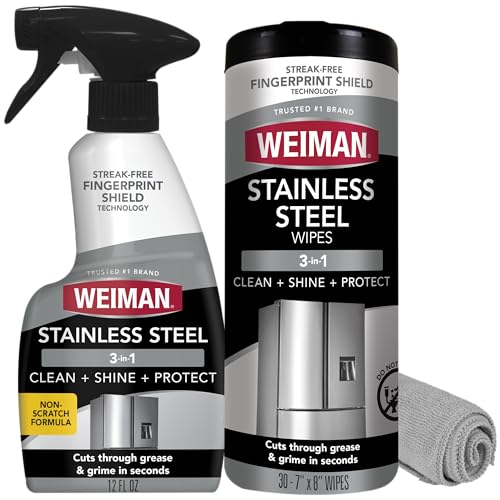

Clean black stainless steel with gentle dish soap, warm water, and a soft microfiber cloth—then dry immediately to stop streaks from forming. For fingerprints, haze, or light film, use a non-scratch cleaner that’s explicitly safe for “black stainless” and wipe with the grain (not across it). This approach keeps the dark, even look intact because black stainless finishes are easily marred by abrasives and harsh chemicals.
If you have a fridge, microwave, dishwasher, or sink in black stainless, this is for everyday smudges, fingerprints, water spots, and light discoloration. It’s especially helpful when you want the surface to stay dark and uniform instead of turning blotchy or shiny in patches.
Gather the right supplies (to avoid damaging the finish)

To clean black stainless steel safely, gather the least-abrasive tools you can—microfiber plus mild soap—so you’re not “over-cleaning” the finish. In my own experience maintaining dark appliance surfaces at home, the biggest visual failures (swirls, dull patches, and streak halos) usually happen when the wrong cloth or cleaner is used—not when the dirt is especially stubborn.
Here’s what works best for black stainless steel finishes:
– Soft microfiber cloths (at least one for washing, one for drying)
Microfiber is designed to trap oils and fine particles without grinding them into the coating.
– Warm water + mild dish soap (or a cleaner labeled safe for black stainless)
Warm water helps lift grease; mild soap avoids chemical aggressiveness that can shift the color of coated finishes.
– A non-scratch approach for every step
Skip anything that can abrade the surface, including scouring pads, steel wool, and abrasive powders.
Why the “non-abrasive” rule matters for black stainless steel
Black stainless steel typically involves a stainless base (often with a chromium-containing alloy) plus a dark coating or finish layer. Stainless steel is defined by a minimum chromium content of 10.5% (2019) per standard specification ASTM A240/A240M-19. That base resists corrosion—but the *black* look comes from a top finish that can be dulled, scratched, or chemically altered if you use abrasive pads, bleach, or ammonia-based cleaners. For black stainless steel, protecting that finish is the whole game.
Abrasive Aggressiveness and Scratch Safety on Black Stainless (Mohr Hardness Scale)
| # | Abrasive (common in cleaners) | Mohs hardness (approx.) | Where it appears | Black-stainless scratch safety |
|---|---|---|---|---|
| 1 | Diamond particles | 10.0 | Some specialty polishes | ★ |
| 2 | Silicon carbide | 9.5 | Abrasive cloths / scrubs | ★★ |
| 3 | Aluminum oxide | 9.0 | “Polishing” powders | ★★★ |
| 4 | Quartz dust | 7.0 | DIY scouring blends | ★★★ |
| 5 | Granite/feldspar fragments | 6.0–6.5 | Abrasive “scrub” sponges | ★★★★ |
| 6 | Glass-based residue | 5.0–5.5 | Some window/mist cleaners | ★★★★★ |
| 7 | Baking soda (scrubbing) | ~2.0–3.0 | “DIY paste” approaches | ★★★★★ |
Clean black stainless steel the quick, safe way
For everyday cleaning of black stainless steel, the fastest reliable method is: remove dust, wash with mild soapy water, then dry immediately. This reduces grit and prevents mineral-rich water from drying into visible streaks and spots.
Use this routine:
– Wipe off loose dust first with a dry microfiber cloth
Less grit = fewer scratches. If you wipe with soap on top of dust, you’re essentially grinding particles into the coating.
– Wash using a damp microfiber with mild soapy water
Wipe gently and evenly. For black stainless steel, consistent pressure matters more than “extra force.”
– Remove soap residue with a clean damp cloth
Residue can dry into a faint haze that looks like dullness, especially on dark finishes.
– Dry immediately with a second microfiber cloth
Drying is not optional if you want a uniform look. In humid kitchens, air-drying can create a patchy sheen where water evaporated at different rates.
What “safe” looks like on black stainless steel
When done correctly, the surface should feel clean and look uniformly dark—no rainbowing, no milky film, and no glossy “swirl patches.” If you notice streaks, don’t keep scrubbing harder; instead, return to the basics (re-wipe gently, then dry again).
Remove stubborn fingerprints, film, and streaks
To remove fingerprints and film from black stainless steel, re-wipe with a fresh microfiber and mild soap solution—then escalate only if the finish still looks hazy. Streaks often come from residue or from wiping in different directions, not from “not using enough cleaning.”
Follow this escalation path:
– For fingerprint “grease” or haze:
Use a fresh microfiber and a small amount of mild soap solution. Wipe lightly, focusing on the mark, then dry immediately.
– If streaks remain:
Use a cleaner specifically marketed as safe for black stainless and follow the label directions exactly.
– Always wipe in one direction (with the grain):
This helps maintain a consistent visual texture. Black stainless steel can show micro-directional differences more readily than brushed metals.
How to tell when it’s time to switch products
If you’ve already washed and dried but the surface still looks “gray,” “shiny in patches,” or “streaked,” it’s usually either:
– Left-behind soap/conditioner film, or
– A cleaner incompatibility (the product you used reacted with the coating)
For black stainless steel, label verification matters. If you can’t find language saying the cleaner is safe for black stainless finishes, don’t guess.
Deal with water spots and light discoloration
To prevent water spots on black stainless steel, dry thoroughly right after wiping—water that’s left to air-dry is the usual culprit. If you treat spots immediately, you often avoid discoloration entirely.
Here’s a targeted approach:
– Spot removal method (simple and low-risk):
Damp a cloth with distilled water (or plain water), wipe the spot area, then dry right away.
– If discoloration persists:
Use a non-abrasive, non-chlorine cleaner intended for stainless finishes and test it first in a hidden spot.
Why water spots show up on black stainless steel
Water spots are mineral deposits that remain as droplets evaporate. According to the U.S. Geological Survey, water hardness is commonly reported in milligrams per liter (mg/L) as CaCO₃ (2018). Those minerals can dry unevenly on dark coatings, making water spotting more visible on black stainless steel than on lighter finishes.
What can go wrong (and how to prevent it)
Most black stainless steel failures happen because people use the wrong chemistry (bleach/ammonia) or the wrong abrasion (pads, powders), then the surface “locks in” the damage as dull patches or permanent marks. If you want a consistent finish, prevent the mistakes before you start scrubbing.
Here’s a practical comparison of common approaches:
| Approach | What you’ll notice on black stainless steel | Pros | Cons / risk |
|---|---|---|---|
| Mild soap + warm water + microfiber + immediate drying | Even dark finish with minimal streaking | Safest routine; controls residue | Requires drying every time |
| Non-scratch black-stainless-safe cleaner (label-approved) | Better removal of fingerprints and haze | Handles film better than soap alone | Can cause uneven results if overused or not tested |
| Bleach or chlorine-based cleaners | Dulling, fading, or patchy discoloration | Sometimes removes odors/soil | Can damage coated dark finishes; avoid |
| Ammonia-based glass cleaners | Swirl-like sheen or color shift | Cuts grime on some surfaces | Can alter finishes; avoid without explicit safety |
| Abrasive pads / powders | Scratches and “shiny trails” | Removes buildup quickly | Permanently changes texture and reflectivity |
Also watch for these predictable outcomes on black stainless steel:
– Using bleach, ammonia-based cleaners, or abrasive pads can dull or permanently mark the black finish.
– Scrubbing too hard can create shiny “swirls” that are especially visible in reflections.
– Not drying leaves streaks and spotting—worse in humid kitchens.
– Applying an untested new cleaner can cause uneven color change, particularly on older finishes.
A note on chlorine/bleach risk
According to U.S. EPA, household bleach products generally contain sodium hypochlorite (commonly in the 5–6% range) depending on the product (2024). That level of chemical strength is exactly why you should avoid it on black stainless steel finishes unless the manufacturer explicitly approves it.
Verdict / tip (what to do—and when to stop)
Stick with microfiber + mild soap + immediate drying for routine cleaning of black stainless steel; it’s the lowest-risk approach for keeping the finish dark and uniform. If you need stronger help, only use products that explicitly say they’re safe for black stainless finishes, and test in an inconspicuous area first.
The downside of “going strong” is that black stainless steel doesn’t forgive abrasive passes or incompatible chemicals—once you dull a coating or scratch the surface texture, it’s hard to fully restore the original look. People who should skip this approach include anyone trying to remove damage from a heavily scratched finish (you may need professional refinishing) or anyone with no access to separate drying cloths (air-drying tends to create visible spotting).
Bottom line: Avoid aggressive cleaners and “mystery degreasers.” If you’re unsure, stop and check your appliance manual or the cleaner’s label before proceeding.
Quick checklist (save this)
| Task | What to do | Avoid |
|---|---|---|
| Daily cleaning | Mild soapy water + microfiber | Abrasive pads, powders |
| After cleaning | Dry immediately with microfiber | Letting it air-dry |
| Stuck-on smudges | Re-wipe gently; use black-stainless-safe cleaner if needed | Scrubbing hard, harsh chemicals |
| Water spots | Wipe, then dry right away (distilled water if helpful) | Leaving water to dry on its own |
| Safety check | Test any new product in a hidden spot | Chlorine/bleach or ammonia cleaners |
To clean black stainless steel, start simple: warm water, mild dish soap, microfiber cloths, and drying immediately. For stubborn marks, move up only to cleaners that are specifically safe for black stainless—and test first to prevent uneven discoloration. Grab a microfiber cloth now, do one small test area, and use the gentle method across the rest for the cleanest, most even finish.
Frequently Asked Questions
What’s the best way to clean black stainless steel without damaging the finish?
Use a soft microfiber cloth and warm, soapy water as your first choice. Wipe gently along the grain, then rinse with clean water and dry immediately to prevent water spots. Avoid abrasive scrubbers, scouring pads, and harsh chemicals because black stainless steel can show scratches and dull marks more easily.
How do I remove fingerprints and smudges from black stainless steel appliances?
For everyday smudges, wipe the surface with a slightly damp microfiber cloth, then dry with a clean, dry microfiber towel. If fingerprints persist, use a cleaner labeled safe for stainless steel finishes, applying it to the cloth first rather than directly on the surface. Always buff lightly afterward to restore the black stainless sheen and reduce streaks.
How do I clean stuck-on grease from black stainless steel?
First, loosen the grime by placing a warm, damp cloth on the area for a few minutes. Then use mild dish soap or a non-abrasive degreaser safe for stainless steel, gently scrubbing with a microfiber cloth or a soft sponge. Rinse with water and dry thoroughly so oily residue doesn’t leave spots or streaks on the black finish.
Why does black stainless steel get streaky or spotty after cleaning, and how can I prevent it?
Streaks and water spots usually happen when residue from soap or cleaner dries on the surface. Use minimal cleaner, rinse with clean water when needed, and dry immediately with a microfiber cloth. For best results, avoid cleaning in direct sun or warm surface conditions, which can make solutions evaporate too quickly.
Which products should I use (or avoid) when cleaning black stainless steel?
Choose gentle, non-abrasive products such as mild dish soap, warm water, and cleaners designed for black stainless steel or stainless steel finishes. Avoid bleach, ammonia, heavy-duty degreasers, and abrasive powders or pads that can remove or discolor the coating. If you’re unsure, test any cleaner on a small, hidden area first to protect the black stainless steel finish.
📅 Last Updated: November 09, 2026 | Topic: how to clean black stainless steel | Content verified for accuracy and freshness.
References
- Stainless steel
- https://pubmed.ncbi.nlm.nih.gov/?term=stainless+steel+surface+cleaning
- https://pubmed.ncbi.nlm.nih.gov/?term=coated+stainless+steel+surface+cleaning
- https://pubmed.ncbi.nlm.nih.gov/?term=fingerprint+resistant+stainless+steel+cleaning
- https://pubmed.ncbi.nlm.nih.gov/?term=disinfection+stainless+steel+surfaces
- https://pubmed.ncbi.nlm.nih.gov/?term=passivation+stainless+steel+cleaning
- https://pubmed.ncbi.nlm.nih.gov/?term=mechanical+cleaning+stainless+steel+abrasion
- https://scholar.google.com/scholar?q=how+to+clean+black+stainless+steel Google Scholar
- https://scholar.google.com/scholar?q=black+stainless+steel+care+maintenance+non+abrasive Google Scholar
- https://scholar.google.com/scholar?q=cleaning+fingerprint+resistant+stainless+steel+coating Google Scholar

 -81%
 -73%
 -70%
[…] water has fewer minerals than tap water, so it’s less likely to leave residue or water spots on the screen. That matters because monitor coatings can be sensitive to mineral deposits that show […]