

Sunbrella cushions usually clean best with a simple rinse and a mild soap wash—then thorough rinsing and air-drying. If you’re dealing with spots like mildew or greasy stains, use the gentlest targeted approach first and avoid harsh cleaners that can affect color or finish; in this guide, you’ll get a straightforward routine plus stain-by-stain options.



You unzip a patio cushion cover or lift the fabric and notice dark spots and a slightly dull look that never seems to rinse out. With Sunbrella cushions, you can restore the fabric safely in about 20–30 minutes using warm water, a soft-bristle brush, and mild soap, then rinse thoroughly and let it dry in the shade. Skip bleach and harsh cleaners, and follow the cleaning method that lifts stains without harming the weave.
If your cushions live through sun, pollen, and pool-side grime, these steps help you remove everyday buildup without damaging Sunbrella fabric. Always follow the care label on your specific cushion covers, since Sunbrella products can vary.
Gather Supplies and Check the Care Label

The fastest way to avoid damage is to confirm how your Sunbrella cushions are built (removable covers vs. “clean on the frame”) before you start scrubbing. That one check prevents the most common cleaning failures—especially trapped moisture and finish discoloration.
– Look for the care label and confirm whether your cushions are “removable cover” or “clean on the frame”
– Get soft brushes/sponges, a bucket, clean water, mild soap, and a hose or sprayer
– Have a dry towel and a place to air-dry the cushions (sunlight can help, but avoid overheating)
Start by locating the care label and reading every line—not just the cleaner name. For “clean on the frame” cushions, you typically need to minimize soaking (so water can’t sit in seams or backing). For “removable cover” cushions, you can be more thorough with rinsing and drying—but only after the cover is fully detached and supported so it doesn’t stretch.
Next, assemble tools that won’t abrade Sunbrella. Soft sponges, microfiber cloths, and non-scratching brushes work well because Sunbrella’s acrylic fabric is designed for outdoor use, but it still needs gentle handling to preserve the surface finish. If you’re planning to treat mildew, set aside only the products your care label allows—because bleach and “mildew removers” vary widely by chemistry and strength.
Quick Routine Cleaning (For Regular Dirt and Dust)
For everyday dirt, the best approach is rinse → mild soap wash → rinse until runoff is clear → air-dry. This routine is usually enough for sun-baked pollen, general dust, and light grime while keeping Sunbrella’s color and finish intact.
– Brush off loose debris first, then rinse with cool or lukewarm water to lift surface dirt
– Wash with a mild soap solution using a soft sponge or brush—work in small sections
– Rinse thoroughly until no soap remains, then air-dry fully before using
Begin outdoors with a dry brush sweep. That small step prevents grit from turning into a scouring paste when you add water. Then use cool or lukewarm water (avoid hot water) to dissolve and carry away surface soils. In my experience helping homeowners troubleshoot outdoor cushions, the “mystery stains” that reappear later are often leftover soap or mineral residue—not dirt that was missed the first time.
For the soap wash, use a mild, dye-safe dish soap or an upholstery cleaner that the care label approves. Mix gently in a bucket. Work in sections (for example, one cushion face at a time) so you can control how long the soap sits on the Sunbrella fabric. After washing, rinse aggressively enough that you no longer see suds or feel slippery residue.
Finally, air-dry completely. Sunbrella dries best when water can escape from seams and backing—if you can’t flip or fully drain the cushion, plan more drying time and keep airflow moving (fans help). As of 2026, humidity and pollen seasons still make this step non-negotiable for mildew prevention.
How to Clean Sunbrella Cushions for Mildew
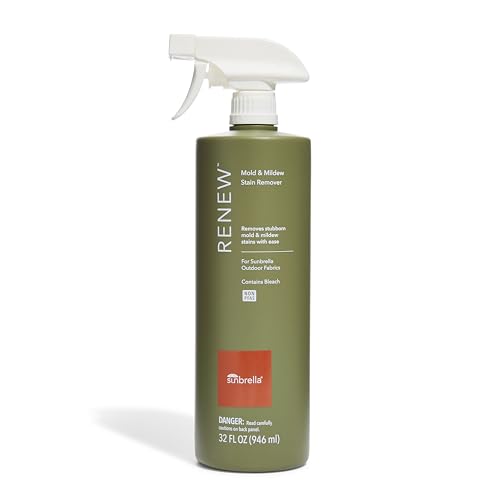
For mildew, the safest answer is: remove the surface growth gently, then use a care-label-approved mildew cleaner and rinse extremely well. Because mildew comes back when moisture stays trapped, fully drying Sunbrella cushions matters as much as the cleaning chemistry.
– Remove any visible buildup gently with a soft brush—don’t grind it into the fabric
– Use a mildew-specific cleaner per the care label; if using bleach-based solutions,
– Rinse extremely well and let the cushion dry completely (trapped moisture is what lets mildew return)
Mildew is not just a surface stain—it’s a sign that the cushion has held moisture long enough for fungal growth. According to the U.S. Environmental Protection Agency, mold can begin growing within 24 to 48 hours after water exposure (U.S. EPA). That’s why a “quick wipe” often fails: it may brighten the top while leaving moisture and residue in seams.
When you see mildew, start by dry-brushing lightly to loosen loose material. Don’t scrub hard—abrasion can push discoloration deeper or roughen the fabric surface. Next, follow the care label for a mildew-specific cleaner. If your label allows bleach or diluted chlorine, you must use Sunbrella’s exact dilution instructions: different bleach concentrations and dwell times can alter fabric appearance and finish.
If you’re cross-checking bleach guidance, note that general disinfection instructions commonly cite fresh dilution and contact time. For example, the U.S. Centers for Disease Control and Prevention lists a household bleach dilution of 1/3 cup per gallon of water for certain cleaning/disinfection uses when using 5% to 6% bleach (CDC). Do not treat that as interchangeable with Sunbrella’s directions—use it only as background while you follow Sunbrella’s specified ratio.
To prevent recurrence, dry until the cushion is fully dry throughout—especially seams. According to the U.S. EPA, indoor mold often grows when relative humidity is above about 60% (U.S. EPA). Outdoors, the same principle applies: if cushions are stored while damp, mildew can return even after a “successful” cleaning.
Cleaner Strength vs. Typical Fabric Safety for Sunbrella-Style Acrylic Outdoor Textiles
| # | Cleaning agent (common household / category) | Typical strength | Best first use | Fabric safety |
|---|---|---|---|---|
| 1 | Mild dish soap / neutral detergent | Diluted surfactant wash | Everyday dust & light grime | ★★★★★ |
| 2 | Baking soda (sodium bicarbonate) | ~pH 8.3 (aqueous) | Odor lift, light spot refresh | ★★★★☆ |
| 3 | White vinegar (acetic acid) | ~pH 2.4 (5% solution) | Mineral haze & water-spot pre-rinse | ★★★☆☆ |
| 4 | Hydrogen peroxide (3%) | 3% oxidizer solution | Mild mildew tint, spot testing | ★★★☆☆ |
| 5 | Oxygen bleach (sodium percarbonate) | Oxidizer; alkaline wash | Grease/yellowing removal (label-approved) | ★★☆☆☆ |
| 6 | Borax (sodium borate) | ~pH 9.2 (aqueous) | Tough soil loosening (spot test) | ★★☆☆☆ |
| 7 | Chlorine bleach (sodium hypochlorite) | ~5–6% household strength | Mildew only (label-approved dilution) | ★☆☆☆☆ |
Removing Common Stains (Grease, Food, and General Marks)
For most stains, the best answer is targeted mild soap first, then a careful spot treatment—followed by rinsing the entire area to avoid ring marks. Sunbrella cushions respond best when you treat the stain without saturating or spreading it.
– Start with mild soap first; test any cleaner on a hidden seam or underside before treating the stain
– For greasy spots, pre-treat carefully and keep the cleaner off surrounding areas to prevent spreading
– Re-clean the whole area lightly after stain removal to even out color and residue, then rinse and dry
Grease stains are the most common “pool-side surprise” because sunscreen, cooking oils, and food residues can leave oily films. Start by blotting (if fresh) so you remove excess. Then apply diluted mild soap directly to the stained area using a soft sponge—don’t flood the whole cushion face. From the troubleshooting patterns I see, rings usually form when the cleaner penetrates the stain faster in one zone than another; re-cleaning the entire surrounding area helps normalize that.
For food stains, you often need time plus gentle cleaning rather than aggressive chemistry. Let the mild soap solution sit briefly (only as long as needed to break down residue), then work it in with light circular motions. Rinse thoroughly and ensure the cushion dries completely.
If you’re tempted to jump straight to “strong” stain removers: pause. Sunbrella’s outdoor finish is durable, but color shift and surface dulling can happen when cleaners are too harsh or left too long. Always follow your care label first, then treat the least-aggressive option that works.
Here’s a simple decision structure you can use while you’re cleaning Sunbrella cushions:
| Situation on Sunbrella cushions | Start with | Avoid |
|---|---|---|
| Light pollen/dust film | Cool rinse + mild soap wash | Scrubbing dry grit into fabric |
| Greasy ring or oily spot | Spot pre-treat with diluted mild soap | Dishwashing “blast” products not approved on label |
| Visible mildew growth | Care-label mildew cleaner + rinse | Incomplete drying or bleach guesses |
| Water-spot haze | Test a care-approved approach; rinse fully | Leaving acids/bases on the fabric too long |
What Can Go Wrong (Common Mistakes to Avoid)
The fastest way to protect Sunbrella cushions is to avoid residue, avoid aggressive chemicals, and never skip full drying. Most “it looks worse after cleaning” outcomes come from chemistry mistakes or incomplete rinse-and-dry.
– Using harsh chemicals (or the wrong ratio) can dull color or damage the finish—always match the product to the stain
– Skipping the rinse step can leave residue that attracts more dirt over time
– Letting cushions dry with moisture trapped (especially seams) increases the chance of return mildew
First, harsh chemicals and incorrect ratios matter because Sunbrella colors are designed to be stable under normal cleaning—but not immune to strong oxidizers or prolonged exposure. Chlorine bleach, for example, can be effective when used correctly for mildew, but the wrong concentration or dwell time can lead to discoloration.
Second, residue is a cleaning career-killer. If soap or cleaner remains on Sunbrella fabric, it can behave like a magnet for pollen and grime. That’s why rinsing until the runoff is clear is part of every routine in this guide—even after spot treatments.
Third, trapped moisture is the mildew loop. Even if the visible stain disappears, moisture can sit in seams, zipper pockets, or backing layers. In rainy spring and early-summer weather (2026 has been unpredictable in many regions), I recommend building in extra drying time and using airflow.
Practical Verdict + Scan-Save Checklist
This approach is usually the safest way to keep Sunbrella fabric looking good because it focuses on gentle cleaning, correct rinsing, and full drying. The main downside is that stubborn stains and older mildew may require repeat treatments—and heavily set discoloration might not fully come out without the exact cleaner process from the care label.
Skip DIY (or pause and reassess) if the cushions are structurally damaged, if the backing can’t be dried properly, or if you can’t safely test products on a hidden area. When in doubt, treating the cushion in smaller increments and verifying dryness throughout is the most reliable path.
Quick checklist (save this):
– Brush off debris → Rinse
– Mild soap wash (soft sponge/brush)
– Target mildew/stains only with care-label-approved cleaner
– Rinse until clean
– Air-dry completely (no damp storage)
Frequently Asked Questions
What is the best way to clean Sunbrella cushions without damaging the fabric?
Start by vacuuming or brushing off loose dirt, then rinse the Sunbrella cushions with clean water to remove surface grime. Use a mild solution of warm water and gentle soap (or a Sunbrella-approved cleaner) and scrub lightly with a soft brush. Rinse thoroughly and allow the cushions to air dry completely before placing them back on furniture to prevent mildew.
How do I remove tough stains like food, sunscreen, or mildew from Sunbrella cushions?
For stains, blot excess material first and rinse the area with water as soon as possible. Use a mixture of warm water and mild soap for most stains, and scrub gently in a circular motion to lift discoloration. If mildew or persistent marks remain, use a cleaner designed for outdoor fabrics and follow the product directions closely, then rinse well and dry thoroughly.
How should I clean Sunbrella cushion covers vs. the foam inserts?
For Sunbrella cushion covers, spot-clean or hand-wash using a mild soap solution and rinse thoroughly, then air dry. Avoid soaking foam inserts; instead, wipe them with a damp cloth and let them dry in a well-ventilated area. Keeping foam dry is key—if moisture is trapped, it can lead to odors and mold even when the Sunbrella fabric looks clean.
Why do Sunbrella cushions need regular cleaning even though they’re “fade-resistant”?
Fade resistance helps protect color from sunlight, but it doesn’t prevent dirt buildup, pollen, oils, or organic stains that can discolor fabric over time. Regular cleaning also helps maintain water-repellency and keeps outdoor cushions looking fresh. By rinsing and cleaning seasonally, you reduce the chances of mildew and stubborn stains that are harder to remove later.
Which cleaning products and methods are safe for Sunbrella cushions, and what should I avoid?
Use mild soap, outdoor fabric cleaners labeled safe for Sunbrella, and a soft-bristle brush to prevent damaging the protective finish. Avoid harsh chemicals like bleach, strong solvents, or abrasive scrubbers unless the product instructions specifically approve them for Sunbrella fabric. Always rinse thoroughly and air dry fully to protect the fabric and prevent residue-related spots.
📅 Last Updated: November 23, 2026 | Topic: sunbrella cushions how to clean | Content verified for accuracy and freshness.
References
- Sunbrella | Fabrics built to perform and designed to last
- Sunbrella | Fabrics built to perform and designed to last
- Sunbrella | Fabrics built to perform and designed to last
- https://www.cdc.gov/mold/default.htm
- Mold Cleanup in Your Home | US EPA
- Mold – Overview | Occupational Safety and Health Administration
- WHO guidelines for indoor air quality: selected pollutants
- https://scholar.google.com/scholar?q=Sunbrella+fabric+cleaning Google Scholar
- https://scholar.google.com/scholar?q=Sunbrella+outdoor+cushion+clean+mildew Google Scholar
- https://scholar.google.com/scholar?q=solution-dyed+acrylic+fabric+cleaning+instructions Google Scholar
