
To sanitize your dishwasher effectively, start by removing and cleaning the filters to clear trapped debris. Use white vinegar on the top rack and run a hot water cycle without detergent to dissolve grime, then sprinkle baking soda on the bottom for a brief cycle to deodorize. Follow with a commercial dishwasher cleaner on the hottest sanitizing cycle for thorough disinfection. Regularly inspect and clear spray arms for ideal water flow. Keep these steps consistent to maintain peak hygiene and efficiency—there’s more to guarantee lasting cleanliness.
Why Regular Dishwasher Cleaning Matters
Although dishwashers are designed to clean dishes effectively, regular cleaning of the appliance itself is crucial to maintain its performance and hygiene. You need to prioritize dishwasher hygiene to prevent buildup of food particles, grease, and limescale that can compromise cleaning efficiency. Without regular maintenance, these residues foster bacterial growth and unpleasant odors, affecting both your dishwasher’s function and your health. Consistent cleaning guarantees spray arms and filters remain unobstructed, preserving water flow and temperature control critical for sanitation. By adhering to a routine cleaning schedule, you reduce the risk of mechanical issues and extend the lifespan of your appliance. Taking control of dishwasher hygiene empowers you with freedom from frequent repairs and subpar dishwashing results, keeping your kitchen environment safe and efficient. Regularly checking and cleaning the dishwasher filters is essential to maintain optimal performance and prevent odors.

Tools and Materials Needed for Sanitizing
To sanitize your dishwasher effectively, you’ll need specific cleaning supplies like dishwasher-safe sanitizers and non-abrasive brushes. It’s important to wear protective gear such as gloves to avoid skin irritation from cleaning agents. Using the right materials guarantees thorough sanitization without damaging your appliance. Regular cleaning of components such as the spray arms helps maintain efficient water flow and overall dishwasher performance.
Essential Cleaning Supplies
Five essential cleaning supplies are required to effectively sanitize your dishwasher: a dishwasher-safe scrub brush, white vinegar, baking soda, a microfiber cloth, and a disinfectant spray. The scrub brush allows you to reach tight corners without damaging surfaces. White vinegar serves as a natural, eco friendly cleaning agent that breaks down mineral deposits and eliminates odors. Baking soda acts as a gentle abrasive to remove residue and enhance deodorization. Use the microfiber cloth for wiping down interior surfaces, as it traps dirt efficiently without scratching. Finally, apply a disinfectant spray approved for kitchen appliances to eliminate harmful bacteria and guarantee thorough sanitization. Choosing eco friendly supplies minimizes environmental impact while maintaining hygiene. These cleaning tools collectively empower you to restore your dishwasher’s cleanliness and performance effectively.
Protective Gear Requirements
Why should you prioritize protective gear when sanitizing your dishwasher? Proper gloves usage is essential to shield your skin from harsh chemicals and contaminants. Nitrile or latex gloves provide a barrier that prevents irritation and chemical burns, ensuring your freedom to handle cleaning agents safely. Mask recommendations focus on preventing inhalation of fumes released by sanitizers. A well-fitted mask, preferably N95 or equivalent, minimizes respiratory exposure to airborne particles and volatile compounds. Using both gloves and masks not only safeguards your health but also allows you to clean efficiently without interruption caused by discomfort or allergic reactions. Prioritizing protective gear empowers you to maintain your dishwasher’s hygiene effectively while protecting yourself, preserving your autonomy throughout the sanitization process.
Dishwasher-Safe Sanitizers
Selecting the right dishwasher-safe sanitizers is essential for effective cleaning without damaging your appliance. You’ll want to use dishwasher safe products that specifically target bacteria and grime buildup while preserving your dishwasher’s components. Effective sanitizers should be compatible with your machine’s materials and avoid harsh chemicals that cause corrosion.
Here are key tools and materials to take into account:
- Phosphate-free dishwasher sanitizer tablets
- Oxygen-based bleach alternatives
- Enzyme-based detergent boosters
- Citric acid rinse aids
- Anti-microbial dishwasher cleaning sprays
Choosing these effective sanitizers guarantees thorough sanitation, prevents residue, and extends your dishwasher’s lifespan. Always check product labels to confirm compatibility and follow manufacturer instructions for best results. This approach gives you freedom to maintain hygiene without compromising your dishwasher’s integrity.
Removing and Cleaning Dishwasher Filters
Although it might seem like a small component, the dishwasher filter plays an essential role in preventing food particles and debris from clogging your appliance’s drainage system. Understanding filter types—usually coarse and fine mesh—helps you perform effective filter maintenance. Removing the filter is straightforward: twist or lift it according to your model. Clean it under running water with a soft brush to avoid damage.
| Feeling | Reason |
|---|---|
| Empowered | You control appliance longevity |
| Relieved | No more foul odors or drainage issues |
| Free | No need for costly repairs or replacements |
Regular filter cleaning guarantees consistent sanitation, giving you the freedom to rely on your dishwasher’s best performance every wash cycle.
Using Vinegar and Baking Soda Effectively
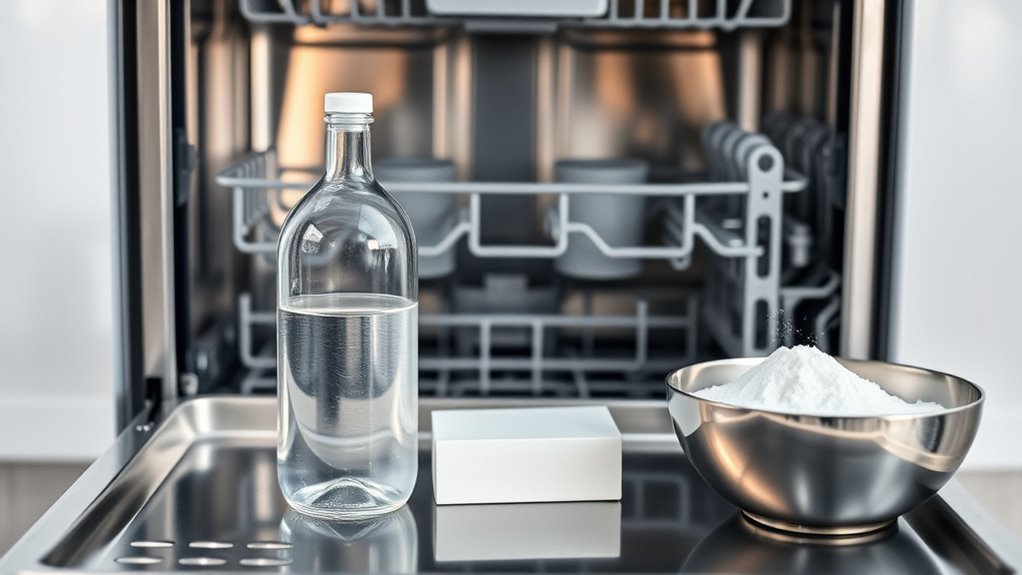
When you want to maintain a spotless dishwasher interior, using vinegar and baking soda is an effective, natural method to break down residue and eliminate odors. Vinegar benefits include its acidity that dissolves mineral deposits and grease, while baking soda effectiveness lies in its mild abrasiveness and deodorizing properties. To use them correctly:
- Place a cup of white vinegar in a dishwasher-safe container on the top rack.
- Run a hot water cycle without detergent to let vinegar work on grime.
- After the cycle, sprinkle a cup of baking soda across the bottom.
- Run a short hot water cycle to activate baking soda’s deodorizing and scrubbing action.
- Wipe down seals and corners to remove loosened buildup.
This method frees you from harsh chemicals while ensuring thorough sanitation. For best results, perform this maintenance cycle monthly to prevent buildup and odors.
Running a Sanitizing Cycle With Dishwasher Cleaner
To run an effective sanitizing cycle, you’ll need to select a dishwasher cleaner formulated to eliminate bacteria and buildup. Follow the manufacturer’s instructions carefully for the best results, ensuring you use the correct amount of cleaner and cycle settings. This method offers a thorough internal cleanse that targets hidden residues and maintains your dishwasher’s hygiene.
Choosing the Right Cleaner
Since dishwashers can accumulate grease, limescale, and food residues that standard cycles might not fully remove, selecting the right cleaner is essential for effective sanitization. Depending on your cleaning frequency and dishwasher model, you’ll want to choose a product that targets these specific deposits without damaging components. Cleaner types vary, so consider:
- Enzymatic cleaners for breaking down organic residues
- Descaling agents to remove limescale buildup
- Detergent boosters that enhance regular cycle efficacy
- Eco-friendly options minimizing chemical impact
- Powder, liquid, or tablet forms for ease of use
Step-by-Step Sanitizing Process
A single thorough sanitizing cycle can greatly reduce bacteria and residue buildup inside your dishwasher. Begin by emptying the dishwasher completely to guarantee the cleaner reaches all interior surfaces. Select a high-quality dishwasher cleaner formulated for effective dishwasher hygiene. Place the cleaner in the detergent dispenser or as directed on the product label. Choose the hottest, longest sanitizing cycle available on your machine—this maximizes the sanitizing methods by using high temperature and extended wash times to eliminate microbes. Avoid interrupting the cycle to maintain consistent cleaning conditions. After completion, inspect the interior for any remaining residue; if necessary, run an additional rinse cycle. Regularly performing this step-by-step sanitizing process enhances your dishwasher’s performance and guarantees a hygienic environment for your dishes, granting you the freedom to trust your appliance fully.
How to Clean and Maintain Dishwasher Spray Arms
Although spray arms are often overlooked, their proper cleaning and maintenance are vital for ensuring your dishwasher operates efficiently. You’ll want to regularly inspect for spray arm obstructions, which can block water flow and reduce cleaning power. Ensuring proper spray alignment is essential to evenly distribute water during cycles.
To maintain your dishwasher spray arms:
- Remove the spray arms carefully following manufacturer instructions.
- Check and clear all holes and jets of debris using a toothpick or small brush.
- Rinse thoroughly under running water to dislodge lingering particles.
- Reattach spray arms securely, verifying they spin freely without resistance.
- Test a water cycle to confirm spray arms are properly aligned and functioning.
This precise maintenance promotes peak spray performance and prevents wash cycle inefficiencies.
Tips for Preventing Future Buildup and Odors
To minimize buildup and odors in your dishwasher, you should implement consistent cleaning habits and use the right detergents. Regularly run an empty cycle with a cup of white vinegar to break down grease and deposits. Afterward, sprinkle baking soda along the bottom and run a short hot water cycle to neutralize odors and remove residual stains. Avoid overloading your dishwasher, as it prevents proper water circulation, leading to buildup. Clean the filter weekly to remove trapped food particles. Use detergents formulated for your dishwasher type and avoid excessive amounts, which can leave residue. Keep the door slightly ajar after cycles to promote airflow and moisture evaporation, aiding odor prevention. By integrating these steps, you’ll maintain a clean, odor-free dishwasher, ensuring peak performance and freedom from unpleasant smells. Additionally, regularly inspect and clean the filters and spray arms to maintain optimal water flow and appliance longevity.
Frequently Asked Questions
Can I Sanitize My Dishwasher Without Running a Full Cycle?
Think of your dishwasher as a fortress needing swift defense. You can achieve quick sanitization without a full cycle by using a dishwasher-safe cup filled with white vinegar placed on the top rack, then running a short, hot water rinse cycle. This method targets bacteria and grime efficiently, ensuring your dishwasher cleaning is precise and effective, giving you freedom from lengthy routines while maintaining a hygienic appliance.
Is It Safe to Use Bleach in My Dishwasher?
You should be cautious with bleach safety when using it in your dishwasher. While bleach can sanitize effectively, mixing it with dishwasher detergent may create harmful fumes or damage internal components. For dishwasher maintenance, it’s safer to use products specifically designed for dishwashers or run a cycle with vinegar or baking soda instead. Always check your manufacturer’s guidelines to avoid voiding warranties or causing corrosion, ensuring your appliance stays efficient and safe.
How Often Should I Sanitize My Dishwasher for Optimal Hygiene?
Every now and then, you need to nip problems in the bud to keep things running smoothly. For ideal hygiene, your sanitizing frequency should be about once a month, depending on usage. If you run your dishwasher daily, consider sanitizing biweekly. Hygiene tips include running an empty cycle with a dishwasher-safe sanitizer or vinegar. This routine helps prevent buildup, odors, and bacteria, ensuring your dishwasher stays clean without restricting your freedom in the kitchen.
Can Dishwasher Sanitizer Harm My Dishes or Utensils?
You shouldn’t worry too much about dishwasher sanitizer harming your dishes if you choose one with safe ingredients. Most sanitizers are designed with dishwasher safety in mind, avoiding harsh chemicals that could degrade utensils or dish surfaces. However, always check sanitizer ingredients for compatibility, especially with delicate items like crystal or non-stick cookware. Following manufacturer guidelines guarantees protection without compromising your dishes’ integrity, giving you freedom to maintain cleanliness confidently.
Are There Eco-Friendly Dishwasher Sanitizing Products Available?
Imagine your dishwasher as a garden; using harsh chemicals is like pouring poison on your plants. You’ll be glad to know there are biodegradable cleaners and natural alternatives designed to sanitize effectively without harming the environment. These eco-friendly products break down safely, preserving your freedom to clean responsibly. Brands now offer formulations with natural enzymes and essential oils, ensuring your dishes stay pristine while you protect the planet—smart, safe, and sustainable.
