Cleaning Mistakes That Damage Your Oven
You’re damaging your oven if you use abrasive cleaners that scratch and erode its surfaces, neglect to remove oven racks before cleaning, apply too much water risking electrical damage, ignore the manufacturer’s cleaning instructions, or scrape with sharp tools that chip enamel and cause rust. These mistakes reduce your oven’s lifespan and performance. Understanding why these errors harm your oven and how to avoid them will help keep it in top shape longer.
Using Abrasive Cleaners That Scratch Surfaces
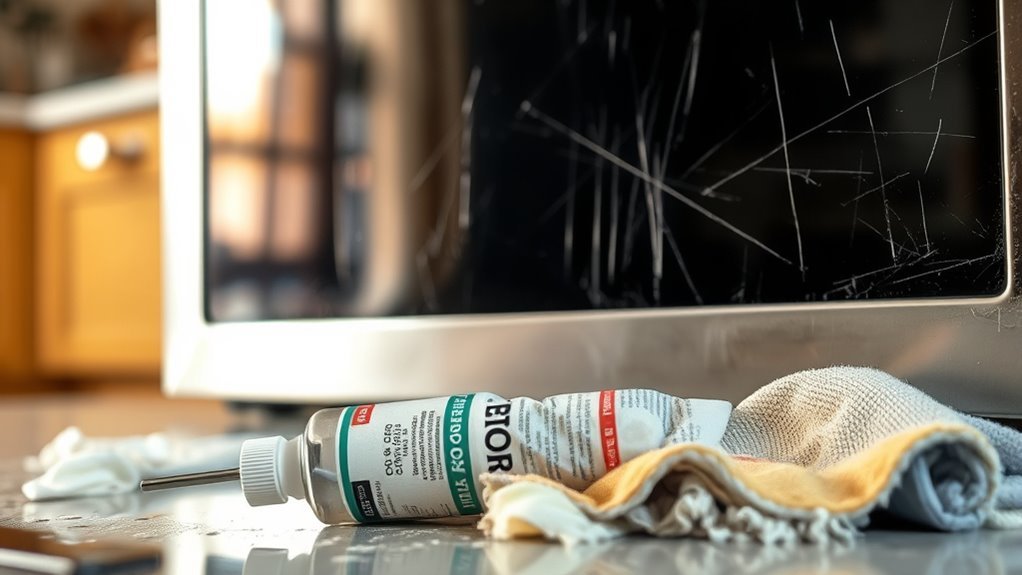
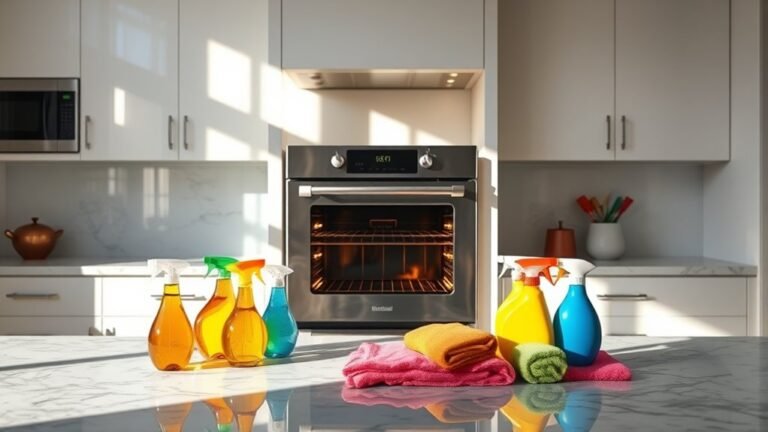
Although abrasive cleaners may seem effective at removing grime, they can easily scratch your oven’s surfaces, leading to permanent damage. When you use abrasive materials, you risk eroding the oven’s finish, which compromises both appearance and durability. To guarantee proper surface protection, avoid scrubbing pads or powders designed for heavy-duty cleaning. Instead, opt for non-abrasive solutions and soft cloths that gently lift dirt without scratching. This approach preserves your oven’s integrity and extends its lifespan, giving you the freedom to maintain it without worry. Being mindful in your cleaning choices prevents costly repairs and keeps your oven looking pristine, letting you enjoy cooking without the hassle of damaged surfaces. Always prioritize gentle, effective cleaners for lasting surface protection. Using appropriate cleaning tools tailored to your oven’s surfaces enhances cleaning efficiency and prevents damage.
Neglecting to Remove Oven Racks Before Cleaning
Why should you always remove oven racks before cleaning? Neglecting rack removal can lead to incomplete cleaning and potential damage to both the racks and oven interior. Proper oven maintenance depends on this simple step to guarantee thorough cleanliness and longevity.
Here’s why it matters:
- Thorough Cleaning: Removing racks lets you clean every surface without obstruction, preventing grease buildup in hidden areas.
- Protecting Surfaces: Cleaning racks separately reduces the risk of scratching the oven’s interior during scrubbing.
- Ease of Maintenance: Rack removal simplifies the process, allowing you to soak and scrub racks effectively, extending their lifespan and guaranteeing your oven stays in top shape.
Always prioritize rack removal to maintain freedom from stubborn grime and protect your oven investment. Additionally, regularly inspecting and cleaning components like filters and seals can help you avoid damage during maintenance, ensuring your appliance remains reliable and efficient. This is a crucial part of regular maintenance.
Applying Excessive Water Inside the Oven
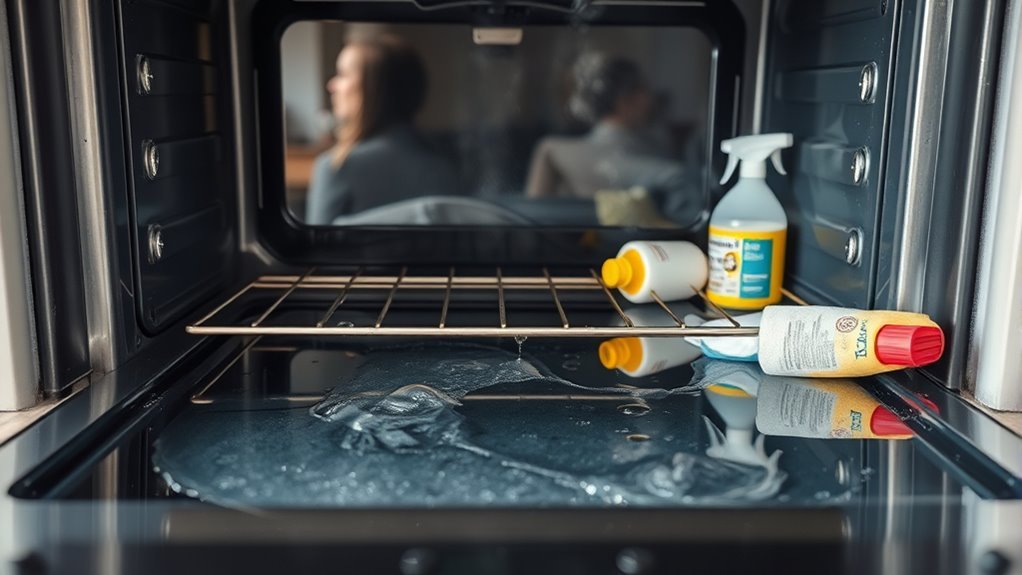
Once you’ve removed the oven racks to clean thoroughly, it’s important to be cautious about how much water you use inside the oven. Excessive water can lead to serious water damage, affecting electrical components and insulation. Avoid pouring water directly onto heating elements or control panels to prevent short circuits. Instead, use a damp cloth or sponge sparingly to wipe down surfaces. Moisture buildup inside the oven can also promote rust and corrosion, reducing your oven’s lifespan. After cleaning, leave the oven door open to allow any residual moisture to evaporate completely. By controlling the amount of water applied, you maintain your oven’s structural integrity and guarantee it operates safely, giving you the freedom to cook without worry or damage. It is also important to incorporate proper ventilation during cleaning to avoid moisture accumulation and ensure thorough drying importance of ventilation.
Ignoring Manufacturer’s Cleaning Instructions
When you skip the manufacturer’s cleaning instructions, you risk using improper methods or products that can void your warranty and damage your oven. Manufacturer guidelines are designed to guarantee safe and effective cleaning, tailored to your oven’s materials and technology. Ignoring these can cause corrosion, electrical issues, or ruined finishes. Pay close attention to the recommended cleaning frequency to avoid buildup without over-cleaning. To protect your oven:
- Follow the exact cleaning products and tools specified in the manual.
- Adhere to the suggested cleaning intervals to maintain peak performance.
- Avoid shortcuts that contradict manufacturer guidelines, even if they seem quicker.
Respecting these instructions gives you freedom from costly repairs and extends your oven’s lifespan.
Using Sharp Tools to Scrape Off Residue
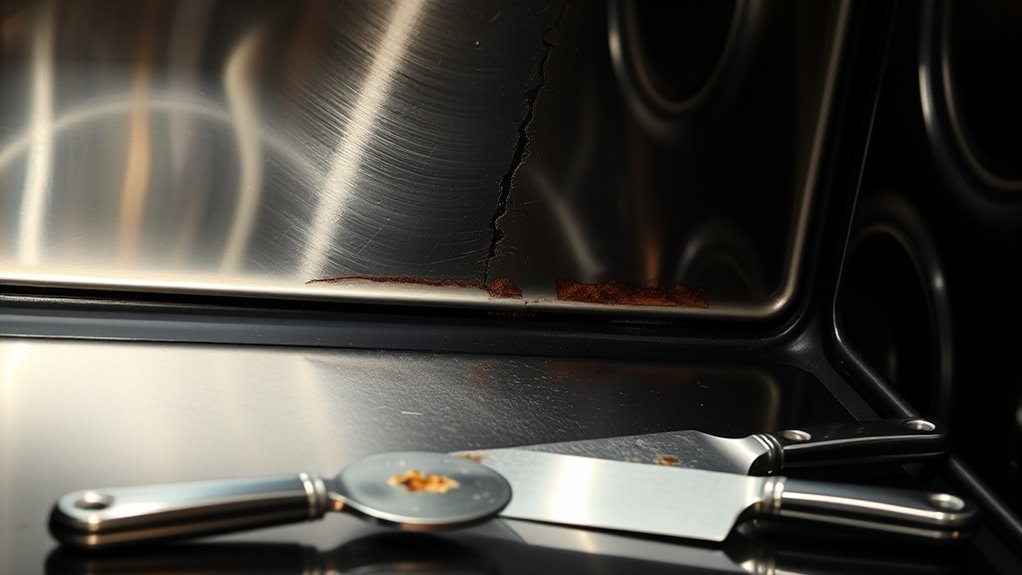
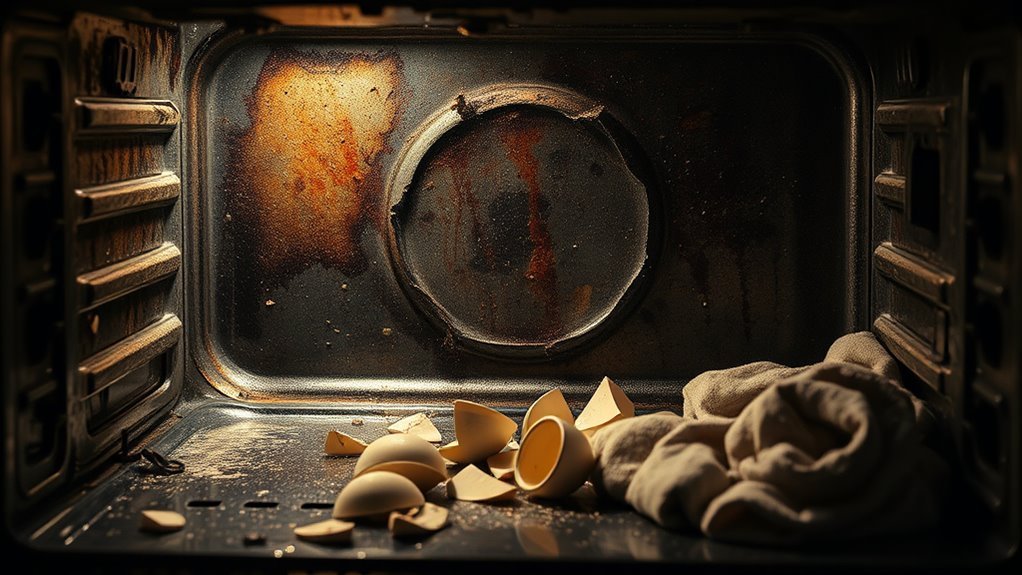
Although it might seem effective to use sharp tools for scraping off baked-on residue, doing so can seriously damage your oven’s interior surfaces. Sharp blades or metal scrapers can scratch the enamel coating, leading to rust and reducing your oven’s lifespan. Instead, explore sharp tool alternatives like plastic scrapers or silicone spatulas, which are gentle yet effective. Employ proper scraping techniques by softening residue first with a warm, damp cloth or a vinegar solution. This loosens grime, allowing you to remove it without exerting excessive force. By avoiding harsh scraping methods, you maintain your oven’s integrity and performance while enjoying the freedom to clean efficiently and safely. Stick to these methods to protect your investment and keep your oven looking and working like new. Using natural remedies like vinegar spray can help break down grease and make residue easier to remove without damaging surfaces.
Frequently Asked Questions
How Often Should I Deep Clean My Oven to Prevent Damage?
Oh, sure, you might think scrubbing your oven daily is the secret to perfect oven maintenance frequency—until it isn’t. To keep your oven running smoothly and avoid damage, deep clean it every three to six months. Stick to cleaning schedule recommendations tailored to your usage; if you cook often, lean toward three months. This balanced approach guarantees your oven stays efficient without risking wear from overzealous scrubbing, giving you the freedom to cook worry-free.
Can I Use Natural Cleaning Products Safely in My Oven?
You can definitely use natural cleaning products safely in your oven, as long as they contain trusted natural ingredients like baking soda, vinegar, or lemon juice. These eco-friendly cleaners are effective without harsh chemicals, so they protect your oven’s surfaces and your health. Just make sure to avoid abrasive scrubbing tools that might scratch the oven. Using these gentle, natural options helps maintain a clean oven while respecting your desire for safe, eco-conscious freedom.
What’S the Best Way to Clean the Oven Door Glass?
When cleaning the oven door glass, start by using gentle cleaning techniques to avoid scratches. Mix equal parts water and vinegar in a spray bottle, then spray onto the glass. Let it sit for a few minutes to loosen grime. Use a soft cloth or non-abrasive sponge to wipe away residue. For stubborn spots, a baking soda paste works well. Avoid harsh chemicals or abrasive tools to keep your oven door looking clear and damage-free.
Are Self-Cleaning Ovens Less Likely to Get Damaged?
Did you know that ovens with self-cleaning features can reduce manual scrubbing time by up to 70%? When you choose self-cleaning ovens, you enjoy self cleaning benefits that help prevent damage caused by harsh chemicals or abrasive tools. This not only eases oven maintenance but also extends your oven’s lifespan. So, if you want freedom from tedious cleaning while keeping your oven in top shape, a self-cleaning model is a smart choice.
How Do I Safely Clean the Oven’S Heating Elements?
To safely clean your oven’s heating elements, start by unplugging the oven to avoid electrical hazards. Avoid using abrasive cleaners or scrubbing pads, as these can damage the elements. Instead, gently wipe them with a damp cloth and mild detergent. For stubborn grime, use a soft brush and make certain elements are completely dry before use. Following these oven maintenance tips guarantees effective heating element care, prolonging your oven’s lifespan and performance.