Essential Tools for Cleaning Pet Mess
To tackle pet messes effectively, you’ll want enzymatic cleaners that break down stains and odors at the source, plus pet-safe solutions with non-toxic ingredients. Microfiber cloths and scrub brushes help lift dirt without damage, while lint rollers quickly remove hair. Don’t forget disposable gloves for hygiene and air purifiers to keep odors fresh. Organizing your supplies in storage bins adds convenience. Keep going, and you’ll find even more tools and tips to maintain a spotless, healthy home.
Stain and Odor Removers
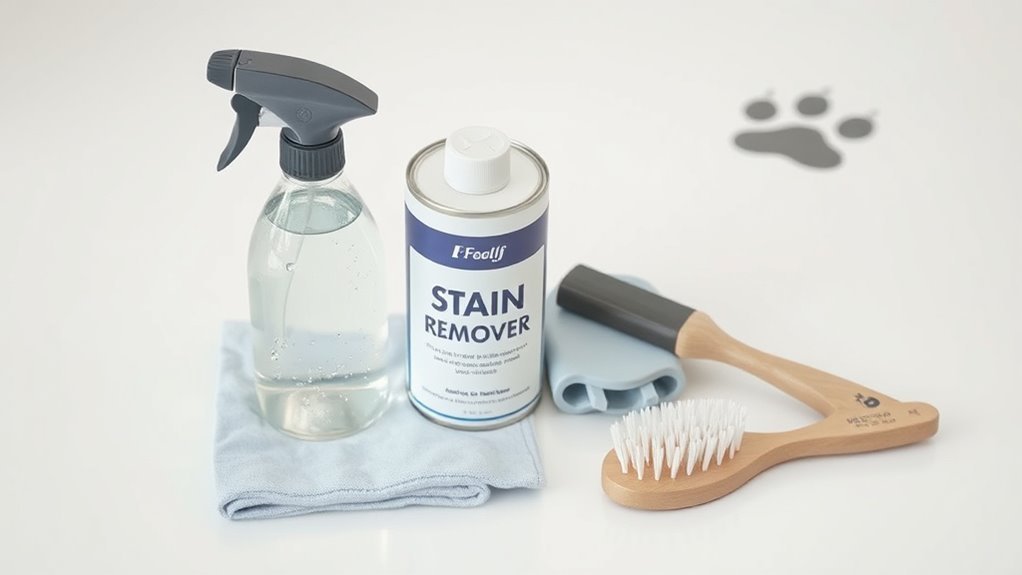
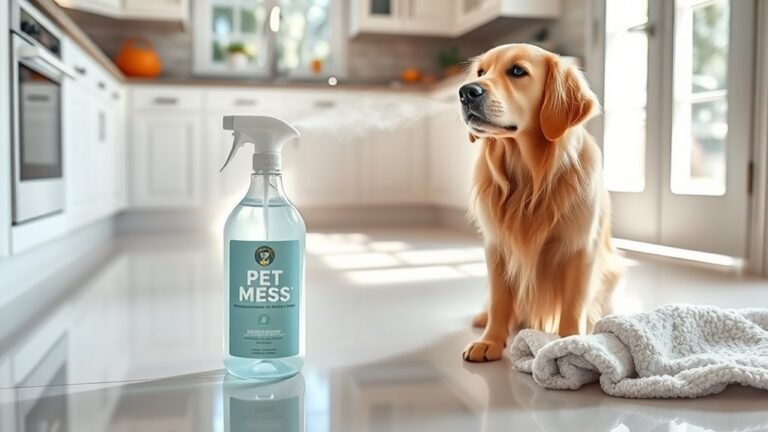
Although pet messes can be tough to tackle, having the right stain and odor removers makes a significant difference. You’ll want to act quickly, as prompt attention improves stain removal techniques effectiveness. Start by blotting excess moisture—never rubbing—and apply a cleaner designed specifically for pet stains. Look for enzymatic cleaners that break down proteins, effectively neutralizing odors rather than masking them. For odor neutralization tips, use products containing natural enzymes or baking soda to absorb and eliminate smells. Avoid harsh chemicals that can irritate pets or damage surfaces. By mastering these stain removal techniques and odor neutralization tips, you’ll maintain a fresh, clean environment. This practical approach frees you from lingering messes, allowing you to enjoy your home and pets without compromise.
Pet-Safe Cleaning Solutions
When choosing cleaning solutions for pet messes, you’ll want to prioritize non-toxic ingredients to keep your furry friends safe. Enzyme-based cleaners are especially effective because they break down organic stains and odors at the source. Using these pet-safe options guarantees thorough cleaning without exposing your pets to harmful chemicals.
Non-Toxic Ingredients
Because your pet’s health depends on the products you use, choosing cleaning solutions with non-toxic ingredients is crucial. Opting for natural alternatives like vinegar, baking soda, and citrus extracts guarantees you avoid harsh chemicals that can irritate your pet’s skin or respiratory system. These safe ingredients effectively tackle stains and odors without compromising your pet’s well-being. When selecting commercial products, check labels for ingredients such as plant-based surfactants and avoid synthetic fragrances and ammonia. Using non-toxic cleaners gives you the freedom to maintain a clean home without worrying about harmful residues. Remember, a clean environment doesn’t have to come at the cost of your pet’s safety. Embrace these practical, pet-safe options to keep your space fresh and your furry friends healthy.
Enzyme-Based Cleaners
If you’ve ever struggled to remove stubborn pet stains and odors, enzyme-based cleaners can be a game-changer. These cleaners use specific enzyme applications to break down organic matter like urine, feces, and vomit at a molecular level. That means they don’t just mask odors—they eliminate their source. One key enzyme benefit is their ability to digest proteins and fats, ensuring thorough cleaning without harsh chemicals. Using enzyme-based cleaners is practical because they’re safe for pets and kids, allowing you freedom from worry about toxic residues. Plus, their natural action prevents pets from re-soiling treated areas. For effective pet-safe cleaning solutions, enzyme applications are essential tools that combine efficiency with safety, making your cleaning routine simpler and more reliable.
Microfiber Cloths and Towels
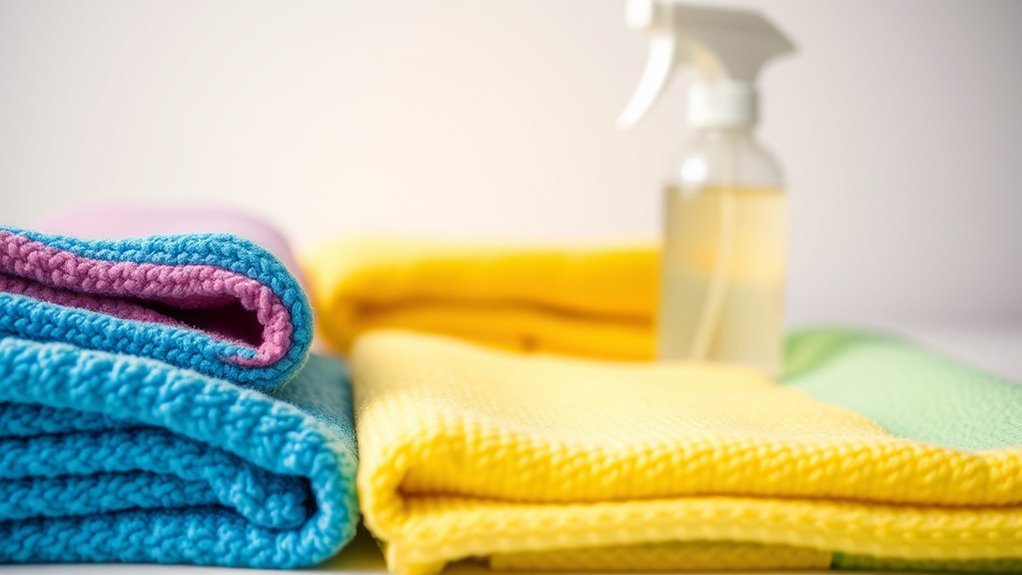
A set of high-quality microfiber cloths and towels should be a staple in your pet cleaning kit. Their microfiber benefits include superior absorbency and trapping dirt, making cleaning techniques more effective and freeing you from harsh chemicals. You’ll appreciate how they pick up pet mess quickly without spreading it around.
| Feature | Benefit | Practical Tip |
|---|---|---|
| Fine fibers | Traps dirt and allergens | Use dry for dusting |
| High absorbency | Soaks up liquids fast | Wring out thoroughly |
| Durable | Long-lasting use | Wash separately, no fabric softener |
| Reusable | Eco-friendly | Air dry to maintain texture |
| Soft texture | Safe on surfaces | Avoid bleach for longevity |
With these cloths, you gain a versatile, efficient tool that simplifies pet mess cleanup and keeps your home fresh.
Lint Rollers and Pet Hair Removers
When dealing with pet hair, choosing the right lint roller or hair remover can make all the difference. You’ll want to take into account different types—like adhesive sheets, reusable brushes, or rubber gloves—and how each works best on various surfaces. Knowing effective techniques and materials guarantees you remove hair quickly without damaging your furniture or clothes.
Types of Lint Rollers
Choosing the right lint roller can make a significant difference in how effectively you remove pet hair from your clothes and furniture. You’ll find two main types: traditional sticky sheets and portable rollers. Sticky sheet lint rollers feature adhesive layers that trap hair instantly. Once a sheet is covered, you peel it away to reveal a fresh surface—ideal for quick, thorough cleanups. Portable rollers, often reusable, come with a textured surface that picks up hair without needing replacement sheets. They’re compact, perfect for on-the-go use or keeping in your bag for spontaneous pet hair emergencies. Each type offers unique advantages, so selecting one depends on your lifestyle and cleaning preferences. Using the right lint roller frees you from pet hair hassle, helping you maintain a clean, comfortable space effortlessly.
Effective Hair Removal Techniques
Although pet hair can be stubborn, using the right tools like lint rollers and specialized pet hair removers can make cleanup much more efficient. When tackling hair removal, you want grooming tools designed to capture and lift fur effortlessly from various surfaces. Lint rollers with adhesive sheets quickly pick up loose hair from clothing and upholstery, while reusable pet hair removers with rubber bristles or silicone edges excel on furniture and carpets. Incorporate these hair removal techniques into your routine to maintain a hair-free environment without hassle. By selecting the correct tool for each surface, you’ll save time and avoid frustration. Remember, consistent use of appropriate grooming tools guarantees your space stays clean and gives you the freedom to enjoy your pet without constant mess.
Choosing the Right Material
Picking the right material for your lint roller or pet hair remover can make a noticeable difference in how effectively you clean up pet hair. You want a tool with material durability to withstand repeated use without losing its stickiness or effectiveness. For instance, high-quality adhesive sheets or reusable silicone surfaces offer long-lasting performance. Equally important is fabric compatibility; some materials can damage delicate fabrics, so choosing a gentle yet efficient option preserves your clothes and upholstery. If you’re dealing with varied fabric types, look for versatile materials that work well on everything from cotton to leather. By focusing on these factors, you’ll enjoy a hassle-free cleaning experience that frees you from constant pet hair troubles without sacrificing your fabrics’ integrity.
Enzymatic Cleaners for Organic Messes
When you’re dealing with pet stains like urine, vomit, or feces, enzymatic cleaners are your best ally because they break down the organic compounds at a molecular level. These cleaners rely on enzyme activation to trigger organic breakdown, eliminating odors and stains effectively.
Here’s how to use them for maximum freedom from mess:
- Apply the cleaner generously to the affected area, ensuring full saturation for enzyme activation.
- Let it sit undisturbed for 10-15 minutes to allow enzymes to digest organic matter deeply.
- Blot or gently rinse the area to remove residues, avoiding harsh scrubbing that can inhibit enzyme function.
Using enzymatic cleaners means you’re not just masking odors—you’re removing the source, freeing your home from persistent pet stains.
Wet/Dry Vacuum Cleaners
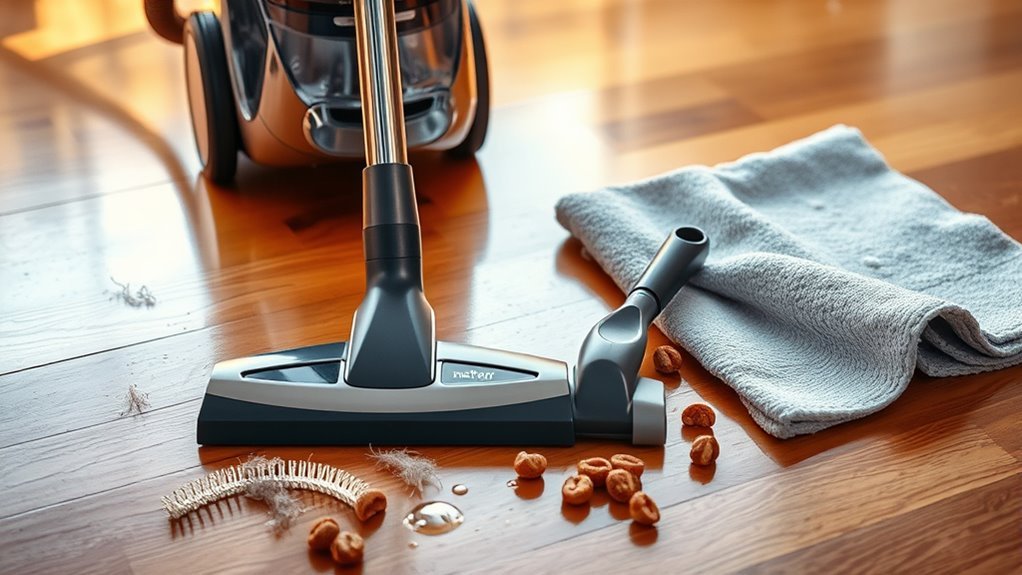
Wet/dry vacuum cleaners are incredibly versatile for tackling both liquid spills and dry debris from pet messes, saving you time and effort. When choosing the right model, consider factors like suction power, tank capacity, and ease of filter cleaning to match your specific needs. Picking the right vacuum guarantees you handle any accident quickly and thoroughly.
Benefits of Wet/Dry Vacuums
Although traditional vacuums handle dry debris well, they often struggle with liquid spills and sticky messes that pets can leave behind. Wet/dry vacuums give you the freedom to tackle these challenges effectively. Here’s why they’re a must-have:
- Versatile Cleaning: You can switch seamlessly between wet and dry messes without changing machines, saving time and effort.
- Strong Suction Power: Designed to maintain powerful suction even with wet debris, they clean more thoroughly, reducing the need for repeated passes.
- Simplified Vacuum Maintenance: Many models feature easy-to-empty tanks and washable filters, making upkeep straightforward and extending the vacuum’s lifespan.
With a wet/dry vacuum, you’re equipped to handle whatever your pet throws at you, making cleanup quicker and less of a chore.
Choosing the Right Model
How do you pick the best wet/dry vacuum for your pet-related cleaning needs? Start by considering the size and power—look for models with strong suction that handle both wet spills and dry debris efficiently. Portability matters too; a lightweight unit with easy maneuverability lets you clean quickly, fitting seamlessly into your cleaning schedule. Choose one with specialized pet mess prevention features such as HEPA filters to trap allergens and odors. A vacuum with multiple attachments will tackle everything from fur on upholstery to liquid accidents. Also, check the tank capacity—larger tanks reduce interruptions during intensive cleaning. By selecting a model tailored to your lifestyle, you’ll streamline pet mess cleanup and maintain a fresher home with less effort, freeing you to enjoy your time with your furry friend.
Disposable Gloves and Masks
Many pet owners find that disposable gloves and masks are indispensable when tackling messes. These items provide essential safety precautions, protecting you from germs and unpleasant odors. When choosing glove types, consider nitrile for durability and latex if you need flexibility; vinyl is a budget-friendly option but less resistant.
- Protection: Gloves shield your hands from bacteria and cleaning chemicals, while masks guard against airborne particles.
- Convenience: Disposable gear saves time—you simply toss them after use, avoiding cross-contamination.
- Comfort: Look for gloves with a snug fit and masks with adjustable nose pieces to maintain freedom of movement while working.
Using these tools properly helps you clean efficiently and safely, giving you peace of mind and the freedom to enjoy a clean, healthy home.
Scrub Brushes and Sponges
Scrub brushes and sponges are essential for tackling stubborn pet messes that gloves and masks alone can’t handle. When choosing scrub brush types, consider firm bristles for tough stains and softer ones for delicate surfaces to avoid damage. A handheld brush with ergonomic grip will give you better control and reduce fatigue. Sponge materials vary—opt for durable cellulose sponges that absorb liquids efficiently or microfiber sponges that trap dirt and hair effectively. Avoid abrasive sponges on sensitive flooring or upholstery to maintain their finish. Using the right combination of scrub brushes and sponges lets you clean thoroughly without wasting effort, giving you more freedom to enjoy your space. These tools make the difference between a surface that’s just clean and one that’s truly fresh and inviting.
Air Purifiers and Deodorizers
Because pet messes often leave behind odors and airborne particles, air purifiers and deodorizers are essential for maintaining a fresh, healthy environment. You’ll want to focus on improving air quality and odor control to reclaim your space.
- Choose an air purifier with a HEPA filter to capture pet dander and allergens, greatly enhancing air quality.
- Use activated charcoal or baking soda-based deodorizers; they naturally neutralize odors without harsh chemicals.
- Opt for devices with adjustable settings so you can tailor odor control and air purification to your room size and pet activity.
Storage Bins for Cleaning Supplies
A well-organized storage bin can make all the difference when managing your pet cleaning supplies. It streamlines cleaning organization by keeping all essentials in one accessible place, saving you time and frustration. Choose bins with compartments or stackable designs to maximize space and guarantee supply accessibility, so you’re never digging through clutter when a spill happens. Opt for durable, easy-to-clean materials to maintain hygiene and longevity. Labeling each bin or compartment further enhances efficiency, letting you quickly grab what you need and get back to enjoying your day. With the right storage bins, you gain control over your cleaning routine, making pet mess management simpler and less stressful while giving you the freedom to focus on what really matters.
Frequently Asked Questions
How Often Should I Deep Clean Areas Where My Pet Spends Time?
Did you know bacteria can double every 20 minutes in pet areas? So, for your deep cleaning frequency, aim to thoroughly clean spaces where your pet spends time at least once a week. This pet messes timeline helps prevent buildup of germs and odors. Of course, if your pet’s messes increase, adjust accordingly. Staying consistent keeps your home fresh and safe, giving you the freedom to enjoy your pet without worry.
What Is the Best Way to Prevent Pet Messes in the First Place?
To prevent pet messes, you’ll want to focus on effective pet training and other preventive measures. Establish consistent routines for feeding, bathroom breaks, and playtime to minimize accidents. Use positive reinforcement to encourage good behavior, and provide designated spaces for your pet to relax and relieve themselves. By combining patience with proactive strategies, you’ll enjoy a cleaner home and more freedom, without constantly worrying about unexpected messes.
Are There Any Homemade Cleaning Solutions Safe for Pets?
Did you know that 60% of pet owners prefer homemade cleaners because they’re safer for their furry friends? You can easily whip up homemade cleaners using pet friendly ingredients like vinegar, baking soda, and lemon juice. These natural options effectively tackle stains and odors without harmful chemicals. Just avoid essential oils and harsh detergents, and you’ll keep your home fresh while protecting your pets, giving you freedom from worry and toxicity.
How Can I Safely Dispose of Pet Waste Without Odor?
To safely dispose of pet waste without odor, you should use biodegradable bags—they’re eco-friendly and help contain smells effectively. After sealing the waste, toss it promptly in an outdoor bin. Spritz the area or the bag’s exterior with odor neutralizing sprays to keep things fresh. This approach guarantees you’re managing waste responsibly while enjoying the freedom of a clean, odor-free environment around your home.
Can Certain Pet Diets Reduce the Mess They Create?
Imagine a tidy home where pet messes are minimal—certain diet types can actually help you get there. High-quality foods rich in fiber and digestible proteins promote better digestion, leading to less smelly and smaller stools. By adjusting your pet’s diet, you’ll notice mess reduction, making cleanup easier and your living space fresher. Choosing the right diet isn’t just about nutrition; it’s about reclaiming freedom from constant cleaning hassles.