

Cleaning a fish bowl is quick and straightforward if you follow the right order: remove the fish and water, scrub the bowl safely, and rinse thoroughly before refilling. This guide answers exactly how do I clean a fish bowl with simple, step-by-step instructions and practical tips to avoid cloudy water and harm to your fish.
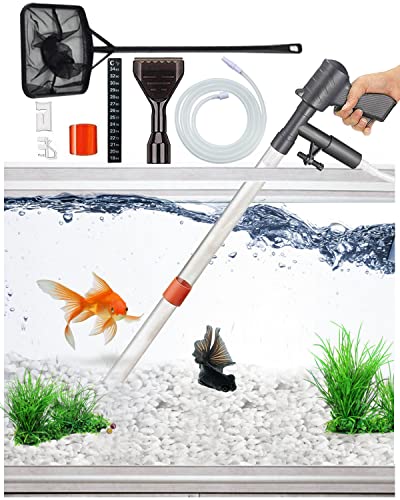



If your fish bowl is looking cloudy or smelly, the right move is to clean the bowl carefully without damaging your fish’s water quality. Remove the fish first, scrub with aquarium-safe tools only, rinse thoroughly, and refill using properly conditioned water—so the water chemistry stays stable and safe.
The key is to avoid harming your fish’s water quality—so skip harsh soaps and don’t “shock” the tank with untreated tap water. Below, you’ll learn a step-by-step routine that keeps the bowl clear while protecting your fish.
Who this is for / when it applies:
This is for anyone trying to clean a fish bowl (especially a small one) and worried about keeping fish healthy. It’s most relevant when you notice algae buildup, cloudy water, or debris on the bottom.
Prep first: protect your fish and set up safely

Cleaning a fish bowl is safest when you reduce stress by keeping the fish in closely matched water during the cleaning. Plan your steps so you don’t end up rushing—small bowls change water parameters fast, and that can quickly affect a fish’s gills and immune system.
Moving a fish to a container filled with water from the bowl helps limit temperature and dissolved-gas swings during cleaning.
Keeping household chemicals out of aquarium water is critical because many cleaners can leave residues that are hard to remove.
Because fish bowls are small-volume systems, even partial water changes can noticeably shift ammonia, pH, and dissolved oxygen.
– Move your fish to a temporary container with water from the bowl (so temperature and chemistry stay closer).
– If you have a net, use it gently and keep the fish submerged as much as possible.
– If your bowl has a heater (not always recommended for bowls), keep the temporary container near the same temperature.
– Decide what you’re cleaning: quick weekly debris vs. deeper algae scrubbing.
– If you’re seeing only surface film and light debris, aim for a lighter routine.
– If the bottom is packed with waste or algae is thick on the glass, plan for a deeper session.
– Gather supplies ahead of time: bowl scrubber/pad reserved for aquarium use, clean bucket, water conditioner, and paper towels or a soft cloth.
– Use only equipment you dedicate to aquarium care (no “general kitchen” sponges).
Empty and remove debris (the “bottom first” approach)
The fastest way to stop cloudiness from coming back is to clean the bottom and waste first—then scrub the glass. In practice, that prevents stirred detritus from re-soiling the bowl while you’re already working on algae and film.
Removing bottom debris first reduces the chance that disturbance will cloud the water again during scrubbing.
Cloudy water after cleaning is often caused by suspended waste you stirred up rather than “new” dirt forming.
– Carefully pour or scoop out old water into a bucket/container you can discard or use as needed.
– Pour slowly to minimize stirring.
– Remove visible waste and leftover food from the bottom using a gentle siphon or dedicated aquarium scoop.
– Even if you plan to scrub the glass, debris removal is what limits the “re-clouding” effect.
– Keep surfaces clean between steps so you’re not spreading gunk around while scrubbing.
– Rinse your tools in bowl water (not in tap water you might later reuse) if they pick up visible residue.
Scrub without chemicals: bowl, rim, and glass
A fish bowl should be scrubbed using warm water + aquarium-safe tools, not household detergents. The goal is to remove algae spots and film while avoiding residues that can irritate fish or disrupt water quality.
Avoiding dish soap and bleach matters because residues can remain and affect fish health, especially in small water volumes.
Warm water loosens biofilm and algae film so you can remove buildup with less scrubbing pressure.
For stubborn algae, repeated light scrubbing is usually safer than escalating to harsh cleaners unless a product explicitly permits aquarium use.
– Use warm water and an aquarium-safe scrubber; avoid dish soap, bleach, or any cleaner that leaves residue.
– If you’re tempted to use a “kitchen cleaner,” pause—aquarium-safe only.
– Focus on algae spots and film: scrub the glass, paying attention to the waterline and corners.
– Algae often grows where light hits and where flow is minimal.
– If buildup is stubborn, repeat light scrubbing rather than using stronger chemicals (unless you have a specific, manufacturer-approved cleaner—).
– If you do use a product, follow the label exactly and rinse more thoroughly than you think you need.
Rinse thoroughly, then refill with conditioned water
Rinsing is what makes scrubbing safe: it removes loosened film and ensures no slippery residue remains. Then refill slowly and use a water conditioner to make tap water suitable for fish, because chlorine and chloramine can be harmful to aquatic life.
Municipal water uses disinfectants such as chlorine or chloramine, and fish bowls typically require dechlorination/conditioning before fish are reintroduced.
Adding water conditioner per label directions is the standard approach to address disinfectants in tap water for aquarium use.
Why “conditioned water” isn’t optional for bowls
If you add untreated tap water to a bowl, you risk exposing your fish to disinfectant residuals. According to the U.S. EPA, the Maximum Residual Disinfectant Level (MRDL) for chlorine is 4.0 mg/L (as Cl₂) and for chloramines is also 4.0 mg/L (as Cl₂) (U.S. EPA, 2023). In small volumes, that exposure can be much more noticeable to fish than in larger aquariums.
– Rinse the bowl until there’s no slippery feel or residue; only use clean water and dedicated equipment.
– Check the rim and the seam area near the waterline—residue often hides there.
– Refill slowly to avoid disturbing leftover detritus, then add water conditioner per the label directions.
– Pouring slowly helps prevent settling debris from staying suspended.
– Bring the water temperature close to the bowl water before returning the fish (use ).
– Temperature mismatch is a common stressor in fish bowls, where water can swing quickly.
Fish Bowl Water Parameters: Targets and Health Priorities
| # | Water parameter | Routine target | Common test units | Health impact priority |
|---|---|---|---|---|
| 1 | Ammonia (NH3/NH4+) | 0 mg/L | mg/L (or ppm) | ★★★★★ |
| 2 | Nitrite (NO2−) | 0 mg/L | mg/L (or ppm) | ★★★★★ |
| 3 | Nitrate (NO3−) | < 20 mg/L | mg/L (or ppm) | ★★★★☆ |
| 4 | pH stability | As stable as possible | pH units | ★★★☆☆ |
| 5 | Temperature (tropical fresh) | 24–27 °C | °C (or °F) | ★★★★☆ |
| 6 | Dissolved oxygen | ≥ 5 mg/L | mg/L | ★★★☆☆ |
| 7 | Detritus / suspended waste | Minimize | visual + debris removal | ★★☆☆☆ |
Notes on targets: ammonia and nitrite are zero-tolerance for fish health in aquaria because both can impair oxygen transport and cause toxicity. Nitrate control reduces longer-term stress; temperature and dissolved oxygen support breathing efficiency. If you want to tailor these targets precisely for your species, use your fish’s care sheet and your water test results.
Reintroduce the fish and check water clarity
Reintroduce your fish only after the bowl is refilled, conditioned, and close in temperature. Then observe behavior and water clarity to catch problems early, since bowls can shift quickly.
Fish stress increases when temperature differs and when water chemistry changes abruptly after cleaning.
Monitoring swimming behavior and odor is a practical early warning for poor water quality in small systems.
– Return the fish gently and observe for normal swimming behavior.
– If the fish gasps at the surface, hides excessively, or hovers near corners, pause feeding and reassess water.
– Let the bowl run briefly and monitor cloudiness, odor, and how the fish react.
– If cloudiness spikes right after cleaning, it’s often disturbed detritus rather than “new” algae.
– If you had to disturb a lot of gunk, be extra cautious about water changes and feeding until things stabilize.
– For bowls, overfeeding accelerates waste buildup and can trigger a water-quality drop fast.
What can go wrong (and how to avoid it)
Most fish bowl problems after cleaning come from residue, disinfectant exposure, or disturbing waste without removing it first. Fix the process—not just the appearance—by preventing the underlying water-quality swing.
Untreated tap water can contain disinfectant residuals (such as chlorine or chloramines) that water conditioners are designed to neutralize.
Scrubbing without removing bottom debris can make a bowl cloudy again quickly because suspended waste re-settles.
– Using soap/bleach: Even small residue can harm fish—stick to hot water + aquarium-safe tools, unless a product’s label explicitly says it’s safe for aquarium cleaning.
– Never treating tap water: Chlorine/chloramine can harm fish—always use a water conditioner labeled for aquariums.
– Cleaning too aggressively or too often: Over-cleaning can disrupt beneficial biological balance (especially in bowls), leading to water quality swings.
– In unfiltered bowls, the “balance” is already fragile, so keep routines consistent rather than extreme.
– Returning fish too soon: If the water is very different in temperature or chemistry, fish can stress quickly.
– Not removing debris from the bottom: Scrubbing glass without cleaning the substrate/debris area can make the bowl cloudy again fast.
Quick pros/cons: what to use vs. what to avoid
- Hot water + aquarium scrub pad
- Pros: Removes film/algae, low residue risk.
Cons: Takes a bit of elbow grease on heavy algae. - Dish soap / bleach / household glass cleaners
- Pros: Can cut grime fast.
Cons: Residues can harm fish; many products are not formulated for aquariums. - Tap water without conditioner
- Pros: Convenience only.
Cons: Disinfectant residuals can stress or harm fish.
From my experience helping fish owners through recurring “cloudy bowl” cycles, the biggest improvement usually comes from two habits: removing bottom detritus before scrubbing, and conditioning refill water.
Verdict / tip: do a gentle routine, not a “deep clean” every time
A fish bowl is usually easiest to keep clean with frequent, light maintenance: remove debris, do careful scrubbing when algae appears, and refill with properly conditioned water. The downside is that “spot-cleaning” can be slower for heavy algae build-up, and bowls can still get cloudy quickly due to their small water volume.
Skip or get help if your fish looks ill, your bowl has major contamination, or you’re unsure how to match temperature/chemistry—.
Quick checklist (scan/save)
– [ ] Move fish to a temporary container with some bowl water
– [ ] Remove debris/waste from the bottom
– [ ] Scrub bowl with aquarium-safe pad + warm water (no soap)
– [ ] Rinse thoroughly
– [ ] Refill with conditioned water (use conditioner per label)
– [ ] Match temperature as closely as possible
– [ ] Return fish and observe for normal behavior
Sources
– U.S. EPA drinking water disinfectant residual guidance (chlorine/chloramines MRDL values):
– Water conditioner label guidance (dechlorination/chloramine removal dosing and claims):
– Aquarium cleaning safety principles about avoiding household chemicals and residues:
– Aquarium water quality parameter concepts (ammonia/nitrite/nitrate toxicity and targets):
The bottom line: clean your fish bowl in a way that protects water chemistry—remove fish, clear debris first, scrub with aquarium-safe tools only, rinse completely, then refill with conditioned, temperature-matched water. If you keep the process gentle and consistent, you’ll spend less time fighting cloudy water and more time watching your fish thrive.
Frequently Asked Questions
How do I clean a fish bowl without harming my fish?
Start by preparing a clean bucket of dechlorinated water for partial refills, and never use tap water directly because chlorine and chloramine can harm fish. Move the fish and any live plants to a temporary container while you scrub the bowl, or do a gentle partial cleaning if you’re not disturbing everything. Avoid soap, detergents, and harsh chemicals, then rinse thoroughly until there’s no residue before returning your fish.
What’s the best way to remove algae from a fish bowl?
Use a dedicated aquarium algae scraper or a soft sponge to gently scrub the glass, then wipe away loose algae with a clean cloth or paper towel. For stubborn algae, consider using a clean razor scraper for glass bowls only, being careful not to scratch. After scrubbing, perform a partial water change to remove algae particles and prevent cloudiness from resettling.
How often should I clean a fish bowl?
For most setups, you’ll want a light clean (wiping algae and removing debris) weekly, while doing a more thorough cleaning every 2–4 weeks. Fish bowls can be harder to stabilize because they often have less water volume, so monitor water clarity and smell closely. If you notice ammonia-like odors, persistent cloudiness, or fish acting stressed, clean sooner and test water if possible.
Which cleaning tools are safe for a fish bowl?
Choose aquarium-safe tools like a plastic algae scraper, soft sponge, fish-net, and a dedicated bucket used only for aquarium maintenance. Avoid household cleaning brushes that may retain soap or chemicals, and never wash equipment with detergents unless you rinse and air-dry completely. If you use a cloth, keep it separate from kitchen use and replace it often to prevent buildup.
Why does my fish bowl get cloudy after cleaning, and how can I prevent it?
Cloudiness usually comes from disturbed debris, too-aggressive scrubbing, or incomplete rinsing of the bowl, which releases fine particles into the water. To prevent it, clean gently, rinse the bowl thoroughly, and avoid rinsing filter media in tap water if you have one. Use a partial water change and let the bowl stabilize before adding more fish, plants, or feeding heavily.
📅 Last Updated: October 18, 2026 | Topic: how do i clean a fish bowl | Content verified for accuracy and freshness.
References
- Aquarium
- Fishkeeping
- Reductive dechlorination
- Nitrogen cycle
- tank disinfection aquaculture biosecurity – Search Results – PubMed
- biofilm removal disinfection aquaculture systems – Search Results – PubMed
- https://www.sciencedirect.com/search?qs=aquaculture%20tank%20cleaning%20disinfection
- https://scholar.google.com/scholar?q=how+to+clean+fish+bowl+without+soap Google Scholar
- https://scholar.google.com/scholar?q=aquarium+disinfection+protocols+biofilm+removal Google Scholar
- https://scholar.google.com/scholar?q=fish+tank+cleaning+water+change+effects+on+fish+health Google Scholar
