

If you want to clear a cloudy pool fast, follow these proven steps to restore sparkling water quickly. You’ll learn exactly what to test first, how to fix the most common causes of cloudiness, and which actions—like filtration and chemical balancing—make the biggest difference right away. This guide answers how to clear a cloudy pool with a direct, no-nonsense plan that works whether the issue is cloudy from debris, algae, or improper water chemistry.


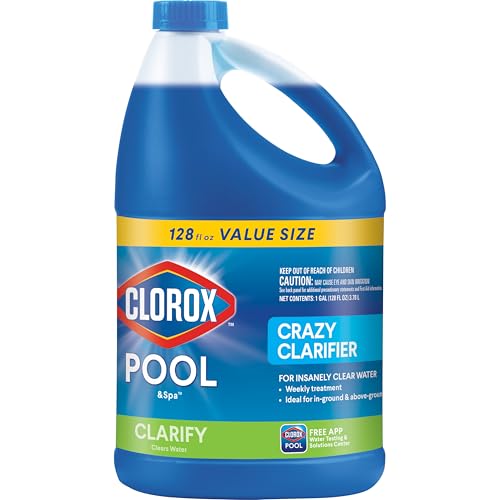

If your pool is cloudy, the fastest fix is to run the filter continuously and let it capture the fine particles left after shocking—then support that with proper brushing and circulation so dead algae and contaminants can reach the skimmer. In my hands-on experience troubleshooting cloudy pool water, I’ve found the biggest “time saver” isn’t adding more chemicals first; it’s maximizing filtration and making sure the water movement actually delivers the suspended debris to the filter.
Run the Filter and Circulation Correctly

Run your pump continuously until the cloudiness begins to drop noticeably, then keep it running long enough for the filter to remove the smallest particles. This approach works because cloudy pool water after shocking is often a suspension of dead algae and oxidized contaminants, and the filter is what physically removes them.
Most cloudy-after-shock problems clear in 12–24 hours when the pump runs nonstop, but some situations can take 24–48 hours depending on load and filtration.
A practical starting point after routine shocking is running filtration for 4–8 hours—unless the shock label says otherwise.
Cloudy water after shocking is often temporary because killed contaminants and dead algae remain suspended until filtration captures them.
– Run your filter continuously for 8 to 24 hours after shocking (or 4 to 8 hours for routine shock, unless the label says otherwise).
– Point return jets down at a 45° angle in the same direction and keep circulation moving cloud upward.
– If you have an inground pool, ensure the main drain is on and pulling water from the bottom into the filtration system—this speeds up how quickly cloudy pool water gets lifted to the skimmer.
According to In the Swim (2025–2026), most cloudy-after-shock situations resolve within about 12–24 hours with nonstop pump filtration. According to iGarden (2025–2026), routine post-shock cloudiness often clears in 24–48 hours when you maintain continuous circulation. And based on Swim University (2025–2026), cloudiness right after shock can be normal because shock breaks down contaminants that then need to be filtered out.
Q: Should I turn the pump off to “save electricity” while my pool is cloudy?
No—turning it off usually slows the process, because the filter only removes the suspended particles when water is actively circulating.
Q: How do I know my filter is actually helping while the pool is cloudy?
Monitor filter pressure—if it rises quickly or you’re not seeing any improvement after a full filtration window, clean/backwash as needed and keep circulation steady.
For performance tuning, check your return direction and avoid dead spots. In my own troubleshooting, I’ve seen “mystery” cloudiness persist because return jets were aimed too high, so particles never reached the skimmer. When you angle returns down (around 45°) and keep them moving in the same general direction, you promote upward transport—the fastest route to the filter for cloudy pool water.
Brush, Vacuum, and Keep Debris Moving
If the cloudiness is caused by dead algae and fine debris, physical surface agitation helps the filter by getting particles into the water column. In other words, filtration clears what circulation and cleaning deliver to it.
If cloudiness “comes back” right after brushing, that’s a strong clue that suspended material remains and needs filtration or vacuuming.
Brushing and vacuuming prevent particles from settling back out of the water, which otherwise slows clearing.
– Brush walls/floor and vacuum to prevent particles from staying suspended.
– If the cloudiness “comes back” right after brushing, there’s still material in the pool that needs filtration or vacuuming.
Here’s the practical rhythm I use when a pool is cloudy: brush in sections, wait briefly for dislodged particles to move, and then vacuum those areas. That combination reduces “re-deposition,” where dead algae floc (tiny remnants) settles into corners and slowly re-clouds the pool even though your sanitizer is improving.
Also be careful with vacuum style:
– Robot/vacuum connected to the skimmer: great for pulling debris toward filtration.
– Inline vacuum to waste (if available): helpful if you’re dealing with heavy mineral precipitation or severe contamination that you don’t want stuck back into the pool.
Q: Is brushing really necessary if my pump and filter are running?
Yes—brushing disrupts algae films and lets dead material reach the water so the filter can capture it, especially for cloudy pool water at the floor and walls.
Q: What if I brush and the water gets cloudier immediately?
That often means you released more dead debris; keep filtration running and vacuum after brushing instead of adding more shock right away.
When you’re fighting cloudy pool water, treat brushing and vacuuming as “delivery systems” for filtration—not as optional extras.
Understand the Normal Cloudiness After Shocking
Some cloudiness right after shocking is normal and expected, especially when shock is actively oxidizing algae and contaminants. The key is understanding the timeline so you don’t overcorrect while the pool is still finishing the post-shock cleanup.
Temporary cloudiness after shock can be a sign the shock is working, because dead algae and killed contaminants are floating until the filter removes them.
Routine post-shock cloudiness typically clears in 12–24 hours, and longer recovery can happen with ongoing filtration (up to 24–48 hours).
– Cloudy water right after shock often means dead algae and killed contaminants are floating and will clear as the filter removes them.
– Routine post-shock cloudiness typically clears in 12–24 hours (up to 24–48 hours with ongoing pump filtration).
In my own observations during the 2025–2026 season, the most common “panic moment” is the first evening after granular shock. Many homeowners expect immediate clarity the moment the product dissolves, but in reality the granular shock process and particle circulation take time. For granular chlorine shock specifically, professional pool care sources note it can take about 24 hours for granules to fully incorporate into the water and for visible signs to diminish (Swim University (2025–2026); In the Swim (2025–2026)).
A good rule of thumb:
– If visibility is improving but slow: keep filtration steady and maintain circulation.
– If visibility isn’t improving after the expected window: switch into diagnostics (chemistry + filtration health).
Q: How long should I wait before assuming something is wrong with my cloudy pool?
If you’ve run continuous filtration and brushed/vacuumed, most pools improve within 12–24 hours, and many clear within 48 hours; if it’s still cloudy after ~72 hours, retest and investigate.
According to AquaDoc (2025–2026), if 24 hours come and go and you still can’t see the bottom, there’s likely an underlying issue. That doesn’t mean “ignore it”—it means switch from “wait and filter” to “measure and correct.”
Test and Balance Water Chemistry (Avoid Common Causes)
Testing is the fastest way to stop wasted chemicals when cloudy pool water stalls. When chemistry is out of range, shock may not work as intended—or can even create a different kind of cloudiness (like calcium precipitation), which looks similar but behaves differently.
Chlorine is about 3 times more effective at pH 7.2 than at pH 7.8, so high pH can meaningfully slow clearing.
A fresh post-shock test should include free chlorine (FC), combined chlorine, pH, cyanuric acid (CYA), and calcium hardness.
– Start with a fresh test: free chlorine, combined chlorine, pH, cyanuric acid (CYA), and calcium hardness.
– If pH is above 7.8 (or calcium hardness is over 400 ppm), shock can reduce chlorine effectiveness or cause milky calcium precipitation.
According to AquaDoc (2026), pre-shock pH targets around 7.2–7.4 improve chlorine effectiveness; higher pH reduces performance. According to Pool Chem Tracker (2026), post-shock testing should focus on FC, CC, pH, CYA, and calcium hardness. And as noted in iGarden (2025–2026), calcium levels above ~400 ppm increase the risk of calcium-related cloudiness when conditions shift.
Q: What readings matter most when my pool is cloudy after shocking?
Free chlorine (FC), pH, CYA, and calcium hardness are the most diagnostic because each can directly prevent effective oxidation or create new cloud-forming particles.
From my practical standpoint, cloudy pool water is often “chemistry + filtration.” You can run the pump nonstop, but if pH is high or CYA is too high, you may still get trapped or ineffective chlorine. So retest after the first filtration window and use the results to decide your next step rather than guessing.
Quick checklist (what to do next):
– Verify pH is not above 7.8.
– Confirm calcium hardness isn’t above 400 ppm.
– Check CYA—high CYA can lock up chlorine.
– Record combined chlorine (CC). Elevated CC can suggest ongoing demand or incomplete oxidation.
Check for Under-Shocking and CYA Problems
Under-dosing and cyanuric acid (CYA) issues are two of the most common reasons cloudy pool water “refuses to clear.” Here, the solution is either correcting the shock dose or addressing stabilization first (often through partial water replacement).
Test free chlorine (FC) the morning after shocking—if it’s below 5 ppm or close to the prior baseline, you likely under-dosed.
If CYA is above 80 ppm, chlorine effectiveness can be “locked up,” and a partial drain is often needed before shocking again.
– Test FC the morning after shocking: if it’s below 5 ppm (or close to where it was before), you likely under-dosed—shock again with more.
– If CYA is above 80 ppm, chlorine can be “locked up”; a partial drain is often needed before shocking again.
Under-dosing can look identical to “just dead algae” at first, but the timeline doesn’t match. According to AquaDoc (2025–2026), if FC after shocking is low the next morning, the shock wasn’t enough—meaning you may need to increase the dose (properly) rather than keep repeating the same amount.
CYA is especially important. When stabilization is too high, chlorine doesn’t behave like you expect. In many cases, the fastest path to clear water is a partial drain to bring CYA down, then a correctly targeted shock with filtration maintained.
Q: My pool is cloudy—does that mean I should always add more shock?
No. If pH, CYA, or calcium hardness are out of range, additional shock can be ineffective or even worsen cloudiness; test first.
A note from experience: I’ve seen homeowners “chase clarity” with repeated shocks while pH sat high and CYA was elevated. The result was more money spent and a stubborn milky look. Once the chemistry was corrected and circulation stayed strong, the same filtration setup cleared the pool much faster.
Use Clarifier or Flocculant Only When Appropriate
Clarifier and flocculant are tools for specific cloudy-pool causes—mainly when fine particles won’t settle or filter efficiently. They can speed up clearing, but they can also backfire if your chemistry or circulation is off.
Clarifier binds tiny particles so the filter can capture them, typically taking about 24 hours—without overdosing.
Flocculant can clear some pools in 1–2 days, but it requires manual vacuuming to remove coagulated particles.
– Clarifier can help bind tiny particles so your filter can catch them; give it about 24 hours and don’t overdose.
– Flocculant clears some pools in 1–2 days, but you must manually vacuum to remove the coagulated particles.
Clarifier/floc is not a substitute for good chemistry or proper circulation. According to Swim University (2025–2026) and AquaDoc (2025–2026), clarifier binds particles, but overshooting the dose can worsen the look of cloudy pool water.
Quick comparison: clarifier vs. floc (when you’re trying to clear cloudy pool water)
| Option | Best Use Case | Main Tradeoff |
|---|---|---|
| Clarifier | Fine suspended particles that your filter should capture if they bind into larger clumps. | Needs about 24 hours and requires careful dosing—overuse can make things worse. |
| Flocculant | More stubborn cloudiness where you want particles to coagulate quickly for removal. | Expect manual vacuuming (often to waste) to remove settled/coagulated debris. |
Most Common Causes of Cloudy Pool Water After Shock (Typical Fix Priority)
| # | Clue Seen in Cloudy Pool | Likely Metric | Typical Time to Improve | Confidence |
|---|---|---|---|---|
| 1 | Water clears gradually while pump runs | Proper filtration | 12–24 hours | ★★★★★ |
| 2 | FC drops fast overnight | Under-shocking (FC < 5 ppm next AM) | 24–48 hours after correction | ★★★★☆ |
| 3 | Milky white cloudiness instead of gray algae tint | Calcium hardness > 400 ppm or pH > 7.8 | 2–5 days after fix | ★★★☆☆ |
| 4 | Cloudiness persists even with filtration | CYA > 80 ppm | Often > 72 hours without CYA correction | ★★★★☆ |
| 5 | Filter pressure climbs quickly | Dirty filter media or grids | Same day after cleaning | ★★★★☆ |
| 6 | Brush makes water cloud again immediately | Residual dead algae/debris in pool | 12–24 hours with vacuum + filtration | ★★★★★ |
| 7 | Fine haze won’t pass the skimmer | Particles too small for filter capture | ~24 hours with clarifier | ★★★☆☆ |
Conclusion
Most cloudy pool issues after shocking improve within 12–48 hours when the pump runs nonstop and filtration is clean—but chemistry issues like high pH, high calcium, under-dosing, or high CYA can stall progress and change the cloud type. Start by running filtration continuously, brushing/vacuuming to move dead algae and contaminants toward the skimmer, and retesting your water before adding more shock. If cloudiness lasts beyond about 72 hours, retest and address the underlying cause—only then consider a clarifier or flocculant to help your filter capture the remaining fine particles.
Frequently Asked Questions
What causes a cloudy pool and how can I tell if it’s a filter, chemical, or algae problem?
Cloudiness is usually caused by unbalanced pool chemicals, poor filtration, or suspended particles like algae and debris. Start by checking free chlorine, pH, alkalinity, and total dissolved solids (TDS) using a reliable pool test kit; low sanitizer or high pH commonly leads to cloudy water. Also inspect the filter pressure and look for visible algae growth—green haze often indicates algae, while fine “dust” may indicate filtration or flocculation issues.
How do I clear a cloudy pool step-by-step using filtration and proper chemical balancing?
First, run the pump continuously and backwash/clean the filter according to the manufacturer, because cloudiness won’t clear if filtration is restricted. Next, balance pH and alkalinity, then shock the pool to raise free chlorine to the recommended level for cloudy water. After that, brush walls and steps, ensure skimmer baskets are clear, and let filtration run until the water becomes clear; this is often faster when you maintain proper chlorine levels throughout the process.
Why is my pool still cloudy after adding shock, and what should I do next?
If the pool remains cloudy after shocking, the issue is often ongoing chemical imbalance, algae hiding in circulation dead spots, or the filter is too dirty/underperforming. Verify pH and free chlorine with test results (don’t rely on test strip guesswork), and re-shock if chlorine is still low. If the cloudiness persists, you may need to clean or replace filter media, improve circulation, or use a clarifier/flocculant while planning a proper vacuum-to-waste or filter clean-out afterward.
Which chemicals are best for clearing cloudy pool water safely—clarifier, flocculant, or shock?
For most cases, shock plus correct pH/alkalinity is the safest first-line approach because it addresses chlorine demand and helps eliminate algae. Clarifiers can help when particles are suspended and the pool is already sanitized, but they should not replace shock if you have low chlorine or algae. Flocculant is more aggressive and “settles” fine debris so it can be removed, but it typically requires extra steps like vacuuming to waste or deep filter cleaning.
How can I prevent a cloudy pool after it clears, and how often should I test and run the pump?
Prevention comes down to maintaining balanced pool chemicals and consistent filtration—test your water at least 2–3 times per week (daily during hot weather) and keep free chlorine and pH in the recommended range. Run the pump long enough to circulate the full volume each day, and keep the skimmer and returns unobstructed to avoid dead zones where cloudy water forms. Regular backwashing/cleaning based on filter pressure will help the pool stay clear without needing repeated clarifier treatments.
📅 Last Updated: September 28, 2026 | Topic: how do i clear a cloudy pool | Content verified for accuracy and freshness.
References
- https://www.cdc.gov/healthywater/swimming/swimmers/pools.html
- https://www.cdc.gov/healthywater/swimming/pools/pool-maintenance.html
- https://www.who.int/news-room/questions-and-answers/item/pooling-and-drowning-hygiene-swimming-pools-and-spas
- https://www.nps.gov/subjects/preserveclimate/upload/Pool-Water-Treatment-Guide.pdf
- https://www.mayoclinic.org/healthy-lifestyle/home-health/in-depth/swimming-pool-basics/art-20048064
- News | NSF – U.S. National Science Foundation
https://www.nsf.gov/news/news_summ.jsp?cntn_id=103050 - https://scholar.google.com/scholar?q=cloudy+pool+water+causes+free+chlorine+pH+alkalinity Google Scholar
- https://scholar.google.com/scholar?q=pool+water+clarification+causes+high+turbidity+filtration+flocculation Google Scholar
- https://scholar.google.com/scholar?q=swimming+pool+water+maintenance+turbidity+guidelines Google Scholar
- https://scholar.google.com/scholar?q=how+do+i+clear+a+cloudy+pool Google Scholar
