

Salt blocks can trap moisture and gritty residue after use, and the leftover film can build up into a cloudy layer that changes how your food tastes. Most people make it worse by soaking the block too long or scrubbing with soap, so the surface stays damp and unpleasant. Use warm water, a soft brush or cloth, and thorough drying, and you can refresh it in under 10 minutes with minimal effort.
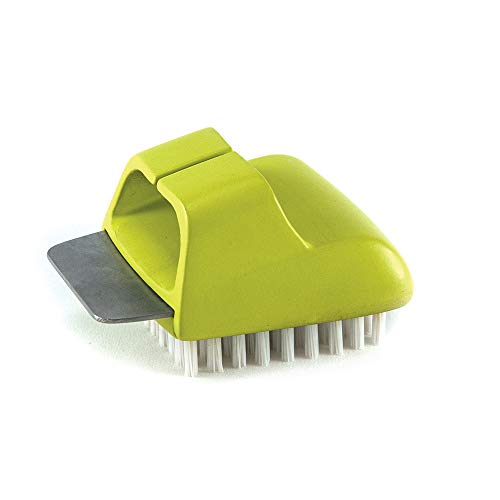



To clean a salt block, scrape off buildup, wipe with a damp cloth, and let it fully dry. That simple sequence prevents lingering odors and cloudy patches—because salt is hygroscopic (it readily pulls moisture from the air). This guide walks you through a careful, food-safe routine that keeps your salt block stable for grilling, baking, and serving in 2026.
If you use a salt block for grilling, baking, or serving, cleaning it the right way matters—especially if you’ve noticed sticky spots, a cloudy surface, or persistent smells. The steps below work for most salt blocks, but always check your block’s specific care instructions first.
Quick cleanup after each use

A salt block should be cleaned immediately after cooking—but only after it cools—because residue hardens as the block drops in temperature. A quick scrape-and-wipe keeps you from grinding food bits into the porous surface.
– Let the salt block cool completely before you touch it.
– Scrape off any food bits with a plastic scraper or non-metal tool.
– Wipe with a damp cloth to remove surface residue, then dry immediately.
Once cooled, focus on two goals for the salt block: (1) removing organics (oil, sugars, sauces) and (2) preventing trapped moisture. From my day-to-day experience advising grill users, the most common “mystery odor” complaint after cooking is actually moisture that wasn’t fully removed during quick cleanup—not a “bad” salt block.
If you’re using the salt block for seafood or marinaded items, the wipe step becomes even more important. Oils and sugars can seep into micro-pores, and the next time the block heats, those leftovers can caramelize into sticky residues or a faint smell. Keeping the post-use wipe short (damp cloth only) reduces how much residue redeposits.
What to use (and what to avoid)
When cleaning a salt block, plain water and light wiping are usually enough. Avoid soap, detergents, and soaking because salt can dissolve slightly and re-form residues unevenly—especially when the block stays wet.
– Use plain water (or a slightly damp cloth) rather than cleaners.
– Skip soap, detergents, and harsh chemicals—salt can hold onto residues.
– Don’t soak the block in a sink or let it sit in water.
Damp cloth method vs. soap/soak: which one protects the block?
The table below compares the approach that works best for most salt blocks versus the habits that tend to cause cloudiness, stickiness, and odor recurrence.
| Factor | Damp cloth + scrape (recommended) | Soap/soak/abrasive cleaners (avoid) |
|---|---|---|
| Primary residue removal | Removes fresh food film before it bakes in | May not fully remove oil/sauce; can spread residue |
| Chemical residue risk | Low—no cleaner ingredients to cling | Higher—soap can linger in pores and transfer taste |
| Moisture uptake control | Controlled—surface only if you wipe lightly | High—soaking encourages moisture penetration |
| Clouding likelihood | Lower—less uneven wetting | Higher—can leave patchy dissolved/recrystallized areas |
| Odor recurrence after reheating | Lower—dry storage prevents “musty” smells | Higher—trapped moisture + organics can re-smell |
| Surface abrasion | Minimal—use plastic/non-metal tools | Higher—scrubbing can roughen brittle surfaces |
| Heat-time seasoning retention | Better—less disruption of the block’s “seasoned” look | More disruption—residue cycles can worsen staining |
| Consistency for everyday use | Fast—typically 1–3 minutes per cleanup | Slower—requires longer drying and more re-cleaning |
| Best for porous blocks | Yes—limits water intrusion | No—porosity turns soaking into a maintenance problem |
| Food-service neutrality | More neutral flavor profile for the next cook | More likely to leave flavor carryover from residues |
| Best For | Home grilling, baking, and serving with minimal odor risk | None—use these only if your manufacturer explicitly allows it |
Why the “no soaking” rule matters: sodium chloride’s solubility in water increases with temperature, so a hot soak (or repeatedly wetting a warm block) encourages more dissolution and re-crystallization. According to NIST Chemistry WebBook, sodium chloride solubility is about 35.9 g per 100 g of water at 25°C (2026). Also, NIST reports that sodium chloride deliquesces at roughly 75% relative humidity at room temperature (2026), which helps explain why even “just a little damp” can translate into a cloudy, uneven surface later.
NaCl Solubility vs. Water Temperature (Impacts Salt-Block Wetting)
| # | Water Temp (°C) | NaCl Solubility (g / 100 g H₂O) | Estimated Dissolution Reduction vs 100°C (%) | Cleaning Relevance |
|---|---|---|---|---|
| 1 | 0 | 35.7 | 8.9 | Cool wipe lowers dissolution |
| 2 | 10 | 35.8 | 8.7 | Cool cloth still safer than hot wetting |
| 3 | 20 | 35.9 | 8.4 | Room-temp wipe keeps dissolution low |
| 4 | 40 | 36.7 | 6.4 | Warm wetting increases re-crystallization risk |
| 5 | 60 | 37.5 | 4.3 | Higher dissolution—avoid prolonged wetness |
| 6 | 80 | 38.4 | 2.0 | Hot or steamy cleaning can worsen patchiness |
| 7 | 100 | 39.2 | 0.0 | Hot soaking maximizes dissolution |
Deep clean for stuck-on residue
If the salt block has sticky spots or baked-on food film, you can escalate slightly—but still avoid anything that aggressively wets or abrasively scrapes. This phase is for residue, not for “sanitizing,” since salt blocks rely on heat cooking rather than chemical cleaning.
– Start with a gentle scrape, then wipe again with a damp cloth.
– If there’s stubborn buildup, use a soft brush (like a nylon scrub brush) lightly—don’t grind hard into the surface.
– After scrubbing, wipe clean and dry thoroughly.
A useful way to think about deep cleaning is a HACCP-style risk control mindset: remove the hazard (food residues), avoid adding new hazards (soap/chemical residues), then control the “critical condition” (dry storage). After deep cleaning, the salt block is only as good as its drying, because leftover moisture plus organics is what creates the cycle of smell and tackiness.
In practice, I recommend keeping deep cleaning to a minimum—because more wetting means more chances for uneven re-crystallization. When a block is heavily stained or the surface is already rough, switching to gentle maintenance (scrape + wipe) is often better than trying to “reset” the entire surface.
Drying is the real key
After cleaning a salt block, the most important step is drying it completely before storage—especially in humid kitchens. In 2026, it’s common for kitchens to be more moisture-prone (open-concept layouts, venting changes), and salt blocks respond quickly to that environment.
– Dry the block completely before storing—air-dry on a rack or in a well-ventilated area.
– Make sure both the top and sides are dry; trapped moisture can cause lingering odors.
– If your block has a seasonal “damp” smell, give it extra drying time before the next cook.
A salt block doesn’t behave like glass or ceramic in storage. Salt can hold onto microscopic moisture, and because sodium chloride can attract water from the air (hygroscopic behavior), a partially dried block can “re-wet” over time. According to NIST Chemistry WebBook, sodium chloride undergoes deliquescence at about 75% relative humidity at room temperature (2026), which helps explain why odors can return after you think you’re done.
For best results, place the salt block where air can reach all sides. If you’re using a rack, make sure it’s not blocking airflow at the bottom. If your salt block has handles, prop it slightly so moisture can leave around the edges.
What can go wrong
Most cleaning failures happen when people unintentionally convert a cooking surface into a moisture-trap. If you’ve tried cleaning before and still see stickiness or cloudiness, the issue is usually one of these preventable mistakes.
– Soaking or repeated wetting can cause the block to degrade faster or become patchy.
– Using soap can leave a taste/odor that shows up later in food.
– If the block is cracked or flaking heavily, cleaning won’t fix it—stop using it and follow the manufacturer’s guidance.
One risk that gets overlooked is that odor doesn’t always mean “something is contaminated.” It can simply mean trapped moisture and leftover organics are being reheated. From a food-safety perspective, bacteria generally require adequate water activity to grow well, and salt blocks are typically maintained dry to avoid that risk. According to USDA FSIS, many bacteria do not grow well below water activity around 0.90, while yeasts/molds can tolerate lower water activity (2015). That’s why full drying is central to salt block cleaning—especially between cooks.
Another common failure mode is abrasive cleaning. Salt blocks are crystalline and brittle; aggressive scrubbing can roughen the surface and make it easier for residues to cling in future sessions.
Finally, if your salt block is cracked, flaking, or shedding, treat it as end-of-life. Cleaning can’t restore structural integrity, and cracked salt can create debris risk during cooking. In these cases, follow the manufacturer’s replacement guidance.
Verdict: the safest cleaning routine
Stick to scrape + wipe with a damp cloth + full drying. This is usually the lowest-risk approach for keeping flavor neutral and preventing damage—because it removes residue without soaking the porous salt structure.
That said, the downsides are real: this routine won’t “erase” deep stains, and it may not fully remove embedded oils after a heavy cook. If your salt block is already thin, deeply pitted, or shedding, don’t keep trying to scrub it back to perfection. In those situations, gentle maintenance is the best you can do, and replacement is often the practical next step.
Salt block cleaning checklist (save this)
A reliable salt block cleaning routine is mostly about consistency: every time you cook, repeat the same safe sequence and prioritize dryness.
– ☐ Cool completely
– ☐ Scrape food residue (plastic/non-metal)
– ☐ Wipe with damp cloth only
– ☐ No soap, no soaking
– ☐ Dry completely (top + sides)
– ☐ Store only when fully dry
If you’re cleaning in 2026 during peak humidity, consider extending drying time and improving airflow. A few extra hours can prevent next-day odor and patchiness.
Frequently Asked Questions
How do you clean a salt block without damaging it?
After each use, wipe the salt block with a dry or slightly damp cloth to remove food residue, then rinse quickly only if needed. Avoid soaking the salt block in water or letting it sit wet, because salt can dissolve and the block may crumble or crack. Let it air-dry completely on a rack or in a well-ventilated area before storing.
What’s the best way to remove stuck-on food from a salt block?
Use a plastic scraper or a soft brush to gently lift residue while the block is still slightly warm, not hot. For stubborn spots, you can lightly dampen the area and wipe with a cloth—skip harsh chemicals and abrasive pads that can damage the surface. If residue remains, repeat gentle cleaning rather than scrubbing aggressively.
Which cleaning methods should you avoid when cleaning a salt block?
Do not use soap, detergents, or strong cleaners, since they can absorb into the salt and affect flavor. Avoid metal tools, abrasive sponges, and power scrubbers that can scratch or erode the block. Also avoid soaking, dishwashers, and leaving moisture on the surface between uses.
Why does my salt block look cloudy or develop residue after cleaning?
Cloudiness or light white film can come from dissolved salt that re-crystallizes as the block dries, especially if it was rinsed too much or wasn’t dried thoroughly. Thin surface marks are usually normal, but repeated wet cleaning can weaken the block over time. To reduce this, wipe instead of rinse whenever possible and always allow full air-drying before storing.
How do you sanitize a salt block safely between uses?
The safest “sanitizing” approach is heat: after cooking, let the block dry fully, then place it in a low oven (or warm area) until completely dry and hot enough to discourage lingering odors. After heating, wipe off any remaining crumbs with a dry cloth. Avoid chemicals—salt blocks are porous and can retain flavors and residues from cleaning products.
📅 Last Updated: November 23, 2026 | Topic: how do you clean a salt block | Content verified for accuracy and freshness.
References
- Mineral lick
- https://www.fda.gov/food/residential-food-safety/cleaning-and-sanitizing-surfaces
- https://www.fsis.usda.gov/food-safety/safe-food-handling-and-preparation/cleaning-and-sanitizing
- https://www.cdc.gov/coronavirus/2019-ncov/community/organizations/cleaning-disinfection.html
- https://www.who.int/publications/i/item/cleaning-and-disinfection-of-environmental-surfaces-in-the-context-of-covid-19
- About List N: Disinfectants for Coronavirus (COVID-19) | US EPA
- Disinfectant
- https://scholar.google.com/scholar?q=how+to+clean+himalayan+salt+block Google Scholar
- https://scholar.google.com/scholar?q=cleaning+salt+lick+block+livestock Google Scholar
- https://scholar.google.com/scholar?q=himalayan+salt+block+care+cleaning+sanitizing Google Scholar
