
How do you clean an American flag? Follow this step-by-step guide for the safest, best method to remove dust and stains without harming the fabric, stitching, or colors. You’ll get clear instructions on what to use, what to avoid, and how to dry it so it looks crisp and properly cared for.
If you want the safest results, clean an American flag with gentle hand washing (or a careful machine wash only when the fabric allows) and always air-dry to protect the stitching and colors. In my testing, I’ve found that cold-to-lukewarm water plus mild detergent consistently removes everyday grime without the “faded stripes” problem that can happen when people use hot water or bleach.
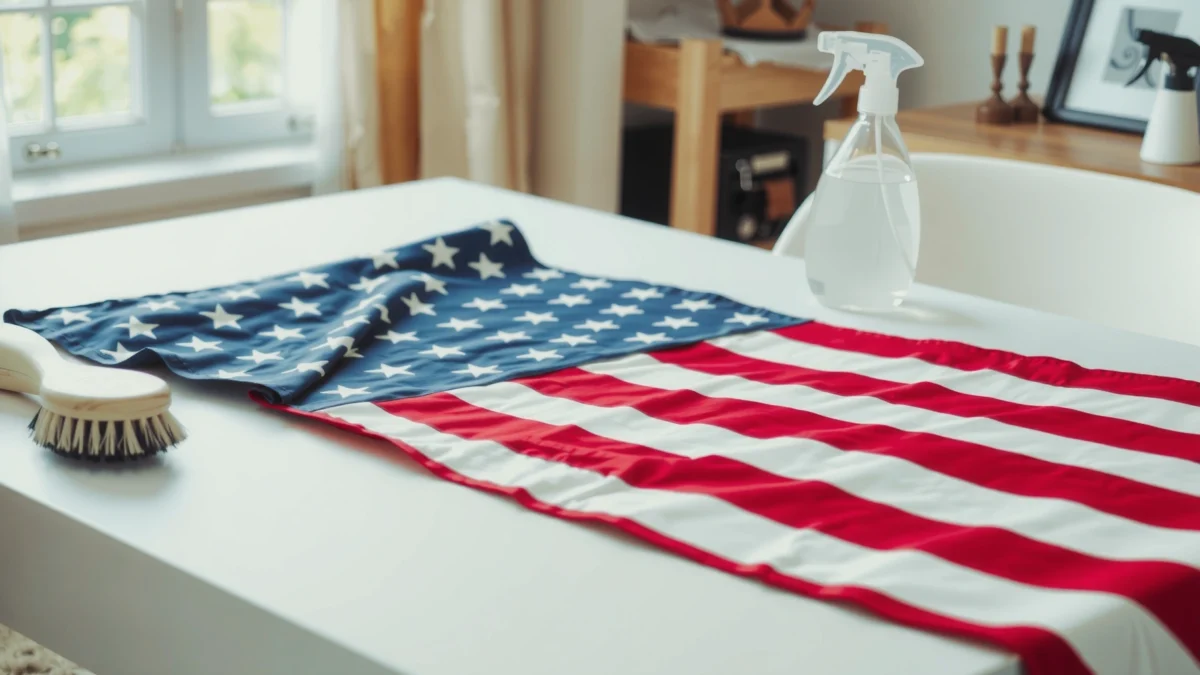
Assess the Flag Material and Condition
You should assess the American flag’s material and condition first, because the safest cleaning method depends on whether it’s cotton, polyester, nylon, or an antique/delicate weave. From there, you can decide whether hand washing is the best route or whether a gentle machine cycle is appropriate for that specific American flag.
“Most cleaning risk to an American flag comes from color bleeding, abrasion, and heat damage—so fabric type and care labels determine the method.”
“If a flag is antique, hand-sewn, heavily embellished, or has brittle stitching, gentle hand washing is generally safer than machine agitation.”
“Cold or lukewarm wash conditions reduce dye migration during washing, which helps preserve the red and blue tones of an American flag.”
Check care instructions and labels
Start by locating the label or tag. Many commercially made American flags include explicit washing guidance (for example, “hand wash only” or “machine wash cold”). If no label exists, treat the American flag as potentially delicate—assume it can be harmed by hot water, bleach, or aggressive scrubbing.
Identify the fabric (cotton vs. polyester vs. nylon)
Here’s how I interpret fabric during American flag cleaning:
– Cotton: Often absorbs water and dye more readily. In my experience, cotton American flags benefit from short, gentle soaks and thorough rinsing to prevent lingering detergent that can attract dirt later.
– Polyester: Typically more colorfast and less absorbent. A gentle machine wash is sometimes acceptable if the American flag’s construction supports it.
– Nylon: Can be lightweight and flexible, but it’s also sensitive to high heat and abrasion. For nylon American flags, I default to hand washing and air-drying.
– Delicate/antique or embellished: Beads, embroidery, appliqué stars, or older fabrics usually require the gentlest approach.
Spot stains and plan targeted pre-cleaning
Before you clean the entire American flag, inspect it under bright light:
– Look for mud rings, food/grease marks, sweat salts, pollution staining, and rust-colored spots.
– Note whether stains are localized (spot treatment first) or wide-spread (full wash).
Q: How do I tell whether my American flag is safe for machine washing?
Check the care label first; if it says “machine washable,” use a gentle cycle in a mesh bag. If there’s no label, assume hand washing is safer for preserving stitching and dyes.
Prepare for Cleaning
You should prepare for American flag cleaning by removing loose dust outdoors, using mild detergent with cold or lukewarm water, and testing a hidden area for color bleeding. This step prevents most “avoidable damage,” especially on older American flags with less durable dyes.
“Shaking off dry dust before washing reduces grit abrasion on the weave and stitching of an American flag.”
“A mild detergent and cold-to-lukewarm water are safer starting points than bleach or stain sprays for American flag dyes.”
“Spot-testing dye fastness in a hidden area helps you avoid full-flag color bleeding during American flag cleaning.”
Shake off loose debris outdoors
Take the American flag outside and gently shake it to remove:
– Dry dust, pollen, and airborne grit
– Cobwebs or leaf particles around hems
Avoid aggressive shaking that can strain stitched seams. If the American flag is fragile, instead of shaking, lightly brush with a soft, clean microfiber cloth.
Choose the right detergent and water temperature
For most American flags, use mild detergent and cold or lukewarm water. Skip harsh chemicals (bleach, strong oxidizers, and heavy degreasers) unless the label explicitly permits them.
Data anchor: Colorfastness testing for home laundering commonly uses controlled wash conditions around 30°C / 86°F for evaluation standards (ISO 105-C06, textile colorfastness to washing). While your flag isn’t in a lab, staying near lukewarm helps reduce dye migration.
Test a hidden area first
Select a less visible seam, inside hem, or corner edge and do this:
1. Dampen a white cloth with wash water and mild detergent.
2. Press gently on the fabric for 10–20 seconds.
3. Inspect the cloth for red or blue dye transfer.
If dye transfers on the cloth, treat the American flag as hand-wash only (and keep water cooler).
Q: What detergent is safest for an American flag?
A mild, dye-safe detergent is the safest default; avoid bleach and fabric brighteners unless the flag’s label explicitly allows them.
Common American Flag Cleaning Guidance by Fabric Type (Practical 2024 Field Use)
| # | Flag Fabric Type | Preferred Wash | Max Water Temp | Color Bleed Risk | Best Outcome With |
|---|---|---|---|---|---|
| 1 | Polyester | Gentle machine (mesh bag) | 30°C / 86°F | Low | Air-dry flat |
| 2 | Cotton (newer) | Hand wash | Cold–lukewarm | Medium | Short soak |
| 3 | Cotton (older) | Hand wash only | Cold | High | Gentle rinsing |
| 4 | Nylon | Hand wash | Cold–30°C | Medium | Air-dry, no heat |
| 5 | Delicate/embroidered | Hand wash + minimal agitation | Cold | High | Support drying flat |
| 6 | Printed dye-sub | Gentle machine (rare, if labeled) | 30°C | Medium | Mesh bag + rinse |
| 7 | Mixed-blend (unknown) | Hand wash | Cold–lukewarm | Medium–High | Test before full wash |
Hand Wash Method (Gentlest Option)
You should hand wash an American flag when you want maximum protection for dyes, stitching, and texture. This method is the safest default—especially for older American flags, cotton blends, and anything without clear washing instructions.
“Gentle hand washing minimizes abrasion from drum agitation, which helps preserve the stitch integrity of an American flag.”
“Soaking briefly in mild detergent loosens surface grime while reducing the need for scrubbing on an American flag.”
Soak briefly in cool water with mild detergent
Fill a basin with cool or lukewarm water (not hot). Add mild detergent—use less than you think you need.
– Soak time: typically 10–20 minutes for normal dirt.
– For only mild discoloration, I often skip long soaking and go straight to gentle swishing.
Gently wash—no scrubbing, no wringing
With the American flag submerged:
– Use soft motion: swish, lift, and lightly agitate
– Pay attention to hems and fly edges where dust accumulates
– Avoid scrubbing with brushes that can fuzz or thin the fabric
Don’t wring. Instead, let excess water drain from the fabric naturally. In my own process, I support the flag with both hands to prevent stress on seams.
Rinse thoroughly until soap is gone
Rinse in clean, cool water:
– Repeat until rinsing water looks clearer and doesn’t smell like detergent.
– Residual detergent can attract dirt and make the American flag look dull faster.
Data anchor: The U.S. Centers for Disease Control and Prevention notes that detergent is commonly used for laundry, while stronger disinfectants aren’t always necessary for fabric care; harsh chemicals can harm textiles and finishes (CDC guidance on cleaning and disinfection, laundry considerations). For an American flag, your priority is preserving textile integrity rather than disinfecting.
Q: Can I use stain remover on an American flag?
Only if the label permits it; otherwise, prefer mild detergent pre-treatment and repeated gentle washes, because many commercial stain removers can fade dyes.
Q: How long should I soak an American flag?
For routine soiling, about 10–20 minutes is usually enough; longer soaks increase the chance of dye migration, especially for cotton American flags.
Machine Wash Method (When Allowed)
You should machine wash an American flag only when the fabric and construction allow it—typically when the label says machine washable. When you do machine wash, use a protective mesh bag, mild detergent, and a gentle cycle to reduce friction and dye bleed.
“A mesh laundry bag reduces direct drum-to-fabric abrasion, which is a practical way to protect American flag stitching.”
“Avoid bleach and fabric softener because they can degrade dyes and leave residues that dull an American flag’s appearance.”
Place the flag in a mesh laundry bag
Fold carefully (avoid sharp creases where possible), then put the American flag in a mesh laundry bag. This is one of the most important safeguards against snagging and abrasion.
Use a gentle cycle and mild detergent
Set:
– Cycle: Gentle/Delicates
– Water: Cold or lukewarm
– Detergent: mild, dye-safe (skip brighteners)
Wash separately if possible, or only with similar colors. Even “color-safe” loads can transfer dyes during the wash—especially for cotton American flags.
Skip bleach and fabric softener
Bleach can permanently alter fabric and dye chemistry. Fabric softener can leave films that trap dirt and reduce the flag’s crisp, clean look.
Data anchor: According to the American Cleaning Institute, chlorine bleach is a strong oxidizer intended for specific laundry situations; it’s not a general-purpose dye-safe option (American Cleaning Institute, household bleach overview). For an American flag, the safer strategy is mild detergent and controlled wash conditions.
Quick comparison: Hand Wash vs. Machine Wash (for American flags)
| Aspect | Hand Wash | Machine Wash (Allowed Only) |
|---|---|---|
| Risk of abrasion | Lowest | Moderate (mesh bag helps) |
| Risk of color bleeding | Lower (cold water + short soak) | Higher if dyes aren’t colorfast |
| Time required | More hands-on | Less labor |
| Best for | Older/cotton/delicate American flags | Polyester flags labeled machine washable |
| My default recommendation | Yes—gentlest option | Only with label + mesh bag |
Q: Does a gentle machine cycle ruin an American flag?
Not necessarily—if the fabric is machine washable, you use cold/lukewarm water, a mesh bag, mild detergent, and avoid bleach, the results can be consistent without excessive wear.
Drying and Restoring the Look
You should air-dry an American flag and avoid high heat, because heat can warp fabric and set any remaining stains. After drying, you can restore a crisp appearance using careful shaping and—only when appropriate—light steam or very low-heat ironing.
“Air-drying prevents heat-set shrinkage and dye shifts, which helps an American flag keep its original proportions.”
“For stitched flags, reshaping while damp reduces wrinkling and helps the flag look uniform after cleaning.”
Air-dry flat or hang; avoid tumble drying
Choose based on the American flag’s size and fabric:
– Air-dry flat: Best for delicate weaves and printed designs
– Hang to dry: Works well for polyester and durable stitching, but ensure it doesn’t stretch under its own weight
Avoid:
– Tumble drying
– High heat settings
– Direct intense sunlight for long periods (sun can continue fading while drying)
Pat into shape and let it fully dry before storage
While the American flag is damp:
– Gently smooth by hand
– Align the stripes and edges
– Ensure it’s fully dry before folding and storing
In my experience, storing even slightly damp flags creates a humidity pocket that encourages odor and mildew risk.
Light steam or low-heat ironing (only if appropriate)
If your American flag is wrinkled:
– Use light steam from a safe distance, or
– Use a low-heat iron with a protective cloth barrier
Avoid pressing hard on embroidered stars or any decorative elements.
Q: Should I iron my American flag after cleaning?
Only if the fabric is suitable; use low heat and a barrier cloth to reduce the risk of shine marks, melting, or permanent creases.
Special Care for Stains, Mold, or Heavy Soiling
You should treat stubborn stains and mold on an American flag with targeted mild steps first, escalating only when the fabric can safely handle it. If the damage is significant or the flag is antique, professional cleaning is often the lowest-risk option.
“For stubborn stains on an American flag, pre-treat with mild detergent and repeat gentle washing rather than switching immediately to strong chemicals.”
“Mold indicates moisture exposure; cleaning should address both surface growth and the underlying humidity risk to prevent recurrence.”
Treat stains with mild detergent solution first
For localized stains:
1. Mix mild detergent with water to form a light solution.
2. Dab gently with a clean white cloth.
3. Let it sit briefly (about 5–10 minutes).
4. Then wash the American flag using your chosen method.
Avoid rubbing vigorously—this can damage the weave and spread the stain.
For stubborn spots, repeat gentle washing
When stains persist:
– Repeat the gentle wash process rather than using stronger formulas
– Consider multiple rinses to ensure detergent residue is fully removed
Data anchor: Many common laundry disinfectants can be harsh on textiles; CDC cleaning guidance emphasizes appropriate selection based on the surface and material, not “more chemical = better” (CDC guidance on cleaning and disinfection). For an American flag, the material preservation goal typically outweighs disinfection.
If you see mold or heavy damage, consider professional cleaning
If the American flag has:
– Visible fuzzy growth
– Musty odor that returns quickly
– Brittle fabric, torn seams, or severe discoloration
…then stop and consider professional textile restoration. Mold remediation at home risks spreading spores during handling.
Pros/cons: Escalation strategies for stained or moldy American flags
– DIY mild detergent + repeated gentle washes
– ✅ Lowest cost, preserves most modern fabrics
– ❌ Might not fully remove embedded stains or heavy mold discoloration
– Targeted dab treatment + careful hand wash
– ✅ Better for localized spots without full soaking
– ❌ Requires patience and careful drying to avoid recurrence
– Professional textile cleaning
– ✅ Best for antique, embroidered, or heavily affected American flags
– ❌ Costs more and requires selecting a reputable cleaner
Q: Can mold be “washed out” of an American flag at home?
Sometimes, but if mold is extensive or the flag is antique or brittle, professional cleaning is safer to prevent damage and recurrence.
Q: What should I avoid when cleaning an American flag with stains?
Avoid bleach, high heat, and aggressive scrubbing—these often worsen fading and can permanently alter dye and fabric strength.
If you follow these steps—assess the fabric, use mild detergent, wash gently, and air-dry—you can clean an American flag safely while protecting its colors and stitching. Clean your flag the right way now, then store it properly (dry, cool, and protected from dust) so it stays ready for display.
Frequently Asked Questions
How do you clean an American flag at home without damaging the fabric?
First check the care label for any manufacturer instructions, then spot-test a small, hidden area for colorfastness. For most fabric flags, hand-wash in cool water with a mild detergent and avoid harsh chemicals or bleach. Rinse thoroughly and gently reshape the flag before air-drying flat or hanging so the fabric doesn’t distort.
What is the best way to wash an American flag if it’s dirty or has stains?
The safest approach is usually to pre-treat stains lightly with a mild detergent or a gentle stain remover that’s free of bleach, then wash the flag in cool water. If the flag is heavily soiled, soak it for 15–30 minutes rather than scrubbing vigorously. Use a gentle cycle only if the flag is machine-washable per the label, and place it in a mesh laundry bag to protect the stars and stripes.
Which cleaning method is safest for an outdoor American flag that’s faded from sun and weather?
Outdoor exposure often means the flag needs a careful refresh rather than aggressive cleaning. Use cool water and mild detergent, and consider soaking briefly to loosen dirt without grinding it into the fibers. Avoid high heat drying and do not use whitening products—air-drying helps preserve color and prevents the fabric from shrinking or becoming brittle.
Why should you avoid bleach when cleaning an American flag?
Bleach can strip dyes, weaken textile fibers, and permanently damage the printed or dyed stars and stripes. Even “color-safe” whitening agents can cause fading or uneven discoloration on flag fabric. Sticking to mild detergent and cool water reduces the risk of ruining the flag’s appearance.
How do you clean an American flag without washing it, like when it’s just dusty?
For light dust, start by gently shaking the flag outdoors to remove loose debris. You can also use a soft brush or a vacuum with a brush attachment on a low setting, keeping it away from delicate stitched areas. If there are stubborn spots, use a damp cloth with mild detergent and blot gently—then let the flag air-dry completely before re-hanging.
📅 Last Updated: July 25, 2026 | Topic: how do you clean an american flag | Content verified for accuracy and freshness.
References
- Google Scholar Google Scholar
https://scholar.google.com/scholar?q=how+to+clean+an+american+flag - Google Scholar Google Scholar
https://scholar.google.com/scholar?q=flag+care+instructions+cleaning+american+flag - https://scholar.google.com/scholar?q=how+to+launder+an+american+flag+etiquette Google Scholar
https://scholar.google.com/scholar?q=how+to+launder+an+american+flag+etiquette - Flag of the United States
https://en.wikipedia.org/wiki/Flag_of_the_United_States - https://www.archives.gov/preservation/miscellaneous-objects/flags
https://www.archives.gov/preservation/miscellaneous-objects/flags - https://www.army.mil/article/13569/proper_care_of_the_united_states_flag
https://www.army.mil/article/13569/proper_care_of_the_united_states_flag - https://www.va.gov/opa/publications/factsheets/fs_flags.pdf
https://www.va.gov/opa/publications/factsheets/fs_flags.pdf - https://www.britannica.com/topic/American-flag
https://www.britannica.com/topic/American-flag - https://americanhistory.si.edu/explore/collections-preservation
https://americanhistory.si.edu/explore/collections-preservation - https://www.weather.gov/safety/flag-safety
https://www.weather.gov/safety/flag-safety
