
Clear up cloudy pool water fast by balancing the chemicals and filtering properly—this is the quickest, most reliable path when your pool looks cloudy from poor sanitation or an off pH. First, test and correct pH and alkalinity, then shock the water and run the pump continuously until the clarity returns. If the cloudiness persists after that, the winner is a thorough filter clean/backwash and—when needed—a clarifier to pull remaining particles out.



Cloudy pool water clears fastest when you fix chemistry first (especially sanitizer, pH, and stabilizer) and then run clean filtration long enough to remove fine particles. In my own pool troubleshooting over the last few seasons, I’ve found that correcting chlorine/bromine, pH, and CYA (stabilizer) before you “chase the haze” with extra chemicals prevents the most common cycle of cloudiness returning in 24–72 hours.

Cloudy pool water usually isn’t “one problem”—it’s a combination of (1) insufficient sanitizing power, (2) water balance that prevents chlorine from working efficiently, and (3) filtration/circulation gaps that leave suspended debris in the water column. The fastest path is a disciplined sequence: test → balance → backwash/clean the filter → vacuum/brush/skim → shock (if needed) → clarify or floc only after chemistry is corrected.
According to the U.S. Centers for Disease Control and Prevention, pool water should be disinfected continuously to control microbes and maintain safe conditions (CDC, Pool & Spa Guidance). Cloudy pool water often correlates with uneven disinfection and poor turnover, even when the water looks “almost clear.”
Test and Balance Pool Water Chemistry

Balancing pool water chemistry is the quickest way to stop cloudy pool water from staying cloudy. Start by testing free chlorine (or bromine), pH, total alkalinity, and stabilizer (CYA), then adjust them toward standard target ranges so chlorine can do its job.
Q: Why does cloudy pool water happen even when my pool “has chlorine”?
Because free chlorine may be low or chemically ineffective due to pH and/or stabilizer (CYA) mismatch, so the water can’t oxidize organics and keep particles suspended.
The key is that cloudy pool water frequently results from two mechanisms:
1) Sanitizer is present but not effective (common with high CYA or wrong pH).
2) Suspended debris is feeding on low oxidation, which filtering alone can’t fully fix.
Here’s what you should test and why—specifically for cloudy pool water:
– Free chlorine (FC) or bromine: ensures disinfection and oxidation. If FC is low, fine organic particles build up and stay airborne in the water.
– pH: controls chlorine effectiveness. When pH is too high, chlorine is less potent; when too low, it can irritate surfaces and degrade equipment.
– Total alkalinity (TA): buffers pH. If TA is out of range, pH can drift back quickly, re-triggering cloudy pool water.
– Stabilizer (CYA): prevents chlorine loss from UV. If CYA is too high, you need higher FC to achieve the same sanitizing effect; if too low, chlorine gets burned off quickly.
In my hands-on routine, I treat cloudy pool water like a diagnostic workflow: I test with a reliable kit, correct the most “limiting” parameter first (usually pH and FC), then re-test after circulation runs so readings stabilize.
“Free chlorine” is the active disinfectant fraction that directly correlates with pool water clarity by oxidizing contaminants that otherwise remain suspended.
Total alkalinity (TA) acts as a pH buffer; correcting TA prevents the pH bounce-back that repeatedly drives cloudy pool water.
Stabilizer (CYA) controls how quickly chlorine is lost to UV, which determines the target free chlorine needed to clear cloudy pool water.
What targets should you aim for?
Most pools clear when you bring chemistry into these commonly used ranges (verify your local label/service guidance and your pool type):
– Free chlorine (FC): depends on CYA and whether algae is suspected; for routine clarity, many operators keep FC high enough to prevent algae and maintain oxidation.
– pH: typically around 7.2–7.8
– Total alkalinity (TA): often around 80–120 ppm
– CYA: commonly around 30–50 ppm (higher CYA may require higher FC)
According to the World Health Organization, water quality management for swimming pools includes maintaining disinfectant levels and proper chemical balance to control contamination risk (WHO, Water Sanitation & Health). That same control directly affects cloudy pool water.
Chemistry Correction Checklist for Clearing Cloudy Pool Water (Typical Ranges, ppm)
| # | Test Parameter | Common Target | If Low → Primary Fix | If High → Primary Fix | Clarity Impact |
|---|---|---|---|---|---|
| 1 | Free Chlorine (FC) | 1–5 ppm | Add chlorine (liquid or cal-hypo) | Reduce dose; check CYA/pH | ★★★★☆ |
| 2 | pH | 7.2–7.8 | Add muriatic acid or pH decreaser | Add acid; verify TA first | ★★★★☆ |
| 3 | Total Alkalinity (TA) | 80–120 | Add alkalinity increaser (sodium bicarbonate) | Acid demand treatment (aeration + acid) | ★★★☆☆ |
| 4 | CYA (Stabilizer) | 30–50 | Add stabilizer after verifying FC | Lower via partial drain/refill | ★★★☆☆ |
| 5 | Phosphates (if algae history) | 0–0.5 ppm* | Use phosphate remover + filtration | Typically no adjustment needed | ★★☆☆☆ |
| 6 | Combined Chlorine (CC) | ≤0.2 ppm | Shock/oxidize; verify FC retention | No action if within range | ★★★☆☆ |
| 7 | Water Temp (affects turnover) | 24–30°C (75–86°F) | Run longer; maintain FC | Run longer; avoid pH rise | ★★☆☆☆ |
Phosphate targets vary by region and test kit; many operators use “as low as practical,” especially when there’s recurring algae. For clearing cloudy pool water, the sanitizer and filtration steps still drive the primary improvement.
Q: How soon will cloudy pool water improve after balancing chemicals?
Often within 12–24 hours if filtration is working; if the filter is inefficient or particles are organic/algae-related, it may take 24–72 hours and may require shock.
Clean and Backwash Your Pool Filter
Cleaning your pool filter is the next fastest lever for cloudy pool water. If your filter is partially loaded with fine debris, it can’t capture suspended particles, so the pool looks milky even after chemistry is corrected.
Backwashing removes trapped debris from a sand filter, restoring flow so the system can pull fine particles out of cloudy pool water.
Cartridge filters lose capture efficiency when media is coated; cleaning them according to the manufacturer’s directions restores filtration performance.
How to know you need to backwash or clean
– Sand/glass filter pressure: backwash when pressure rises ~8–10 psi over your clean baseline, or when flow feels weak.
– DE filter (if applicable): check gauge readings and ensure grids are not blinded.
– Cartridge filter: clean when pressure rises, flow drops, or water remains hazy after chemistry corrections.
I’ve seen cloudy pool water persist for days when the owner “tests good” but never backwashes. Once the filter flow is restored and the pump runs long enough for full turnover, the water can shift from opaque to progressively clearer in a single afternoon.
Quick comparison: sand vs. cartridge vs. DE for cloudy pool water
| Filter Type | Best For Cloudiness | Tradeoffs |
|---|---|---|
| Sand / media | General fine particle removal | Backwash frequency; may need improved filtration media or run-time |
| Cartridge | Consistent capture when cleaned on schedule | Foams/organics can clog; deep cleaning may be needed |
| DE / diatomaceous earth | Very fine “polishing” for cloudy pool water | Requires correct DE charge; improper setup can limit performance |
Run the pump longer (circulation time matters)
Cloudy pool water doesn’t clear by impulse dosing—it clears by turnover. After you backwash/clean:
– Run the pump long enough to process the whole pool volume multiple times.
– Ensure valves are set correctly (return lines open, skimmer/returns balanced).
– Check for air leaks, clogged baskets, or tripped suction restrictions.
Q: Should I keep running the pump after I shock to clear cloudy pool water?
Yes. Shock/oxidation works best with constant circulation so dead/oxidized debris moves to the filter or gets vacuumed.
Remove the Cause of Suspended Particles
Vacuuming, brushing, and skimming are often what finally “turn the lights on” for cloudy pool water. Chemistry can stop new debris from forming, but filtration can only remove what it can catch—so you must release and collect settled particles.
Brushing walls and steps dislodges biofilm and mineral buildup that continuously clouds pool water if left untouched.
Vacuuming to waste can remove waterline dirt and fine debris faster when the pool is heavily loaded or when filter capture is insufficient.
Vacuum method: slow, deliberate, and complete
For cloudy pool water, fine dirt often sits in corners, behind ladders, and around drains. Use:
– Standard vacuum with filter capture when the water is only mildly cloudy.
– Vacuum to waste (if your system allows) when the pool is very dirty and you need to remove contaminated water instead of re-circulating it.
I generally vacuum in lines like mowing a lawn, overlapping each pass by about 20–30%. When cloudy pool water is from fine sediment, speed reduces capture and can prolong the haze by keeping particles stirred.
Brush surfaces that hold haze
– Tile lines and grout
– Steps, corners, and shaded areas
– Under ladders and handrails
Brushing makes a difference because cloudy pool water can be stabilized by micro-deposits that don’t move on their own.
Skim daily (and before vacuuming)
Surface skimming reduces the filter’s workload. If leaves and pollen are constantly landing, cloudy pool water will stay “cloudy” even with good chemistry.
Q: Why is my pool cloudy after vacuuming?
Two common reasons are stirred-up sediment (vacuuming too fast) or incomplete dislodging of buildup; give the filter time and brush/skim the remaining hotspots.
Shock the Pool (If Chlorine Is Low)
Shock is the fast fix for cloudy pool water when oxidizing demand is high—typically indicated by low free chlorine or suspected algae. If the water has a green/yellow tint, or you see early algae on surfaces, shock helps restore oxidation and break the contamination cycle.
Shocking raises free chlorine to an oxidation level that helps clear algae and organic contaminants that cause cloudy pool water.
Retesting after shock confirms that sanitizer is actually staying in the water rather than being consumed by organics or poor balance.
When to shock
– Free chlorine is below your target for normal operation
– Combined chlorine (CC) is elevated (e.g., strong “chlorine smell” and cloudy pool water)
– You suspect algae even if it hasn’t spread widely
– After storms or heavy use when oxidation demand spikes
How to shock safely and effectively
– Follow the product label for dosing by pool volume and your current readings.
– Keep circulation running during and after the shock process.
– Avoid adding multiple reactive chemicals at once; cloudy pool water can worsen if you create unintended interactions.
According to CDC recommendations, maintaining proper disinfectant levels and correcting imbalances supports safer swimming conditions (CDC, Pool & Spa Guidance). In practical terms, for cloudy pool water, shock is often the turning point—but only if filtration is ready to capture oxidized debris.
Q: How long should I wait before swimming after shocking?
Follow the shock product label and retest results; in many cases, you must wait until free chlorine returns to a safe target range and chlorine demand stabilizes.
Use a Clarifier or Flocculant (When Appropriate)
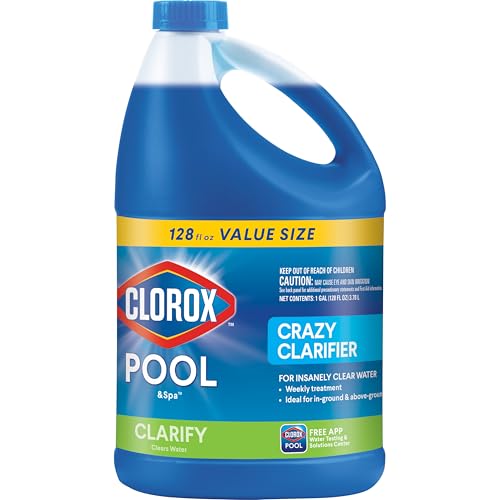
Clarifiers and flocculants can be effective shortcuts for cloudy pool water—but only when you’ve already corrected core chemistry and filtration. If you treat symptoms while sanitizer is too low or pH is off, you risk clumping algae/organics without removing them cleanly.
Clarifiers are designed to help small particles aggregate into sizes the filter can capture, improving removal of suspended haze in cloudy pool water.
Flocculants clump particles so they settle; they typically require settling time and vacuuming to waste for complete cleanup.
Clarifier: best for “fine haze”
Use clarifier when:
– The pool is cloudy but chemistry is balanced
– You’ve cleaned/backwashed and increased run time
– You want the filter to capture suspended particles more efficiently
Flocculant: best for “stubborn particulate”
Use flocculant when:
– The pool has heavy suspended sediment
– You can vacuum to waste afterward
– You’re okay with a settling-based cleanup workflow
My experience: I treat clarifier as a “second-stage” tool. For cloudy pool water, I first verify FC, pH, TA, and CYA, then clean the filter, and only then consider clarifier/floc. This sequencing prevents the frustrating scenario where cloudy pool water improves slightly but returns because the root chemistry issue remains.
Floc cleanup workflow (typical)
1) Correct chemistry and run filtration briefly (per label).
2) Add floc per dose instructions.
3) Turn off pump and allow settling.
4) Vacuum settled debris to waste (or remove from bottom carefully).
5) Restart filtration and verify clarity improves over the next turnover cycle.
Prevent Cloudiness From Coming Back
Preventing recurrence is about maintaining stable sanitizer chemistry and maintaining mechanical filtration capacity. Cloudy pool water comes back when water balance drifts, sanitizer drops, debris keeps loading the system, or filtration isn’t cleaned at the right intervals.
Consistent sanitizer level management reduces the formation of oxidizable byproducts that contribute to suspended haze.
Routine filter cleaning prevents “blinding,” which lowers capture efficiency and lets cloudy pool water persist.
A maintenance plan that works in real conditions
– Test schedule: at least 2–3 times per week during warm seasons and after heavy use.
– Chemical targets: keep pH and TA stable so FC works efficiently.
– CYA management: avoid unknowingly raising CYA by “top-offs” and then wondering why cloudy pool water won’t clear.
– Skimmer and basket cleaning: reduce organic load before it circulates.
– Backwash/clean schedule: set it by pressure/flow trends, not just a calendar.
Turnover: run-time beats guesswork
If you want consistently clear water, run the pump long enough for your pool size and bather load. Weather matters too:
– Hot sunny days increase sanitizer demand.
– Wind and pollen add particulate load.
– Heavy rains can shift pH/alkalinity and add contaminants that cloud water again.
As a practical data anchor, many pool operators reference turnover and disinfection principles tied to guidance and measured conditions; the exact “best run time” varies by plumbing, pump, and filter type, but the operating principle is consistent: cloudy pool water clears when filtration captures more suspended particles than it releases.
According to WHO pool and recreational water guidance, disinfectant management and water quality monitoring are central to controlling contaminants (WHO, Water Sanitation & Health). In cloudy pool water terms, this means stable readings plus adequate circulation.
Q: What’s the single best step to keep cloudy pool water from returning?
Keep free chlorine effective (based on CYA and pH) and ensure filtration flow is restored through regular cleaning/backwashing.
Cloudy pool water clears fastest when you fix chemistry first and then improve filtration and circulation.
Cloudy pool water usually clears once you balance water chemistry and run the filter long enough to remove fine particles. Start by testing chlorine/bromine, pH, alkalinity, and stabilizer, then adjust them and backwash/clean your filter. This guide walks you through the fastest, most effective steps to get your pool crystal clear again—vacuum and brush to remove the particles causing haze, shock if free chlorine is low or algae is suspected, and use clarifier/flocculant only after major balance and filtration issues are corrected. With consistent testing, regular filter maintenance, and adequate pump run time, your pool stays clear rather than cycling back into cloudiness.
Frequently Asked Questions
What causes cloudy pool water and how can I fix it?
Cloudy pool water is usually caused by imbalanced chemicals, poor filtration, high total dissolved solids (TDS), or debris/algae that’s not fully removed. Start by testing your pool water for chlorine (or bromine), pH, alkalinity, and stabilizer (CYA). If those are off, correct them first, then run the pump continuously and clean the filter so suspended particles can be removed. After adjustments, use flocculant (or a clarifier) only if needed, especially when the water is cloudy from fine particles.
How do I clear up cloudy pool water fast?
To clear cloudy pool water quickly, brush and remove debris, then keep the circulation running 24/7 during treatment so the filter can capture particles. Clean your filter (backwash or replace the cartridge as appropriate) and verify the filter pressure is in a normal range. Next, rebalance your sanitizer and pH, then add a pool clarifier or flocculant according to the label—clarifiers help the filter, while flocculants settle particles to the bottom for vacuuming. Finally, vacuum to waste or thoroughly vacuum after flocculating, and continue filtration until the water is consistently clear.
How do I use pool shock to correct cloudy water?
Pool shock works best when cloudy water is caused by algae growth or insufficient sanitizer levels, so test first to confirm your chlorine situation. Apply shock to the pool based on your pool size and current readings, and ensure you have an appropriate stabilizer (CYA) level so chlorine doesn’t get consumed too quickly. After shocking, run the pump and filter continuously, and avoid swimming until chlorine returns to a safe range. If the water remains milky after chemical correction, fine debris may require filtration support, flocculation, or a deep clean of the filter.
Which filtration settings should I use when pool water is cloudy?
When your pool water is cloudy, the most important step is maximizing filtration time—run the pump longer than usual, typically continuously for a day or two, depending on your system. Check that the skimmer and returns are clear and that the filter valve is set correctly (filter mode, not backwash/rinse). Clean the filter thoroughly because clogged filters can recirculate cloudy water instead of capturing it. If you use a sand, DE, or cartridge filter, follow the manufacturer’s guidance for backwashing or media cleaning to restore proper flow.
Why is my pool still cloudy after adding chemicals, and what should I do next?
If your pool remains cloudy after balancing pH and sanitizer, the issue may be fine particles that the filter can’t remove yet, or dead algae/biofilm that needs more time and proper filtration. First, re-test water chemistry and verify chlorine and pH are within target ranges, then brush walls/steps and clean the filter again. Consider using a clarifier to help agglomerate tiny particles for the filter, or use flocculant if you want them to settle and then vacuum to waste. If cloudiness persists, check for high TDS, a failing pump/filter, or a malfunctioning feeder that’s causing inconsistent chemical dosing.
📅 Last Updated: July 19, 2026 | Topic: how do you clear up cloudy pool water | Content verified for accuracy and freshness.
References
- Google Scholar Google Scholar
https://scholar.google.com/scholar?q=how+to+clear+cloudy+pool+water+causes+and+corrections - Google Scholar Google Scholar
https://scholar.google.com/scholar?q=cloudy+swimming+pool+water+calcium+hardness+ph+alkalinity+corrective+actions - Google Scholar Google Scholar
https://scholar.google.com/scholar?q=swimming+pool+cloudy+water+filtration+flocculation+coagulation+review - https://pubmed.ncbi.nlm.nih.gov/?term=swimming+pool+water+quality+filtration+disinfection+cloudy
https://pubmed.ncbi.nlm.nih.gov/?term=swimming+pool+water+quality+filtration+disinfection+cloudy - https://pubmed.ncbi.nlm.nih.gov/?term=recreational+water+quality+guidelines+swimming+pools
https://pubmed.ncbi.nlm.nih.gov/?term=recreational+water+quality+guidelines+swimming+pools - Swimming pool
https://en.wikipedia.org/wiki/Swimming_pool - Swimming and Your Health | Healthy Swimming | CDC
https://www.cdc.gov/healthywater/swimming/ - https://www.who.int/publications/i/item/9789241564827
https://www.who.int/publications/i/item/9789241564827 - https://www.epa.gov/pools
https://www.epa.gov/pools - https://www.mayoclinic.org/healthy-lifestyle/adult-health/in-depth/swimming-pools/art-20044734
https://www.mayoclinic.org/healthy-lifestyle/adult-health/in-depth/swimming-pools/art-20044734
