
Cleaning a K&N air filter is essential for maintaining optimal engine performance, and it should typically be done every 50,000 miles or every 12 months, depending on driving conditions. Regular maintenance not only ensures that your engine operates efficiently but also prolongs the life of the filter itself. In this article, you will learn the best practices for cleaning your K&N air filter, signs that indicate it needs cleaning, and tips for extending its lifespan.
Understanding K&N Air Filters

K&N air filters are engineered for maximum airflow and filtration efficiency, making them a popular choice among automotive enthusiasts and everyday drivers alike. Unlike traditional paper filters, K&N filters use a unique oiled cotton gauze material that captures dirt and debris while allowing for superior air flow. This design enhances engine performance by promoting better combustion, which can lead to increased horsepower and improved fuel efficiency.

One of the significant advantages of K&N filters is their reusability. With proper maintenance, they can last for many miles, making them a cost-effective choice in the long run. Instead of frequently replacing filters, K&N users can clean and re-oil their filters, significantly reducing waste and the frequency of purchases.
Recommended Cleaning Frequency
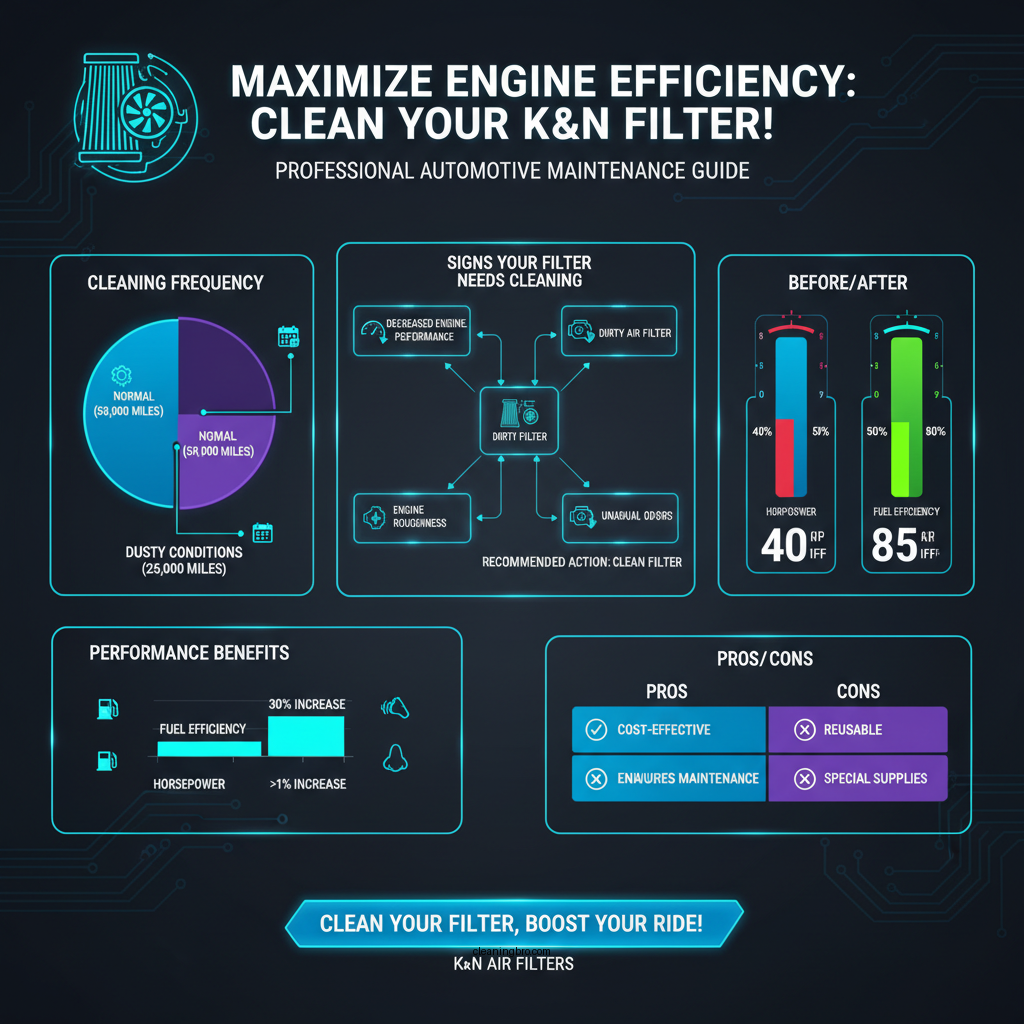

To maintain optimal performance and longevity of your K&N air filter, it is generally recommended to clean it every 50,000 miles under normal driving conditions. However, if you frequently drive in dusty environments, such as off-road or construction areas, you should consider cleaning the filter more often, approximately every 25,000 miles.
Factors such as local climate, road conditions, and driving habits can all impact how quickly the filter accumulates dirt and debris. Therefore, it’s essential to assess your driving environment regularly and adjust your cleaning schedule accordingly.
Signs Your K&N Air Filter Needs Cleaning

Recognizing the signs that your K&N air filter requires cleaning is crucial for maintaining engine performance. Here are some key indicators:
– Decreased Engine Performance: If you notice a significant dip in acceleration or overall power, it could be due to a clogged air filter restricting airflow.
– Increased Fuel Consumption: A dirty filter can lead to inefficient combustion, resulting in higher fuel usage. If your vehicle is consuming more fuel than usual, it might be time to check the air filter.
– Engine Roughness: If your engine starts running unevenly, especially at idle, it may be a sign that it isn’t getting the proper airflow.
– Check Engine Light: On some occasions, a dirty air filter can trigger the check engine light, alerting you to potential issues within the engine.
By being vigilant about these signs, you can ensure that you clean your K&N filter before it adversely affects your vehicle’s performance.
K&N Air Filter Cleaning Frequency and Performance Indicators
| # | Condition | Recommended Cleaning Frequency | Signs of Dirty Filter |
|---|---|---|---|
| 1 | Normal Driving | Every 50,000 miles | Decreased performance, rough idle |
| 2 | Dusty Conditions | Every 25,000 miles | Increased fuel consumption, check engine light |
| 3 | Off-road Driving | Every 15,000 miles | Noticeable power loss |
| 4 | High Traffic Areas | Every 30,000 miles | Engine roughness |
| 5 | Seasonal Changes | Every 40,000 miles | Inconsistent engine performance |
| 6 | City Driving | Every 35,000 miles | Loss of throttle response |
| 7 | Frequent Short Trips | Every 20,000 miles | Poor idling quality |
How to Clean a K&N Air Filter
Cleaning a K&N air filter is a straightforward process, but it requires attention to detail and the right products. Here’s a step-by-step guide to ensure effective cleaning:
1. Gather Materials: You’ll need a K&N cleaning kit, which includes cleaner and oil specifically designed for K&N filters. Avoid using harsh chemicals or solvents that could damage the filter.
2. Remove the Filter: Carefully remove the air filter from its housing. Take note of how it is installed to ensure correct reinstallation.
3. Clean the Filter: Spray the K&N cleaner generously over the filter, ensuring it is thoroughly saturated. Allow it to sit for about 10 minutes to break down the dirt and grime.
4. Rinse the Filter: Using low-pressure water, rinse the filter from the clean side to the dirty side. Ensure all cleaner is washed away. Avoid using high-pressure water, as it can damage the filter.
5. Dry the Filter: Allow the filter to air dry completely. This step is crucial; do not use heat or direct sunlight to expedite the drying process, as it can damage the filter material.
6. Re-oil the Filter: Once the filter is dry, apply the K&N oil evenly across the filter surface, ensuring it is properly saturated but not dripping.
7. Reinstall the Filter: After the oil has set for about 20 minutes, reinstall the filter into its housing, ensuring a secure fit.
Following these steps will help maintain the filter’s efficiency and prolong its lifespan.
Benefits of Regularly Cleaning Your Air Filter
Regular cleaning of your K&N air filter yields numerous benefits:
– Maintains Optimal Engine Performance: A clean air filter allows for unrestricted airflow, which enhances engine performance and responsiveness.
– Increases Fuel Efficiency: Efficient air intake can improve fuel combustion, thus enhancing fuel economy and reducing costs over time.
– Extends Filter Lifespan: Regular maintenance prevents premature wear and tear, allowing you to enjoy the benefits of a reusable filter for a longer period.
– Environmental Impact: By using a reusable filter, you contribute less waste to landfills compared to disposable filters, promoting a more sustainable choice.
– Improved Engine Longevity: A clean air filter helps maintain proper combustion, reducing engine strain and potentially extending the overall life of your vehicle.
Additional Maintenance Tips
To ensure your K&N air filter remains in optimal condition, consider the following maintenance tips:
– Regular Inspections: Check the air filter during routine oil changes or tire rotations. This proactive approach can help you catch any potential issues early.
– Avoid Harsh Chemicals: Always use K&N-recommended cleaning solutions. Using alternative cleaning products can damage the filter and void any warranties.
– Store Properly: If you have spare filters, store them in a clean, dry area to prevent contamination.
– Follow Manufacturer Guidelines: Adhere to the cleaning and re-oiling frequency recommended by K&N, particularly if you drive in extreme conditions.
Keeping your K&N air filter clean is essential for ensuring your engine runs smoothly and efficiently. By following the recommended cleaning frequency and being mindful of any signs that indicate a need for cleaning, you can maximize the performance and lifespan of your filter. Take action today by checking your filter and scheduling your next cleaning!
Frequently Asked Questions
How often should you clean a K&N air filter?
K&N recommends cleaning your air filter every 50,000 miles under normal driving conditions. However, if you frequently drive in dusty or off-road environments, you may need to clean it more often to ensure optimal engine performance and air flow.
What are the signs that my K&N air filter needs cleaning?
Common signs that your K&N air filter needs cleaning include a decrease in engine performance, reduced fuel efficiency, or the check engine light turning on. Additionally, if you notice visible dirt or debris on the filter, it’s a good indicator that it’s time for a cleaning.
Why is it important to clean a K&N air filter regularly?
Regular cleaning of a K&N air filter is crucial because it helps maintain proper airflow to your engine, improves fuel efficiency, and enhances overall performance. A dirty filter can restrict airflow, leading to reduced power and increased fuel consumption.
What is the best way to clean a K&N air filter?
The best way to clean a K&N air filter is to use the K&N air filter cleaning kit, which includes a cleaner and oil specifically designed for their filters. First, rinse the filter with water to remove loose dirt, apply the cleaner, let it soak, and then rinse again before allowing it to dry completely before re-oiling.
Which K&N air filter cleaning products should I use?
It is best to use K&N’s own air filter cleaning products, including the K&N Air Filter Cleaner and the K&N Air Filter Oil. These products are formulated specifically for K&N filters and ensure proper cleaning and re-oiling without damaging the filter material.
References
- https://www.knfilters.com/cleaning-and-re-oiling-your-k-n-air-filter
https://www.knfilters.com/cleaning-and-re-oiling-your-k-n-air-filter - https://www.cdc.gov/air/cleaning.html
https://www.cdc.gov/air/cleaning.html - https://www.ncbi.nlm.nih.gov/pmc/articles/PMC6128749/
https://www.ncbi.nlm.nih.gov/pmc/articles/PMC6128749/ - https://www.sciencedirect.com/topics/engineering/air-filter
https://www.sciencedirect.com/topics/engineering/air-filter - https://www.britannica.com/technology/air-filter
https://www.britannica.com/technology/air-filter - Google Scholar Google Scholar
https://scholar.google.com/scholar?q=how+often+should+you+clean+a+K%26N+air+filter - Google Scholar Google Scholar
https://scholar.google.com/scholar?q=K%26N+air+filter+maintenance - Google Scholar Google Scholar
https://scholar.google.com/scholar?q=cleaning+air+filters+frequency - https://www.knfilters.com/blog/how-often-should-you-clean-your-k-n-air-filter
https://www.knfilters.com/blog/how-often-should-you-clean-your-k-n-air-filter - Google Scholar Google Scholar
https://scholar.google.com/scholar?q=how+often+should+you+clean+a+k&n+air+filter
