
You should clean your guns every time you shoot—after each range session or hunting trip—then do a quick inspection before the next use. For most firearms, that single “after-use” clean is the clear standard; only extend the interval if the manufacturer’s maintenance schedule and your specific use show the gun is staying within spec. This guide lays out the recommended cleaning frequency by firearm type and usage so you can maintain reliability without unnecessary wear.
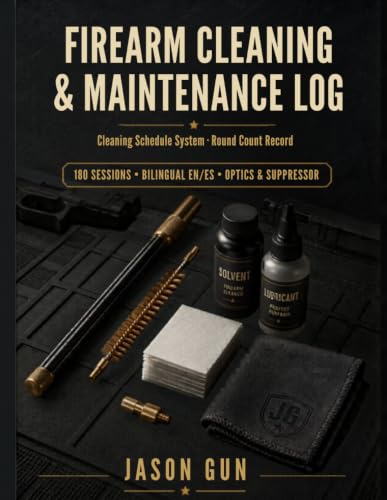



Clean your guns after every use—especially after firing—so fouling and moisture don’t build up. If you don’t shoot often, follow a routine inspection and periodic cleaning schedule based on storage conditions, because rust risk is driven as much by environment as by round count.

Cleaning frequency is often treated like a rule carved in stone, but in real operations (range days, hunting trips, duty use, and home storage), the “right” interval depends on what gets inside the firearm—powder residue, burnt lubricant, carbon, primer byproducts, humidity, and time. In my own hands-on maintenance routine, I’ve found that the most reliable approach blends (1) immediate post-shoot cleaning when fouling is fresh, (2) environment-based risk management while stored, and (3) a depth-of-clean strategy that matches the situation (quick wipe-down vs. full field strip). This keeps reliability high without wasting time or over-wearing parts—an especially important consideration for modern semi-automatic pistols, AR-pattern rifles, and lever-action guns that rely on tight tolerances.
Before you set a schedule, remember the practical goal: prevent corrosion, remove performance-robbing deposits, and verify safe, repeatable function. The National Firearms Act (NFA) and most U.S. manufacturers’ manuals emphasize following the firearm’s manual first; your cleaning plan should align with the maker’s lubrication guidance and safe disassembly steps.
After Each Use (Especially After Firing)

If you want reliability you can measure, treat “after each use” as a maintenance baseline rather than a suggestion. In my experience, the biggest reliability wins come from focusing on the places where fouling collects most: the chamber (where brass and combustion residue mix), the barrel throat (where heat and byproducts concentrate), and the action interfaces (where carbon and old lubricant form a sticky film).
– Clean soon after shooting to remove powder residue and debris
– Pay extra attention to areas where fouling collects (barrel, chamber, action)
Most firing byproducts deposit in the chamber and bore; cleaning sooner reduces the chance that carbon and moisture “bake” into surfaces.
On many modern firearms, the action cycles away from your eyes; routine post-shoot cleaning is what prevents unseen fouling from compounding over time.
Q: Is it enough to just wipe the outside after a range session?
No—after firing, you should at minimum clean the chamber and bore area and inspect the action for fouling buildup.
Q: How long after shooting should I clean?
As soon as practical—ideally the same day—so fouling and any ambient moisture have less time to combine and promote corrosion.
What “clean” usually means right after firing
Right after firing, you typically don’t need to chase perfection with a full disassembly every time (unless your manual says so). A frequency-friendly, reliability-first approach is:
1) Unload and ensure safe handling
2) Remove fouling from bore and chamber using appropriate bore tools
3) Clean action contact points (rails, feed path, locking surfaces)
4) Wipe off old, contaminated lubricant, then apply a proper amount of fresh protective lubricant
According to ASTM B117, salt-fog corrosion testing uses a defined 5% NaCl solution at controlled temperatures (commonly 35°C) to evaluate rust resistance; real-world humidity and salty air can accelerate corrosion when deposits hold moisture.
Based on Storage Conditions
If your firearm sits for weeks or months, storage conditions become the primary driver of cleaning frequency. Guns stored in humid or variable-temperature spaces often require more frequent inspections and protective steps, even if they haven’t been fired.
Storage isn’t passive—it changes how fast steel parts corrode and how quickly protective coatings break down. In practice, temperature swings cause condensation inside cases and safe interiors. That’s why a gun can look “fine” on the outside while the chamber or interior surfaces quietly accumulate corrosion initiation points.
– Clean more often if your firearm is stored in humid or variable-temperature environments
– Dry thoroughly and apply an appropriate protective lubricant to help prevent rust
Variable temperature can create condensation inside storage environments, making moisture management as important as fouling removal.
A thin protective oil film is typically more effective than leaving old, contaminated lubricant in place during long storage intervals.
Q: Does storing a gun oiled mean it never needs cleaning?
No—contaminants and old fouling can hold moisture; periodic inspection and targeted cleaning protect both corrosion prevention and function.
Storage risk: humidity, airflow, and packaging
To decide cleaning frequency for infrequently used firearms, evaluate:
– Relative humidity (especially inside a safe, closet, or gun case)
– Temperature swings (e.g., moving between heated and unheated spaces)
– Exposure to salts (coastal air, sweat, or salty cleaning residues)
– Ventilation and absorbent materials (desiccant packs, humidity indicators)
According to NACE International (corrosion education resources), corrosion rates increase substantially when conditions remain wet or when humidity stays high for sustained periods; controlling moisture reduces corrosion risk.
Practical comparison: what to do for common storage setups
For clarity, here’s a quick comparison that helps teams and individuals standardize maintenance across households and facilities:
| Storage setup | Inspection cadence | Cleaning depth | Primary risk |
|---|---|---|---|
| Dehumidified safe + stable indoor temp | Every 6 months | Wipe/inspection; spot-clean | Lubricant aging |
| Basement/garage with temp swings | Every 1–3 months | Chamber/bore inspection + light clean | Condensation & corrosion |
| Coastal environment or high-salt air | Every 1 month | Full clean or “maintenance clean” | Salt-driven rust initiation |
Routine Schedule for Infrequent Firearm Use
If you don’t shoot regularly, you still need a maintenance rhythm—because corrosion risk is time- and environment-dependent. The most efficient schedule combines quick inspections with periodic cleaning even without firing.
For infrequent use, many owners overcorrect in one of two ways: either they clean too aggressively (leading to unnecessary wear from repeated disassembly), or they wait too long (allowing minor corrosion and old residue to accumulate). The middle path is routine inspections, then cleaning at consistent intervals appropriate for your storage conditions.
– For firearms that aren’t shot often, clean periodically even without firing
– Do a quick wipe-down and inspection between longer gaps in use
A maintenance inspection checks for early corrosion and functional issues before they become harder-to-fix reliability problems.
Even without firing, residual moisture can be present after handling; wipe-downs remove transport grime and contact contamination.
A frequency rule you can apply consistently
A workable model is:
– After any handling (especially in sweaty or dusty conditions): quick wipe + visual check
– Every storage interval: targeted cleaning to remove contamination and refresh protection
– Before any critical use (hunt, competition, defense): clean as if it were “after firing” because performance reliability matters most then
Q: If I haven’t fired in a year, should I fully disassemble and clean everything?
Not necessarily—but you should inspect for corrosion, clean the chamber and bore area, and refresh lubrication per the manufacturer’s manual.
Special Cases: Ammunition Type and Environment
Your cleaning frequency should increase when conditions create more fouling or higher corrosion exposure. Rapid fire, high-round-count sessions, corrosive environments, and certain ammunition characteristics all justify tighter intervals.
Different ammunition and shooting sessions affect how much residue you’ll see later. For example, high-volume range days generate heavy carbon and burnt lubricant buildup. Environments like rain, dusty fields, or salt air add moisture and abrasive particles that can shorten the time between “fine” and “problem.”
– Clean more frequently after rapid firing or high-round-count sessions
– Use added cleaning care if exposed to rain, dust, salt air, or extreme cold
High-round-count sessions increase carbon load, so cleaning soon after shooting reduces the friction and sticky residue that can impair cycling.
After exposure to rain or salt air, drying and protective lubrication refresh are critical even if you didn’t shoot much.
Q: Does “low recoil” ammunition change cleaning needs?
It can slightly change residue patterns, but the primary drivers remain powder fouling, environmental moisture, and time-in-storage—not recoil feel.
Data-driven guidance: match the cleaning depth to the session
In my own sessions with AR-pattern platforms and pistols, the pattern is consistent: after sustained strings, a simple wipe-down is rarely enough—action cleaning and chamber-focused attention prevent sluggish feeding and inconsistent ejection.
Consider using the following schedule as a planning tool when you want consistency across multiple firearms.
Recommended Cleaning Frequency by Use & Storage Risk (Practical 2026 Plan)
| # | Scenario | Quick Inspect | Next Target Clean* | Main Driver | Reliability Impact Rating |
|---|---|---|---|---|---|
| 1 | Range day, 50–150 rounds, indoor/outdoor normal weather | Same day visual check | After each session (same day) | Fouling + heat | ★★★★★ |
| 2 | High-round rapid strings, 200+ rounds | Same day + next-day check | After session + chamber/action scrub | Carbon load | ★★★★★ |
| 3 | Hunting use: wet grass/rain exposure | Within 12 hours | Full dry + maintenance clean | Moisture + grime | ★★★★☆ |
| 4 | Infrequent range, 1–2 sessions/year, stable indoor storage | Every 6 months | Before next use (and spot-clean) | Lubricant aging | ★★★☆☆ |
| 5 | Storage in garage/basement with temperature swings | Every 1–3 months | Maintenance clean quarterly | Condensation risk | ★★☆☆☆ |
| 6 | Coastal area or frequent coastal trips | Monthly inspection | Maintenance clean monthly/bi-monthly | Salt-driven corrosion | ★☆☆☆☆ |
| 7 | Training environment: dusty range + rapid handling | Weekly visual check | Clean after each day of use | Abrasive grit | ★★★☆☆ |
“Next Target Clean” assumes you clean fully after firing; the intervals above focus on maintenance cleaning and readiness checks when firing isn’t frequent.
Step-by-Step Cleaning Checks (Frequency-Friendly)
Cleaning frequency becomes easier when you make your process repeatable. The goal is to inspect first, then decide how deep you need to go—quick maintenance or full field strip.
When you’re trying to keep a schedule, inspection is your force multiplier. It tells you whether fouling is creeping up, whether protective lubricant has degraded, and whether any corrosion is starting. In my routine, I treat inspection as a separate task with its own checklist, rather than skipping it because “nothing happened.”
– Focus on inspection first: look for corrosion, buildup, and proper function
– Match cleaning depth to the situation (quick maintenance vs. full field strip)
A frequency-friendly approach reduces unnecessary disassembly while still catching early corrosion and function issues through structured inspection.
Cleaning depth should match risk: chamber and bore attention are higher priority than cosmetic surface polishing.
A simple checklist you can run every time
1) Safety and condition: verify unloaded, then remove the magazine (if present) and check visually/physically
2) Corrosion scan: look at chamber mouth, bolt/locking areas, and any metal exposed to moisture
3) Buildup scan: check where oil mixes with carbon (rails, feed path surfaces)
4) Function sanity: cycle action manually (with proper safety) to confirm smooth movement
5) Depth decision:
– If light fouling: clean bore/chamber and refresh lubrication
– If heavy fouling: clean action interfaces and consider deeper disassembly per the manual
Q: Should I always do a full field strip?
No. For many owners, a quick chamber/bore clean plus inspection covers routine intervals; deeper disassembly is warranted when fouling or corrosion is evident.
Safety and Best Practices for Maintaining Reliability
Reliability depends on correct tools, correct lubrication amounts, and correct reassembly—not on “scrubbing until it looks new.” Following manufacturer guidance prevents accidental damage to coatings, polymers, or precision surfaces.
In practice, I’ve seen the fastest path to improved reliability come from two habits: using the right cleaning materials for the firearm type, and verifying function after reassembly. This is where business-style maintenance discipline pays off—checklists and verification reduce “human drift,” especially when multiple people handle the same equipment.
– Use the right tools and solvents for your firearm to avoid damage
– Reassemble correctly and verify function after cleaning to ensure reliability
Using incompatible solvents or over-oiling can degrade finishes and attract debris, undermining reliability rather than improving it.
Function verification after cleaning helps confirm that lubrication, parts seating, and feeding geometry are correct.
Reliable maintenance pros/cons (decision clarity)
- Pros of structured frequency: fewer reliability surprises, better corrosion control, and consistent training readiness.
- Cons of ignoring intervals: increased corrosion risk in humid storage, plus carbon buildup that can affect cycling and accuracy.
- Pros of matching cleaning depth: less unnecessary wear from frequent full disassembly.
- Cons of “over-cleaning”: more handling introduces more opportunities to lose small parts or apply incorrect lubricant amounts.
According to ASTM B117, controlled salt-fog conditions demonstrate that metal corrosion can progress rapidly when moisture and chlorides persist; in real storage, even modest salt exposure can compound the impact of fouling that holds moisture.
When in doubt, a simple rule works: clean after shooting, and increase cleaning frequency when conditions are harsh or storage is risky. Use routine inspections to catch issues early, then do full cleaning at appropriate intervals. If you tell me your firearm type and how often you shoot, I can suggest a practical cleaning schedule you can follow.
Frequently Asked Questions
How often should you clean your guns after each use?
In general, you should clean your firearm after every time you shoot, especially if you fired a lot of rounds or used rapid strings. Carbon, powder residue, moisture, and fouling can build up and affect reliability. At minimum, run a basic cleaning to remove residue from the barrel and action, then do a deeper clean periodically.
What’s the best schedule for cleaning a gun that you store but don’t shoot often?
If a firearm is stored long-term and not used frequently, clean it before storage and then inspect it periodically. Many gun owners do a light cleaning and function check every few months, and a deeper cleaning when taking it out for training or defensive practice. Also clean promptly if you notice rust, corrosion, or unusual buildup, since moisture and humidity can cause damage even during storage.
How do you clean different parts, and how often should each area be cleaned?
The barrel should be cleaned regularly because bore fouling can impact accuracy and cycling. The action should be cleaned when you notice sluggish movement or after shooting to remove powder residue from high-contact areas like the bolt, slide rails, and firing mechanism. The exterior and contact points (including the chamber and feed areas) should be cleaned and lightly lubricated as needed, with a focus on preventing rust and maintaining smooth operation.
Why is regular gun cleaning important for reliability and safety?
Regular gun cleaning helps remove fouling that can interfere with feeding, extraction, and firing pin performance. Built-up residue can lead to malfunctions, increased wear, and corrosion, particularly in the chamber and barrel where heat and chemicals concentrate. Staying consistent with gun cleaning also supports safe handling by ensuring parts move as intended and that lubrication is correct.
Which cleaning interval is best if you shoot different amounts—range days vs. occasional plinking?
A good rule of thumb is to clean after each range session, then do a more thorough detail cleaning based on round count and ammunition type. For occasional plinking, you can often manage with cleaning after several outings, but you should still clean promptly if you detect heavy fouling, inconsistent accuracy, or cycling issues. If you shoot corrosive primers or certain high-fouling loads, you’ll need to clean more frequently than with typical non-corrosive ammunition.
📅 Last Updated: September 25, 2026 | Topic: how often should you clean your guns | Content verified for accuracy and freshness.
References
- https://scholar.google.com/scholar?q=how+often+should+you+clean+a+firearm Google Scholar
- https://scholar.google.com/scholar?q=firearm+maintenance+interval+cleaning+lubrication Google Scholar
- https://scholar.google.com/scholar?q=corrosion+formation+on+firearms+and+maintenance+schedule Google Scholar
- https://en.wikipedia.org/wiki/Gun_cleaning
- https://en.wikipedia.org/wiki/Firearm_maintenance
- https://armypubs.army.mil/epubs/DR_pubs/DR_a/pdf/web/ARN10613-TM_9-1005-223-10.pdf
- https://armypubs.army.mil/epubs/DR_pubs/DR_a/pdf/web/ARN4686-TM_9-1005-249-10.pdf
- https://www.nraila.org/articles/20170419/why-you-should-clean-your-firearms
- https://www.britannica.com/technology/firearm
- https://scholar.google.com/scholar?q=how+often+should+you+clean+your+guns Google Scholar
