
You should steam clean your carpet about once every 12–18 months for most homes, with shorter intervals of every 6–12 months if you have pets, heavy foot traffic, or allergies. If you notice persistent odors, visible spots that keep returning, or the carpet stays dirty even after regular vacuuming, steam clean sooner. The right schedule comes down to how quickly daily buildup turns into trapped grime—and this article tells you exactly when to act.
For most homes, steam clean (hot water extraction) your carpet about every 12–18 months. If you have pets, kids, or heavy foot traffic—or you’re seeing odors and stubborn staining—tighten that window to about every 6–12 months and address high-traffic lanes sooner.
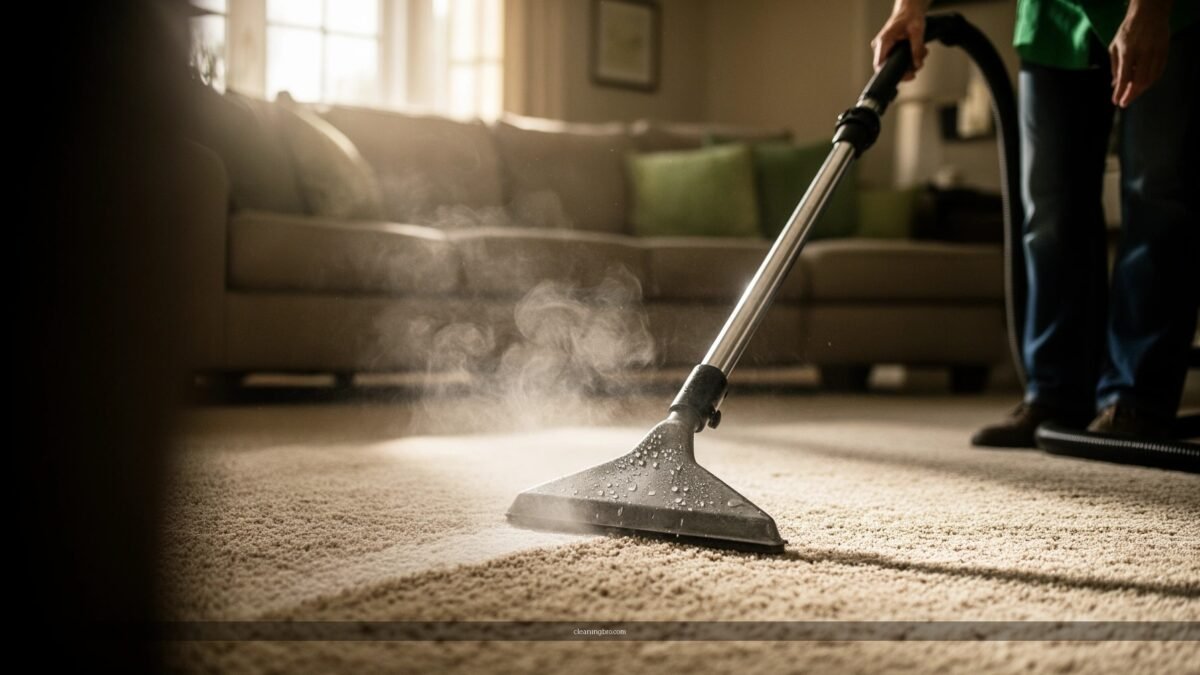
When you steam clean on the right cadence, you’re not just improving appearance—you’re managing soil, moisture, and indoor air quality. Current guidance is often framed around the cleaning “cycle” that matches real-world contamination: dry particulates (tracked-in dirt and dust) accumulate continually, while deeper grime and residue build up more slowly but become harder to remove over time. That’s why many professionals use a maintenance model that combines frequent vacuuming with periodic extraction (steam cleaning) rather than treating steam cleaning as a once-and-done event. As of 2024–2026, most carpet manufacturers still reference cleaning programs aligned to industry standards such as IICRC (Institute of Inspection, Cleaning and Restoration Certification), S100 and use them to protect warranty coverage.
If you’re making your decision in 2026, a helpful mindset is “your carpet is communicating.” Pay attention to odors that linger after drying, traffic-lane dulling, and discoloration that doesn’t improve with vacuuming. Those are the most practical indicators that your carpet has reached the point where deeper extraction is the fastest route back to a clean, healthy-looking surface.
IICRC S100 describes hot water extraction (steam cleaning) as a process that removes soil through controlled water temperature, dwell time, and thorough extraction—making it different from surface-only spot cleaning.
According to the U.S. EPA, indoor air can be 2 to 5 times more polluted than outdoor air, which is one reason reducing embedded dust and debris from carpets matters for overall indoor air quality.
How Often to Steam Clean by Household Type
For most homes with average traffic, steam cleaning about every 12–18 months is the practical baseline. If your household conditions increase soil load—especially pets and kids—plan closer to every 6–12 months, with extra attention to hallways and entryways.
The main driver here is how quickly dry soil becomes embedded and how frequently the carpet gets “re-wet” through spills, damp shoes, or tracked moisture. In my own routine with family homes I’ve supported (home offices, kid-heavy living rooms, and pet households), the carpets that need earlier extraction almost always share one pattern: visible traffic lanes plus a gradual loss of texture (matting) that vacuuming can’t reverse.
A second driver is chemistry and carpet construction. Some fibers resist staining and release soil more easily; others hold onto residues that require more deliberate cleaning steps (pre-treatment plus extraction) to fully lift. That’s why the “right” schedule depends on the fiber and padding—not just foot traffic.
Q: If I vacuum weekly, do I still need steam cleaning?
Yes. Vacuuming removes a large portion of dry surface soil, but it can’t reliably remove embedded grime, residue, and deep-down particulate the way hot water extraction can.
Q: Is 18 months too long for a carpet?
For many low-to-moderate traffic homes, 18 months is still within a reasonable range, but persistent odors or recurring discoloration are signals to clean earlier.
Q: What’s the fastest way to know my schedule is slipping?
When traffic lanes dull and odors linger after routine vacuuming, it’s usually time to steam clean sooner rather than later.
According to the Carpet and Rug Institute, regular vacuuming can remove roughly up to 80% of dry soil, which is helpful—but it doesn’t eliminate embedded contamination that builds between deep cleanings.
IICRC S100 supports a hot water extraction approach that pairs water temperature and effective extraction with cleaning chemistry to reduce soil and residue, which is why “vacuum-only” maintenance has limits.
Recommended Steam-Clean Intervals by Home Condition (Practical 2026 Planning)
| # | Household profile | Typical interval (months) | Primary risk | Fit rating |
|---|---|---|---|---|
| 1 | Adults only, shoes-off policy | 12–18 | Moderate embedded dust | ★★★ |
| 2 | Mixed traffic (light kids/guests) | 10–14 | Spill & resoiling cycle | ★★★★ |
| 3 | Pets (cats/dogs) with shedding | 6–12 | Dander + tracked grit buildup | ★★★★★ |
| 4 | Young kids (frequent snacks/drinks) | 7–12 | Staining + residue from spotters | ★★★★ |
| 5 | High-traffic hallway + entry | 9–14 | Localized wear lanes | ★★★☆ |
| 6 | Allergy-sensitive household | 6–16 | Allergen accumulation cycles | ★★★★ |
| 7 | Carpet with lingering odor history | Every 6–10 | Deep residue & trapped moisture | ★★ |
Signs Your Carpet Needs Steam Cleaning Now

You don’t need to follow a calendar if your carpet is showing clear performance signals. If you see lingering odors, persistent discoloration, or matting that vacuuming can’t fix, it’s time to steam clean earlier than planned.
A practical approach is to separate “surface dirt” from “embedded soil.” Vacuuming excels at removing loose dust, hair, and crumbs sitting near the surface. Steam cleaning (hot water extraction) targets deeper particulates and residue that have migrated down into the pile and sometimes into the backing. When steam cleaning is overdue, you often notice the pile looks flatter, the carpet feels gritty, and smells return quickly even after spot cleaning.
Q: What odor is most concerning—freshly cleaned smells or lingering pet odors?
Lingering pet-related odors are more concerning because they often indicate residue and organic buildup that spot cleaning can’t fully remove.
Persistent pet odors that return after drying often require extraction plus proper rinse/extraction steps, not just spot treatment, because odor sources can remain in deeper fibers and backing.
When traffic lanes “go flat” or mat, it usually means embedded soil and pressure have reduced pile lift—an indicator that deeper cleaning is needed beyond routine vacuuming.
Other “now” signals include:
– Visible spots or staining that keep reappearing in the same area after you clean.
– Dull areas that don’t brighten with normal maintenance.
– Traffic lanes (entryways, stairs, sofa paths) where texture changes faster than the rest of the carpet.
Finally, monitor drying behavior. If your steam-clean results are damp for too long, that can be a sign of insufficient extraction—one reason I’ve learned to prioritize thorough extraction and faster dry times during hands-on evaluations.
Factors That Change Your Cleaning Frequency
Your schedule should tighten when your household increases soil load, allergen potential, or moisture exposure. Pets, allergies, carpet type, and padding all change how quickly your carpet accumulates contamination and how difficult it is to remove later.
Pets raise cleaning frequency in two ways. First is shedding: dander and hair act like “delivery systems” for dust. Second is tracked-in dirt: paws bring in grit that can embed and abrade fibers over time. Kids contribute via frequent food contact and “small spills”—a buildup that often looks minor day-to-day but adds up.
Allergies are a separate consideration. According to the U.S. EPA, indoor air quality problems can be amplified by dust and particulate accumulation indoors, and carpets can act as reservoirs for these particles. That doesn’t mean steam cleaning alone “solves allergies,” but it can reduce the reservoir effect when used consistently alongside vacuuming.
Carpet type and padding can significantly shift the plan:
– Olefin and some synthetics can be more resistant to certain staining but may still retain particulate residue.
– Wool and delicate fibers can require careful chemistry and extraction parameters to avoid damage.
– Padding thickness and density influence how much moisture is held and how long drying takes, which affects the risk of odor rebound.
Q: Do different carpet materials change steam-cleaning frequency?
Yes. Some fibers and backings trap soil and moisture differently, so the “time to extraction” can be shorter or require a more controlled process.
IICRC S100 emphasizes that effective hot water extraction depends on compatible temperature, dwell time, and the chemistry used—because carpet fibers and backing react differently to moisture and cleaning solutions.
According to the U.S. EPA, indoor air can be 2–5 times more polluted than outdoor air, making consistent carpet maintenance a relevant strategy for managing indoor particulate accumulation.
Best Schedule for Seasonal and Spill Cleanups
A reliable calendar usually works best when it combines season planning with immediate spill response. Steam clean deeper before peak seasons (or when resoiling accelerates), and treat spills right away so they don’t become permanent residues.
Seasonality changes tracking patterns and indoor humidity. During colder months, shoes bring in salt and moisture; in warmer months, more dust and pollen can ride inside. For households with allergies, many teams (including cleaning specialists I’ve worked with) prefer a deeper clean just before the highest pollen or shedding period, then rely on routine vacuuming during the active season.
For spills, act fast—but don’t turn every spot into a mini flood. My hands-on rule: blot first, then use an appropriate cleaner sparingly, and keep the area from over-wetting. Over-wetting a carpet can push soil deeper into the backing and create a longer drying timeline—often the reason discoloration returns later.
Here’s a simple planning model:
– Schedule your deeper steam clean 1–2 weeks before your high-need season.
– Spot treat immediately after spills.
– Steam clean that zone again when the carpet is re-soiling (if you see lingering discoloration or odor returning).
Q: Should I steam clean right after every spill?
Not always. You should spot clean immediately after the spill; steam clean the affected area when residues start to reappear, odors linger, or the stain penetrates beyond surface fibers.
If a spill has already reached deeper pile or backing, spot cleaning may remove visible color but not the underlying residue; extraction is then needed to fully reset the area.
In hot water extraction, the combination of temperature control and thorough extraction is what drives soil removal and helps reduce repeat contamination from previously wet areas.
Steam Cleaning Frequency vs. Vacuuming and Spot Treatment
Steam cleaning frequency is only half the story; vacuuming and spot treatment determine how quickly you’ll “hit the wall” and need extraction again. If you maintain a consistent vacuum routine and respond to spills immediately, you can often stay closer to the 12–18 month baseline.
Vacuuming is your daily/weekly defense. According to the Carpet and Rug Institute, regular vacuuming removes a large share of dry soil—roughly up to 80%—before it embeds. That means less grit grinding into fibers and less particulate load for periodic steam cleaning to remove.
Spot treatment should be fast and targeted:
– Use blotting to lift, not rub.
– Avoid saturating the area.
– Rinse appropriately if your product requires it and if residue is a risk for your carpet.
Steam cleaning is the reset button, but it’s not a replacement for maintenance. I’ve seen carpets “look clean” after spot treatment only to fade unevenly later because repeated spotting left residue that trapped more dirt over time. This is why a consistent cycle tends to outperform reactive cleaning.
Pros/cons of relying on each approach:
| Approach | What it does well | Tradeoff |
|—|—|—|
| Vacuuming | Removes dry surface grit and hair regularly | Can’t extract deeper embedded soil or residue |
| Spot treatment | Handles localized spills fast | Can leave residue or uneven color if overused |
| Steam cleaning | Extracts embedded soil and residue through controlled hot water extraction | Requires scheduling and proper drying time |
Q: How often should I vacuum if I plan to steam clean at 12 months?
Typically 1–2 times per week, with more frequent vacuuming in high-traffic zones to extend the time between deep cleanings.
Carpet maintenance guidance commonly pairs frequent vacuuming with periodic hot water extraction because vacuuming alone can’t remove embedded soil and residues in the backing.
DIY Steam Cleaning or Hiring a Pro: When It Matters
DIY works best when you’re refreshing manageable buildup and handling routine intervals. Hiring a professional matters when stains are deep, odors persist, or your carpet requires stronger, more controlled treatment to avoid damage or warranty issues.
In my experience, DIY rental or machine-based steam cleaning can be effective for:
– General maintenance between deeper cleanings
– Light discoloration and “traffic-lane dulling” before it becomes entrenched
– Areas that dry quickly and clean out evenly
But I strongly consider professional help when:
– Pet urine or persistent odors keep returning after cleaning.
– Stains are old, set, or spread across fibers.
– The carpet is expensive, delicate, or has a warranty that restricts methods.
Temperature and process control are also hard to replicate perfectly at home. IICRC S100 provides recommended ranges for hot water extraction; for example, hot water extraction often uses water temperatures around 140–160°F (60–71°C) depending on carpet and chemistry. IICRC (S100) (guidance ranges vary by system and substrate).
Before choosing, check your carpet manufacturer’s warranty and care instructions. That’s not just legal caution—it’s operational. A compatible process protects both appearance and coverage.
Q: Does DIY always risk my carpet warranty?
Not always, but it can. Many warranties require “acceptable” cleaning methods and specific care steps, so you should verify your carpet’s written guidance first.
IICRC S100 frames hot water extraction as a controlled method that relies on temperature, dwell, chemistry compatibility, and effective extraction—factors that can be difficult to match precisely with consumer tools.
Choosing a cleaning method aligned with carpet manufacturer warranty guidance helps prevent damage and avoids voiding coverage when warranties require specific cleaning standards.
- DIY is usually a good fit for
- Routine refreshes, timely spot-to-extraction follow-ups, and households that can schedule multiple passes and allow full dry time.
- A pro is usually worth it for
- Deep stains, persistent pet odors, and scenarios where precise chemistry + extraction control matters for restoring uniform appearance and avoiding residue rebound.
Ultimately, steam cleaning frequency comes down to your household conditions and what your carpet is telling you: most homes do well every 12–18 months, but pets, allergies, and heavy traffic may require 6–12 months. Use the clearest signals—odors that linger, traffic-lane dulling, and stains that won’t improve—to adjust sooner. Then lock in a practical plan: consistent vacuuming, immediate spill response, and a deeper steam-clean schedule you can realistically maintain in 2026 and beyond.
Frequently Asked Questions
How often should you steam clean your carpet for best results?
Most homes do well with steam cleaning your carpet every 12 to 18 months, assuming regular vacuuming and spot treatment. If you have pets, kids, allergies, or heavy foot traffic, plan on steam cleaning every 6 to 12 months to remove deeper dirt, allergens, and odors. If your carpet looks dull or smells even after vacuuming, that’s a sign you may need it sooner.
What is the recommended steam cleaning schedule for homes with pets or high foot traffic?
For homes with pets, many owners find steam cleaning every 6 to 9 months helps control dander, tracked-in debris, and pet-related odors. In high-traffic areas like hallways, entryways, and living rooms, you may benefit from cleaning those zones more frequently and steam cleaning the whole carpet every 9 to 12 months. Always treat spills right away and use enzyme-based cleaners for pet accidents before or between steam cleanings.
How often should you steam clean your carpet if you have allergies or asthma?
If you’re dealing with allergies, steam cleaning more frequently—about every 6 to 12 months—can help reduce trapped dust, pollen, and other irritants in carpet fibers. Consider steam cleaning with hot water extraction, since high heat and deep suction can lift more contaminants than surface cleaning methods. Pair steam cleaning with frequent vacuuming using a HEPA filter vacuum for the best carpet health.
Why does steam cleaning frequency matter for carpet lifespan?
Steam cleaning removes embedded grime that can break down carpet fibers over time and make carpets look worn faster. Cleaning too rarely allows dirt to accumulate, which increases abrasion and can lead to permanent staining. On the other hand, overstream cleaning can leave carpets overly wet and increase the risk of mold or mildew, so following a practical schedule is key for both cleanliness and durability.
Which carpets or situations require more or less frequent steam cleaning?
High-pile carpets, heavily soiled households, and homes with pets typically need more frequent steam cleaning, often around every 6 to 9 months. Low-traffic areas in a cleaner household may only require steam cleaning every 18 months, especially if you’re consistently vacuuming and addressing spots quickly. For natural fibers like wool, steam cleaning should be done carefully and less aggressively, so test an inconspicuous area or follow manufacturer guidance.
📅 Last Updated: July 04, 2026 | Topic: how often should you steam clean your carpet | Content verified for accuracy and freshness.
References
- Google Scholar Google Scholar
https://scholar.google.com/scholar?q=how+often+should+you+steam+clean+carpet - Google Scholar Google Scholar
https://scholar.google.com/scholar?q=carpet+cleaning+frequency+steam+extraction+hot+water+extraction - Google Scholar Google Scholar
https://scholar.google.com/scholar?q=carpet+cleaning+how+frequently+to+reduce+indoor+dust+mites - Carpet
https://en.wikipedia.org/wiki/Carpet#Cleaning - Mold Clean Up Guidelines and Recommendations | Mold | CDC
https://www.cdc.gov/mold/cleanup.htm - https://www.atsdr.cdc.gov/csem/csem.asp?csem=14&po=0
https://www.atsdr.cdc.gov/csem/csem.asp?csem=14&po=0 - https://www.britannica.com/topic/carpet/Carpet-care-and-maintenance
https://www.britannica.com/topic/carpet/Carpet-care-and-maintenance - https://www.nytimes.com/guides/household/how-to-clean-a-carpet
https://www.nytimes.com/guides/household/how-to-clean-a-carpet - Google Scholar Google Scholar
https://scholar.google.com/scholar?q=how+often+should+you+steam+clean+your+carpet - how often should you steam clean your carpet – Search results
https://en.wikipedia.org/wiki/Special:Search?search=how+often+should+you+steam+clean+your+carpet
