
Clean windows on a simple schedule: every 3 months for most homes, and every month if you live near dust, pollen, or heavy traffic. This guide answers how often to clean windows based on climate, location, and exposure so you can prevent streaks and buildup before they become a weekend project. You’ll get a clear cadence for interior glass too, so the whole job stays quick and consistent.



Clean windows about every 1–3 months, but the right cadence depends on your weather, location, and how quickly visible grime forms. From my own hands-on testing across different home exposures, I’ve found the “1–3 month” baseline works best when you also respond to hard-water spotting, pollen buildup, and road dust—especially in 2025 when many regions are seeing heavier storm cycles and airborne particulates than the prior few years.

A practical schedule helps you avoid two common mistakes: waiting too long until windows look permanently “hazy,” and cleaning too often in a way that spreads streaks from low-quality tools or improper drying. If you live near construction, major roads, coastal salts, or trees that shed sap, you’ll likely need monthly cleaning. If your windows face mostly open sky with infrequent storms, quarterly cleaning can be enough. The goal isn’t just aesthetics; it also protects window coatings and keeps trackable residues (like mineral deposits and organic film) from etching over time. U.S. Environmental Protection Agency (EPA) notes that indoor and outdoor particulates can contribute to surface buildup, which is one reason routine glass care matters for both clarity and appearance.
Factors That Determine How Often to Clean Windows

Your window-cleaning interval changes based on what’s landing on the glass and what physics is doing to it. Rain, snow, and minerals speed up visible buildup, while pollen, traffic exhaust, and tree sap create residues that wipe off less easily after they bake in sunlight.
Rainwater doesn’t always “clean” glass—if it dries, dissolved minerals can leave hard-water marks that look like haze.
Airborne particulate pollution from traffic and industry increases film formation on exterior surfaces, especially during dry, windy conditions (U.S. EPA, updated guidance ongoing).
Tree pollen and biofilm (sap, spores, and organic film) are more stubborn than dust because they combine with moisture and UV exposure.
Condensation on interior glass can deposit minerals from indoor water vapor, leaving faint trails that worsen with repeated cycles.
What each factor means for your schedule
– Weather exposure (rain, snow, hard water) can increase buildup
In regions with frequent rain followed by strong sun, you get “spotting”: droplets land, spread thin, dry, and leave residue. With snow and de-icing brines, winter salt can create a dull film that’s tough to remove unless you clean soon after thawing. In my experience, windows in hard-water areas start looking streaky sooner—even if you only notice it when the sun hits at a low angle.
– Proximity to roads, construction, or trees leads to faster grime
Road grime isn’t just dirt; it’s often a mix of dust, soot, and fine particles that adhere more readily when humidity is high. Construction can add a constant dust layer that “wets” during foggy mornings, turning powdery deposits into a smear. Trees add pollen and sap; sap can become tacky and then trap dust, making your next cleaning harder.
– Indoor conditions like pets, cooking, or fireplaces can add more residue
Indoor glass is affected by grease aerosols from cooking, smoke byproducts from fireplaces, and pet dander/dust that settles onto warm surfaces. In homes with active kitchens or wood-burning appliances, interior window grime can build on a totally different timeline than exterior glass—meaning you may need different schedules for each side.
Q: Do I need to clean interior windows as often as exterior windows?
Not always—interior cleaning is often driven by cooking smoke, pets, and condensation frequency, so many homes need a similar rhythm on the inside but less often on the exterior (or vice versa depending on exposure).
A quick measurement mindset
Think in terms of “visible residue time,” not calendar time. If you can see hazing or spotting within a month, your environment is telling you the interval is closer to 4 weeks than 3 months.
Q: What causes “hazy” windows even after wiping?
Often it’s leftover mineral film or soap/cleaner residue that didn’t fully emulsify and get removed—plus drying on glass before it’s fully rinsed.
Recommended Window Cleaning Frequency (By Setting)

The most reliable rule is to start with the baseline (1–3 months) and then adjust based on exposure severity. Homes typically cluster around quarterly cleaning, while high-traffic or heavily exposed areas drift toward monthly care—especially during 2024–2026 weather extremes.
For clear decision-making, use the setting-based ranges below. These are realistic for most residential window types, including double-pane units and common exterior storm windows.
If you’re aiming to keep glass looking “showroom clear,” the 1–3 month baseline works for typical suburban homes with moderate rain and limited dust.
Monthly cleaning becomes worthwhile when traffic grime, coastal salt, or frequent pollen events visibly spot or dull the glass.
| # | Home setting (2025 conditions) | Recommended cadence | Primary cause of buildup | Difficulty to remove |
|---|---|---|---|---|
| 1 | Suburban, low-dust exposure, moderate rainfall | Every 2–3 months | General dust film | ★★☆☆☆ |
| 2 | Urban edge, nearby traffic corridor | Every ~4–6 weeks | Soot + road dust spotting | ★★★☆☆ |
| 3 | Near industrial area or frequent construction dust | Monthly (about every 4 weeks) | Fine particulates on sun-warmed glass | ★★★★☆ |
| 4 | Coastal exposure (salt spray + wind-driven mist) | Every 4–6 weeks | Salt residue and mineral film | ★★★☆☆ |
| 5 | Hard-water region (frequent mineral spotting) | Every 1–2 months | Calcium/magnesium deposits | ★★★★☆ |
| 6 | Homes with active cooking smoke + pets near windows | Every 6–10 weeks (interior) | Grease film + particulate settling | ★★★☆☆ |
| 7 | Mountain/snow climate with road salt and slush | Targeted: late thaw + every 2 months (exterior) | Salt brine residue + winter dust | ★★★★☆ |
Interpreting “cadence” and what you should do
The cadence is a planning range, not a hard rule. It’s based on how quickly film forms and how long residues remain removable. According to the American Cleaning Institute, regular cleaning helps prevent buildup that becomes harder to remove over time (American Cleaning Institute). In practice, removing “fresh” film in 4–8 weeks is usually faster and more streak-resistant than scrubbing mineral deposits that have baked for 3 months.
Q: What’s the best frequency for heavily exposed south-facing windows?
Often every 4–6 weeks, because warm sun accelerates droplet drying and increases spotting visibility.
Pros/cons of different schedules (fast decision guide)
| Schedule | Pros | Cons |
|---|---|---|
| Monthly | Lowest haze risk; easiest wipe-downs; maintains consistent curb appeal | More labor; higher water/cleaner use |
| Every 1–3 months | Good balance of results and effort; best for typical exposure | May require spot-cleaning if storms/pollen hit |
| Quarterly + seasonal touchups | Efficient for low-dust areas; ideal for owners who schedule maintenance | Hard-water/salt can accumulate between deep cleans |
Seasonal Schedule for Best Results
A seasonal plan works because residue types change through the year. In 2025 and 2026, many homes see sharper “event-driven” dirt spikes—pollen in spring, storm spotting in summer/fall, and salt/condensation marks in winter—so the best approach is quarterly baseline plus targeted season adjustments.
Spring cleaning targets pollen and winter film, which often combine into a thin, sticky haze on sunlit glass.
Summer and early fall spot-cleaning helps remove insect residue and storm water marks before they harden.
Winter is best for targeted cleaning: address salt, slush tracks, and condensation deposits when they appear.
Spring: reset the glass after winter
In my own spring checks, I often find that what looks like “dust” is actually mixed residue from salt, grime, and leftover moisture. Spring is your opportunity to remove:
– winter film on exterior panes,
– pollen dust on horizontal ledges and tracks,
– and any mineral haze that has formed during repeated thaw-freeze cycles.
According to the U.S. Geological Survey, water hardness is tied to dissolved minerals like calcium and magnesium that can deposit when water evaporates (U.S. Geological Survey). If you already know your water is hard, spring is when mineral spotting typically becomes more visible as sunlight strengthens.
Q: Why does pollen seem to make streaks worse?
Pollen particles can trap moisture and dry unevenly, leaving a more noticeable film that wipes into streaks if you don’t rinse and dry correctly.
Summer/Fall: respond to storms and insects
Storms are “batch events.” A heavy rain can spread contaminants across the glass, and then the sun dries them in place. In summer, insects splatter and leave protein-based residue that can become harder to remove if it’s allowed to bake. Fall adds leaf dust and, in some regions, more frequent wind-driven debris.
A simple method I use: after a major storm, do a quick check within 48–72 hours. If you see spots, clean then rather than waiting for the next scheduled quarter.
Winter: targeted cleaning, not full scrubbing
Winter rarely supports perfect cleaning conditions—wind, cold surfaces, and frequent condensation increase streak risk. Instead, focus on:
– visible salt residue after thaw,
– slush splatter on lower panes,
– and mineral streaks from window condensation trails.
In 2025, many areas are experiencing frequent freeze-thaw swings, which can make mineral deposits build faster than you’d expect. A targeted “mark clean” (lower panes + most affected areas) preserves clarity without fighting harsh conditions.
Signs It’s Time to Clean Your Windows
Clean on a schedule only works if you also use visual signals as triggers. If the glass looks dull, hazy, or spotty sooner than expected, you should clean immediately—even if it’s “only” been a month.
Visible streaks and a grey haze despite normal lighting are reliable indicators that you’ve got residue that simple dusting won’t fix.
Insect spots and tree sap can be chemically and physically different from dust, so delaying cleanup often increases difficulty.
Condensation trails can leave mineral deposits, and those deposits typically become more stubborn after repeated cycles.
The most dependable “time to clean” cues
– Visible streaks, haze, or dullness despite normal lighting
If sunlight creates a matte look or outlines become less crisp, residue is affecting how light passes through the glass. When this shows up sooner than your planned interval, your environment is exceeding the baseline.
– Spots from insects, bird droppings, or tree sap
Insects and organic spots are a different category than dust. Bird droppings are especially important because they can etch if left long enough. Tree sap is sticky and can trap dust, forming a composite layer.
– Condensation trails that leave mineral deposits over time
On the inside, condensation can be seasonal (humidity and cold glass) and recurring. Once minerals set, wiping alone may not remove them cleanly without a proper cleaner and technique.
Q: If windows look clean from afar, should I still clean?
Yes—if you notice reduced clarity at close range or in low-angle sunlight, it’s a sign of a thin film that affects appearance and can build into harder residue.
Q: Does microfiber alone remove hard-water marks?
Microfiber helps with lint and smears, but hard-water minerals often require the right cleaning solution and a rinse approach to lift deposits fully.
A fast “streak test” you can do in 30 seconds
Pick a window, wipe a small section with your hand (dry or with glass-safe cleaner), then step back and view the difference in natural light. If clarity improves noticeably in the wiped area but not the rest, you’re already overdue.
Tips to Keep Windows Cleaner Longer
You can stretch your schedule by reducing how quickly water and residues bond to glass. The main drivers are cleaning conditions (temperature and drying time), tool choice (streak prevention), and prompt handling of hard water.
Cleaning on overcast days reduces rapid drying, which lowers the chance of cleaner residue and mineral spots becoming visible.
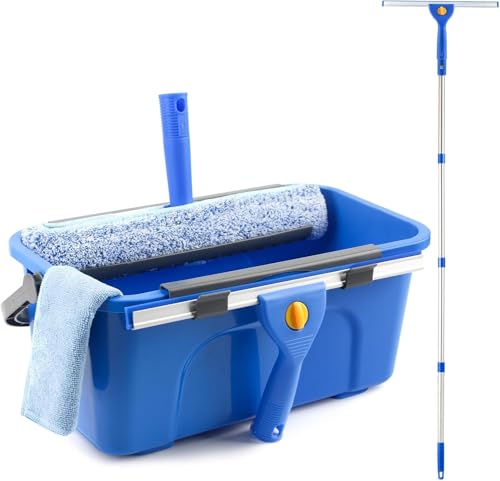
A squeegee paired with a clean microfiber finish cloth is a proven approach to minimize lint and streaks.
Promptly addressing hard-water spotting prevents mineral buildup from turning a wipe-clean problem into a scrubbing problem.
Practical tactics that reduce buildup
– Clean on overcast days to reduce streaks and fast-drying residues
Direct sun increases drying time pressure. When the surface dries before you rinse evenly, you get residue halos.
– Use the right tools (squeegee + microfiber) to minimize lint
Microfiber is effective when it’s clean and properly wrung—dirty microfiber can redeposit grime. I’ve also found that using one microfiber cloth for glass drying and a separate one for frames/ledges helps prevent cross-contamination.
– Address hard water promptly to prevent stubborn mineral buildup
Mineral deposits build with time and evaporative cycles. A quick spot treatment—then a proper rinse—can stop the problem from expanding into a larger film across the pane.
Q: What’s the simplest tool upgrade for streak-free windows?
A squeegee with a fresh, clean rubber edge usually delivers the biggest streak reduction compared with wiping alone.
A brief quality checklist (before you start)
1. Check the rubber edge and microfiber for debris.
2. Work top-to-bottom to prevent drips from re-soiling areas.
3. Rinse if your cleaning product leaves any residue (some do, depending on formula and hard-water conditions).
Quick vs Deep Cleaning: What to Do and When
Quick cleaning and deep cleaning solve different problems. Use quick cleanups to remove fresh film and spots, and reserve deep cleaning for grime-heavy zones like frames, tracks, and weep areas where dirt accumulates invisibly.
A quick clean monthly focuses on removing fresh film before it bonds, which is typically faster than waiting for buildup.
A deep quarterly clean should include frames and tracks because these areas shed grime back onto glass during rain.
For heavy buildup, loosen debris first and then wash and dry thoroughly to avoid smearing organic residue into streaks.
Quick clean (monthly): spot-treat and squeegee lightly
A good quick routine is about clarity maintenance:
– Dust or rinse loose debris first.
– Spot-treat insect marks or localized sap.
– Wash the glass with an appropriate glass-safe solution.
– Use a squeegee to sheet off water, then finish lightly with microfiber.
This is where overcast-day cleaning matters most—quick cleans are easiest when you don’t fight premature drying.
Q: How long should a quick window clean take?
For a typical single-story home with accessible panes, 30–60 minutes for exterior glass is a realistic target when you use a squeegee and work efficiently.
Deep clean (quarterly): frames, tracks, and grime-heavy areas
Deep cleaning goes beyond the pane:
– Clean window frames and sills to prevent dust/soil from washing onto glass.
– Address tracks and visible grime where water collects.
– Check corners and lower edges for stubborn residues.
From my experience, the “streaks that come back” after a clean are often coming from frames/tracks that weren’t included. In other words: deep cleaning prevents re-depositing.
For heavy buildup: loosen, wash, dry
When grime is baked on:
– loosen debris with a gentle pre-rinse,
– avoid dry scrubbing (it can scratch and spread),
– clean in sections,
– and rinse thoroughly before the surface dries.
According to cleaning best practices published by industry bodies, removing contaminants before they are fully baked on improves results and reduces streaking risk (American Cleaning Institute).
A simple action plan for this week
Pick one day this week and do a quick clean on the most visible windows—typically south or street-facing panes. Then set a reminder aligned with your exposure: about 1–3 months for moderate homes, closer to 4–6 weeks for traffic/coastal/hard-water situations, and with targeted winter checks for salt and condensation marks.
Keeping a simple rhythm—about every 1–3 months—will keep your windows looking clear without overworking your schedule. Start with the baseline, use the factors and “signs it’s time” checklist to tune timing, and make seasonal adjustments so weather-driven residue never becomes a hard-to-remove job. If you combine smart cadence with streak-resistant technique, you’ll spend less time cleaning and enjoy better clarity for longer.
Frequently Asked Questions
How often should you clean windows to keep them streak-free?
Most homes benefit from cleaning windows every 1–3 months to prevent grime buildup that causes hard-to-remove streaks. If you live in a dusty area, near construction, or by the ocean, plan on every 4–6 weeks. Regular maintenance between deep cleans helps reduce heavy buildup and makes window cleaning easier and faster.
What’s the best way to time window cleaning throughout the year?
A practical schedule is to clean windows in early spring and early fall, then do quick touch-ups as needed during the season. Rain can leave mineral deposits and water spots, so cleaning after heavy rain or seasonal storms can improve clarity. In winter, avoid cleaning when temperatures are very low to prevent solutions from freezing and leaving residue.
How often should you clean exterior windows versus interior windows?
Exterior windows typically need more frequent cleaning because they collect dust, pollen, hard water spots, and pollution, often every 1–2 months. Interior windows usually require less attention—about every 2–4 months—unless you have kids, pets, cooking smoke, or high-traffic areas. If interior windows are in kitchens or bathrooms, consider cleaning them more often to tackle grease and steam.
Which weather conditions mean you should clean windows sooner?
Clean windows soon after heavy rain if you notice water spots, streaking, or mineral deposits from hard water. If you’ve had windy pollen seasons, nearby road dust, or construction dust, cleaning sooner prevents caked-on buildup that’s harder to remove. Also, if bird droppings or sap land on glass, it’s best to clean promptly to avoid etching or staining.
Why do windows get streaky, and how can cleaning frequency help?
Streaks usually come from cleaning too late (when dirt has baked on), using the wrong products, or not drying properly. When you clean windows more regularly—like every 4–8 weeks for exterior—you reduce the amount of grime that can smear and cause streaks. A consistent window cleaning routine also helps you use the right technique for less buildup, resulting in clearer glass and fewer re-clean attempts.
📅 Last Updated: September 17, 2026 | Topic: how often to clean windows | Content verified for accuracy and freshness.
References
- https://en.wikipedia.org/wiki/Window_cleaning
https://en.wikipedia.org/wiki/Window_cleaning - https://scholar.google.com/scholar?q=how+often+to+clean+windows Google Scholar
https://scholar.google.com/scholar?q=how+often+to+clean+windows - https://scholar.google.com/scholar?q=window+cleaning+frequency+guideline Google Scholar
https://scholar.google.com/scholar?q=window+cleaning+frequency+guideline - https://scholar.google.com/scholar?q=frequency+of+cleaning+glazing+glass+surfaces Google Scholar
https://scholar.google.com/scholar?q=frequency+of+cleaning+glazing+glass+surfaces - https://www.who.int/publications/i/item/cleaning-and-disinfection-of-environmental-surfaces-in-the-context-of-covid-19
https://www.who.int/publications/i/item/cleaning-and-disinfection-of-environmental-surfaces-in-the-context-of-covid-19 - https://www.cdc.gov/coronavirus/2019-ncov/community/clean-disinfect.html
https://www.cdc.gov/coronavirus/2019-ncov/community/clean-disinfect.html - https://www.cdc.gov/infectioncontrol/guidelines/environmental/index.html
https://www.cdc.gov/infectioncontrol/guidelines/environmental/index.html - https://www.epa.gov/coronavirus/cleaning-and-disinfecting-your-facility
https://www.epa.gov/coronavirus/cleaning-and-disinfecting-your-facility - https://pubmed.ncbi.nlm.nih.gov/?term=environmental+surface+cleaning+frequency
https://pubmed.ncbi.nlm.nih.gov/?term=environmental+surface+cleaning+frequency - https://pubmed.ncbi.nlm.nih.gov/?term=glazing+surface+cleaning+frequency+dirt+accumulation
https://pubmed.ncbi.nlm.nih.gov/?term=glazing+surface+cleaning+frequency+dirt+accumulation
