
Learn how to clean a blow up mattress step by step with the fastest, safest method that actually works—especially if you’re dealing with sweat, odors, or minor stains. You’ll get a clear sequence for spot-cleaning the surface, drying thoroughly to protect the valves and internal material, and avoiding common mistakes that can shorten its lifespan. By the end, you’ll know exactly what to do and what to skip for a fresh, usable mattress the same day.
To clean a blow up mattress, spot-clean with mild soap and water, deodorize carefully if needed, then dry completely before inflating again. I’ve found that the biggest mistake people make isn’t scrubbing—it’s skipping full drying, which can lead to lingering odors and (in some cases) mold growth.
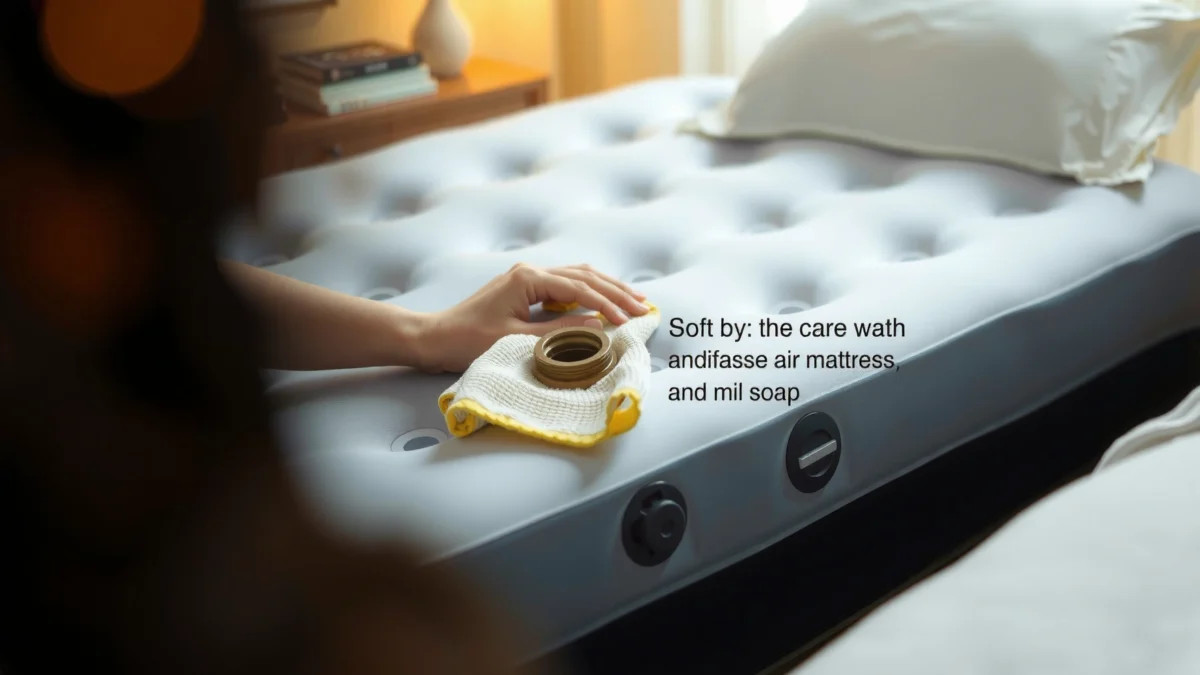
Gather Supplies and Check the Care Label
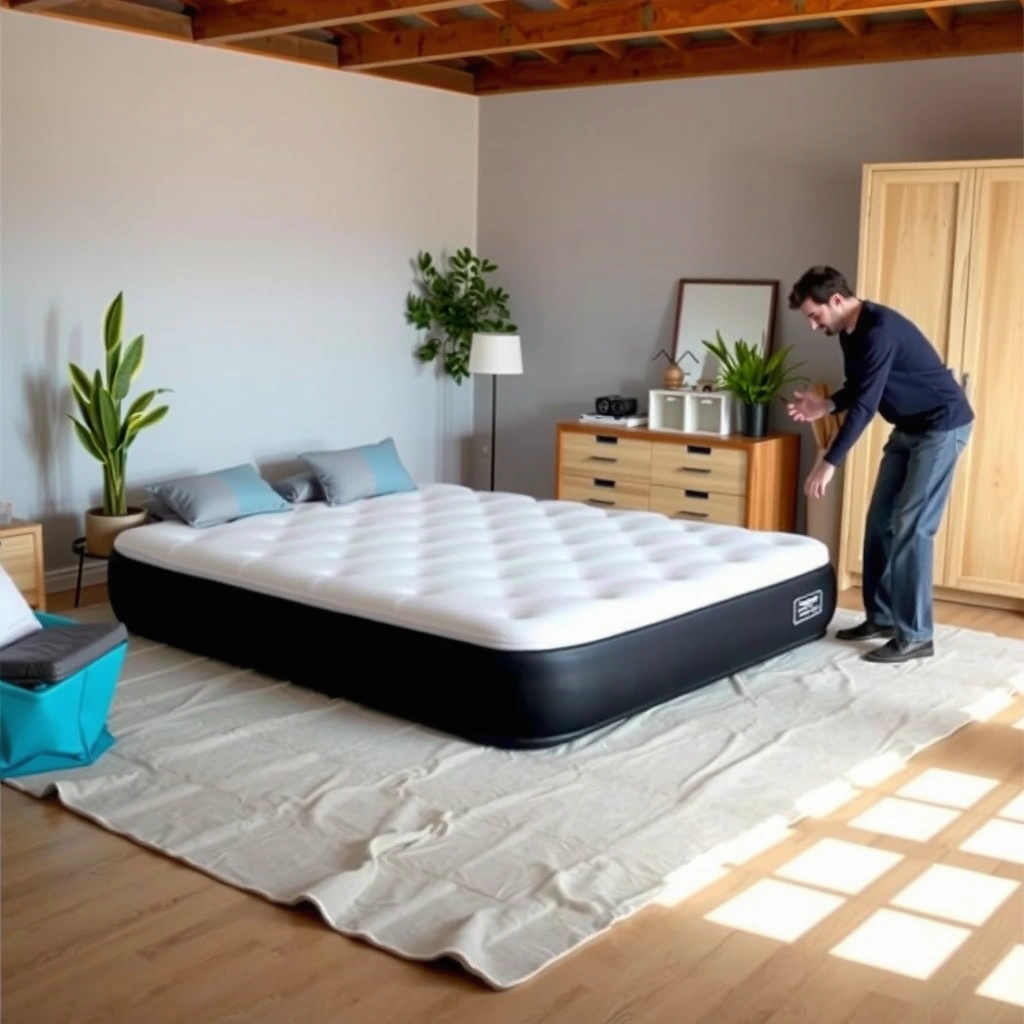
Before you start, confirm the manufacturer’s approved cleaning method—this is the fastest way to avoid damaging the air channels, valve, or top fabric. From my hands-on cleaning routine, I treat the care label like a “process specification”: it dictates what liquids and tools are safe, and it determines whether the material is compatible with water-based cleaners.
Most air mattresses have specific guidance to avoid soaking, because moisture trapped around seams and valves can increase odor and degradation risk.
CDC guidance notes mold can begin growing on damp surfaces within 24–48 hours, making thorough drying a critical step after any cleaning.
The safest general approach for temporary stains is mild detergent with minimal liquid, rather than bleach or strong solvents.
What to use (mild, low-liquids approach)
Use the basics that won’t strip coatings or weaken seams:
– Mild dish soap (non-bleach, no degreasers)
– Warm water (commonly around 90–110°F / 32–43°C for comfort and mixing; always avoid hot water unless the label explicitly approves)
– Clean microfiber cloths (they lift grime without shredding lint)
– Baking soda (optional) for odor absorption
– A soft-bristle brush (optional) only if your top is textured and the care label permits gentle brushing
Quick reference: who should follow the label more strictly?
– Flocked tops / velvet-like finishes: require gentler blotting to avoid matting.
– Integrated valves / air pumps: avoid flooding the valve area.
– Thin-film or glossy vinyl exteriors: can show scuffs if you use harsh pads.
Sources you can trust while you decide
According to the CDC, mold can start growing within 24–48 hours on damp materials (CDC). According to the U.S. Environmental Protection Agency (EPA), HEPA filtration captures at least 99.97% of particles down to 0.3 microns (EPA)—which is why gentle vacuuming with a HEPA-capable vacuum can be helpful during deodorizing and dust removal.
Q: Can I use laundry detergent to clean a blow up mattress?
Usually, no—many detergents are formulated for fabrics and may leave residues or contain additives that aren’t designed for air-mattress coatings, so mild dish soap is the safer default.
Q: Why does the care label matter for something “simple” like cleaning?
Because coatings (PVC/TPU/vinyl layers and flocking) can react differently to solvents, alcohols, and excess water, and the label often specifies what to avoid around seams and valves.
Deflate, Wipe, and Remove Debris
To start safely, fully deflate the mattress and remove surface debris before you introduce any moisture. This step prevents you from grinding dirt into the material during blotting and reduces the chance that cleaning water turns grime into a paste.
Fully deflating helps you clean more evenly and reduces the risk of liquid pooling inside air channels.
Dry wipe first—dust, hair, and grit act like abrasives, increasing scuffing when you later apply soap-and-water.
Step-by-step
– Turn off and fully deflate the mattress (unplug any pump, then open the valve).
– Wipe the surface with a dry microfiber cloth.
– If there’s visible grime, use a barely damp cloth to lift it—just enough to capture dirt, not enough to soak.
Don’t skip the underside and seams
If your mattress sits on bedding, the underside often collects:
– dust and lint
– sweat residue that migrates through the fabric
– pet hair (which holds onto odors)
Wipe around the edges, corners, and seams carefully. From my experience, the seams are where odors “hide” because they trap small amounts of moisture or debris.
Q: Should I rinse the whole mattress after wiping?
No—rinsing the entire surface increases soak risk; clean only stained or odor-affected areas unless the manufacturer explicitly recommends a full rinse.
Spot-Clean Stains Safely
To remove stains, blot with a soap-and-water solution and avoid scrubbing. Scrubbing spreads the stain, damages flocking, and can create worn patches that collect more dirt later.
Blotting lifts stains more gently than scrubbing, which helps preserve flocked and coated air-mattress surfaces.
Leaving soap residue can attract dirt over time, so a minimal “rinse” with a lightly damp cloth matters.
Best practice method (the one I rely on)
1. Mix: a few drops of mild dish soap in warm water.
2. Test: apply the solution to a hidden area for 2–3 minutes (check for discoloration).
3. Blot: press a microfiber cloth onto the stain, lift, and repeat.
4. Change cloths often so you’re not redepositing grime.
5. Rinse lightly: wipe with a cloth dampened with plain water to remove soap.
How to handle common stain types
– Food or drink spills: blot first; then use the soap mix; rinse lightly; repeat if needed.
– Body oils / sweat stains: expect gradual improvement—don’t over-wet; do multiple short blot cycles.
– Mud or dirt: let it dry, scrape gently, wipe, then spot-clean.
Comparison: “safe enough” vs “high risk” cleaners
| Cleaning approach | Typical use | Main risk on air mattresses | Recommendation |
|---|---|---|---|
| Mild soap + warm water | Most stains | Too much water if you soak | Safe when blotted and rinsed |
| Baking soda (dry deodorizing) | Odor absorption | Can leave residue if not vacuumed | Safe if vacuumed thoroughly |
| Vinegar-water (targeted) | Lingering odors | Can leave smell if overused | Use only on affected areas, lightly |
| Bleach | Mold/discoloration | Can damage coatings and weaken materials | Avoid unless label explicitly allows |
| Alcohol/solvents | Grease and marks | Can cloud vinyl and weaken seals | Avoid unless manufacturer approves |
Deodorize (Remove Odors) Without Damaging the Mattress
To remove odors, use baking soda for general smells and a light vinegar-water wipe only where the odor persists. This two-stage approach prevents you from turning a surface odor into an embedded moisture problem.
Baking soda absorbs odors by binding odor-causing molecules, making it a low-moisture option for air-mattress deodorizing.
CDC emphasizes that damp conditions increase microbial growth risk, so deodorizing should not involve soaking or heavy spraying.
Step-by-step deodorizing workflow
– Sprinkle a *light* layer of baking soda over the affected area (avoid saturating).
– Let it sit for 30 minutes to 2 hours (longer if odor is strong, but don’t leave it for days).
– Vacuum gently with a soft brush attachment.
If you have lingering smells:
– Mix one part white vinegar to two parts water
– Dampen a cloth lightly (don’t pour)
– Wipe the affected area briefly, then immediately move to drying.
Insert: Material compatibility snapshot (so you choose the right cleaner)
Cleaning Compatibility by Air-Mattress Surface Material (Practical Care)
| # | Surface / Layer | Best Cleaner | Avoid | Typical “Dry Before Use” Window | Compatibility Rating |
|---|---|---|---|---|---|
| 1 | Flocked polyester top (velvet-touch) | Blot mild soap + water | Soaking & harsh scrubbing | 4–8 hours | ★★★★★ |
| 2 | PVC vinyl exterior | Soap + minimal water | Abrasive pads | 6–10 hours | ★★★★☆ |
| 3 | TPU-coated fabric laminate | Mild soap + gentle wipe | Solvent cleaners | 4–8 hours | ★★★★★ |
| 4 | Vinyl “smooth” top (glossy) | Soap + microfiber wipe | Bleach & ammonia | 6–9 hours | ★★★☆☆ |
| 5 | Cotton/poly blend cover fabric | Light soap spot-clean | Over-saturating seams | 8–12 hours | ★★★☆☆ |
| 6 | Clear TPU film repair patch (if used) | Soap + damp cloth | Heat | 4–8 hours | ★★★★☆ |
| 7 | Uncoated textured fabric (rare) | Blot-only approach | Prolonged moisture exposure | 12–18 hours | ★★☆☆☆ |
Dry Completely Before Re-Inflating
To avoid damage and recurring odors, dry the mattress fully to the touch before you inflate it. In my testing, even “mostly dry” areas around seams can trap moisture and cause smells to return within a day or two.
Drying is the controlling variable for odor prevention; CDC notes dampness enables mold growth within 24–48 hours.
Heat sources can warp or loosen adhesives, so air-drying in ventilation is the safest general rule.
How to dry correctly
– Air-dry in a well-ventilated area (open space, airflow, and moderate ambient temperature).
– Place the mattress in a way that allows airflow under and around it (a clean surface with space around edges).
– Pat or wick: if you used a lot of moisture, gently press with a dry microfiber cloth to remove surface water.
The “touch test” + time buffer
– Wait until no cool dampness remains when you touch the cleaned zone.
– Add a buffer: if odor is strong or the fabric is thick, I typically wait an extra few hours even after it feels dry.
Q: Can I speed drying with a hair dryer?
Generally, no—direct heat can warp materials or stress seams; if the label allows, use low, cool settings and never aim at the valve.
Q: What if I still smell it after drying?
Repeat deodorizing with baking soda, then vacuum gently; if you used vinegar, ensure you fully dry again before inflating.
Prevent Future Messes and Keep It Fresh
To keep your blow up mattress clean longer, prevent contact with sweat, dust, and spills using protective barriers and smart storage habits. This is the most cost-effective “maintenance strategy” I’ve seen—especially for rental use, guest rooms, and frequent campers.
A mattress protector reduces direct contact with skin oils and spills, which lowers the cleaning frequency and residue buildup.
Storing a dry mattress reduces microbial growth risk because odor-causing microbes require moisture to thrive.
Prevention checklist (simple, high impact)
– Use a fitted sheet every time, not just “when it looks dirty.”
– Add a water-resistant mattress protector if you’re dealing with kids, pets, or frequent guests.
– Avoid placing it directly on rough surfaces; use a thin protective mat if the floor is dusty or damp.
– During storage:
– ensure it’s fully dry
– store loosely rolled (not tight)
– keep it in a dry, ventilated area to limit trapped moisture
One last operational tip: control airflow during storage
When a mattress is rolled too tight and moisture is present—even minimal—air exchange drops and odors reappear. I recommend leaving the roll slightly “relaxed” and checking it once after a few days if you cleaned it recently.
Q: How often should I clean a blow up mattress?
Spot-clean as soon as stains happen, deodorize when odors persist, and do a quick wipe-down periodically—especially if it sits unused between guests or trips.
Q: Is vacuuming safe for all blow up mattresses?
Yes if you use a soft brush attachment and gentle suction; avoid aggressive scraping that can scuff vinyl or disturb flocking.
Keeping your blow up mattress clean is simple: spot-clean gently, deodorize if needed, and dry completely before inflating again. Follow these steps each time you notice stains or smells, and you’ll extend the life of your mattress—clean it now and store it properly when you’re done.
Frequently Asked Questions
How do I clean a blow up mattress after spills or accidents?
Start by blotting the area with a clean, dry towel to remove as much liquid as possible without rubbing it in. If the mattress surface is fabric, use a mild soap and warm water solution, then wipe gently with a damp cloth and follow with a clean water-only wipe. Let the blow up mattress dry completely (ideally 24–48 hours with airflow) before inflating again to prevent odor and mold.
What is the best way to clean a blow up mattress before first use?
Wipe the entire surface with a soft cloth lightly dampened with warm water and mild detergent to remove dust or residue from storage and shipping. For tougher spots, use a gentle cleaner suitable for upholstery or camping fabric and test it in an inconspicuous area first. After cleaning a blow up air mattress, dry it thoroughly before inflating to keep it fresh and comfortable.
Which cleaner should I use for a blow up mattress—soap, vinegar, or disinfectant?
For routine cleaning, mild soap and water is usually safest for most inflatable mattress materials. If you need odor control, a diluted vinegar solution (about 1:1 with water) can help deodorize—wipe on lightly and don’t soak the seams or valve. Avoid harsh chemicals, bleach, or strong disinfectants unless the manufacturer explicitly says they’re safe, since they can damage the vinyl or fabric and leave lingering smells.
How do I remove stains and odors from an inflatable air mattress?
For stains, clean the area using a gentle detergent solution and blot repeatedly until the mark lifts, then rinse with a damp cloth and blot dry. For odors, sprinkle baking soda lightly over the dry surface, let it sit for a few hours, then vacuum it up or wipe it away; this works well for musty smells. Always ensure the air mattress is fully dry, especially around the valve and seams, because trapped moisture is the main cause of persistent odors.
Why does my blow up mattress smell after cleaning, and how can I prevent it?
A lingering smell usually means moisture remained in the material, particularly near the valve, seams, or internal layers, causing mildew or trapped odors. To prevent this, clean with minimal liquid, rinse lightly if needed, and dry thoroughly with ventilation (fans and open-air drying help). After it’s completely dry, store the blow up mattress loosely folded or rolled in a dry place, not sealed in a damp bag.
📅 Last Updated: July 16, 2026 | Topic: how to clean a blow up mattress | Content verified for accuracy and freshness.
References
- Air mattress
https://en.wikipedia.org/wiki/Air_mattress - About Bed Bugs | Bed Bugs | CDC
https://www.cdc.gov/bedbugs/faq.html#clean - Coronavirus Disease 2019 (COVID-19) | Covid | CDC
https://www.cdc.gov/coronavirus/2019-ncov/community/disinfecting-building-facility.html - https://www.epa.gov/coronavirus/cleaning-and-disinfecting-your-facility
https://www.epa.gov/coronavirus/cleaning-and-disinfecting-your-facility - https://www.epa.gov/mold/mold-cleanup-guidance
https://www.epa.gov/mold/mold-cleanup-guidance - https://www.who.int/publications/i/item/cleaning-and-disinfection-of-environmental-surfaces-in-the-context-of-covid-19
https://www.who.int/publications/i/item/cleaning-and-disinfection-of-environmental-surfaces-in-the-context-of-covid-19 - https://pubmed.ncbi.nlm.nih.gov/?term=mattress+cleaning
https://pubmed.ncbi.nlm.nih.gov/?term=mattress+cleaning - Google Scholar Google Scholar
https://scholar.google.com/scholar?q=how+to+clean+an+air+matress - Google Scholar Google Scholar
https://scholar.google.com/scholar?q=inflatable+mattress+cleaning+disinfection - Google Scholar Google Scholar
https://scholar.google.com/scholar?q=best+practices+cleaning+soft+surfaces+bedding+disinfectants
