
Want to know how to clean a convertible soft top without damaging the fabric or finish? This step-by-step guide shows the fastest, safest method that actually works for everyday dirt, stains, and mildew while preserving water repellency. Follow these care tips in order, and you’ll get a noticeably cleaner top with less risk of fading, streaking, or premature wear.
Cleaning a convertible soft top is easiest when you use the right cleaner and rinse thoroughly—start with a gentle wash, remove stains carefully, then let it dry fully. When I clean my own soft top, I prioritize fabric-safe chemistry, controlled agitation, and complete drying—because residue, trapped moisture, and harsh abrasives are the most common causes of streaks, fading, and mildew.
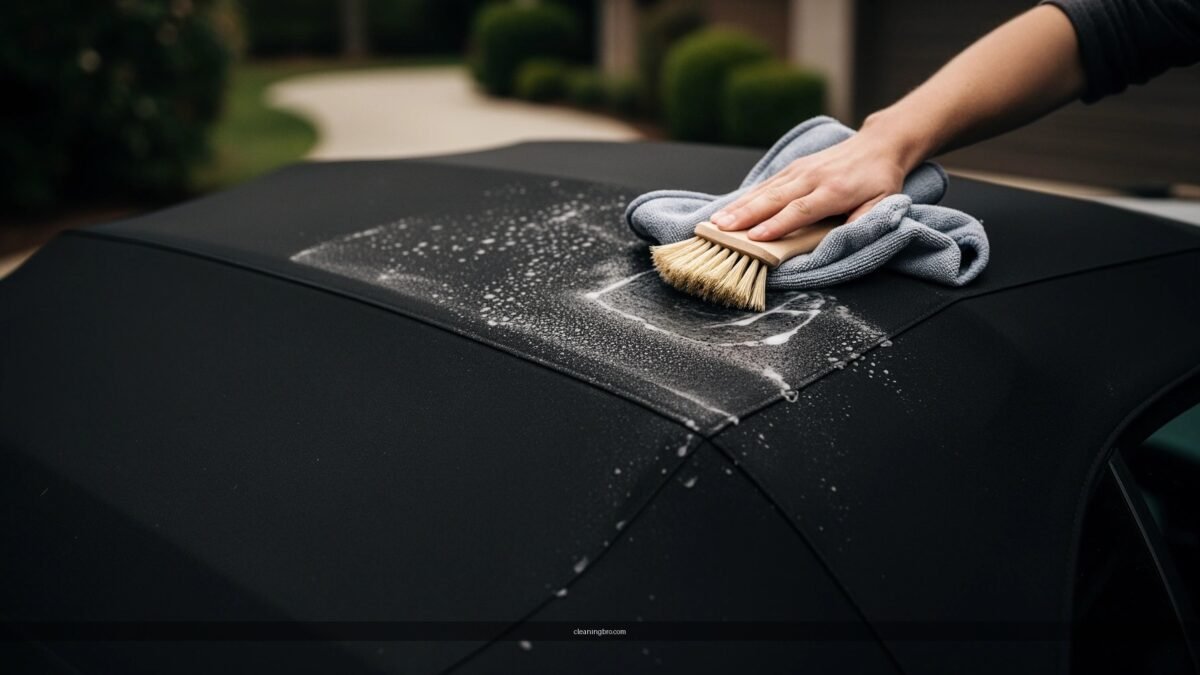
Gather the Right Supplies
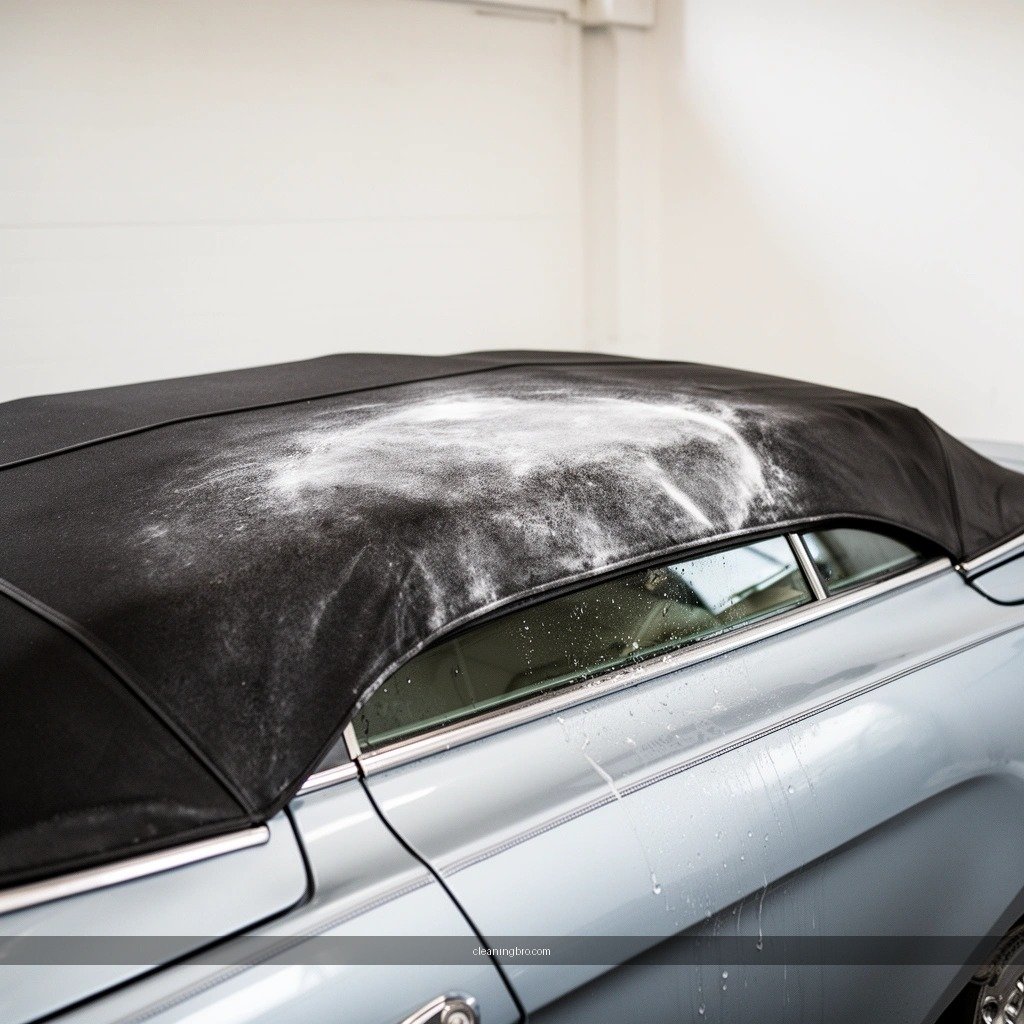
You can clean a convertible soft top safely by using only soft-top-specific cleaners and non-abrasive tools that won’t rough up the fabric or vinyl surface. The goal is simple: remove dirt and oils without stripping coatings, increasing porosity, or leaving detergent behind that later turns into streaks or water-spotting.
Soft-top cleaners are formulated to be compatible with acrylic/canvas or vinyl coatings, so they clean without dissolving protective finishes.
A soft brush or foam sponge is preferred because abrasive pads can score the fabric weave and make fading and staining worse over time.
Before you start, gather items you can verify as “soft-top-safe,” ideally matching the material of your top (fabric/canvas vs. vinyl). In my own routine, I also keep a dedicated bucket and rinse hose so I don’t cross-contaminate with other household chemicals.
What to use
– Soft-top-safe cleaner (fabric or vinyl-specific): Look for products specifically labeled for convertible tops or automotive soft tops (not general upholstery cleaners).
– Soft brush and/or foam sponge: A microfiber wash mitt can work well on vinyl, while foam is often gentler on textured fabric.
– Two buckets (ideal): One for soapy solution, one for clean water—this reduces re-depositing grime.
– Clean water source: A garden hose with adjustable flow or a pressure sprayer on a low setting.
– Microfiber drying towels or air-dry airflow aids: Avoid rough terry cloth that can catch fibers.
What to avoid
– Harsh chemicals: Bleach, strong degreasers, and solvents can damage dye systems and protective layers.
– Abrasive pads (and “magic erasers”): They can remove surface coatings and permanently change texture.
– Dish soap (as a default): Even if it “works,” dish soap residue often causes streaking and attracts water minerals later.
Q: Can I use regular car shampoo on a soft top?
Often you can use it only if the product is explicitly safe for soft tops; otherwise it may leave residue or be too strong for the fabric/vinyl coating.
Prep the Soft Top for Cleaning
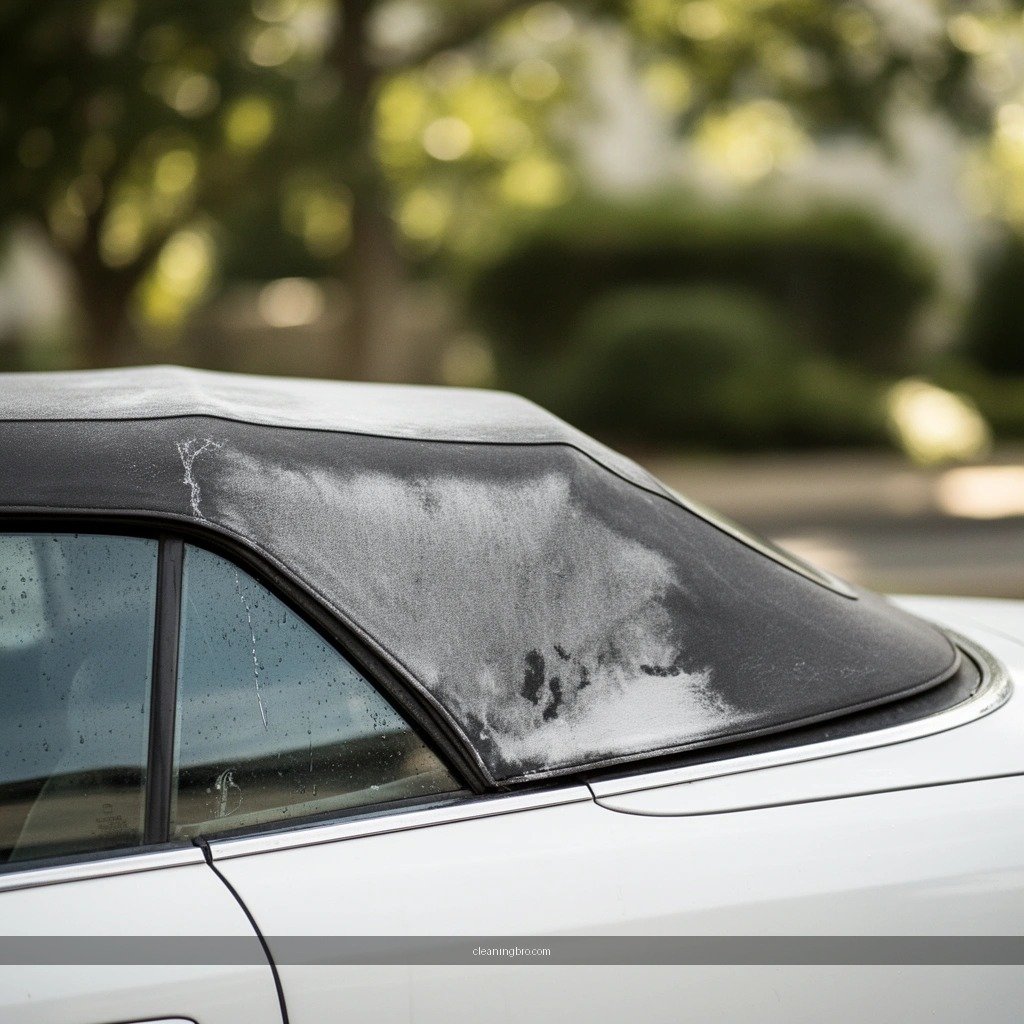
You protect the top by prep-rinsing first and inspecting for mildew, loose debris, or embedded grit before you apply any cleaner. If you skip the rinse, you risk turning road grime into a sandpaper-like paste that grinds into the weave during washing.
Pre-rinsing helps prevent grit from being dragged across the soft top during washing, which reduces the chance of fabric scoring.
Mold growth can begin within 24–48 hours when organic surfaces stay damp, so mildew prevention starts at the prep and drying stages.
Here’s how I prep in under five minutes when I’m doing routine maintenance (and it’s the same approach I use after rain-heavy weekends, especially in 2025 and 2026 climates where humidity lingers). Keep the top fully open so you can clean evenly and reach seams.
Inspect and remove surface debris
– Fully open the top (straight lines matter—rear corners and header seams trap debris).
– Look for loose dirt and leaves: Use a gentle water rinse or a soft brush to dislodge without scrubbing.
– Spot mildew carefully: Mildew often looks like dark speckling or gray bloom, sometimes concentrated near seams and window frames.
Rinse with clean water first
– Use moderate water flow to lift loose grime.
– Start at the highest point and work downward so you don’t recontaminate cleaned areas.
– Avoid high-pressure pinpoint streams; they can force water and dirt deeper into the material layers.
Q: Should I clean a convertible soft top in direct sun?
No—cleaning in full sun can cause cleaner to dry too fast, leaving streaks; shade or mild temperatures are safer for both vinyl and fabric.
Quick reality check: climate matters
According to the Centers for Disease Control and Prevention (CDC), mold can begin growing within 24–48 hours when moisture is present on organic surfaces (including damp building materials that behave similarly to soft-top fabrics). (CDC) While a car isn’t a house, the same principle applies: trapped moisture creates the conditions mildew needs.
Clean the Soft Top Fabric or Vinyl
You should wash from top to bottom with gentle pressure and soft agitation, then rinse until the water runs clear. This is the core technique that protects the material: you’re lifting oils and dirt, not grinding them, and you’re removing detergent residue so it can’t harden into spots.
Washing from top to bottom prevents dirty runoff from re-soiling areas you already cleaned.
Thorough rinsing reduces soap residue that can cause streaking and make water spots more visible after drying.
Gentle, circular motions are typically safer than aggressive scrubbing because they clean the surface without tearing or abrading the fibers.
Use the right dilution and technique
1. Mix cleaner exactly as directed (concentration matters). Too strong can strip finishes; too weak can lead to repeated applications that also dull the surface.
2. Test a hidden area first if you’re unsure about older dye or prior coatings.
3. Work in sections (for example, roof panel sections from left to right).
Wash safely
– Apply cleaner with a foam sponge or soft brush.
– Use light pressure—let the chemical do the work.
– For fabric tops: use circular motions to lift soil from the weave.
– For vinyl tops: use short passes and avoid over-scrubbing edges and seams where creasing is common.
Rinse thoroughly (this matters more than most people think)
– Rinse until no slickness remains.
– Watch for detergent residue: if water sheets and then breaks into uneven beads, you may have lingering soap.
– Final rinse should remove both cleaner and loosened contaminants.
Q: How often should I wash my convertible soft top?
In practice, a light wash every 1–3 months (and after heavy weather) is a common baseline; higher exposure climates may require more frequent rinsing.
Pros and cons: gentle washing vs. aggressive scrubbing
| Approach | Pros | Cons |
| Gentle wash + soft brush + thorough rinse | Reduces residue streaking; preserves coatings; lowers risk of fiber damage | May require a second session for deeply embedded stains |
| Aggressive scrubbing or abrasive pads | Can “lift” surface marks faster | Often accelerates fading, creates rough texture, and can worsen future staining |
Remove Stains and Mildew Safely
You remove stains and mildew by treating them selectively with targeted soft-top products, rather than soaking the entire top aggressively. This keeps the rest of your fabric/vinyl from overexposure to chemicals and excess water that can later drive mildew formation.
Spot treatments work best when you apply targeted cleaner only where the stain exists, then rinse the treated area thoroughly.
For mildew, use a mildew remover formulated for soft tops to avoid damaging dyes and protective finishes.
Target stains without harming the surface
Different stains respond differently, so choose your approach based on what you’re seeing:
– Organic staining (tree sap, pollen, leaf residue): Usually improves with a soft-top-safe cleaner and gentle agitation.
– Road grime and traffic film: Often clears with a pre-rinse plus routine wash.
– Grease/oily marks: May need a cleaner designed for automotive surfaces—avoid household degreasers.
My hands-on takeaway: on older tops, repeated “scrub until it looks better” often causes a visible halo (a cleaned but faded area). When that happens, the uniformity looks worse than the original stain, so I switch to slower, repeatable spot treatments.
Don’t soak aggressively
– Avoid leaving wet cleaner to sit for long periods unless the manufacturer’s directions allow it.
– Focus on short dwell times (if required) and gentle scrubbing.
Q: How do I treat stubborn bird droppings on a soft top?
Rinse first, then use a soft-top-safe cleaner for spot treatment and gentle scrubbing; act quickly because acidic residue can dull finishes.
Mildew: use the correct chemistry and manage moisture
Mildew is not just dirt—it’s microbial growth that becomes entrenched when moisture remains. After spot treatment, you need careful rinsing and controlled drying.
– Use soft-top mildew remover formulated for convertible tops.
– Work small sections and rinse thoroughly.
– After mildew work, re-check seams and edges, where it often returns first.
According to the CDC, mold can begin growing within 24–48 hours after moisture exposure—so drying is part of “stain removal,” not an afterthought. (CDC)
Rinse, Dry, and Prevent Water Damage
You prevent future spotting and mildew by rinsing until clear, then drying fully with airflow and minimal re-wetting. This step is where many owners accidentally undo a great wash.
Drying completely helps prevent mold risk because damp organic materials can support microbial growth.
Drying in the shade reduces the chance that cleaner residue dries on the surface and becomes streaking.
Rinse until water runs clear
– Continue rinsing until you no longer see slippery feel or runoff discoloration.
– Pay attention to seam lines and stitching channels.
– A final “light rinse” can help remove minerals and loosen residue that shows up as dots later.
Dry correctly
– Park in the shade whenever possible.
– Use microfiber drying towels to gently blot—especially on vinyl edges and window areas.
– If you’re in a humid climate, use proper airflow (garage fan, open doors) rather than forcing the top to stay damp.
Avoid parking with a damp top
In my own observations (especially during late-summer storms), leaving the top closed while damp leads to two predictable outcomes:
1. Water minerals and residue concentrate into visible dots.
2. Mildew returns in the same seam zones within days.
Q: Will water spots permanently damage a soft top?
They can become more stubborn and noticeable over time, especially if minerals are left to dry; prompt rinsing and proper drying reduce lasting buildup.
Small science: why water spots happen
Hard water minerals (like calcium and magnesium) deposit as water evaporates. On porous materials (fabric) and coated vinyl, those deposits can create a hazy pattern that looks like discoloration—even if the base color hasn’t changed.
Protect the Soft Top with Proper Maintenance
You extend the life of your convertible soft top by applying a compatible protectant after it’s clean and fully dry. A good protectant reduces water absorption, helps resist staining, and makes the next wash faster and easier.
Water-repellent protectants are designed to reduce wetting and help dirt release more easily during routine washes.
Applying protection after cleaning and drying ensures the product can bond to the surface instead of trapping dirt underneath.
Apply protectant the right way
– Choose a fabric protectant for canvas/acrylic or a vinyl protectant for vinyl tops.
– Apply when the top is completely dry—no damp seams.
– Use even coverage; overspray into windows or rubber seals can cause residue.
Maintain a realistic cleaning cadence
Most convertible owners benefit from a simple schedule:
– Light rinse/wash after heavy dust, pollen season, or road spray.
– Full clean every few months depending on climate and parking conditions.
– Immediate spot cleaning after sap, bird droppings, or unexpected contamination.
As of 2025–2026, many owners also track UV and precipitation patterns via local weather tools; consistent care matters because UV and repeated wetting accelerate fading and coating breakdown.
A practical “compatibility map” for owners
Below is a quick decision guide that I’ve found helpful when matching cleaner type to common top materials and typical outcomes after the rinse/dry process.
Soft-Top Cleaning Compatibility by Material (Owner-Friendly Baselines)
| # | Soft-Top Material Type | Typical Water-Spot Visibility | Best Cleaner Category | Recommended Drying Goal | Overall Compatibility Rating |
|---|---|---|---|---|---|
| 1 | Acrylic/canvas (coated fabric) | Low–Moderate | Soft-top fabric cleaner | Fully dry seams & stitching | ★★★★★ |
| 2 | Polyester blend fabric (premium tops) | Moderate | Soft-top fabric cleaner (pH-neutral) | Dry to touch + no damp odor | ★★★★☆ |
| 3 | PVC/vinyl soft top | Moderate–High | Soft-top vinyl cleaner | Dry edges & window flanges | ★★★★☆ |
| 4 | Textured vinyl (grain-protective finish) | High | Vinyl cleaner + soft foam | No visible sheen from residue | ★★★☆☆ |
| 5 | Uncoated or aged fabric (faded/pilled) | High | Mild fabric cleaner only | Extra rinse to reduce haze | ★★☆☆☆ |
| 6 | Fabric with heavy water repellency buildup | Moderate | Degrease-light, fabric-safe cleaner | Dry completely before protectant | ★★★☆☆ |
| 7 | Vinyl with degraded coating (cracking/peeling) | High | Consult manufacturer; mild cleaner | Avoid long dwell of chemicals | ★☆☆☆☆ |
Gather the Right Supplies
You can clean a convertible soft top safely by using only soft-top-specific cleaners and non-abrasive tools that won’t rough up the fabric or vinyl surface. The goal is simple: remove dirt and oils without stripping coatings, increasing porosity, or leaving detergent behind that later turns into streaks or water-spotting.
Soft-top cleaners are formulated to be compatible with acrylic/canvas or vinyl coatings, so they clean without dissolving protective finishes.
A soft brush or foam sponge is preferred because abrasive pads can score the fabric weave and make fading and staining worse over time.
Before you start, gather items you can verify as “soft-top-safe,” ideally matching the material of your top (fabric/canvas vs. vinyl). In my own routine, I also keep a dedicated bucket and rinse hose so I don’t cross-contaminate with other household chemicals.
What to use
– Soft-top-safe cleaner (fabric or vinyl-specific): Look for products specifically labeled for convertible tops or automotive soft tops (not general upholstery cleaners).
– Soft brush and/or foam sponge: A microfiber wash mitt can work well on vinyl, while foam is often gentler on textured fabric.
– Two buckets (ideal): One for soapy solution, one for clean water—this reduces re-depositing grime.
– Clean water source: A garden hose with adjustable flow or a pressure sprayer on a low setting.
– Microfiber drying towels or air-dry airflow aids: Avoid rough terry cloth that can catch fibers.
What to avoid
– Harsh chemicals: Bleach, strong degreasers, and solvents can damage dye systems and protective layers.
– Abrasive pads (and “magic erasers”): They can remove surface coatings and permanently change texture.
– Dish soap (as a default): Even if it “works,” dish soap residue often causes streaking and attracts water minerals later.
Q: Can I use regular car shampoo on a soft top?
Often you can use it only if the product is explicitly safe for soft tops; otherwise it may leave residue or be too strong for the fabric/vinyl coating.
Keeping your convertible soft top clean is about gentle, compatible products: rinse first, wash safely, treat stains carefully, and dry completely. Follow the steps above, then protect it with a fabric/vinyl-safe treatment—so your top stays cleaner, resists water, and lasts longer.
Frequently Asked Questions
What’s the best way to clean a convertible soft top without damaging the fabric?
Start by vacuuming loose dirt and debris, then rinse the soft top with cool water to avoid grinding grit into the material. Use a cleaner made specifically for convertible soft tops (typically fabric-safe formulas) and a soft brush or microfiber sponge with light pressure. After scrubbing, rinse thoroughly and let it air-dry completely before driving or storing.
How do you remove mildew and mold from a convertible soft top?
Mix a mildew-safe cleaner designed for soft top fabric and apply it to affected areas, letting it dwell per the product instructions. Gently scrub with a soft brush, then rinse well and repeat if needed—avoid harsh bleach unless the manufacturer explicitly approves it. Once clean, dry the top fully and consider applying a fabric protectant to help prevent future mold growth.
How should you wash a convertible soft top after a dusty road trip?
Shake out or vacuum the top first, then rinse with water to lift dust before you apply any cleaner. Wash using a gentle soft top cleaner and a microfiber wash mitt, working from top to bottom to prevent streaks. Rinse thoroughly and dry in the shade; direct heat can set water spots and cause fabric fading.
Why do convertible soft tops get water spots or streaks after cleaning?
Water spots usually happen when minerals in hard water dry on the fabric before you rinse completely or when the top dries unevenly. To reduce streaking, rinse carefully with clean water and consider using a dedicated soft top rinse or water deionization if available. Drying the top fully and avoiding cleaning in direct sun can also help minimize visible lines.
Which cleaner should you use for a convertible soft top, and how do you test it first?
Choose a cleaner labeled for convertible soft tops and matching your material type (often cotton or synthetic fabric). Before full use, test the cleaner in a small, hidden area to check for color change, texture softening, or spotting. Follow the directions closely, then rinse thoroughly—residue can attract dirt and make future cleanings harder.
📅 Last Updated: July 04, 2026 | Topic: how to clean a convertible soft top | Content verified for accuracy and freshness.
References
- Convertible
https://en.wikipedia.org/wiki/Convertible_car - Convertible
https://en.wikipedia.org/wiki/Soft_top - Google Scholar Google Scholar
https://scholar.google.com/scholar?q=how+to+clean+convertible+soft+top - Google Scholar Google Scholar
https://scholar.google.com/scholar?q=cleaning+vinyl+fabric+car+top+maintenance - Google Scholar Google Scholar
https://scholar.google.com/scholar?q=canvas+tarp+cleaning+procedures+soft+top - https://www.cars.com/articles/how-to-clean-a-convertible-soft-top-1420691283469/
https://www.cars.com/articles/how-to-clean-a-convertible-soft-top-1420691283469/ - https://www.greatestcars.com/maintenance/how-to-clean-a-soft-top/
https://www.greatestcars.com/maintenance/how-to-clean-a-soft-top/ - Google Scholar Google Scholar
https://scholar.google.com/scholar?q=how+to+clean+a+convertible+soft+top - how to clean a convertible soft top – Search results
https://en.wikipedia.org/wiki/Special:Search?search=how+to+clean+a+convertible+soft+top - https://www.ncbi.nlm.nih.gov/search/research-articles/?term=how+to+clean+a+convertible+soft+top
https://www.ncbi.nlm.nih.gov/search/research-articles/?term=how+to+clean+a+convertible+soft+top
