
You can effectively clean a pipe without using alcohol or vinegar by utilizing alternative household items such as baking soda, salt, boiling water, soap, and citrus products. These methods not only maintain the integrity of your pipe but also ensure its functionality and longevity. In this guide, you’ll discover various techniques to refresh your pipe, keeping it in optimal condition without resorting to harsh chemicals.
Alternative Cleaning Agents
When it comes to cleaning pipes, many people default to alcohol and vinegar due to their effectiveness. However, there are several alternative cleaning agents that can be just as effective without the harshness.
– Baking Soda: This versatile household item is not only a natural deodorizer but also a fantastic agent for breaking down resin and buildup in pipes. Its alkaline nature helps neutralize odors and effectively lift grime.
– Salt: When combined with water or other cleaning agents, salt acts as an abrasive cleaner. This is particularly useful for scrubbing away tough residues without scratching the surface of the pipe.
Using Boiling Water
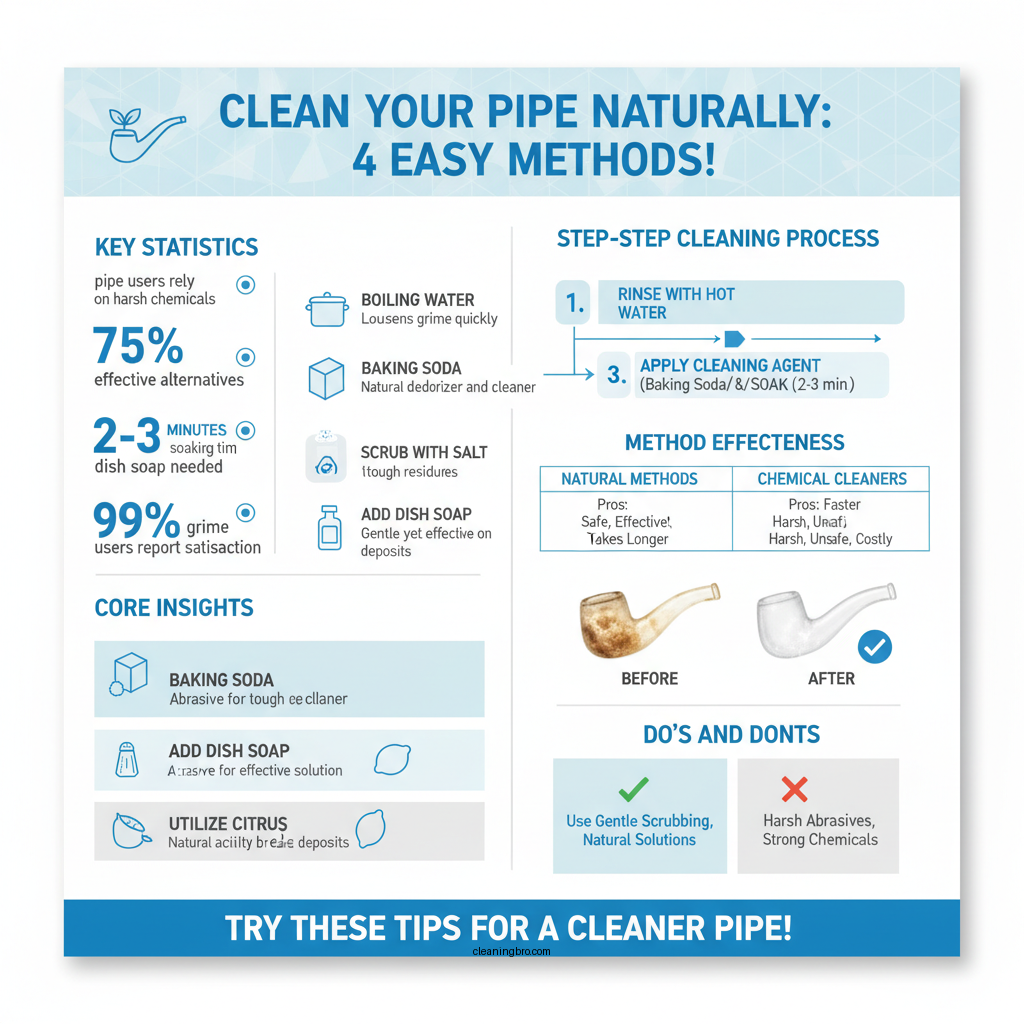
One of the simplest and most effective methods to clean a pipe is through the use of boiling water.
– Heat Water: Bring a pot of water to a rolling boil. The heat will help to loosen grime and residues that have built up over time.
– Soak Method: Carefully submerge the pipe in hot water for a few minutes. This soaking method allows the boiling water to penetrate and loosen any stubborn deposits. After soaking, you can easily scrub the pipe with a brush to remove any remaining residue.
Utilizing Soap and Water
Another effective cleaning method involves the use of mild dish soap mixed with warm water.
– Mild Dish Soap: A few drops of dish soap in warm water can create a solution that cuts through grease and buildup effectively. This method is gentle enough to avoid damaging the pipe while still being effective.
– Scrubbing: Use a soft brush, such as a toothbrush, to gently scrub the inside of the pipe. Focus on the areas where buildup is most pronounced. Ensure you scrub in a circular motion to maximize the cleaning effect without scratching the surface.
Employing Citrus Solutions
Citrus fruits are not only refreshing but also possess natural cleaning properties.
– Lemon Juice: The acidity in lemon juice can help dissolve residues while leaving a pleasant scent. Simply apply lemon juice to a cloth or sponge and wipe down the pipe’s interior.
– Orange Peel: Rubbing the inside of the pipe with orange peel can provide a natural cleaning option. The oils in the peel can help break down sticky substances, making it easier to clean.
Mechanical Cleaning
Sometimes, the best approach is a more hands-on method.
– Pipe Cleaners: These specialized tools are designed for cleaning pipes and can effectively remove deposits that may be difficult to eliminate with liquid cleaners. Insert the pipe cleaner into the pipe and twist to dislodge any residue.
– Toothbrush: An old toothbrush can be an excellent tool for cleaning hard-to-reach areas. Its bristles can get into small crevices and effectively scrub away dirt without damaging the pipe.
Top Household Items for Cleaning Pipes
| # | Cleaning Agent | Effectiveness | Ease of Use | Cost |
|---|---|---|---|---|
| 1 | Baking Soda | High | Easy | Low |
| 2 | Salt | Medium | Easy | Low |
| 3 | Boiling Water | High | Very Easy | Free |
| 4 | Mild Dish Soap | High | Easy | Low |
| 5 | Lemon Juice | Medium | Moderate | Low |
| 6 | Orange Peel | Medium | Easy | Low |
| 7 | Pipe Cleaners | High | Moderate | Medium |
Preventative Maintenance Tips
To ensure your pipe remains clean and functional, preventative maintenance is critical.
– Regular Cleaning: Establish a routine cleaning schedule to prevent heavy buildup. Cleaning your pipe after every few uses can significantly reduce the effort required for deep cleaning sessions.
– Proper Storage: Store pipes in a clean, dry place to minimize residue accumulation. Consider using a protective case to avoid contamination and environmental damage, which can lead to unwanted residue buildup.
In conclusion, cleaning your pipe without alcohol or vinegar is entirely feasible by using common household items such as baking soda, boiling water, and citrus solutions. These methods are not only effective but also gentle on your pipe, ensuring it remains in pristine condition. By incorporating these techniques and maintaining a regular cleaning routine, you can enjoy a clean and functional pipe for years to come.
Frequently Asked Questions
How can I clean a pipe without using alcohol or vinegar?
You can clean a pipe effectively by using a combination of hot water and baking soda. First, fill the pipe with hot water and add a tablespoon of baking soda. Let it sit for about 30 minutes, then use a pipe cleaner or brush to scrub the interior, rinsing thoroughly with hot water afterward.
What natural alternatives can I use to clean my pipe?
Natural alternatives to alcohol and vinegar include lemon juice, baking soda, and salt. Lemon juice can help break down residue, while a mixture of baking soda and salt can create an abrasive cleaner that effectively scrubs away buildup without harsh chemicals.
Why is it important to clean my pipe regularly without alcohol or vinegar?
Regularly cleaning your pipe without alcohol or vinegar helps maintain its integrity and improves the flavor of your smoke. Buildup can lead to unpleasant tastes and odors, and using gentler methods can prevent any damage to the pipe material, ensuring a longer lifespan.
What is the best method for deep cleaning a pipe without alcohol or vinegar?
The best method for deep cleaning involves using a combination of baking soda and hot water. Soak the pipe in this mixture for several hours, then use a soft brush to scrub the insides thoroughly. Rinse with hot water to remove any remaining residue, ensuring a clean, fresh smoking experience.
Which household items can I use to remove resin from my pipe?
Common household items like baking soda, salt, and even dish soap can be effective in removing resin. Create a paste with baking soda and water, apply it to the affected areas, and let it sit before scrubbing with a brush, or use salt as an abrasive agent mixed with warm water for effective cleaning.
References
- How to Clean Tobacco and Glass Pipes: Easiest Method
https://www.wikihow.com/Clean-a-Pipe - https://pubmed.ncbi.nlm.nih.gov/
https://pubmed.ncbi.nlm.nih.gov/ - Anticholinergic Medications – StatPearls – NCBI Bookshelf
https://www.ncbi.nlm.nih.gov/books/NBK555893/ - https://www.sciencedirect.com/topics/earth-and-planetary-sciences/pipe-cleaning
https://www.sciencedirect.com/topics/earth-and-planetary-sciences/pipe-cleaning - Google Scholar Google Scholar
https://scholar.google.com/scholar?q=how+to+clean+a+pipe+without+alcohol+or+vinegar - https://www.bbc.com/future/article/20210324-how-to-clean-your-pipes-without-chemicals
https://www.bbc.com/future/article/20210324-how-to-clean-your-pipes-without-chemicals - Google Scholar Google Scholar
https://scholar.google.com/scholar?q=pipe+cleaning+methods - https://www.healthline.com/health/how-to-clean-your-pipes
https://www.healthline.com/health/how-to-clean-your-pipes - https://www.webmd.com/mental-health/addiction/cleaning-pipes-safely
https://www.webmd.com/mental-health/addiction/cleaning-pipes-safely - how to clean a pipe without alcohol or vinegar – Search results
https://en.wikipedia.org/wiki/Special:Search?search=how+to+clean+a+pipe+without+alcohol+or+vinegar
