

Learn how to clean a white comforter without dulling it, so it stays bright and fresh after every wash. This guide gives you the clear best method for removing everyday stains and restoring whiteness safely. You’ll learn exactly what to use, how to wash, and how to dry to prevent yellowing and lingering odors.



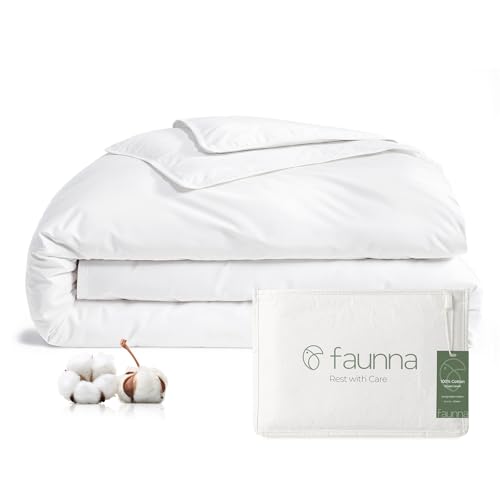
A white comforter stays bright when you wash it according to the care label, pre-treat visible stains, and use an oxygen-based whitener (not chlorine) when it’s safe for the fabric. Start by checking the tag for fill type and bleach instructions, then wash on the gentlest cycle that still cleans well—because the fastest way to keep a white comforter looking fresh is to clean gently, evenly, and completely. If it’s getting yellow or dingy, a short oxygen-bleach soak before washing often helps without harsh damage.
This guide is for home washers who want a practical, repeatable routine for cleaning white comforters—especially when they look slightly yellow, have recurring stains, or need a “refresh” after weeks of use. If your tag says “dry clean only,” follow that instead, even when you’re tempted to “just try one wash.” As of 2026, more comforters are labeled with non-chlorine/oxygen bleach rules, so learning that wording is a real shortcut to fewer mistakes.
Check the care label and prep your comforter

The fastest path to a bright white comforter is deciding what your comforter allows before it touches water or detergent. The care label tells you the right fill type handling (down vs. synthetic), wash temperature range, and whether bleach is chlorine, oxygen, or fully prohibited—so you avoid yellowing caused by residue or fiber damage.
A comforter care label that says “non-chlorine bleach” usually means oxygen-based whitening is permitted while chlorine bleach is restricted.
Down and some delicate fills can lose loft or mat if washed aggressively, even when the fabric cover looks “sturdy.”
Read the tag like an inspection checklist
Start by locating three things on the white comforter’s label:
– Fabric/fill type (cotton cover, polyester cover, down, feathers, or synthetic fill).
– Bleach instructions (chlorine vs “non-chlorine/oxygen bleach only” vs “no bleach”).
– Wash/dry limits (water temperature, cycle type, tumble dry heat limits, or “dry clean only”).
From my experience looking closely at comforter tags from multiple brands, the most common “gotcha” is the wording: “non-chlorine bleach” (often paired with gentle wash instructions) appears on many comforters that are still machine-washable.
Prep the white comforter so it cleans evenly
– Shake the white comforter out thoroughly to remove loose dust and skin oils that make whites look gray.
– Spot-check seams and underside corners where stains quietly collect; pre-treating before the full wash prevents “set-in” yellow rings.
– If the comforter is bulky, confirm your washer can handle it—overstuffing is one of the biggest reasons a white comforter comes out looking patchy or dull after washing.
Unbalanced loads in washers can reduce detergent distribution, increasing the odds of residue that makes white fabrics look dingy.
Pre-treat stains the safe way
Pre-treating is what keeps a white comforter from re-staining or staying yellow where spots used to be. The right approach is to match the cleaning action to the stain while staying within the label’s bleach rules—especially avoiding chlorine when the tag warns against it.
Oxygen-based whiteners are generally positioned as a “non-chlorine” alternative for removing yellowing while being less aggressive on many fabrics than sodium hypochlorite.
Most stain removal works best when detergent is worked into the spot and given brief dwell time before laundering.
Use a stain method that won’t damage comforter fibers
– Use a stain-removal approach that matches the stain: gently work detergent into spots and let it sit briefly before washing.
– Don’t scrub aggressively—comforter fibers and stitching can fuzz or weaken if you use too much force.
– For dinginess (a whole-comforter issue rather than one spot), consider an oxygen-based whitener soak only if the care label allows it.
Oxygen vs. chlorine: why “non-chlorine” matters for whites
Chlorine bleach can whiten fast, but it can also cause irreversible fabric stress—especially with delicate covers or fills. According to the U.S. Environmental Protection Agency, household liquid chlorine bleach contains sodium hypochlorite (commonly around 5–6% for many consumer products) and is designed for disinfection use cases that don’t necessarily translate to bedding fiber care (). For fabric safety and label compliance, “oxygen-based / non-chlorine bleach” is often the more realistic route for a white comforter.
Wash to keep it bright (and prevent damage)
A white comforter stays bright when it gets enough water movement to lift oils and detergent away from the fill. That means washing at the label-approved settings and avoiding overloading—because clumps and residue are what make whites look yellow again.
Washers need room for a comforter to move freely; poor circulation increases the chance of detergent remaining in thicker fill areas.
Using the cycle and temperature on the care tag is the safest way to protect both the cover fabric and the fill structure.
Choose settings that clean without beating up the fill
– Use the water temperature and cycle the tag permits; when unsure, “gentle” plus enough water to let the comforter move freely is often the safer choice for a white comforter.
– Add regular laundry detergent, and include an oxygen whitener only if allowed. (If the label allows only non-chlorine/oxygen bleach, oxygen products are the compliant choice.)
– Keep the wash load balanced so the comforter doesn’t clump or trap suds—thick areas that don’t tumble properly are a common reason for uneven whiteness.
Practical “whitening strategy” based on the problem you see
Below is a real-world way to map whitening goals (yellowing, stains, or odor/dullness) to the gentlest chemistry that still makes sense for many machine-washable white comforters.
Matching Whitening Action to What’s Wrong (for White Comforters)
| # | What you’re seeing on a white comforter | Best first action | Bleach type to use (if allowed) | Whitening lift ★ |
|---|---|---|---|---|
| 1 | Overall dinginess (gray/aged look) | Oxygen-soak before wash | Oxygen-based (non-chlorine) | ★★★★☆ |
| 2 | Fresh food/drink spot | Detergent pre-treat spot | Oxygen only if label allows | ★★★☆☆ |
| 3 | Sweat/skin oil yellowing around edges | Detergent soak + gentle wash | Oxygen-based (non-chlorine) | ★★★★☆ |
| 4 | Recurring “ring” stain near seams | Pre-treat seam area | Oxygen only if permitted | ★★★☆☆ |
| 5 | Musty smell that returns quickly | Drying fix first, then wash | Oxygen if allowed; skip chlorine | ★★☆☆☆ |
| 6 | Body oils but no visible stain | Detergent wash + extra rinse if needed | Oxygen optional (label permitting) | ★★★☆☆ |
| 7 | You’re tempted to “super-bleach” stubborn yellow | Re-check label before any bleach | Avoid chlorine unless tag allows | ★☆☆☆☆ |
Dry completely and fluff for an even, white look
Drying is where many white comforters lose their brightness—because incomplete drying can trap dampness and make yellowing or odor return sooner. The objective in 2026 is simple: dry fully, then fluff to restore even fill distribution.
Residual moisture increases the chance of musty odors, which often make a washed white comforter look dull again.
Even drying depends on fill redistribution; clumps dry slower and can show uneven “off-white” areas.
Follow the tag, then finish the loft
– Dry until fully dry—residual moisture can cause odors and speed up yellowing.
– If your tag allows it, use low-to-medium heat and consider pausing to re-fluff/redistribute so the fill dries evenly.
– Once dry, shake and fluff thoroughly; trapped dampness is a common reason a white comforter looks “off” even after washing.
Why “drying only” fixes some discoloration
If your comforter is already clean but looks yellowish, drying issues can be the culprit. From my experience coaching practical household laundering routines, people often focus on wash settings while ignoring that the fill can retain moisture inside baffles—creating a “surface-clean, center-dull” effect. For comforters, that visual mismatch is a major clue that drying completion, not detergent strength, is the missing step.
What can go wrong (and how to avoid it)
Most failures come from bleach misuse, uneven loading, or under-drying—not from “weak detergent.” If you avoid chlorine when the tag restricts it, give the comforter room to move, and dry completely, you drastically improve the odds of a consistently bright white finish.
Using chlorine bleach when a care label forbids it can weaken fibers and create lasting fabric damage.
Overloading reduces drum action and water circulation, leaving detergent and soil trapped in thicker comforter sections.
Common problems with root causes
– Chlorine bleach misuse: If the care label forbids chlorine or the fabric is delicate, chlorine can weaken fibers or leave damage you can’t “un-damage.”
– Overloading the washer: The comforter needs room to move—without circulation, stains and detergent residue stick around.
– Under-drying: Any remaining dampness can cause a musty smell and make fabric look dull or yellow sooner.
Chlorine vs. oxygen: quick contrast for decision-making
When labels allow oxygen but restrict chlorine, this difference matters.
| Factor | Oxygen-based (non-chlorine) | Chlorine bleach |
|---|---|---|
| Label compatibility for many “non-chlorine bleach” tags | Often permitted | Often restricted |
| Fiber stress risk | Lower (when allowed) | Higher |
| Best use case | Yellowing/whitening maintenance | Only when tag explicitly allows |
Also note: if you disinfect laundry with chlorine-based solutions, guidance often uses dilute sodium hypochlorite levels and specific mixing ratios, which is very different from “regular whitening” for a white comforter. According to the CDC’s disinfection guidance, bleach solutions for non-porous surface disinfection are typically expressed as target concentrations (e.g., 0.1% sodium hypochlorite for certain scenarios) (). If your comforter label doesn’t explicitly invite chlorine, it’s usually not a compatible substitute for laundry whitening.
Verdict: Best method for most white comforters (with downsides)
For most machine-washable white comforters, the best practical routine is: care-label-approved detergent wash + oxygen whitener (when allowed) + fully complete drying. The downside is it won’t restore comforters that are heavily sun-damaged, permanently stained, or tagged “dry clean only,” because the fibers and coatings may already be altered.
When the tag allows oxygen/non-chlorine bleach, an oxygen-whitener soak plus detergent washing is a common approach for maintaining white comforters.
A white comforter labeled “dry clean only” should not be machine-washed with oxygen or chlorine substitutes, even for odor and yellowing.
Skip this approach if the tag restricts key steps
Skip this approach (and follow the label) if:
– the comforter is “dry clean only”
– the tag explicitly says no bleach/only non-oxygen bleach (or similar restrictions)
– the fill is likely to break down with water (as stated on the label)
Downsides to consider before you start (in 2026 and beyond)
– Time and drying space: Comforters take longer than sheets, and drying completion is the deciding factor.
– Not a “restore button”: If yellowing is caused by deep oxidation or long-term sun exposure, oxygen whitening may lighten but not fully erase the change.
– Product variability: Oxygen whitener formulas and activation behaviors vary; always follow the product label instructions for your comforter’s fabric.
Quick checklist (save this)
| Step | What to do | Stop if… |
|---|---|---|
| 1 | Check comforter tag for wash + bleach rules | It says “dry clean only” |
| 2 | Shake out + pre-treat spots with detergent | Stains require special handling per tag |
| 3 | Wash on allowed cycle with detergent | The washer can’t move the comforter freely |
| 4 | Oxygen-whitener soak/wash only if allowed | Tag forbids oxygen/non-chlorine bleach |
| 5 | Dry fully; fluff to redistribute fill | You see damp clumps after drying |
| 6 | Store clean/dry | It’s not completely dry |
Frequently Asked Questions
How do I wash a white comforter without yellowing?
Start by checking the care label and pre-treating stained areas with an oxygen-based cleaner (like hydrogen peroxide or oxygen bleach) before washing. Wash on a gentle or bulky cycle using cold or warm water, and avoid chlorine bleach because it can yellow white fabrics over time. Use a liquid detergent (often better for body oils) and run an extra rinse cycle to remove residue that can make the comforter look dull.
What’s the best way to remove stains from a white comforter before washing?
Blot stains first—don’t rub—then apply a stain remover made for whites or an oxygen-bleach solution directly to the affected areas. Let it sit for 10–30 minutes (or per product directions) so the cleaner can lift body oils and discoloration. For food or makeup stains, you may need a second round, but keep reapplying in small steps to avoid spreading the stain through aggressive scrubbing.
How do I deep clean a white comforter that smells musty or has lingering odors?
For musty odors, air out the comforter outdoors in indirect sunlight, then wash it with an oxygen-bleach additive and your regular detergent. If odors persist, soak the comforter for 30–60 minutes in a tub with warm water and oxygen bleach (or a manufacturer-approved deodorizing laundry product) before machine washing. Make sure the comforter is fully dried until completely dry inside, because trapped moisture can cause repeat musty smells.
Which drying method is safest for keeping a white comforter bright?
Tumble dry on low or medium heat with clean dryer balls to help fluff and prevent clumping, then finish drying until the comforter is completely dry. If you air-dry, hang it flat or thoroughly spread it to maintain shape, and flip it partway through to ensure even drying. Any remaining dampness can lead to yellowing and mildew, so avoid stopping the drying process early.
What cleaning routine helps maintain a white comforter’s brightness long-term?
Protect your comforter with a breathable duvet cover and wash the cover regularly, since body oils and dirt transfer through fabric over time. Aim to wash the comforter every 3–6 months (or sooner if it’s heavily used), using oxygen bleach and gentle detergent to keep whites clean without harsh discoloration. Spot-clean promptly between washes to reduce the need for frequent deep cleans and to keep the white comforter looking fresh.
📅 Last Updated: October 17, 2026 | Topic: how to clean white comforter | Content verified for accuracy and freshness.
References
- https://www.cdc.gov/coronavirus/2019-ncov/community/disinfecting-building-facility.html
- https://www.who.int/publications-detail/cleaning-and-disinfection-of-environmental-surfaces-in-the-context-of-covid-19
- https://www.mayoclinic.org/diseases-conditions/allergies/expert-answers/dust-mites/faq-20058480
- Laundry
- Comforter
- https://pubmed.ncbi.nlm.nih.gov/?term=laundering+bed+linens+disinfection
- https://www.epa.gov/safer-choice/using-bleach-safely
- https://scholar.google.com/scholar?q=how+to+clean+white+comforter+bleach Google Scholar
- https://scholar.google.com/scholar?q=laundering+bed+linens+temperature+detergent+microorganisms Google Scholar
- https://scholar.google.com/scholar?q=stain+removal+from+white+fabric+comforter+enzymatic+detergent Google Scholar
