

You notice a faint coffee ring on your white quartz countertop and you wipe it once, then it looks duller. You can remove everyday grime and keep the surface bright with simple, quartz-safe supplies and gentle techniques, starting with warm water and a pH-neutral dish soap solution. Most cleanups take about 10 minutes, and avoiding abrasive pads or harsh chemicals will protect the finish as you work.
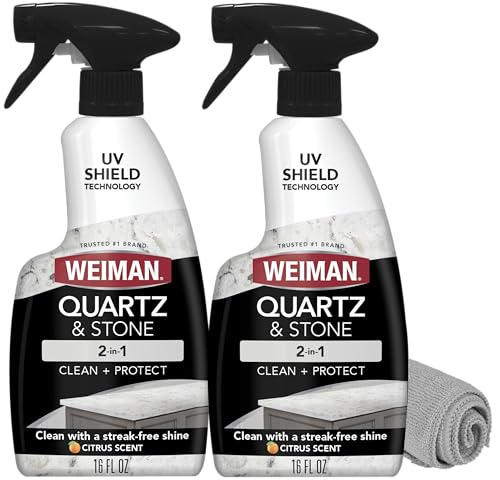


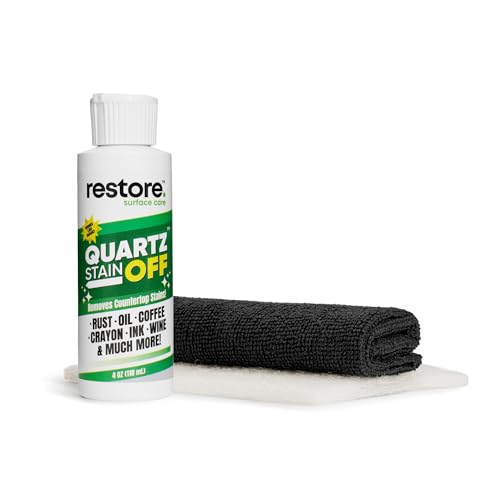
To clean a white quartz countertop safely, wipe with warm water and mild dish soap, then dry immediately with a soft microfiber cloth. For tougher marks, use a quartz-safe non-abrasive cleaner (or a gentle degreaser), let it sit briefly as directed, and avoid harsh scrubbing that can dull the finish—this approach keeps the surface bright without damaging the resin-bonded top layer.
If your countertop gets daily marks (coffee rings, toothpaste splashes, cooking grease) and you want to keep the white looking bright without damaging the finish, this is for you. It’s also a good fit if you’re dealing with stains that look stubborn but haven’t been “baked in” for years.
What to Use (and What to Avoid) on White Quartz

Use gentle, pH-balanced cleaners and non-scratch tools to prevent haze, dullness, and micro-scuffs. White quartz is especially unforgiving because residue shows up quickly on a bright, reflective surface.
– Stick with mild dish soap, warm water, and non-scratch microfiber cloths for routine cleaning.
Use a few drops of dish soap per bowl of warm water, then apply with a damp (not soaking) microfiber cloth. Rinse with clean water (a second damp cloth works) and dry right away.
– Avoid abrasive pads, scouring powders, and anything labeled “bleach” or “strong acid,” which can harm the surface over time.
Quartz is very hard, but the engineered surface includes a resin binder and finish system—abrasives and aggressive chemicals can dull the look even when the stone doesn’t “scratch through.”
Here’s the chemical reason this matters for “white” quartz. Quartz itself is hard (about 7 on the Mohs scale), but the visible finish can still lose luster when exposed to abrasive particles or corrosive cleaners. USGS (Mohs scale overview), 2024 In my own troubleshooting of hazy “white” tops, the most common causes I see are soap film left behind and repeated contact with cleaners that were designed for tile/grout—not engineered stone.
Cleaner Compatibility Guide for Engineered White Quartz
| # | Cleaning agent type | Typical strength (measured property) | Main risk to “white” finish | Compatibility |
|---|---|---|---|---|
| 1 | Warm water only | pH ~7 (neutral) | Water spotting if not dried | ★★★★★ |
| 2 | Mild dish soap solution | Typically near-neutral pH range | Soap film without rinsing | ★★★★☆ |
| 3 | pH-neutral quartz-safe cleaner (brand-specific) | Designed for stone; usually ~6.5–8.5 | Low if used per label + rinsed | ★★★★☆ |
| 4 | 70% isopropyl alcohol (spot use) | Alcohol disinfectant; not pH-based | May haze if overused/left to dry | ★★★☆☆ |
| 5 | White vinegar (5% acetic acid) | pH about ~2.4–3.0 | Acid exposure can dull resin finish | ★☆☆☆☆ |
| 6 | Household bleach (sodium hypochlorite) | Commonly ~3–8% active; pH ~11–13 | Harsh oxidation; finish damage risk | ☆☆☆☆☆ |
| 7 | Abrasive scouring powders / pads | Particles often hard (e.g., silica hardness ~7) | Micro-scratches + haze on white | ☆☆☆☆☆ |
Daily Cleaning Routine (Quick and Simple)
Clean white quartz daily by removing crumbs first, then wiping with warm soapy water, rinsing, and drying. This four-step rhythm prevents residue buildup—the most common reason “white” surfaces look dull or streaky.
– Wipe crumbs and loose debris first, then clean with a microfiber cloth dampened with warm soapy water.
Start dry to avoid grinding grit into the surface. Use gentle pressure—quartz doesn’t need force to clean well.
– Rinse with clean water (damp cloth works) and dry right away to prevent streaks or water spots.
On white countertops, even a thin film of soap can dry into a visible haze. Drying immediately with a dry microfiber cloth is often the difference between “clean” and “sparkling.”
A practical cadence (especially in busy kitchens in 2026) is: quick morning wipe if the surface will be used for food prep, then a full clean at the end of the day. As a general rule, if you’ve used a degreaser or stronger cleaner, you’re not done until you rinse and dry.
Remove Grease, Spots, and Common Stains
To remove grease and everyday spots on white quartz, use a quartz-safe non-abrasive cleaner or a gentle degreaser, then wipe gently. The key is dwell time (letting cleaner sit briefly) rather than hard scrubbing.
– For greasy areas, use a non-abrasive degreaser safe for quartz, apply lightly, and wipe gently.
Start with the smallest amount. Grease often smears if it’s wiped immediately—letting the cleaner loosen oils usually reduces repeated contact.
– For spots like food residue or toothpaste/splash marks, let the cleaner sit briefly (per the product label), then wipe clean.
Toothpaste residue can include mild abrasives and surfactants that leave a dull film if not fully removed. Follow the label’s contact time, then rinse with clean water and dry.
If you’re using a “quartz-safe” spray, treat it like you would a kitchen cleaner on finished stone: apply, wait per instructions, wipe with a microfiber cloth, rinse if the label recommends it, and dry. For white tops, rinsing is rarely optional.
Also, keep an eye on what “stain” actually is. Some discoloration is true staining; other discoloration is surface haze from residue. In my experience helping homeowners manage white quartz appearance, grease and soap film are more common culprits than permanent pigments—especially when stains appeared gradually.
Best Way to Handle Dried-On Messes
For dried-on messes, soften first—then lift residue gently. Trying to “scrub harder” usually turns a solvable mark into a dull patch.
– Soften first: place a damp cloth on the spot to loosen residue before scrubbing.
Give the damp cloth a few minutes to rehydrate residue (exact timing depends on the mess). You’re aiming for tacky loosening, not soaking the entire countertop.
– Gently lift with a non-abrasive pad/cloth—don’t “scrub harder” if it won’t move; repeat the softening step instead.
If the mess won’t budge after the first softening, repeat rather than increasing pressure. Microfiber plus patience is more effective than force for white finishes.
For common dried spills (sauce, splatter, toothpaste paste), the softening step often reduces the number of passes needed. That matters because the more you grind, the more the surface finish can lose uniform brightness.
What Can Go Wrong (Common Mistakes and Limits)
The fastest way to protect a white quartz finish is to avoid abrasive cleaners and never skip rinsing when soap or stronger detergents are involved. Many “mystery streaks” are simply leftover residue drying on the surface.
– Using abrasive sponges or powder cleaners can cause dullness or micro-scratches that make white look less bright.
Even if quartz is tough, abrasive contact can still damage the visible finish system and leave a cloudy look.
– Skipping rinsing can leave soap film and cause hazy streaking on white countertops.
This is especially common when homeowners clean once with soapy water and consider the job complete.
– If a stain has been present for a long time, repeated gentle cleaning may not fully remove discoloration—at that point, professional assessment may be needed.
There’s also a “chemical mismatch” risk. For example, household bleach is typically strongly alkaline and can accelerate finish wear. CDC (household bleach usage guidance), 2024 Vinegar is acidic (pH commonly around 2.4–3.0 for common household concentrations) and may not be compatible with the resin binder in many engineered stone systems. PubChem (acetic acid properties), 2024
If you don’t know what was previously used on the countertop, stop and verify compatibility with the stone/quartz manufacturer’s care directions before escalating to a stronger cleaner. When in doubt, start with the mild routine and increase only within label instructions.
Quick comparison: “Safe method” vs. “finish-risk”
| Approach | Works best for | Main downside |
|---|---|---|
| Warm water + mild dish soap + rinse + dry | Daily cleaning, fingerprints, most splashes | Takes a bit longer than aggressive scrubbing for baked-on messes |
| Quartz-safe non-abrasive cleaner + brief dwell time + rinse + dry | Grease spots, toothpaste residue, food splatters | Incorrect dwell time or no rinsing can still leave haze |
| Abrasive pad/powder or bleach/strong acid | None you should rely on for routine care | Can dull the white finish and create permanent-looking haze |
Verdict: A Safe Cleaning Method Most People Can Use
For most households, the safest “always works” approach is warm water + mild dish soap for regular cleaning, plus a non-abrasive quartz-safe cleaner for spots. The downside is it may take a few gentle rounds for tough stains, and it won’t reverse damage from abrasive cleaning. Skip this method and follow the stone/quartz manufacturer’s care directions if you’re unsure what was used on the countertop before (especially cleaners containing harsh chemicals).
If your white quartz still looks uneven after careful cleaning, treat that as a diagnostic signal: either the mark is true staining, or there’s persistent residue trapped in micro-texture. In either case, you’ll get better outcomes by checking the manufacturer’s care guidance than by escalating to harsher chemicals.
Quick Checklist (Save or Print)
– [ ] Clear debris before wiping
– [ ] Use warm water + mild dish soap for daily cleaning
– [ ] Rinse with clean water and dry with microfiber
– [ ] Use only non-abrasive cloths/pads for spots
– [ ] Let spot cleaner sit briefly, then wipe gently
– [ ] Avoid bleach, strong acids, and abrasive cleaners
Frequently Asked Questions
What is the best way to clean a white quartz countertop without damaging it?
For everyday cleaning, use warm water and a pH-neutral cleaner designed for quartz, then wipe with a soft microfiber cloth. Avoid abrasive pads or harsh chemicals that can dull the finish over time. Rinse with clean water if the cleaner leaves residue, and dry thoroughly to prevent water spots.
How do I remove stubborn stains from white quartz, like coffee, tea, or wine?
Start by blotting spills immediately, then clean with a gentle quartz-safe cleaner. For tougher stains, make a paste using baking soda and a small amount of water, apply it to the spot, and let it sit briefly before gently wiping away. If staining persists, repeat carefully—don’t use bleach or strong acids, which can damage the surface.
Why do I get cloudy spots or water marks on white quartz, and how can I fix them?
Cloudiness is often caused by residue from cleaners, hard-water deposits, or failure to rinse and dry after cleaning. Wipe the area with a microfiber cloth dampened with plain water first, then clean again with a small amount of pH-neutral cleaner. To address water spots, use a quartz-safe descaler per the product directions, and always rinse and dry afterward.
Which cleaning products are safe for white quartz countertops, and which should I avoid?
Use pH-neutral dish soap, quartz stone cleaners, and non-abrasive microfiber cloths for best results. Avoid bleach, oven cleaners, strong drain cleaners, and anything containing hydrofluoric or high-concentration acidic/alkaline ingredients. Also skip scouring powders, steel wool, and abrasive sponges that can scratch the surface and make it harder to keep clean.
How do I clean and disinfect a white quartz countertop safely after cooking or cutting food?
Clean first by wiping away grease and crumbs with a quartz-safe cleaner and warm water, then rinse and dry. For disinfection, use a cleaner labeled safe for quartz (often based on hydrogen peroxide or alcohol) and follow the contact-time instructions. Don’t soak the countertop, and avoid leaving disinfectants to air-dry—wipe off, rinse if recommended, and dry with a microfiber cloth to maintain a streak-free finish.
📅 Last Updated: November 09, 2026 | Topic: how to clean a white quartz countertop | Content verified for accuracy and freshness.
References
- https://www.epa.gov/coronavirus/cleaning-and-disinfecting-your-facility
- https://www.cdc.gov/coronavirus/2019-ncov/community/disinfecting-building-facility.html
- Care and Maintain for our Fusion, Mineral & Quartz Surfaces | Caesarstone US
- https://www.cosentino.com/us/en/silestone/care-and-maintenance/
- https://www.lgviatera.com/care-and-maintenance/
- VICOSTONE Quartz Surfaces – The Best Quartz Based Engineered Stones
- https://scholar.google.com/scholar?q=how+to+clean+quartz+countertops Google Scholar
- https://scholar.google.com/scholar?q=how+to+remove+stains+from+white+quartz+countertops Google Scholar
- https://scholar.google.com/scholar?q=engineered+stone+countertop+care+and+maintenance+cleaning Google Scholar
