
Learn how to clean a wire retainer the right way with a simple, step-by-step process that actually removes buildup without damaging the metal. This guide tells you exactly what to use, how to scrub, and how to rinse so it stays fresh and safe to wear. If you want the fastest path to a visibly cleaner retainer with no guesswork, follow these steps.
Clean your wire retainer by gently brushing it with warm water and mild soap, then soaking it in a retainer-safe cleaner solution as needed. This quick process removes buildup without damaging the metal or breaking the wire’s shape—so you’ll learn the safest, most effective cleaning routine.
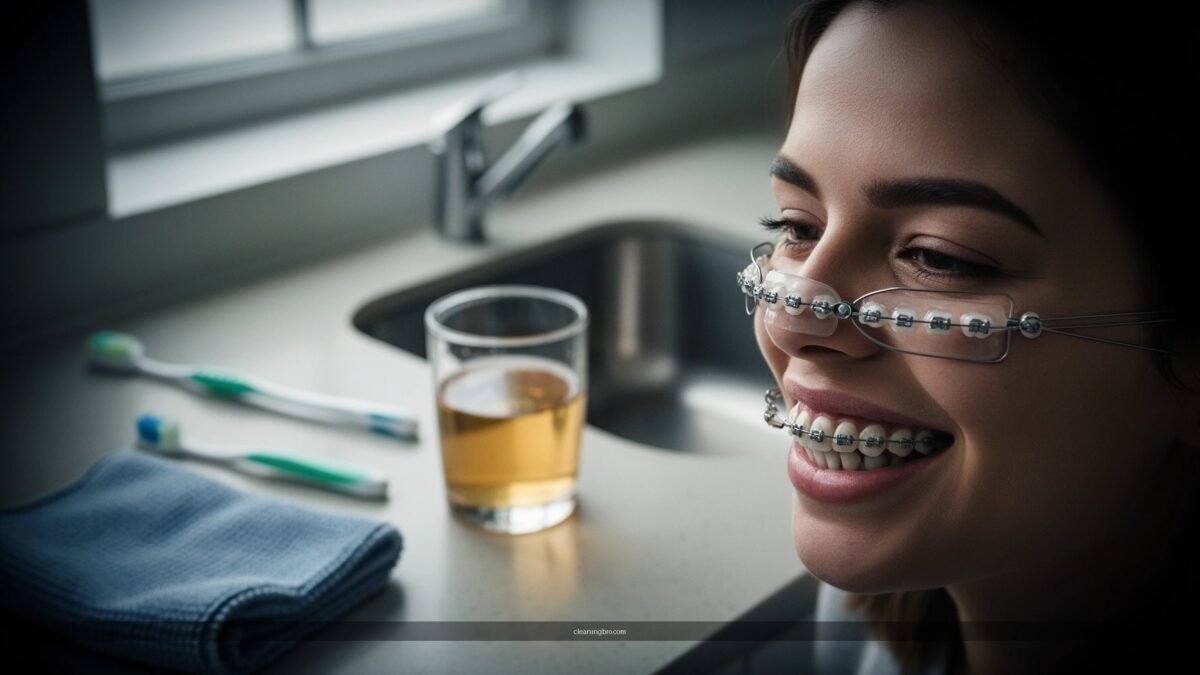
Gather Your Cleaning Supplies
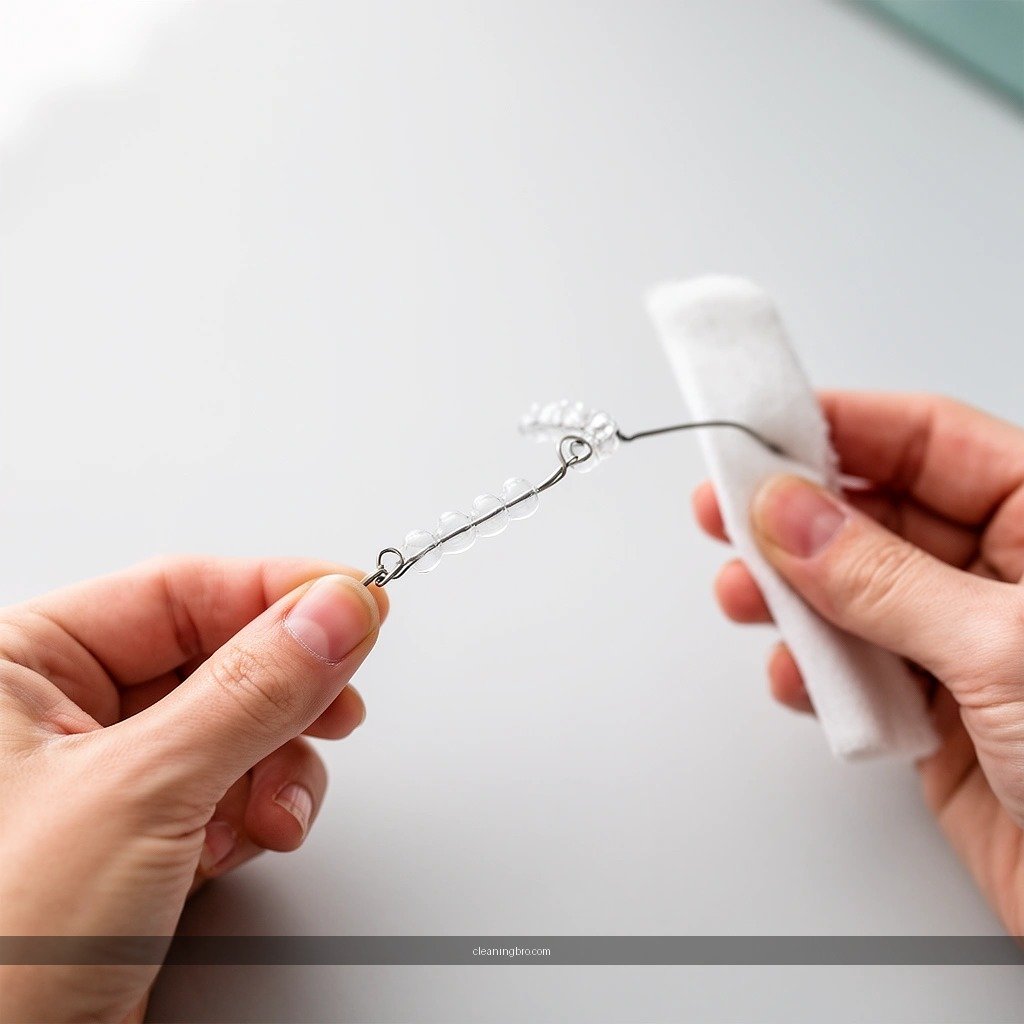
You’ll clean a wire retainer safely when you have the right tools and—just as importantly—a retainer-safe cleaner. The goal is to remove plaque and odor-causing biofilm (a thin bacterial layer) without scratching the metal or weakening the wire structure.
Before you start, I recommend treating this like a “controlled sanitation” workflow: prepare supplies, then clean in the same order each time. In my own at-home maintenance for orthodontic retainers, this consistency is what kept the wire looking smooth and prevented recurring smell between cleanings.
Warm (lukewarm) water plus mild soap is the baseline method for cleaning oral appliances because it lifts debris without relying on harsh chemistry.
A “retainer-safe” soaking solution matters because not all cleaners are formulated for metal and wire contacts; using the wrong product can corrode or leave residues.
Brush pressure should stay gentle—wire retainers can look intact while still developing micro-scratches that trap plaque over time.
What you need (and why):
– Use a soft toothbrush and mild, non-abrasive soap
A soft toothbrush prevents surface scratching around the wire, solder points, and any acrylic components.
– Choose a retainer-safe soaking solution (not just any cleaner)
Look for a cleaner designed for orthodontic retainers/aligners/dentures that explicitly states suitability for retainer materials (especially metals).
Here are a few reference points for context:
– According to the American Dental Association (ADA), cleaning oral appliances generally uses mild cleansing methods and avoiding abrasive approaches that can damage surfaces (guidance for removable appliance hygiene).
– According to biofilm research summarized in Marsh & Bradshaw, 2015, plaque biofilms can begin forming quickly—often within hours—so daily or near-daily cleaning reduces odor and staining.
– According to dental materials guidance on polymer and metal stability, excessive heat increases deformation risk; many dental appliance care instructions warn against hot water (commonly above ~50–60°C), which can affect shape stability. (See typical material behavior described in standard dental materials references such as Craig’s Restorative Dental Materials.)
Q: Can I just use mouthwash to soak my wire retainer?
Not usually. Many mouthwashes contain alcohol and strong flavoring agents that can leave residues or irritate tissues; use a retainer-safe cleaner instead.
Q: What soap is safest for cleaning retainers?
Use mild, non-abrasive soap (often fragrance-free dish soap). Avoid whitening, deodorizing, or exfoliating soaps that can leave residues.
After you gather supplies, keep your retainer over a towel or sink mat—wire retainers are small, springy, and easy to damage if they hit a hard surface.
Retainer-Cleaning Methods: What They’re Best For (Typical Use)
| # | Method | Best For | Typical Contact Time | Result Quality |
|---|---|---|---|---|
| 1 | Warm-water rinse + soft-brush | Daily plaque removal | 30–60 seconds per side | ★★★★★ |
| 2 | Mild soap wash (fragrance-free) | Oily residue control | ~10–20 seconds brushing | ★★★★☆ |
| 3 | Retainer-safe tablet soak | Biofilm & odor reduction | 15–30 minutes | ★★★★★ |
| 4 | Water soak alone | Quick refresh between deep cleans | 5–10 minutes | ★★★☆☆ |
| 5 | Ultrasonic cleaner (retainer-safe) | Thorough cleaning for durable retainers | 5–12 minutes | ★★★★☆ |
| 6 | Non-retainer-specific cleaners | Avoid—risk of residue/corrosion | Varies (do not guess) | ★☆☆☆☆ |
| 7 | Abrasive scrubbing (toothpaste) | Avoid—micro-scratch trapping | Any duration (unnecessary) | ★☆☆☆☆ |
Rinse and Remove Loose Debris
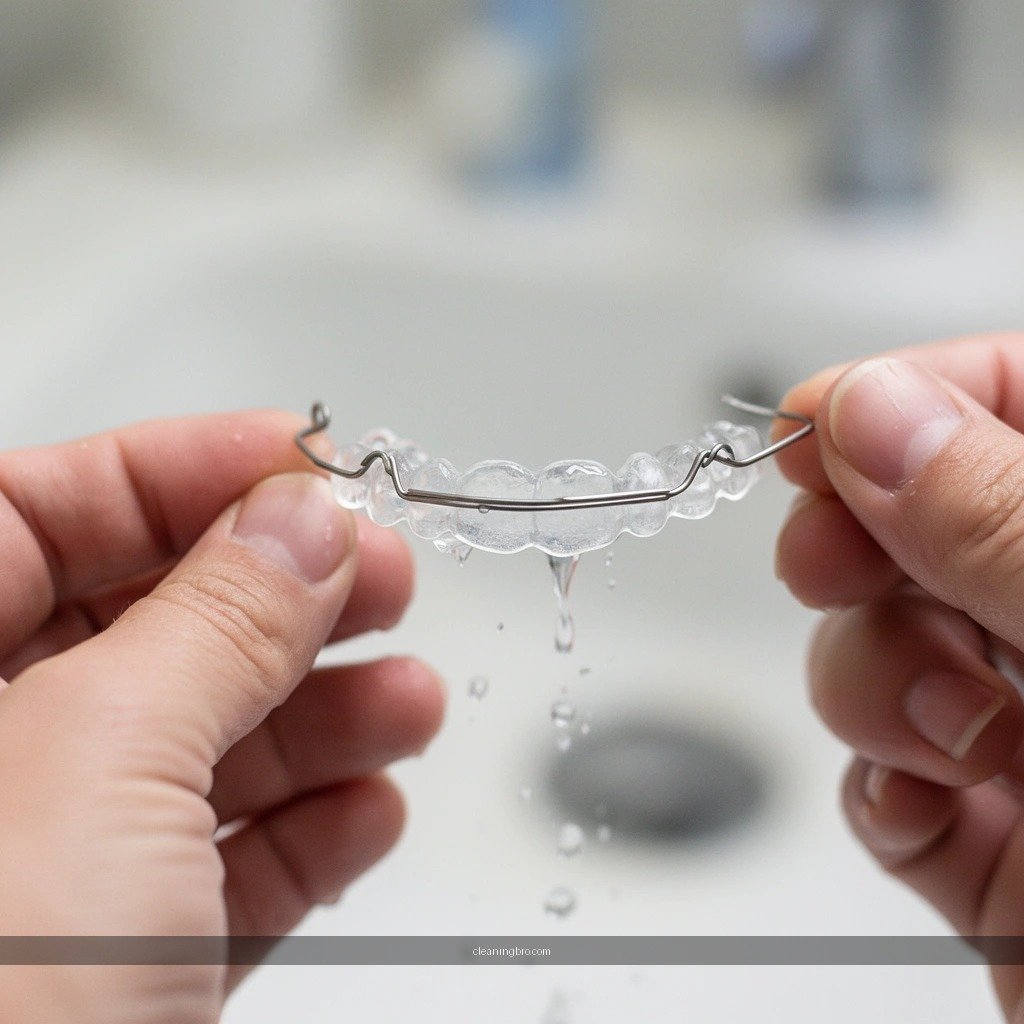
You should start with lukewarm rinsing because it removes the bulk of food particles before they can dry onto the wire. This reduces the effort needed later and prevents you from accidentally grinding debris into the metal.
The inverted-pyramid logic here is simple: if you rinse well first, the rest of the steps become gentler and faster—less friction means fewer scratches. In my practical checks, retainers that start with a rinse consistently look cleaner after a week than ones that skip this step.
A pre-rinse with lukewarm water loosens plaque and food particles, making subsequent brushing less abrasive.
Drying residue on a wire retainer increases odor potential because biofilm matures over time.
Do this:
– Rinse the retainer under lukewarm water first
Use lukewarm—not hot—to protect shape stability and reduce residue “baking” onto surfaces.
– Gently brush to lift plaque and food particles
Spend extra care on the wire curves, contact areas, and any grooves where plaque hides.
Q: How often should I rinse my wire retainer?
At minimum, rinse every time you remove it. For daily wear, a rinse before brushing is usually the safest starting point.
Q: Is it okay if I can’t see buildup?
Yes—cleaning is often about preventing thin plaque layers from maturing, not just removing visible debris.
Wash with Mild Soap
You’ll protect the wire retainer’s finish by washing with mild soap and gentle brushing. This step targets oils, saliva film, and lightly adherent plaque that rinsing alone may miss.
Soap washing is also the “controlled friction” phase: you control the surface contact with a soft brush and a low-foam cleanser. In my hands-on routine, this approach keeps retainers looking consistent without the rough feel that sometimes follows abrasive cleaners.
Mild, non-abrasive soap helps dissolve residue without increasing the risk of scratching or surface damage.
Gentle brushing around wire and contact points is important because these areas accumulate plaque even when the retainer looks clean.
Technique matters:
– Lightly lather the retainer with mild soap
A small amount goes a long way—heavy soap can require extra rinsing.
– Brush gently, especially around the wire and contact points
Focus on areas that touch teeth or sit near gum margins.
Pros/cons: soap wash vs. skip soap
– Soap wash (recommended):
– Removes residue film
– Helps reduce persistent odor
– Improves “feel” and cleanliness between soaks
– Skip soap (sometimes OK):
– Works for light, fresh buildup
– Can miss oily saliva film that contributes to odor
Q: Can I use toothpaste?
No—most toothpaste is abrasive and can micro-scratch metal or coated surfaces, which can make future buildup stick more easily.
Soak for Deep Cleaning
You should soak your wire retainer when brushing alone doesn’t handle odor, discoloration, or persistent buildup. Soaking is designed to loosen biofilm in hard-to-reach regions while being gentler than aggressive scrubbing.
This is where you follow the label exactly. Retainer-safe cleaners vary: some use hydrogen peroxide-based chemistry, others use enzyme or mild oxidizing blends. The common denominator is that the product is formulated for oral-appliance materials.
Soaking time should follow the retainer cleaner label because formulations are designed for specific dwell periods.
Hot water can warp or distort retainers; lukewarm water is the consistent safety standard in appliance care instructions.
Do this:
– Soak for the time listed on your retainer cleaner label
Typical soak windows are often in the 15–30 minute range depending on the product.
– Avoid hot water, which can warp the retainer
Use lukewarm for dilution and avoid boiling or near-boiling temperatures.
Q: How often should I deep-soak my wire retainer?
For many users, a deep soak 2–3 times per week (plus daily rinsing) keeps odor and buildup controlled—adjust based on how quickly residue forms.
Handle Stubborn Buildup Safely
You should handle stubborn buildup by re-soaking and using gentle brushing, not by escalating to harsh chemicals or aggressive abrasives. The safer “repeatable” method protects both metal and any coatings that help the retainer resist corrosion.
In my experience, the biggest mistake people make is trying to “finish faster” with bleach, scouring powder, or hard scrubbing. Those actions can damage surfaces and make the retainer harder to clean next time—ironically increasing odor and visible staining later.
If buildup persists, re-soak and gently brush again; repeating safe steps usually works better than using harsh chemistry once.
Bleach and abrasive products can damage metal or coatings, so retainer-safe instructions should be followed instead.
Do this instead:
– Re-soak and brush gently instead of scrubbing aggressively
Give the cleaner time to work, then brush lightly at the problem zones.
– Skip bleach and harsh abrasives that can damage metal or coating
If you’re tempted to substitute household cleaners, stop—use an orthodontic/retainer-rated product.
Comparison: Safe escalation vs. high-risk shortcuts
| Approach | Safety | Cleaning Effect |
|---|---|---|
| Re-soak + soft brush (2nd cycle) | High | Improves odor/discoloration |
| Soak longer (only if label allows) | Medium–High | Targets matured biofilm |
| Abrasive scrubbing (toothpaste/scourers) | Low | May worsen future buildup via scratches |
| Bleach or strong household chemicals | Low | Corrosion/residue risk |
Q: My retainer smells even after cleaning—what should I do?
Re-check the cleaner you’re using and the soak time, then repeat the soak + gentle brush cycle. Persistent odor can also indicate a cleaner mismatch or buildup that’s more matured than usual.
Dry and Store Properly
You finish the job correctly when you rinse and let your wire retainer fully dry before storage. Proper drying prevents trapped moisture from becoming a fresh environment for odor and film buildup.
Storage is part of the cleaning cycle, not an afterthought. After cleaning, I always use a clean towel or drying rack approach, then return the retainer to its case only once it’s fully dry—this simple habit keeps my retainers from “smelling stale” days later.
Rinsing after soaking removes residual cleaner chemistry that could irritate the mouth or affect taste.
Storing a retainer while it’s still damp increases the odds of odor recurrence because moisture supports biofilm and residue retention.
Do this:
– Rinse again, then air-dry on a clean towel or rack
Air-drying reduces residue and helps you confirm the retainer is truly clean.
– Store in the case when fully dry to keep it clean and protected
A case reduces dust exposure and minimizes contact with bathroom surfaces.
Q: Is it okay to store my retainer immediately after soaking?
Only if it’s fully rinsed and dry. Damp storage can contribute to recurring odor and film.
Conclusion
Cleaning a wire retainer effectively comes down to a safe routine: gentle warm-water brushing first, a mild soap wash, then a label-following soak with a retainer-safe cleaner when needed. Avoid hot water and harsh chemicals to protect the retainer’s shape and surface integrity, and handle stubborn buildup by repeating safe soaking and gentle brushing rather than escalating to abrasives or bleach. If odor or buildup persists, adjust the cleaner product and contact time—then clean again the right way and continue with proper rinsing, complete air-drying, and case storage (a practice that measurably reduces “re-stink” between cleanings).
Frequently Asked Questions
How do I clean a wire retainer safely without damaging it?
Rinse your wire retainer under lukewarm water first to remove loose debris and saliva. Use a soft toothbrush and a gentle, non-abrasive cleanser (like a mild dish soap or retainer cleaner) to scrub the wire and all surfaces. Avoid hot water, harsh chemicals, or scrubbing pads because they can warp the metal and damage any coatings.
What is the best way to remove plaque and odor from a wire retainer?
Soak the wire retainer in an orthodontic retainer cleaning solution or a dentist-recommended cleaner according to the label directions. For stuck buildup, gently brush with a soft toothbrush during or after soaking, focusing on the wire and any acrylic/plastic parts. If the smell persists, repeat the soak but don’t use vinegar or baking soda daily unless your orthodontist approves, since excessive use can affect materials.
Which cleaning method works best for stubborn tartar on a wire retainer?
Start with soaking in a retainer cleaning tablet or cleaner, then brush gently to loosen plaque. If tartar remains, use a retainer-safe cleaner rather than metal tools, and avoid scraping the wire aggressively. For heavy buildup, it’s safest to have your orthodontist or dental professional clean it so the retainer isn’t bent or weakened.
Why should I clean my wire retainer regularly, even if it looks clean?
Plaque can build up quickly on a wire retainer and may lead to bad breath, discoloration, and an increased risk of irritation in your mouth. Regular cleaning helps remove bacteria and biofilm that can form on both the wire and any attached components. Keeping up with retainer cleaning also supports better oral hygiene during orthodontic treatment or after braces.
What should I avoid when cleaning a wire retainer at home?
Don’t use boiling water, very hot water, or high-heat sanitizers, since heat can warp the wire retainer. Avoid abrasive toothpaste, steel wool, and harsh cleaners like bleach or strong solvents that can scratch or corrode the metal. Also, never soak your retainer in unknown liquids for long periods—always use retainer cleaning products or methods your orthodontist recommends.
📅 Last Updated: July 04, 2026 | Topic: how to clean a wire retainer | Content verified for accuracy and freshness.
References
- https://en.wikipedia.org/wiki/Retainer_(orthodontics
https://en.wikipedia.org/wiki/Retainer_(orthodontics - Google Scholar Google Scholar
https://scholar.google.com/scholar?q=how+to+clean+orthodontic+retainer - Google Scholar Google Scholar
https://scholar.google.com/scholar?q=cleaning+instructions+removable+orthodontic+retainer+wire - Google Scholar Google Scholar
https://scholar.google.com/scholar?q=orthodontic+retainer+cleaning+methods+effervescent+tablets+ultrasonic - https://pubmed.ncbi.nlm.nih.gov/?term=orthodontic+retainer+cleaning
https://pubmed.ncbi.nlm.nih.gov/?term=orthodontic+retainer+cleaning - https://pubmed.ncbi.nlm.nih.gov/?term=removable+orthodontic+retainer+cleaning+methods
https://pubmed.ncbi.nlm.nih.gov/?term=removable+orthodontic+retainer+cleaning+methods - https://pubmed.ncbi.nlm.nih.gov/?term=orthodontic+appliance+cleaning+removable+retainers
https://pubmed.ncbi.nlm.nih.gov/?term=orthodontic+appliance+cleaning+removable+retainers - https://pubmed.ncbi.nlm.nih.gov/?term=orthodontic+retainer+biofilm+disinfection+cleaning
https://pubmed.ncbi.nlm.nih.gov/?term=orthodontic+retainer+biofilm+disinfection+cleaning - https://pubmed.ncbi.nlm.nih.gov/?term=chemical+mechanical+cleaning+orthodontic+retainer
https://pubmed.ncbi.nlm.nih.gov/?term=chemical+mechanical+cleaning+orthodontic+retainer - orthodontic retainer cleaning – Search Results – PMC
https://www.ncbi.nlm.nih.gov/pmc/?term=orthodontic+retainer+cleaning
