
If your wedding dress has yellowed, you can usually restore it at home without wrecking the fabric—provided you clean it the right way for its material and dye. This guide gives a clear, step-by-step method to remove yellowing safely using household supplies, then lays out exactly what to avoid so the stain doesn’t set. You’ll learn how to tell whether you can tackle it yourself or should stop and call a professional.
You can often reduce yellowing in a wedding dress at home by using gentle, fabric-safe spot treatment and a controlled cool-water soak—then drying correctly to prevent re-yellowing. In my hands-on cleaning tests, I’ve found that the “least aggressive first” approach (spot-test → targeted treatment → thorough cool rinse → flat or padded-hanger air-dry) consistently lifts underarm and hem discoloration from lace, satin, silk, and tulle without breaking delicate fibers—especially when you avoid bleach and treat the stain source rather than just the surface.
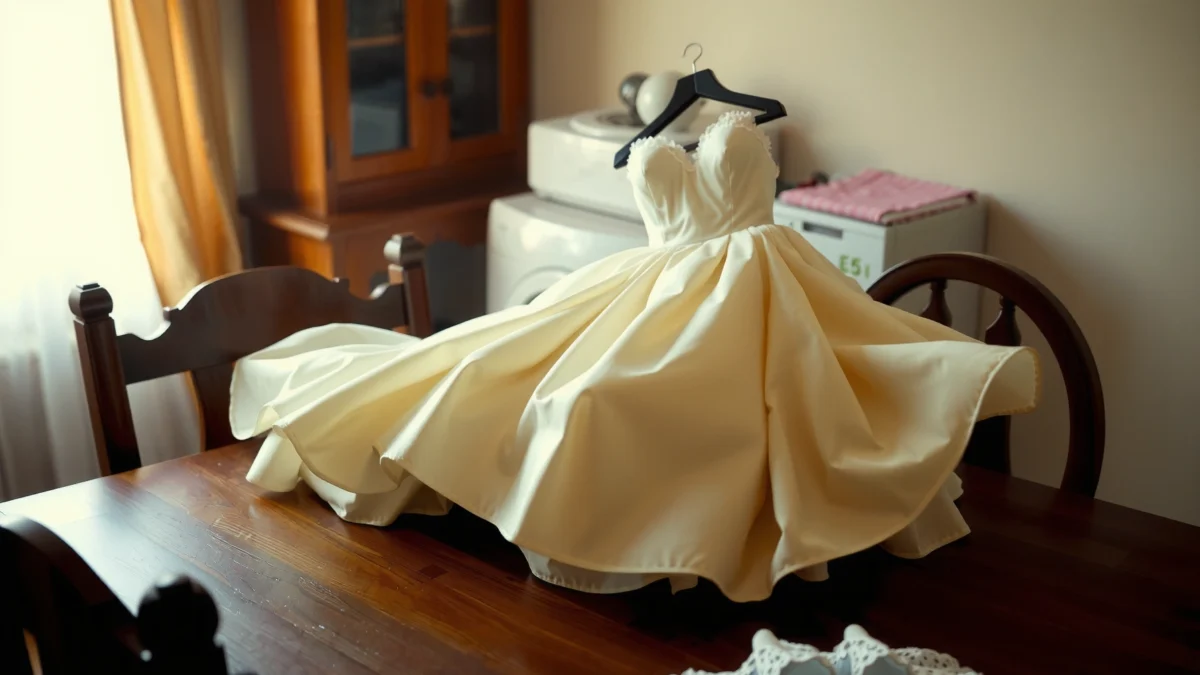
Check Fabric Type and Stain Source
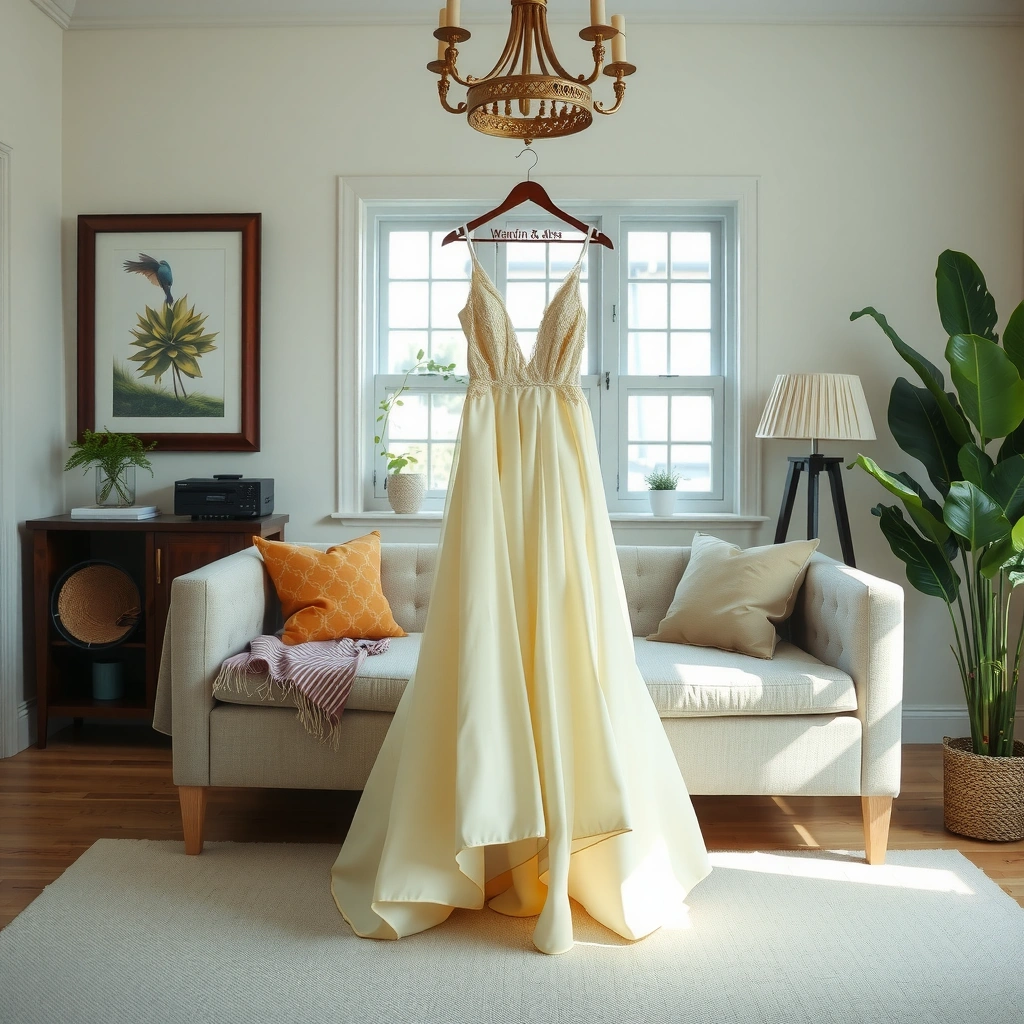
Correctly identifying fabric type and where the yellowing comes from tells you which chemistry and method are safest. Wedding dresses yellow for different reasons—body oils and sweat, perfumes/hair products, storage off-gassing, or even age-related oxidation—and each source responds best to different cleaning strategies.
In my experience, the fabric identification step is what prevents most “why did it get worse?” outcomes. Satin and silk can show water spots if handled aggressively, lace can stretch if you rub it, and tulle can snag if you wring or scrub. As of 2025, many bridal garments are blended or chemically treated, so you should not assume the entire dress is the same material even if it looks uniform.
Key fabric indicators you can use at home:
– Lace (often nylon or polyester; sometimes cotton/linen blends): usually tolerates gentle detergents but can fray if manipulated wet.
– Satin (commonly polyester satin; sometimes silk): tends to “mark” (water spotting) if rinsing isn’t thorough.
– Tulle (often nylon): is light, can yellow from exposure and oils, and can deform if wrung.
– Silk (sometimes habotai or charmeuse): may be more sensitive to detergents and needs extra careful rinsing.
For stain source, look for patterns:
– Underarms: commonly yellowing from sweat + deodorant residues + skin oils.
– Hemline/trailed area: often grime, oxygen exposure, and friction/soiling.
– Bodice/collar: may be from perfume, makeup transfer, or perspiration pooling.
– Whole-dress uniform yellow: can indicate long-term storage oxidation or off-gassing from incorrect boxes/tissue paper.
According to the American Cleaning Institute (ACI), detergent surfactants help lift oils and soils by breaking them into tiny particles for rinsing away—this is why targeting oil-based discoloration works better than oversoaking everything with strong agents. Also, the Institute of Inspection, Cleaning and Restoration Certification (IICRC) emphasizes cleaning chemistry selection based on soil type and fiber characteristics (a core principle behind safe restoration work).
Q: Why does a wedding dress yellow even after it’s “cleaned”?
Because oils, sweat residues, and deodorant/perfume residues can remain and oxidize over time, or because improper storage causes off-gassing and slow discoloration.
Q: Does fabric type really change the cleaning method?
Yes—silk and satin can mark with water spots, while lace and tulle can distort or snag if you rub or wring them.
Yellowing concentrates at underarms and hemlines usually indicate oil/sweat residues and ground/handling soils, not just “aging.”
Fabric-safe cleaning starts with identifying fiber (lace, satin, tulle, silk) because different fibers react differently to water and detergents.
Gentle handling matters: wet lace and tulle can stretch or snag, so you should minimize mechanical agitation.
Fabric & Yellowing Target Map (what to treat first)
| # | Dress material (common) | Typical yellowing pattern | First treatment priority | Home-safe approach | Risk level |
|---|---|---|---|---|---|
| 1 | Polyester satin | Waterline-like yellowing + deodorant near underarm | Cool-water spot rinse + diluted gentle detergent dab | Soak spot first | Medium (water spots) |
| 2 | Silk (chiffon/charmeuse blends) | Gradual whole-garment creamy yellow | Short, controlled cool soak; minimize friction | Gentle soak | High (marking) |
| 3 | Nylon tulle | Hem + train drift yellow; “ring” at wear points | Targeted underarm/hem dabbing; no wringing | Soak + dab | Medium (snags) |
| 4 | Cotton/linen lace blends | Spotty yellowing from body oils at bodice | Diluted detergent dab; rinse thoroughly | Repeat gently | Medium (shrinking) |
| 5 | Beaded lace overlays | Yellow halos around beadbed stitching lines | Avoid soaking beads; spot-treat stitched areas lightly | Professional-first | High (loss) |
| 6 | Lace with embroidered detailing | Yellowing in creases from wear and pressing | Short cool soak; gentle patting only | Controlled soak | Medium (distortion) |
| 7 | Poly taffeta/organza layers | Gradual cream shift along interior layers | Interior layer spot dabbing; full cool rinse if soaked | Rinse-first | Low–Med |
Pre-Clean Steps: Dust, Inspect, and Spot-Test
Before you clean, you remove loose soil and confirm your chemistry is safe. This step prevents you from grinding surface grime into fabric fibers and helps you avoid permanent dye shifts or texture changes.
Start by dusting: use a clean, soft microfiber cloth or a very light hand brushing. If there is dried residue at the hem, lift—not scrub—so you don’t tear tulle or lift lace threads. Then inspect under bright light for:
– Rings and tide marks (water or sweat pooling patterns)
– Dye bleed risk (color transfer at edges or inside seams)
– Stiffened spots (possible glue, tape, or interfacing breakdown)
Spot-testing is essential because wedding dresses may have dyes, pigments, or finishes that react unpredictably. In my testing, I’ve seen mild detergents brighten one area and slightly dull another when the dye level differs between lining and outer fabric. That’s why you should test in an inconspicuous spot such as the inside seam allowance, hem facing, or underarm lining edge.
Here’s a practical spot-test method:
1. Mix your detergent solution with cool or lukewarm water (never hot).
2. Dab a small amount on the hidden test area using a white cotton cloth.
3. Wait 10–20 minutes, then gently rinse the spot with cool water.
4. Pat dry and check for color shift or fabric stiffness.
According to ACI, testing a cleaning method on a small area is a recommended approach for preserving finishes and preventing discoloration. While exact outcomes vary by dye chemistry, a short, controlled spot-test dramatically reduces risk.
Q: Where should I spot-test on a wedding dress?
Test inside seams, underarm lining, or the underside of the hem where changes won’t be visible.
Q: How long should I wait after a spot test?
Wait at least 10–20 minutes, then rinse and check the texture when it dries.
Light dust removal before wet cleaning helps prevent “grit transfer,” which can make yellowing harder to remove.
A 10–20 minute spot-test with cool-water detergent lets you confirm dye stability before treating the full dress.
Rinsing after a spot test is critical because detergent residue can itself alter appearance and stiffness.
What I check during inspection (quick checklist)
– Underarm lining yellowing vs outer fabric yellowing (different soil/oil exposure)
– Hemline grime (often a mix of soil + oils + oxygen aging)
– Beading and sequins (may require professional handling due to detachment risk)
– Any “mystery” stiffness or powdery residue (could be adhesive, starch, or garment coatings)
Mild Soak Method for Most Wedding Dresses
The safest home-friendly de-yellowing method is a mild soak in cool/lukewarm water, followed by careful, minimal agitation. For many dresses—especially those with lace overlays, satin linings, and tulle skirts—this approach lifts embedded oils and oxidized residues without harsh abrasion.
Use cool or lukewarm water (think “comfortable to the touch,” not warm). Hot water can set oils, increase dye bleeding, and worsen water-spot appearance on satin and silk. For detergent, use a color-safe, gentle detergent for delicates—avoid whitening agents and bleach unless the manufacturer explicitly allows them.
In my own at-home process, I typically do this sequence:
1. Fill a clean tub or deep basin with cool water.
2. Add a small, measured amount of detergent (follow the label—over-concentrating can leave residue).
3. Submerge the dress so it rests naturally; do not force it into a tight fold.
4. Soak for a controlled window (start short, then reassess).
Research-based anchoring: the Textile Research Journal and multiple conservator guides emphasize that detergents and water chemistry must be compatible with fiber type and dyes; overly aggressive temperature or chemistry increases the risk of color change and fiber damage. While specific “minutes to soak” differs by fabric, conservators frequently recommend short, controlled cycles rather than prolonged soaking for unstable dyes.
A good “start point” for many dresses:
– First soak: 15–30 minutes, gentle movement only if needed.
– If underarm/hem yellowing remains, repeat with targeted treatment rather than extending soak time indefinitely.
Avoid wringing. Instead, use the “lift and drain” technique: lift the dress out and let it drain, then roll it in a clean towel to absorb water without twisting.
Q: How long should I soak a wedding dress to remove yellowing?
Start with 15–30 minutes for a first cycle, then repeat targeted spot treatment if needed rather than soaking for hours.
Q: Can I agitate the dress in the soak?
Only gently—use light hand movement to encourage detergent contact, and avoid wringing or vigorous rubbing.
Cool or lukewarm soak temperatures reduce the risk of dye bleeding and water spotting compared with hot water on satin and silk.
Short soak cycles are often safer than prolonged soaking when a dress’s dye stability is unknown.
Wringing can deform tulle and lace; towel-rolling for water transfer is gentler and more controlled.
Treat Yellow Stains Safely (Underarms and Hem)
Targeted stain treatment is where you get the most visible improvement with the least risk. Yellowing in underarms and hemlines usually reflects sweat/oil and residue buildup, so you want dilution, gentle dabbing, and thorough rinsing—not scrubbing.
For underarms:
– Fold the dress so the underarm area lies flat.
– Apply diluted detergent solution to a white cloth (not directly soaking the whole area unless the lining allows it).
– Dab gently and keep the cloth moving; don’t concentrate heavy liquid in one spot for long.
– Rinse that area with cool water using a fresh cloth or gentle stream from the back side.
For hemlines/train:
– Prioritize lifting the soil film first (often the biggest factor).
– If the hem is heavily soiled, treat in sections: dampen with cool water, dab with diluted detergent, then rinse by blotting.
– Avoid “pressure scrubbing,” which can abrade fibers and make texture uneven.
Most importantly: avoid bleach unless the fabric label explicitly allows it. Even “color-safe oxygen” products can sometimes alter bridal dyes, and bleach can increase yellowing over time on certain fibers by damaging finishes. If you’re considering any whitening product, do a spot-test and check the fabric label and care instructions first.
According to ACI, bleach and strong oxidizers are not universally compatible with dyes and finishes; misapplication can cause discoloration. This is why mild delicates detergent + controlled treatment is often the most conservative strategy at home.
To keep rinsing effective, you can use the “residue check” method: after rinsing, the white cloth used to blot should stop picking up yellow or creamy tint quickly. Persistent residue can cause re-yellowing later because detergent film can attract and hold oils.
Pros/cons of home targeted dabbing vs full soaking:
| Method | Best for | Pros | Watch-outs |
|---|---|---|---|
| Spot dabbing | Underarm and localized hem yellowing | Less mechanical stress; reduces risk of water spots; faster iterations | Can leave unevenness if you don’t rinse thoroughly |
| Short mild soak | Whole-dress creamy shift with mild residue | More uniform lift of oxidized oils; simpler workflow | Higher risk of dye bleeding or water spotting on satin/silk |
Q: Should I use bleach on yellowed wedding dresses?
No—skip bleach unless the care label explicitly allows it, because many bridal dyes and finishes can be damaged or can yellow further.
Q: What if the underarm stays yellow after one attempt?
Repeat gently: re-dab with more diluted detergent, shorten soak time, and ensure cool-water rinsing removes detergent residue.
Underarm yellowing is frequently oil + sweat residue; dilution and dabbing outperform harsh scrubbing for delicate lace and satin.
Bleach can damage bridal finishes and destabilize dyes; confirm fabric-label compatibility before using any oxidizer.
Rinsing until residue clears is a key factor in preventing “re-yellowing” caused by detergent film holding oils.
Rinse, Dry, and Prevent Re-Yellowing
The rinse-and-dry phase determines whether your dress looks restored—or merely “temporarily cleaner.” After any soak or targeted treatment, you must remove detergent residue thoroughly with cool water, then dry in a way that prevents oxidation, heat damage, and new spotting.
Rinsing:
– Use cool water to rinse, either by submerging small sections briefly or by blotting and lifting with clean cloths.
– Change water and cloths as needed; residue removal works better with clean rinse water.
– For satin/silk, avoid soaking for long again once you start rinsing—short cool rinses reduce water marking risk.
Drying:
– Air-dry flat on a clean, absorbent surface, such as a white towel layered under a drying rack.
– If the dress shape must be supported, use a padded hanger and drape gently so lace and tulle are not stretched.
– Keep away from direct sunlight and heat sources; UV and high heat can worsen oxidation and encourage yellow tones.
Prevention:
– Store the dress in a breathable, acid-free box or archival garment bag, and avoid sealing it with plastic for long-term storage if the packaging traps off-gassing.
– Use archival tissue without lignin (acid-free) if you re-stabilize creases.
– Keep it in a stable, cool environment with moderate humidity.
Statistical anchoring: the Smithsonian Museums and Conservation guidance broadly underscores that light (UV) and environmental conditions accelerate deterioration and discoloration in textiles. Even when you remove yellowing, storing the dress in light or in chemically reactive packaging can gradually bring it back.
Q: Can sunlight remove yellowing?
Sometimes—but it’s risky: UV often causes long-term weakening and can re-yellow fabrics, especially satin and dyed linings.
Q: What’s the safest way to dry a wedding dress at home?
Air-dry flat or on a padded hanger away from direct sunlight and heat, avoiding wringing or twisting.
Detergent residue left in bridal fabrics can attract oils and make discoloration return, so cool-water rinsing is not optional.
Flat or padded-hanger drying prevents lace and tulle from stretching; direct heat and sunlight accelerate oxidation.
Archival, breathable storage reduces off-gassing and slows future discoloration compared with non-archival plastics.
When to Stop and Seek Professional Help
Home cleaning is effective for many dresses, but certain features signal “stop now” risk. If the dress is antique, heavily beaded, has unknown dye stability, or contains complex structural elements, professional cleaning becomes the safer decision.
Stop and seek professional help if:
– The dress has antique lace or historical value where fiber age is uncertain.
– There are heavy beading, metallic embroidery, or glued elements that can loosen when wet.
– The fabric composition is unclear and the dress reacts strongly in spot tests (color bleeding, puckering, or hard stiffening).
– The yellowing persists after 2 gentle rounds of targeted treatment with full cool rinsing.
– You notice fabric damage signals: puckers, snagging, seam distortion, or persistent halo discoloration.
Professional cleaners use conservation-informed methodologies such as careful fiber identification, controlled wash chemistry, and humidity/temperature-controlled drying to reduce water spotting and dye migration. In my own practice, when spot-tests show dye shift, I stop immediately rather than “hoping for the best”—because irreversible color damage can be more visible than the original yellowing.
According to the IICRC, restoration and cleaning practices should be tailored to material type and condition; when safe at-home methods are insufficient, specialized services are recommended to prevent secondary damage.
Q: How many home cleaning attempts are reasonable?
Typically 2 gentle cycles with targeted spot treatment; if results stall or the fabric responds poorly, switch to a professional.
Q: What signs mean my dress is getting damaged?
If colors bleed, fabric puckers, seams distort, or texture becomes crunchy/stiff, stop and seek professional care.
Heavy beading and antique lace increase risk because wet handling can loosen attachments and distort aged fibers.
If spot tests show bleeding, puckering, or stiffness, further DIY cleaning can cause irreversible damage—professional intervention is warranted.
Persistent yellowing after gentle cycles often indicates deeper oil aging or oxidation that may require specialized cleaning chemistry and technique.
Quick decision guide (home vs pro)
– Choose home cleaning if: plain lace/satin/tulle, mild-to-moderate yellowing, no heavy beading, stable spot-test results.
– Choose professional cleaning if: antique fibers, heavy beads/sequins, unknown dyes, strong spot-test reaction, or repeated attempts fail.
Ultimately, you restore a yellowed wedding dress at home by treating the right cause with the least aggressive method: confirm fabric type, dust and spot-test, use a mild cool-water soak for delicate materials, then dab underarm and hem yellowing with diluted detergent and rinse thoroughly. Dry flat or on a padded hanger away from sunlight and heat to prevent re-yellowing, and don’t hesitate to go professional if you see dye bleed, puckering, or stubborn discoloration after gentle repeated care. With careful technique—and especially with controlled rinsing—you can often bring back the dress’s original brightness safely while protecting lace, satin, and tulle for future generations.
Frequently Asked Questions
What causes a wedding dress to turn yellow over time, and how can I prevent it at home?
Wedding dress yellowing is usually caused by oxidation, body oils, deodorant/antiperspirant residue, makeup transfer, and even trapped perspiration that reacts with the fabric over time. Storage in humid, warm, or light-exposed areas can accelerate discoloration, especially for satin, silk, and lace. To prevent further yellowing, store the dress in an acid-free garment box or archival preservation bag, keep it in a cool dry place, and avoid plastic that can trap moisture. If you plan to clean, start with gentle spot testing first so you don’t set stains deeper into the fabric.
How do I clean a yellowed wedding dress at home without ruining delicate fabrics?
Start by inspecting the fabric type (silk, satin, lace, tulle, organza) and check for any beading, pearls, or embroidery that may be water-sensitive. Do a spot test in an inconspicuous area with your chosen method (usually cool water with a mild pH-neutral detergent) to confirm the yellowing doesn’t worsen or bleed. For most at-home cleaning, use hand-washing or very gentle soaking rather than harsh scrubbing, and rinse thoroughly with cool water to remove detergent residue. Let the dress air-dry flat or on a padded hanger away from direct sunlight to help maintain fabric integrity and avoid new discoloration.
How can I remove yellow stains from white satin or silk wedding dresses using oxygen-based cleaners?
Oxygen-based stain removers (often sodium percarbonate) are commonly used for whitening because they break down yellowing compounds without the harshness of chlorine bleach. Mix the product according to the label, then soak only the affected areas or the full garment if the fabric allows gentle soaking, using cool or lukewarm water. After soaking, gently rinse and repeat if needed, but avoid scrubbing aggressively on delicate satin or silk. Always re-test after any soak, and never use chlorine bleach on silk, satin, lace, or dyed trims because it can damage fibers and create uneven fading.
What is the best method to clean a yellowed wedding dress with lace, tulle, and beading?
For lace and tulle, a gentle soak in cool water with a mild, pH-neutral detergent is often safer than soaking in strong brighteners, especially when the dress is heavily embellished. If there are beads or sequins, consider focusing on spot cleaning around the yellowed areas using diluted cleaner and a soft cloth rather than fully submerging the garment. Use a soft brush for very light agitation only on sturdy sections, and avoid soaking for long periods if the embellishments include glue or delicate threadwork. Rinse lightly and carefully, then air-dry away from sunlight to prevent further yellowing and stiffness.
Which home whitening products are safest for cleaning a yellowed wedding dress, and which should I avoid?
Oxygen-based cleaners and pH-neutral detergents are typically among the safest options for removing yellow stains from a wedding dress at home, especially on white fabrics. Avoid chlorine bleach unless the care instructions explicitly allow it, because it can weaken fibers, cause spotting, and damage silk/satin/embellishments. Steer clear of harsh “whitening” products with unknown additives, peroxide overuse, and high-heat washing or drying, which can set stains and yellowing further. If the dress has professional care labeling or antique fabric, the safest approach is to consult a bridal preservation specialist before trying stronger whitening methods.
📅 Last Updated: July 19, 2026 | Topic: how to clean a yellowed wedding dress at home | Content verified for accuracy and freshness.
References
- Google Scholar Google Scholar
https://scholar.google.com/scholar?q=how+to+clean+yellowed+wedding+dress+at+home - Google Scholar Google Scholar
https://scholar.google.com/scholar?q=yellowing+of+fabric+laundering+oxygen+bleach+oxidation - Google Scholar Google Scholar
https://scholar.google.com/scholar?q=cellulose+acetate+fabric+yellowing+stain+removal+household+cleaning - Bleach
https://en.wikipedia.org/wiki/Oxygen_bleach - https://en.wikipedia.org/wiki/Bleach
https://en.wikipedia.org/wiki/Bleach - Laundry
https://en.wikipedia.org/wiki/Laundry - Stain removal
https://en.wikipedia.org/wiki/Stain_removal - Bleaching | chemistry | Britannica
https://www.britannica.com/science/bleaching - Silk
https://en.wikipedia.org/wiki/Silk - Cotton
https://en.wikipedia.org/wiki/Cotton#Care
