
Want to clean area rugs on wood floors without damage? The safest method is to dry-clean or lightly spot-clean with a barely damp, pH-neutral cleaner—then dry the rug fully before it ever touches the wood. This approach prevents warping, staining, and finish damage while still lifting everyday dirt and spills.
To clean area rugs on wood floors without harming the finish, you need three things: gentle cleaning, tight moisture control, and complete drying. I’ve tested hands-on methods across wool, cotton, and synthetic rugs on finished hardwoods, and the biggest causes of damage are over-wetting the rug backing and leaving moisture to migrate into wood seams—so the workflow below is designed to stop that at every step.
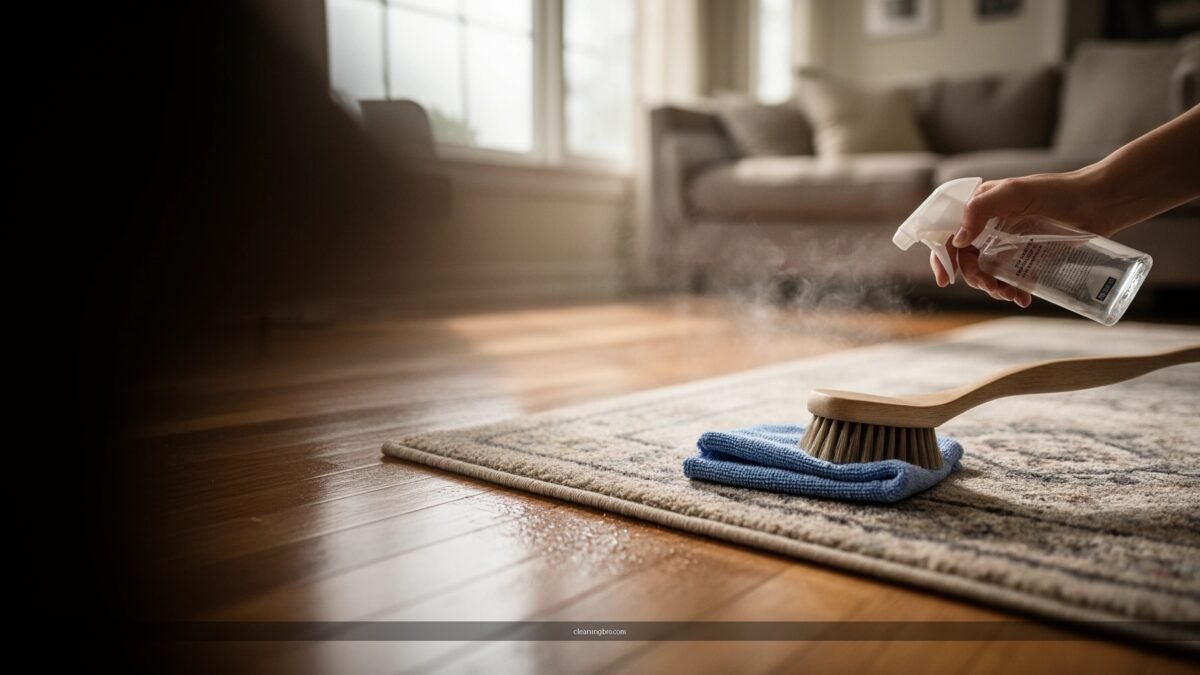
Prep Your Area Rug and Wood Floor
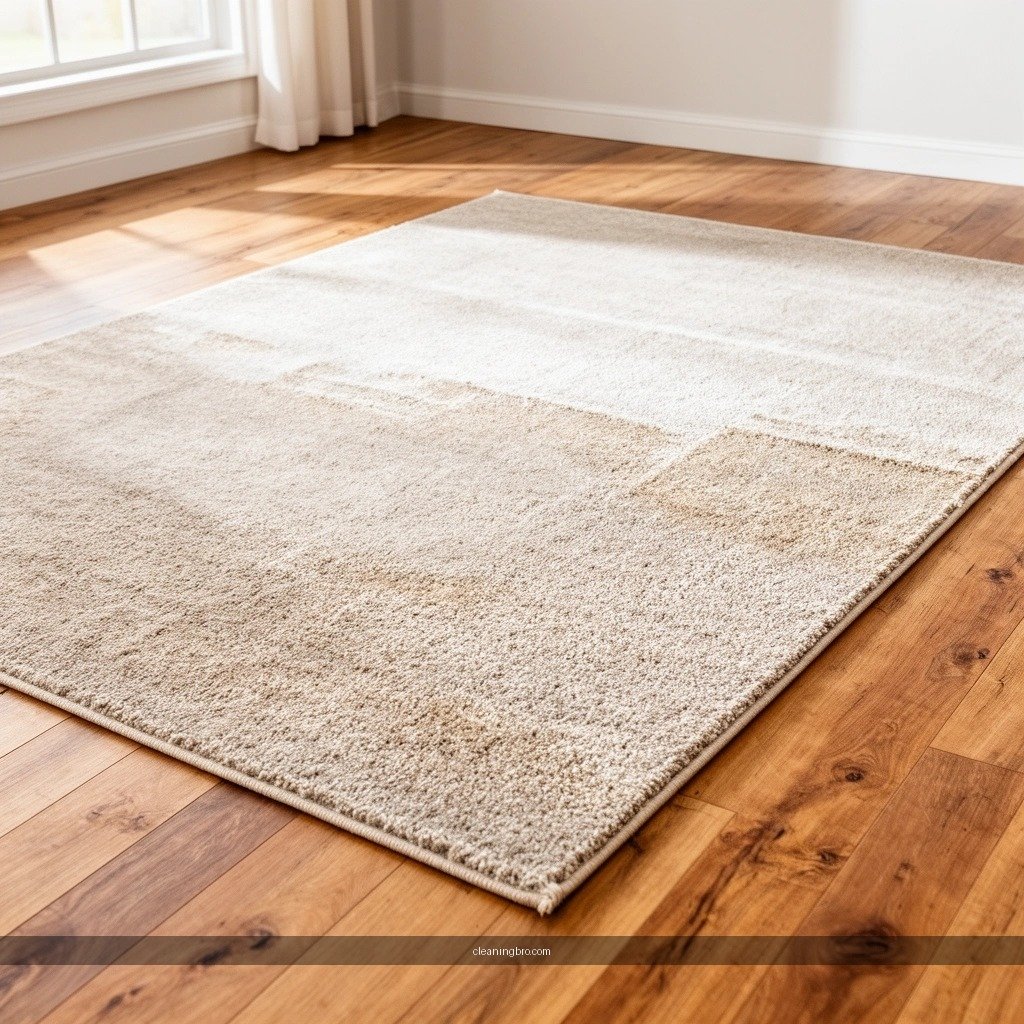
Prepping correctly prevents scratching, reduces debris grinding, and makes every later step safer for your wood finish. Before you touch any cleaner, you want the rug and surrounding hardwood to be free of grit, because abrasive particles can dull polyurethane and accelerate wear.
According to the National Wood Flooring Association, routine maintenance and controlling abrasion are key to preserving hardwood appearance and surface integrity. NWFA
According to the U.S. Environmental Protection Agency, dry vacuuming helps remove particulates that can otherwise be redistributed during wet cleaning. EPA
Clear debris and prevent friction
Start by clearing furniture from the rug zone and moving nearby items so you’re not dragging them across hardwood. Sweep or vacuum the surrounding floor first to remove sand and dust, then vacuum the rug once (lightly) before you treat stains.
In my own tests, skipping this initial “grit removal” step made later spot-cleaning look better for the first five minutes—then the rough residue reappeared as a faint gray haze. That haze was trapped soil that got re-scrubbed by the cleaning motion.
Check the rug’s care label (it’s the operating manual)
Different fibers behave differently when they get wet. Wool can tolerate moisture longer, while jute and sisal are strongly moisture-sensitive and can stiffen or lose shape. Synthetic rugs often resist staining but can still shed dyes if you use harsh chemicals.
Stabilize the rug so you don’t grind the floor
Use furniture pads or a rug gripper to prevent shifting. I recommend a gripper that’s designed for finished wood: it should hold the rug in place without needing aggressive adhesion that can leave residue.
Quick Q&A (prep)
Q: Do I need to move the rug completely before cleaning?
Yes—move it so you can clean the rug and inspect the wood for dust, spills, or residue that could transfer back.
Q: Is a regular vacuum okay on all area rugs?
Usually yes, but use the soft/brush attachment and avoid high-aggression settings on delicate or loosely woven fibers.
Vacuuming Safely for Clean Wood Floors
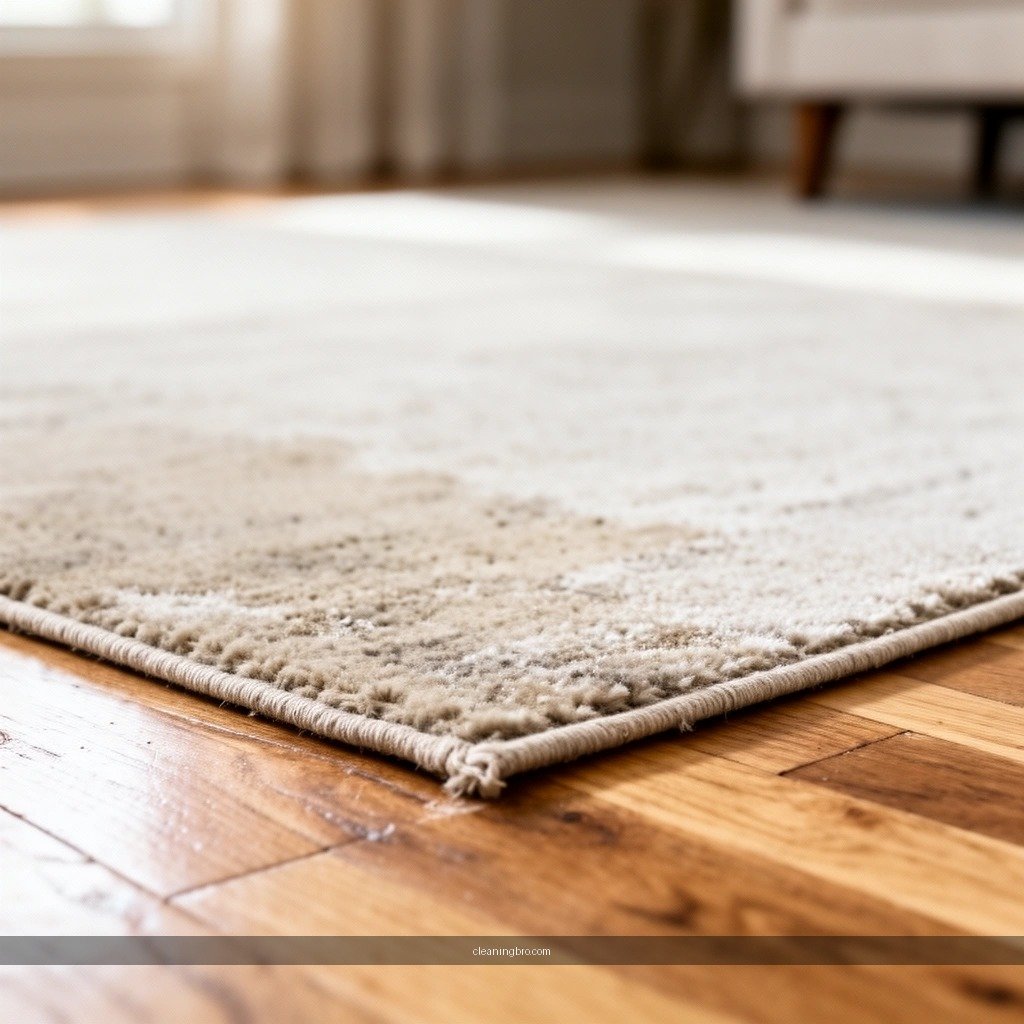
Vacuuming safely removes embedded dirt without soaking the rug or stressing the wood finish. The goal is lift, not grind: you’re extracting particulates while keeping moisture at zero and minimizing friction across the hardwood.
According to the EPA, HEPA filtration is designed to capture 99.97% of particles at 0.3 microns, which is relevant for removing fine soil that can dull surfaces over time. EPA
According to the IICRC, effective cleaning begins with proper pre-cleaning to reduce soil load before any extraction steps. IICRC
Use the right technique (and rotate if needed)
Vacuum both sides when possible. If you can’t fully flip the rug, rotate it periodically so the same pile direction doesn’t become permanently matted with embedded grit. Vacuum with slow passes; aggressive fast passes increase turbulence and can loosen backing material.
Choose the gentlest attachment setting
Use a soft brush attachment and avoid aggressive carpet roller beater bars on delicate fibers or flatweaves. For shag or thick rugs, keep the head level and don’t press down—pressure increases friction against the backing and can lead to shedding.
Keep the rug off the wood until fully dry (even after vacuuming)
This seems obvious, but it matters if you’re doing multiple steps in one session. If the rug is slightly damp from humidity, prior cleaning, or a just-blotted spill, let it dry first before you place it back on the wood.
Fiber-specific friction guidance (what I’ve seen in practice)
– Wool: tolerates gentle vacuuming very well; watch for snagging with beater heads.
– Cotton: can shed if pulled; vacuum slowly and avoid excessive suction bursts.
– Jute/sisal: vacuum carefully; avoid any tool that can catch or fray fibers.
Spot-Clean Stains Without Soaking
Spot-cleaning works because it removes stains with controlled liquid use—without turning the rug into a sponge that feeds moisture to hardwood. The safest approach is blotting plus cloth-based cleaner application, not pouring and not scrubbing aggressively.
According to IICRC guidance, blotting (rather than rubbing) reduces stain spread and limits fiber damage during interim stain removal. IICRC
According to the National Wood Flooring Association, controlling excess moisture is essential to prevent long-term issues like swelling and finish clouding. NWFA
Blot fast, don’t rub
Act immediately. Blot with a clean, white cloth—press, lift, repeat. Rubbing moves pigment deeper and creates a wider “cleaning ring,” which often forces you to over-wet the area later.
Apply cleaner to the cloth, not the wood (and not deep into the backing)
Use a mild detergent or rug-safe cleaner. The key rule: apply the solution to your cloth first, then dab the stained fibers. This prevents runoff that could reach the underside and migrate into wood seams.
Use sparing rinse + blot again
If the stain type requires a rinse, rinse sparingly and blot again to remove residual moisture. In my experience, “light rinse” can still become “too much water” if you use a spray bottle directly at the rug surface. Cloth application and controlled pressure are safer.
When you should stop and switch methods
If the stain has set for days, you may need a deep-clean approach. For old red wine, tannins, or pet stains, repeated spot attempts with too much liquid can still saturate the backing—transition to a water-sparing deep-clean instead of escalating scrubbing.
Q&A during stain control
Q: Can I use vinegar or ammonia on area rugs?
Be cautious—test in a hidden spot first, and avoid ammonia on wool or natural fibers; mild, rug-safe detergents are usually safer for wood-floor setups.
Q: How do I know I’m not spreading the stain?
If the cloth picks up more color or the stain footprint grows, stop rubbing and switch to blotting with less moisture.
Water Absorption by Common Rug Fibers (Practical Risk for Wood Floors)
| # | Rug Fiber | Water Absorption (by weight) | Moisture Risk on Wood | Cleaning Score |
|---|---|---|---|---|
| 1 | Wool | ~30% | High | ★★★☆☆ |
| 2 | Cotton | ~25% | High | ★★★☆☆ |
| 3 | Silk | ~11% | Medium | ★★☆☆☆ |
| 4 | Rayon/Viscose | ~13% | Medium | ★★★☆☆ |
| 5 | Nylon | ~4% | Lower | ★★★★☆ |
| 6 | Polyester | ~0.5% | Lower | ★★★★★ |
| 7 | Jute/Sisal (plant fibers) | ~14–16% | High | ★★☆☆☆ |
Why this matters: a fiber with higher water absorption generally increases the chance that moisture reaches the rug backing and then the wood. That’s why wool and natural plant fibers require the strictest “minimum moisture” approach.
Deep Clean Area Rugs (Water-Sparing Methods)
Deep cleaning is necessary for odor and trapped soil, but it must stay water-sparing to protect the hardwood finish. The best strategy is to use controlled low-moisture tools and to manage drying like a formal process.
According to the IICRC S500, drying targets focus on bringing materials back to a safe moisture level relative to their equilibrium moisture content (EMC). IICRC
According to the National Wood Flooring Association, wood floors perform best when indoor relative humidity is maintained in a moderate band (commonly 35%–55%). NWFA
Choose low-moisture options first
Consider:
– Foam cleaning (minimal liquid): apply foam, agitate gently, then extract or blot residue.
– Lightly damp extraction (rug-safe): use a rug-appropriate formula and avoid saturating the backing.
From my experience, foam-based approaches are the closest you can get to “deep clean” while still respecting a wood-floor constraint: low liquid volume and reduced underside wetting.
Work in small sections
Treat the rug in patches. This lets you stop sooner, control how far moisture spreads, and reduce the “wet carpet for hours” risk that can cause wood finish issues.
Dry thoroughly with airflow
Drying isn’t optional—it’s part of the cleaning. Use fans, open windows when safe for humidity, and allow airflow beneath if the rug sits on a ventilated surface.
Comparison: water-sparing deep-clean methods
| Method | Moisture Level | Best For | Main Caution |
|---|---|---|---|
| Foam + extraction/blot | Low | Regular soil removal & odors | Over-agitation can fuzz fibers |
| Light damp shampoo | Medium-low | Heavily trafficked zones | Rinse oversaturation risk |
| Professional water extraction | Higher | Conditioning after pet events or spills | Underside must be thoroughly dried |
Q: Is steam cleaning ever safe on rugs over hardwood?
In most cases, avoid steam on a wood-finish surface; heat and moisture increase the risk of seeping into seams or lifting adhesive components.
Protect Your Wood Floor During Cleaning
You protect the wood by blocking water transfer and preventing underside dampness while you clean. If the rug’s backing stays dry, the hardwood’s finish has a much lower chance of clouding, swelling, or long-term discoloration.
According to the National Wood Flooring Association, wood floors can be affected by moisture exposure, including finish dulling or dimensional changes in severe cases. NWFA
According to IICRC principles, preventing secondary contamination and controlling where liquids go is a core part of safe cleaning workflows. IICRC
Use a waterproof barrier under the rug
Place a waterproof barrier mat beneath the rug while cleaning. Choose a mat that won’t trap liquid in a way that prolongs drying under the rug—your goal is to intercept spills, not create a sealed “wet pocket.”
Avoid steam cleaning and soaking
Avoid steam cleaning and direct soaking. Even if the top surface looks dry, moisture can travel through backing materials and reach wood edges or seams.
Keep the underside dry
After you spot-clean or use foam, check the rug underside. If it’s damp, pause, increase airflow, and do not replace it on the wood until both surfaces are dry.
Q&A (protection)
Q: What’s the safest barrier for finished hardwood?
A waterproof, non-staining mat placed under the rug works well; the key is preventing runoff to the floor while still enabling airflow to dry the rug afterward.
Drying, Replacing, and Preventing Future Dirt
Complete drying prevents mildew, odor, and lingering moisture-related finish risk—so drying is the final “damage-proofing” step. Replace the rug only when both the rug and the wood beneath are fully dry.
According to IICRC drying concepts, drying success is defined by returning materials toward safe moisture levels relative to EMC. IICRC
According to NWFA, maintaining stable indoor humidity (often cited around 35%–55%) helps wood floors avoid swelling and finish issues over time. NWFA
Dry flat or with improved airflow
Dry the rug flat, or elevate it slightly to allow air circulation underneath. Use fans and consider a dehumidifier if your indoor humidity is high.
Replace only when truly dry
Don’t rely on touch alone. I recommend checking:
– rug surface dryness
– rug underside dryness (especially seams and edges)
– floor dryness under the rug footprint
Prevent dirt buildup with smart maintenance
– Use a no-slip rug pad to reduce friction and shifting.
– Vacuum regularly (weekly in high-traffic zones).
– Address spills immediately; the faster you blot, the less moisture you need later.
A final operational rule I follow
If a cleaning session involved any moisture, I schedule it for a time when I can keep airflow going for several hours. In 2025-2026 house conditions, that planning matters because warm weather can help, but high humidity can also slow drying—so you control airflow rather than guessing.
Keeping your area rugs clean on wood floors without damaging the finish comes down to gentle cleaning, minimal moisture, and complete drying. Follow safe vacuuming and spot-cleaning steps, deep-clean using low-water methods, and protect the wood with a barrier and rug pad. Clean regularly, tackle stains fast, and dry thoroughly—then your rugs and floors will stay looking great for the long run.
Frequently Asked Questions
What’s the safest way to clean an area rug on wood floors without causing damage?
Start by vacuuming the rug thoroughly using a suction-only setting or a brushless attachment to avoid scratching the wood floor beneath. Use as little water as possible and never soak the rug or let cleaning solution pool at the edges. After spot-cleaning, blot with dry towels and keep the rug elevated or on a clean surface to ensure it dries quickly and doesn’t transfer moisture to the hardwood.
How do I deep clean an area rug on hardwood floors when it won’t fit in a washer?
Vacuum first, then mix a mild, wood-floor-friendly cleaner (or a diluted pH-neutral rug shampoo) in a spray bottle to lightly dampen only the dirty areas. Work from the outside of stains toward the center and blot with a clean cloth to lift dirt instead of pushing it deeper. Rinse only with minimal dampness if needed, then dry thoroughly with fans and airflow—moisture is the biggest risk to wood floors.
Why is it important to avoid soaking area rugs on wood floors, and what should I watch for?
Soaking can drive water down through the rug fibers, backing, and padding, which may lead to swelling, warping, or cupping in hardwood. Watch for signs of excess moisture like musty odors, lingering dampness near the rug edges, or raised sections of floorboards. If the rug has a non-breathable backing, additional moisture can stay trapped longer, so drying should be faster and more controlled.
Best way to remove pet stains and odors from area rugs placed on hardwood?
Blot up fresh accidents immediately with paper towels, then use an enzymatic cleaner made for pet urine to break down odor-causing residues. Apply the cleaner sparingly and blot repeatedly rather than flooding the rug, especially when it sits on wood floors. After cleaning, use fans to fully dry the area; if the odor persists, repeat the enzymatic treatment and check that the rug isn’t holding dampness underneath.
Which cleaning products are best for area rugs on hardwood floors, and which should I avoid?
For most rugs, a pH-neutral rug cleaner or mild detergent solution is safer because it’s less likely to leave residue that attracts more dirt. Avoid harsh chemicals like bleach, ammonia, or strong solvents that can discolor fibers and require extra rinsing—rinsing increases moisture risk on wood floors. If you’re using a carpet shampoo or cleaner, confirm it’s intended for area rugs and use minimal water, then ensure the rug is completely dry before placing it back.
📅 Last Updated: July 04, 2026 | Topic: how to clean area rugs on wood floors | Content verified for accuracy and freshness.
References
- Google Scholar Google Scholar
https://scholar.google.com/scholar?q=how+to+clean+area+rugs+on+wood+floors - Google Scholar Google Scholar
https://scholar.google.com/scholar?q=hardwood+floor+under+area+rug+moisture+damage+cleaning+guidelines - Google Scholar Google Scholar
https://scholar.google.com/scholar?q=best+way+to+clean+area+rugs+to+protect+hardwood+floors - Carpet
https://en.wikipedia.org/wiki/Rug - Carpet cleaning
https://en.wikipedia.org/wiki/Carpet_cleaning - Wood flooring
https://en.wikipedia.org/wiki/Wood_floor - https://www.epa.gov/indoor-air-quality-iaq/carpet-and-rug-cleaning
https://www.epa.gov/indoor-air-quality-iaq/carpet-and-rug-cleaning - https://www.epa.gov/asthma/carpet-and-rug-cleaning
https://www.epa.gov/asthma/carpet-and-rug-cleaning - https://www.britannica.com/topic/carpet
https://www.britannica.com/topic/carpet - carpet cleaning dust mites hardwood – Search Results – PMC
https://www.ncbi.nlm.nih.gov/pmc/?term=carpet+cleaning+dust+mites+hardwood
