How to Clean Concrete Around Your Pool: A Simple Guide
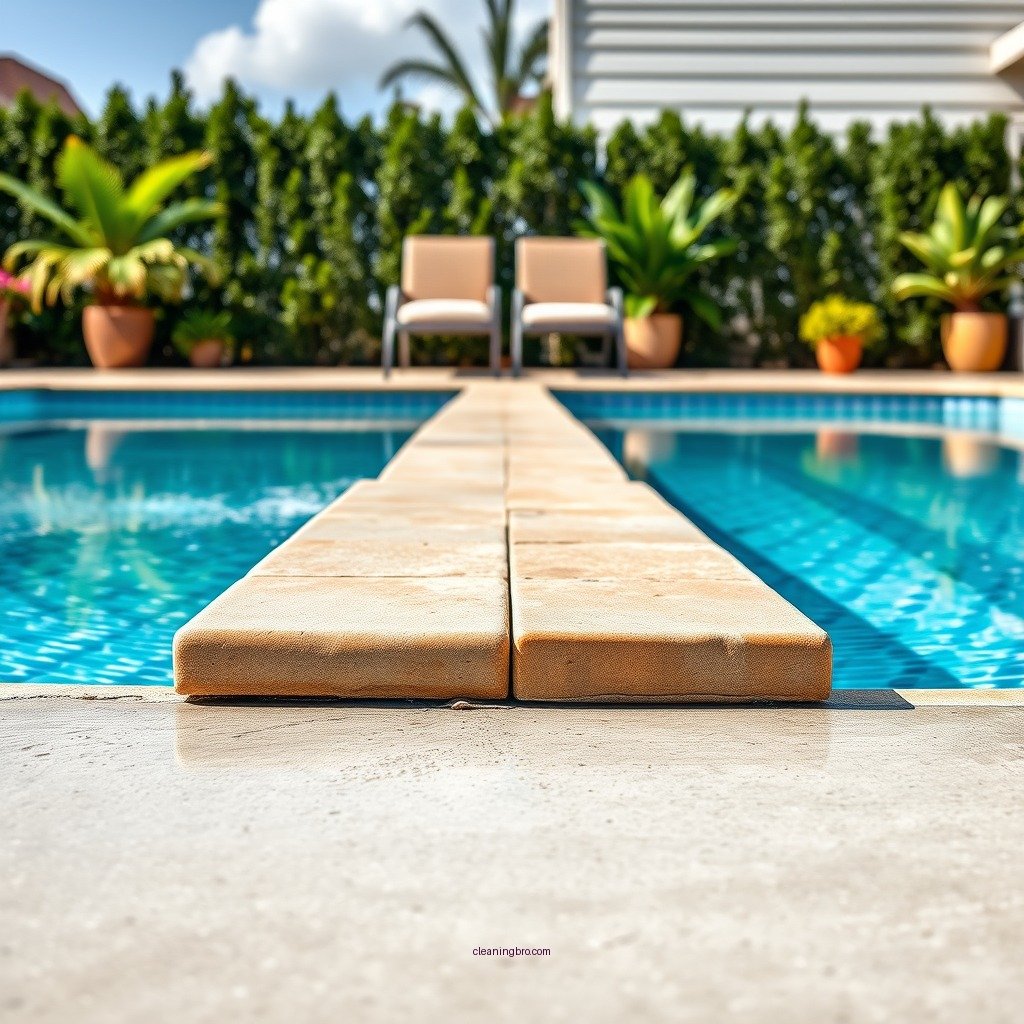
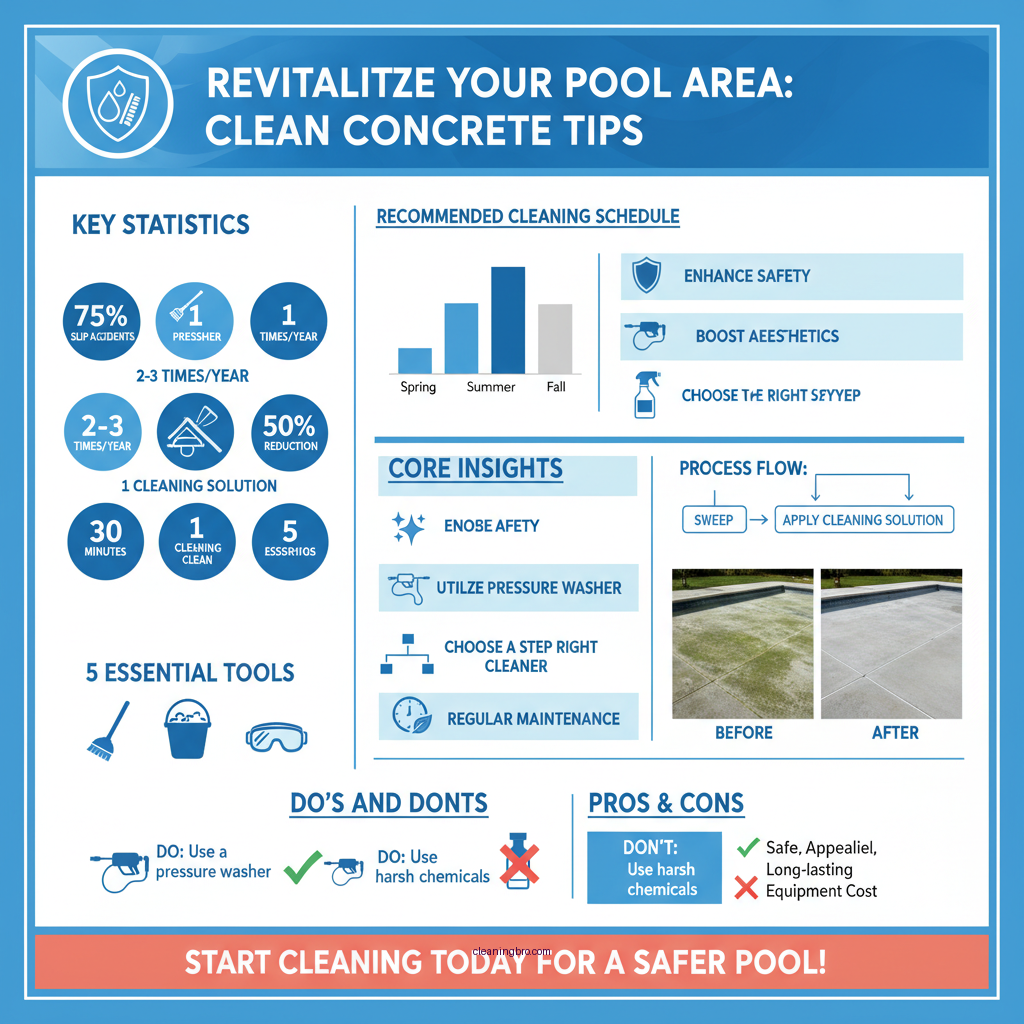
Cleaning the concrete around your pool is essential for both aesthetic appeal and safety. A clean pool area not only enhances the visual appeal of your outdoor space but also reduces slip hazards associated with algae and moss. In this guide, you’ll learn effective techniques and tips for keeping your pool area spotless, ensuring a safe and enjoyable environment for family and guests.
Understanding the Importance of Cleaning Pool Concrete
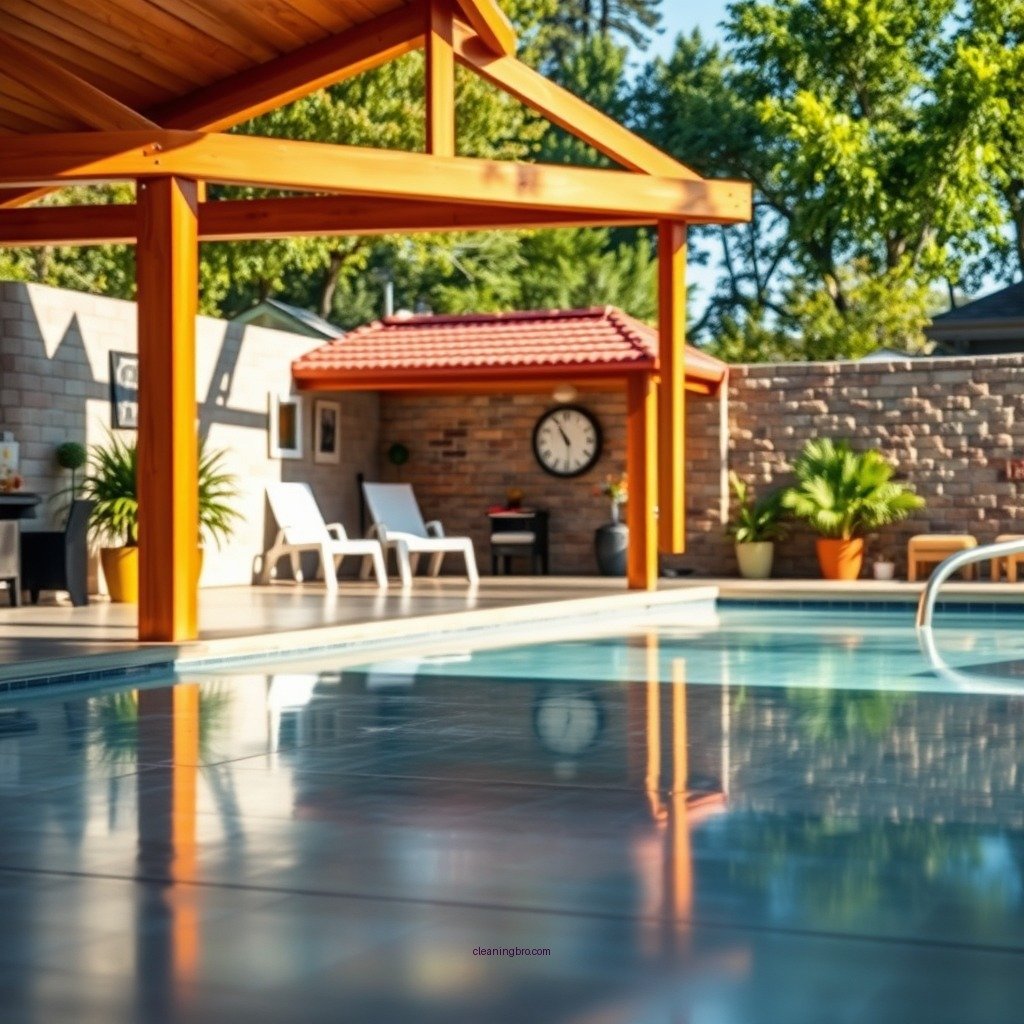
The concrete surrounding your pool is subject to various environmental factors, including water splashes, sunlight, and organic debris from plants and trees. Over time, these elements can lead to the growth of algae, mold, and stains, which not only detract from the beauty of your pool but can also pose significant safety risks.
– Enhances Safety: The presence of algae or moss can create slippery surfaces, increasing the likelihood of slips and falls. Regular cleaning minimizes these risks, making your pool area safer for everyone.
– Improves Appearance: A clean pool area is visually inviting and contributes to the overall ambiance of your outdoor space. Regular cleaning can help maintain the quality of your concrete surfaces, preventing deterioration and keeping them looking new for years.
Tools and Materials Needed
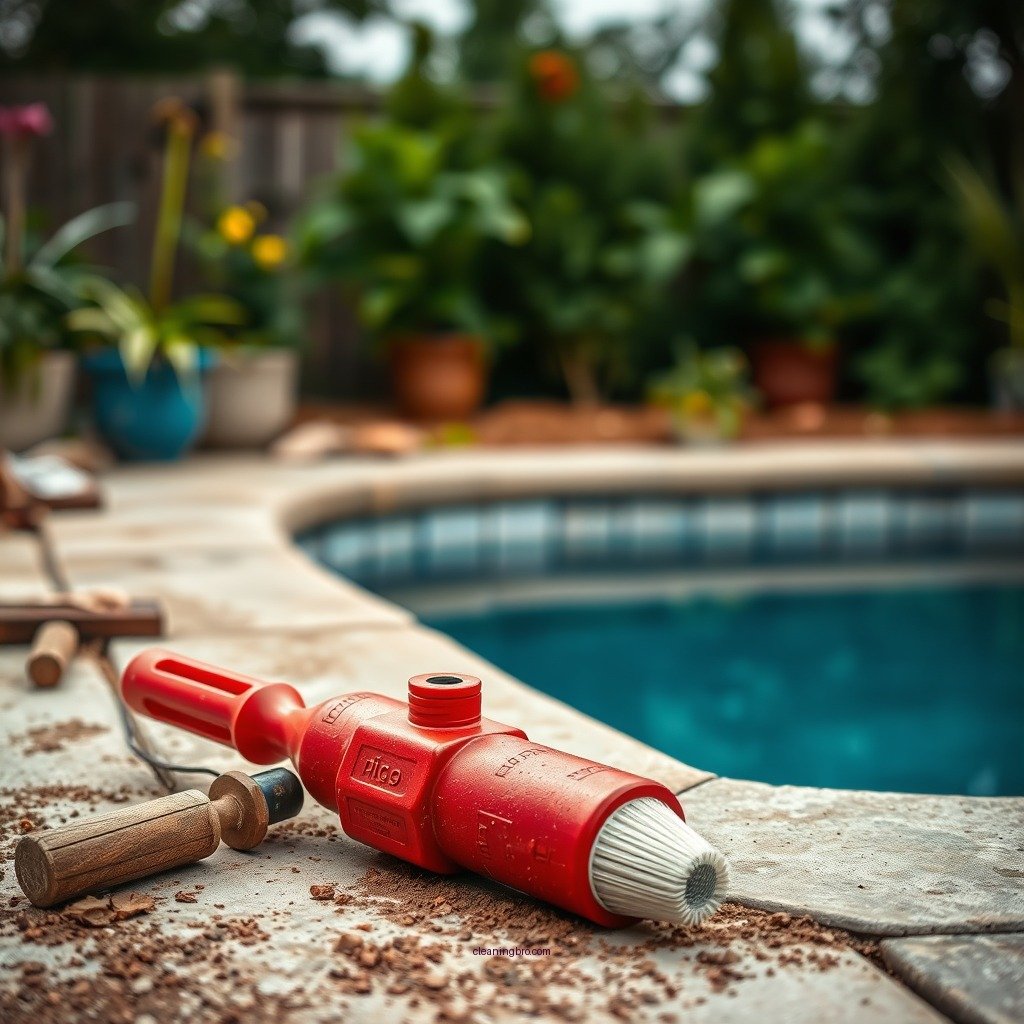
To effectively clean the concrete around your pool, you will need some essential tools and materials. Having the right equipment ensures that the job is done efficiently and thoroughly.
– Pressure Washer: A pressure washer is an indispensable tool for deep cleaning concrete. It uses high-pressure water to remove embedded dirt and stains effectively.
– Broom and Scrub Brush: A broom is necessary for sweeping away loose debris, while a scrub brush helps in scrubbing tough stains or areas with accumulated grime.
– Cleaning Solution: Depending on the type of stains you encounter, you might need a suitable cleaning solution. Choose a cleaner specifically designed for concrete surfaces to avoid damaging them.
Step-by-Step Cleaning Process
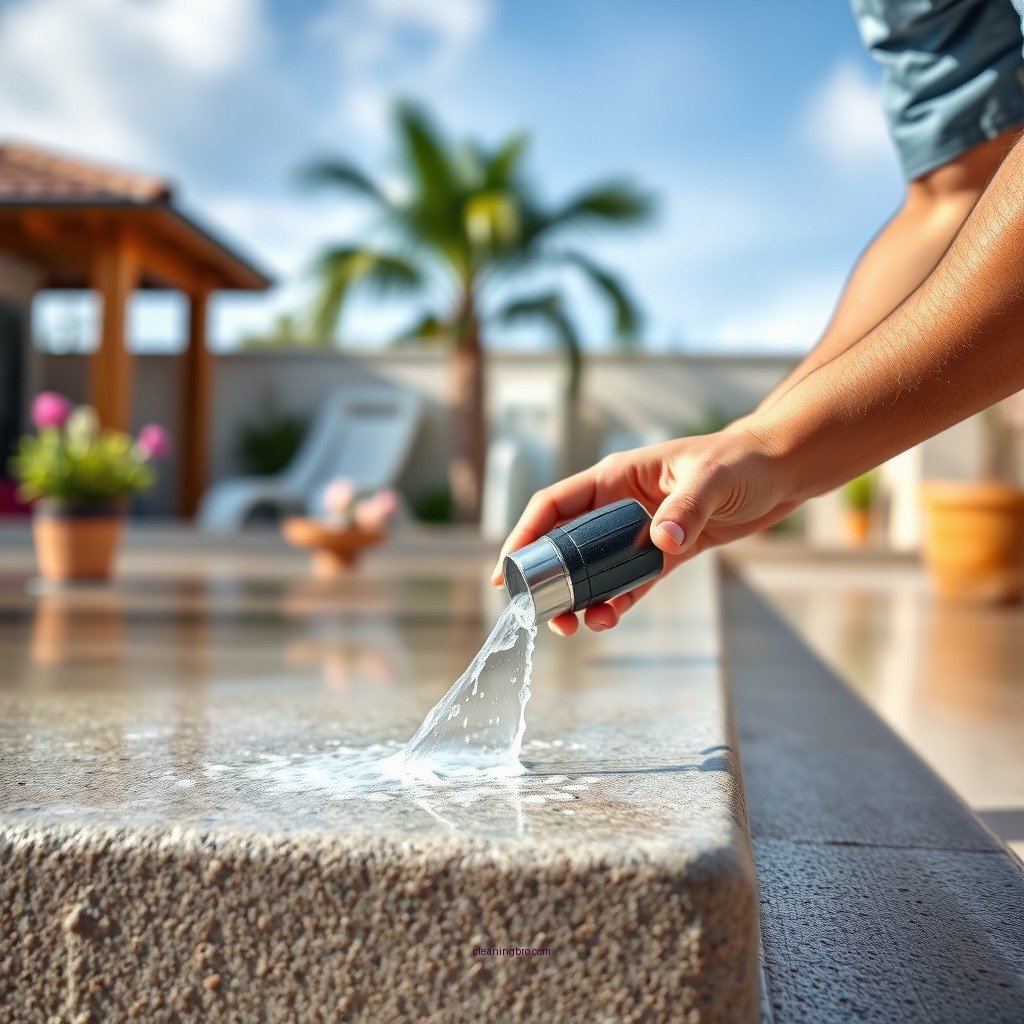
Cleaning concrete around your pool can be broken down into simple steps:
1. Sweep the Area: Start by using a broom to clear away leaves, dirt, and other debris. This initial step prepares the surface for deeper cleaning.
2. Rinse Thoroughly: Use a pressure washer or a hose with a spray nozzle to rinse the area thoroughly. This will remove any loose dirt and help lift off surface stains.
3. Apply Cleaning Solution: Depending on the type of stains, apply an appropriate cleaning solution to the affected areas. Allow the solution to sit for a few minutes to penetrate the stains.
4. Scrub Tough Spots: For stubborn stains, use a scrub brush to work the cleaning solution into the concrete. Pay extra attention to corners and edges where dirt tends to accumulate.
5. Final Rinse: After scrubbing, use the pressure washer or hose again to rinse away the cleaning solution, ensuring no residue remains.
6. Drying: Allow the concrete to dry completely before using the pool area again. This will help prevent slips and ensure the cleanliness is maintained.
Choosing the Right Cleaning Solution
Selecting the right cleaning solution is pivotal to effective cleaning without damaging your concrete:
– pH-Neutral Cleaners: Opt for a pH-neutral cleaner to avoid etching or damaging the concrete surface. These are safe for regular use and effective in removing dirt and grime.
– Eco-Friendly Options: Consider using eco-friendly cleaning solutions that are biodegradable and non-toxic. This approach is not only safe for your family and pets but also protects the surrounding environment.
Addressing Tough Stains and Algae
Some stains and algae can be particularly stubborn. Here are some effective methods to tackle these issues:
– Organic Stains: For organic stains such as leaves or grass, a mixture of vinegar and water can be effective. Mix equal parts of vinegar and water, apply it to the stain, and let it sit for 30 minutes before scrubbing.
– Grease or Oil Stains: For grease stains, a specialized concrete cleaner is recommended. These cleaners are formulated to break down oil without damaging the concrete. Apply the cleaner as per the manufacturer’s instructions for optimal results.
Preventive Maintenance Tips
Preventive maintenance is crucial to keeping your pool area clean and safe:
– Regular Cleaning: Make it a habit to sweep and rinse the area regularly. This will prevent the buildup of debris and stains, making the cleaning process easier.
– Apply Sealant: Consider applying a sealant to the concrete surface. Sealants can protect against stains and damage from chlorine and UV rays, prolonging the lifespan of your concrete.
– Mind the Plants: Trim nearby trees and bushes to reduce the amount of organic debris falling into the pool area, minimizing the need for frequent cleaning.
When to Seek Professional Help
While many cleaning tasks can be handled DIY, there are situations where professional cleaning may be necessary:
– Extensive Staining: If the concrete has severe staining or discoloration that doesn’t respond to standard cleaning methods, it may be time to consult a professional.
– Large Areas: For larger pool areas, professional services can save you time and effort, ensuring thorough cleaning with industrial-grade equipment that is often more effective than household tools.
– Structural Damage: If you notice cracks or other structural damages in the concrete, hiring a professional is essential to assess the situation and provide necessary repairs.
Cleaning the concrete around your pool not only promotes a safer swimming environment but also enhances the overall look of your outdoor space. By following the steps outlined above, you can maintain a clean and inviting pool area. Remember to gather the necessary tools, choose the right cleaning solutions, and implement preventive maintenance to keep your poolside pristine. For any major issues, don’t hesitate to call in professionals.
Top 7 Pool Cleaning Solutions (2024)
| # | Brand | Type | Eco-Friendly | Effectiveness Rating |
|---|---|---|---|---|
| 1 | Krud Kutter | Cleaner | Yes | ★★★★☆ |
| 2 | Zep | Cleaner | No | ★★★★☆ |
| 3 | Simple Green | Cleaner | Yes | ★★★★★ |
| 4 | Wet & Forget | Mold Remover | Yes | ★★★★★ |
| 5 | Star Brite | Cleaner | No | ★★★☆☆ |
| 6 | Pool Mate | Cleaner | Yes | ★★★★☆ |
| 7 | Bio Clean | Cleaner | Yes | ★★★★★ |
Effectiveness of Various Pool Cleaning Methods
DIY Pool Cleaning vs Professional Services vs Automated Cleaners
| Feature | ⭐ DIY Cleaning | Professional Services | Automated Cleaners |
|---|---|---|---|
| Cost | Low | Medium | High |
| Time Required | Variable | Consistent | Efficient |
| Effectiveness | ✅ Good | ✅ Excellent | ✅ Good |
| Flexibility | ✅ Full control | ✅ No control | ✅ Automated |
| Safety | Moderate | High | Low |
| Equipment Needed | Basic | Professional | Advanced |
| Maintenance | Frequent | As needed | Minimal |
| Learning Curve | ★★★☆☆ | ★★★★☆ | ★★★☆☆ |
| Results | Good | Excellent | Good |
| 🏆 Best For | Budget-conscious homeowners | Comprehensive cleaning | Automated convenience |
Frequently Asked Questions
How do I remove stains from concrete around my pool?
To remove stains from concrete around your pool, start by identifying the type of stain—whether it’s oil, rust, or algae. For oil stains, sprinkle baking soda or apply a commercial degreaser, scrub with a stiff brush, and rinse. Rust stains can be treated with a mixture of lemon juice and baking soda. For algae, a solution of water and bleach will help; however, ensure to rinse thoroughly to maintain the integrity of your pool water.
What is the best way to clean concrete pool decks?
The best way to clean concrete pool decks is to use a pressure washer, which effectively removes dirt, grime, and algae without damaging the surface. Alternatively, you can scrub the area with a mixture of water and a mild detergent or a specialized concrete cleaner. Always follow up with a thorough rinse to prevent any residue from affecting your pool water quality.
Why is it important to regularly clean concrete around the pool?
Regularly cleaning concrete around the pool is important to prevent the buildup of algae, mold, and stains that can be slippery and hazardous. It also helps maintain the aesthetic appeal of your pool area and prolongs the lifespan of the concrete by preventing deterioration caused by contaminants. A clean pool deck enhances the overall swimming experience and safety for users.
Which cleaning products are safe for concrete around pools?
Safe cleaning products for concrete around pools include pH-neutral cleaners, baking soda, and vinegar, as they won’t harm the pool water’s chemical balance. Avoid using harsh acids or bleach in high concentrations, as they can damage the concrete and may lead to complications with pool maintenance. Always ensure the product is specifically labeled for use on concrete surfaces.
How often should I clean the concrete surrounding my pool?
You should clean the concrete surrounding your pool at least once a month to prevent buildup of dirt, algae, and stains. However, if your pool is frequently used or surrounded by trees, you may need to clean it more often—potentially bi-weekly. Regular maintenance not only keeps the area looking fresh but also ensures a safe environment for swimmers.
References
- https://www.universityofcalifornia.edu/news/how-clean-your-pool-deck
https://www.universityofcalifornia.edu/news/how-clean-your-pool-deck - https://www.nichd.nih.gov/health/topics/poolsafety/condition/cleaning
https://www.nichd.nih.gov/health/topics/poolsafety/condition/cleaning - https://www.cdc.gov/healthywater/swimming/pools/cleaning.html
https://www.cdc.gov/healthywater/swimming/pools/cleaning.html - https://www.epa.gov/poolspas
https://www.epa.gov/poolspas - Google Scholar Google Scholar
https://scholar.google.com/scholar?q=cleaning+concrete+around+pool - Google Scholar Google Scholar
https://scholar.google.com/scholar?q=pool+deck+cleaning+methods - Google Scholar Google Scholar
https://scholar.google.com/scholar?q=maintenance+of+concrete+around+swimming+pool - https://www.researchgate.net/publication/331517328_Cleaning_and_Maintaining_Concrete_A_Step-by-Step_Guide
https://www.researchgate.net/publication/331517328_Cleaning_and_Maintaining_Concrete_A_Step-by-Step_Guide - Google Scholar Google Scholar
https://scholar.google.com/scholar?q=how+to+clean+concrete+around+pool - how to clean concrete around pool – Search results
https://en.wikipedia.org/wiki/Special:Search?search=how+to+clean+concrete+around+pool