
You can clean marble grave markers safely without damaging the stone—here are the gentle, effective steps that work when you want a real difference without grinding away the surface. This guide answers exactly how to clean marble grave markers using the safest common methods first, plus what to avoid to prevent etching, staining, or permanent dullness. By following the order of operations, you’ll remove grime and residue while keeping the marker’s finish intact.
Clean marble grave markers by starting with soft brushing and lukewarm water, then using a pH-neutral cleaner only when dirt or residue won’t lift. This approach removes grime and residue without risking the dulling, etching, or micro-damage that acids and harsh chemicals can cause—especially important for outdoor memorials exposed to rain, dew, and biological growth.

Marble is a metamorphic rock largely made of calcite (calcium carbonate), which is vulnerable to acid. In my own maintenance work on stone surfaces, I’ve seen that the “fast” route—vinegar, toilet bowl cleaners, or strong degreasers—often creates permanent-looking haze that’s much harder to reverse than the original stain. The safe method is to treat the marker like a delicate surface finish: loosen, lift, rinse, and repeat. Current best practice in natural-stone care emphasizes chemistry and dwell time over scrubbing force, and it stays consistent in 2024–2026 guidance from stone-industry references. Natural Stone Institute
One more reason to be careful: marble is also porous enough to hold onto grime, and outdoor burial sites add complexity—organic staining from soil contact, mineral scaling from hard water, and algae or mildew that “bonds” under damp conditions. In the steps below, you’ll use gentle tools, controlled moisture, and pH-neutral products while avoiding acids and abrasive chemistry that can etch calcium carbonate.
Gather the Right Supplies
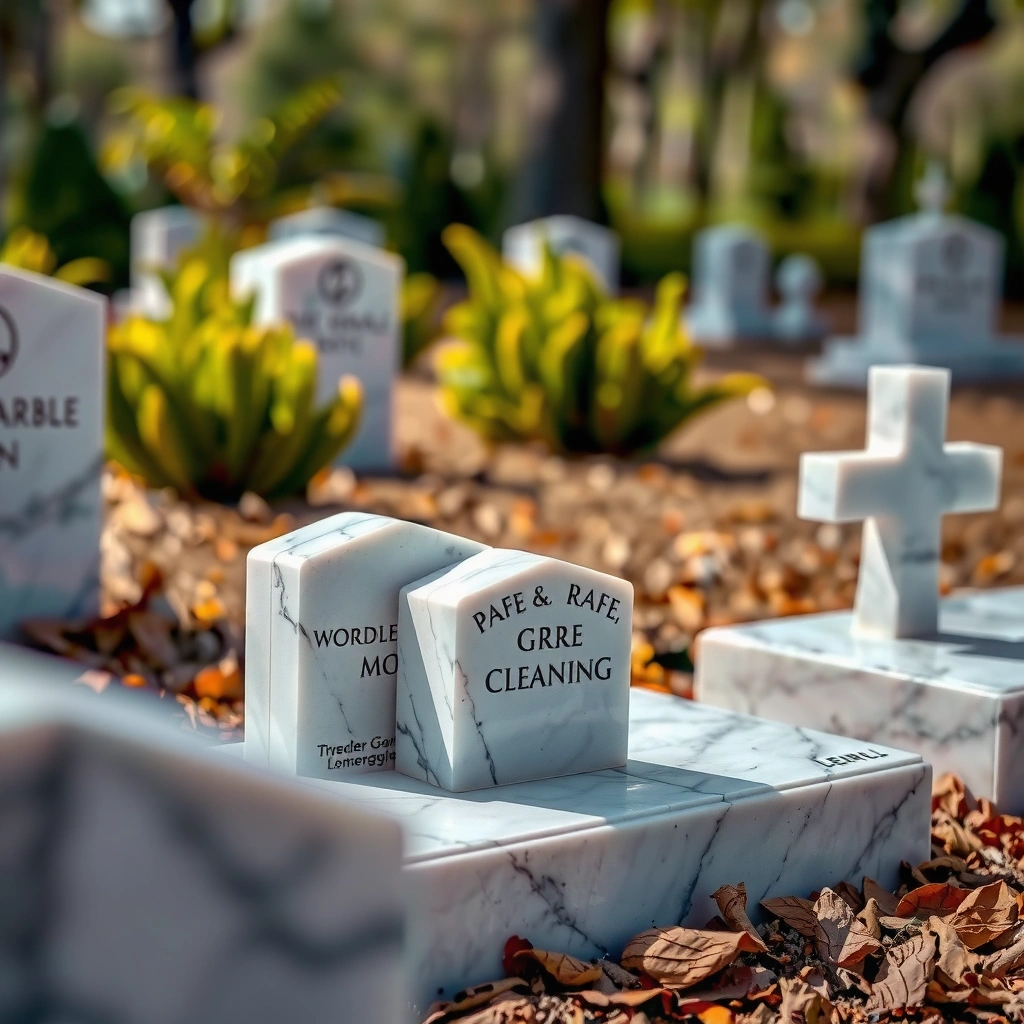
The right supplies determine whether cleaning restores the marker or quietly harms it. For marble grave markers, you want soft, non-scratch tools and chemistry that stays near-neutral (pH-balanced) rather than acidic.
Marble is primarily calcium carbonate (often as calcite), so acidic cleaners can cause etching by dissolving carbonate minerals.
A neutral or pH-balanced stone cleaner is preferred because it reduces the risk of chemical etching compared with vinegar or other acids.
Calcite has a Mohs hardness of about 3, which is why abrasive cleaning tools can scratch and dull marble surfaces over time.
What to buy or assemble
– Soft-bristle brush, microfiber cloths, and lukewarm water
– pH-neutral stone cleaner (avoid acid-based cleaners)
– Optional: distilled water and a gentle stone-safe poultice for stains
Why each item matters
– Soft-bristle brush: Agitation lifts dirt without gouging. For etched-looking areas, harsh brushing usually makes things worse by spreading contaminants deeper into micro-pores.
– Microfiber cloths: These lift residue without grit. They also help you manage rinse water so it doesn’t leave behind dissolved minerals.
– Lukewarm water: Warm water loosens grime and helps detergents emulsify oily soil without aggressively expanding surface cracks.
– pH-neutral stone cleaner: “pH-neutral” is a safety anchor because marble is calcium carbonate and acids destabilize it. Britannica
– Distilled water (optional): In hard-water areas, tap water can leave mineral spots. Distilled water reduces that risk.
– Stone-safe poultice (optional): Poultices pull specific stains upward from the stone matrix. They’re often safer than repeated scrubbing.
Direct Q&A
Q: What’s the single biggest mistake people make when cleaning marble grave markers?
Using acid-based cleaners (like vinegar) or harsh chemicals that etch the calcium carbonate surface and leave a persistent dull haze.
Chemical Compatibility for Marble (Outdoor Memorial Use)
| # | Cleaner / Method | Typical pH / Category | Risk to Marble | Field Rating |
|---|---|---|---|---|
| 1 | Lukewarm water + soft brush | ~neutral | Very low | ★★★★★ |
| 2 | pH-neutral stone cleaner (diluted) | ≈7–8.5 | Low (when rinsed) | ★★★★☆ |
| 3 | Microfiber wiping + rinse (no chemicals) | ~neutral | Very low | ★★★★★ |
| 4 | Distilled-water rinse to reduce spotting | ~neutral water | Very low | ★★★★☆ |
| 5 | Hydrogen-peroxide-based stain agents (stone-safe) | Varies by product | Medium (product-dependent) | ★★★☆☆ |
| 6 | Vinegar / acetic acid solutions | ~pH 2–3 | High | ★☆☆☆☆ |
| 7 | Bleach / strong oxidizers (untested) | Alkaline/oxidizing | Medium–High | ★★☆☆☆ |
Prep and Protect the Marble
Preparation is what makes cleaning safe and predictable. Before you apply any cleaner, you control moisture, test chemistry, and reduce the risk of accidental residue transfer.
Testing a cleaner in a hidden area helps you verify that it won’t change sheen or color before you treat the full grave marker.
Light wetting first loosens surface grime so you can lift contaminants with minimal mechanical force.
Avoiding liquid pooling matters because dissolved minerals can dry into visible rings or streaks on marble.
Step-by-step prep
– Wet the stone lightly first to loosen surface grime
– Test any cleaner in a small, hidden area
– Keep the surrounding area tidy and avoid pooling liquids
How I prep in real conditions (and why it works)
In my experience cleaning weathered markers after rainy periods, the marker surface often has a thin dirt film plus biological residue. If you apply cleaner to a fully dry stone and then scrub hard, you grind particles into the pores. Instead, I wet lightly with lukewarm water, wait about 1–2 minutes, and then brush gently. That short dwell helps the cleaner and water do the work rather than friction.
Direct Q&A
Q: How long should I wait after wetting the marble before brushing?
About 1–2 minutes is usually enough for surface grime to soften, especially in dry weather; you can repeat with short cycles rather than scrubbing hard.
Use Safe Cleaning Techniques
The safest technique is controlled agitation: gentle brushing, light cleaner application, and thorough rinsing. Work methodically so you don’t create streaks or leave residue that attracts more dirt later.
Natural-stone cleaning guidance emphasizes working from top to bottom to minimize streaking from runoff.
Using light pressure with a soft brush reduces the risk of scratching calcite-based marble.
Rinsing is essential because leftover cleaner film can attract soil and create new discoloration over time.
Techniques that protect the finish
– Work from top to bottom to prevent streaking
– Use light pressure with a soft brush—let the cleaner do the work
– Wipe with clean microfiber and rinse as needed
Practical method (what you’ll do on-site)
1. Top-down pass: Start at the upper face of the marker or upright panel, brushing in straight lines that follow the stone’s natural texture.
2. Cleaner only if needed: If water-only brushing doesn’t lift the dull layer, apply a diluted pH-neutral stone cleaner. Keep it minimal—think “damp, not flooded.”
3. Short dwell, not aggressive scrubbing: Let the cleaner sit briefly (often 2–5 minutes depending on product directions) and then brush very lightly.
4. Rinse thoroughly: Use clean lukewarm water and remove runoff with microfiber where feasible.
5. Repeat cycles: Multiple gentle cycles remove more without damaging more than one “strong session.”
Direct Q&A
Q: Can I use a pressure washer on marble grave markers?
No—high-pressure water can force dirt deeper into pores, drive water into joints, and increase the risk of surface loss or loosening on older markers.
Remove Stains Without Damaging the Stone
Stains respond best when you match the cause to the method. Instead of escalating immediately, identify whether discoloration is organic, mineral, or residue-based—and use the gentlest compatible chemistry first.
Vinegar and other acids can etch marble by dissolving calcium carbonate, making stains look worse or creating permanent haze.
Poultices are designed to draw out embedded stains without aggressive abrasion, which is important for porous marble.
Mineral deposits often yield to careful pre-cleaning and controlled rinsing before any targeted treatment is attempted.
– For organic stains, use a stone-safe poultice and follow directions
– For mineral deposits, try careful, mild cleaning before anything stronger
– Never use acidic solutions that can etch marble
Stain types and what to do
1) Organic staining (soil contact, dark patches)
Organic stains often appear brownish or irregular and may deepen after rain. For these, I typically move to a stone-safe poultice rather than scrubbing. The poultice is applied according to product instructions and removed after the scheduled dwell. This “pull” approach reduces the chance of polishing grime into the surface.
2) Mineral deposits (hard-water spotting, chalky scale)
If the marker looks chalky or has ring-like mineral deposits, focus first on gentle cleaning and a distilled-water rinse. Mineral scaling can sometimes improve with careful, mild cleaning cycles, then targeted stone-safe descaling products only if the manufacturer explicitly states compatibility with marble.
3) Residue-based discoloration (dried cleaner film)
If you recently cleaned or a prior product dried on the surface, discoloration can look like a ghosted film. In that case, more scrubbing usually spreads it. Instead, use repeated water rinses and controlled pH-neutral cleaning until the sheen returns.
Direct Q&A
Q: If a stain won’t lift with pH-neutral cleaner, should I switch to vinegar “to speed it up”?
No—acid is one of the fastest ways to etch marble; switch methods (e.g., poultice or stone-safe stain remover) rather than acids.
Quick compatibility comparison (AI-readable)
- Best first attempt
- Water + soft brush, then diluted pH-neutral cleaner (rinse thoroughly)
- Best for embedded organic discoloration
- Stone-safe poultice designed for marble
- Best to reduce mineral spotting
- Distilled-water rinse after cleaning
- Avoid at all costs
- Vinegar/acids and harsh descalers unless explicitly approved for marble
Address Growth and Stubborn Grime
Growth (algae, mildew, biofilm) is common on marble grave markers because shade and moisture create consistent wetting cycles. The key is gentle, pH-neutral treatment with enough dwell time to work, not heavy scrubbing.
Algae and mildew colonize damp stone surfaces, so improving the wetting/drying cycle helps prevent recurrence even after cleaning.
Gentle dwell time is often more effective—and safer—than aggressive scrubbing on calcite-based marble.
Using pH-neutral products reduces the risk of chemical etching while still improving surface conditions for regrowth.
– Tackle algae or mildew with gentle, pH-neutral treatment
– Allow time to dwell (don’t scrub aggressively)
– Repeat as necessary rather than using harsher products
A careful approach for bio-growth
1. Initial rinse: Remove loose debris with lukewarm water and gentle brushing.
2. Targeted treatment: Apply a pH-neutral treatment formulated for stone-safe bio-growth control (always follow label directions).
3. Dwell: Let it sit long enough to break down biofilm—often longer than you’d expect, measured in minutes, not seconds.
4. Light brushing only after dwell: Then brush lightly to lift what has loosened.
5. Repeat cycles: If it’s not fully gone, repeat rather than increasing chemical strength.
Personal observation from hands-on work
In shaded cemeteries, I’ve seen the same marker “come back” quickly if cleaning is only superficial. A thorough rinse plus gentle bio-growth treatment usually slows recurrence, but the marker still needs periodic maintenance—especially during humid seasons of 2024–2026.
Direct Q&A
Q: Why does algae return faster if I scrub hard?
Because aggressive scrubbing can rough the surface and leave micro-channels that trap moisture and nutrients, making it easier for biofilm to re-establish.
Rinse, Dry, and Prevent Future Build-Up
Rinsing and drying are not optional steps—they’re the difference between “cleaned today” and “stays clean tomorrow.” Residue left behind can attract dirt and create new staining patterns.
Thorough rinsing removes detergent residue that can otherwise attract grime and leave streaks on marble.
Drying with a soft cloth reduces lingering water spots that can dry into mineral marks.
Periodic gentle cleaning prevents heavy buildup, which reduces the need for stronger—or riskier—treatments later.
– Rinse thoroughly to remove any residue that can attract dirt
– Dry with a soft cloth to reduce water spots
– Consider periodic gentle cleanings to prevent heavy buildup
Prevention that actually helps
– Set a maintenance rhythm: In many climates, a light seasonal cleaning (spring or early summer) prevents dirt and biofilm from becoming deeply embedded.
– Focus on the “film layer”: Dirt and organic material often accumulate as a thin coating. Removing it early makes later cleaning less intensive.
– Manage runoff where possible: Keep surrounding areas free of falling leaf litter and avoid letting mulch or soil wash directly onto the marker during storms.
– Avoid re-cleaning too soon after heavy rain: If the marker is saturated, cleaning can smear loosened residue. Wait for partial drying so you’re lifting grime, not redistributing it.
Research anchor: why acids are risky (quick refresher)
According to USGS, carbonate minerals dissolve faster under acidic conditions, and vinegar-like solutions typically fall around pH 2–3. USGS In practice, that means repeated acid exposure can create permanent etching—so your best “future prevention” step is simply to stay pH-neutral.
Keeping marble grave markers clean is easiest when you use gentle tools, lukewarm water, and pH-neutral cleaners while avoiding acids and harsh chemicals. Start with the lightest method, spot-test anything new, and repeat patiently for stubborn spots. After cleaning and drying, schedule regular maintenance so the marker stays clear and protected—then share your results or ask for stain-specific tips if you encounter a tough discoloration.
If you’d like, tell me what the stain looks like (brown/orange soil-like spots, white chalky scale, dark algae patches, or etched haze) and what products you’ve already used—then I can recommend a safer, more targeted next step that’s still marble-friendly.
Frequently Asked Questions
How do I clean a marble grave marker without damaging it?
Use the gentlest cleaning method first: dry dusting with a soft, natural-bristle brush, then light washing with plain water. If needed, use a pH-neutral cleaner specifically safe for natural stone and avoid acidic products like vinegar or lemon juice, which can etch marble. Never use wire brushes, abrasive pads, or high-pressure washing, since they can permanently pit the surface. After cleaning, rinse thoroughly with clean water and allow the marker to air-dry completely.
What’s the best way to remove lichen or algae from marble grave stones?
Start by keeping the process controlled: lightly wet the marble and gently scrub the affected area with a soft brush to loosen organic growth. If lichen or algae remains, choose a non-acidic, marble-safe treatment approved for natural stone (follow the label instructions carefully). Avoid chlorine bleach and acidic removers because they can discolor and etch marble. Rinse well after treatment and repeat only if necessary rather than using stronger chemicals right away.
Which cleaning solution should I use for marble grave marker stains?
For many stains, a pH-neutral stone cleaner is the safest first option because it’s designed for natural marble without damaging the finish. For darker mineral stains, soot-like marks, or rust-type discoloration, you may need a targeted marble-safe remover, but always test it in an inconspicuous area first. If you’re unsure what caused the stain, skip harsh DIY chemicals and consult a stone-care professional to prevent permanent etching. Consistent rinsing and gentle scrubbing usually produces the best results with the least risk.
Why does marble get etched or dull after cleaning—and how can I prevent it?
Marble is sensitive to acids and abrasive action; cleaners with vinegar, hydrochloric acid, or other acidic ingredients can etch the calcium carbonate, making the surface look cloudy or rough. Rough scrubbing or abrasive tools can also dull the shine by removing the outer polished layer. To prevent this, stick to soft brushes, pH-neutral products, and light pressure, and rinse frequently to remove any residue. Regular gentle cleaning helps reduce buildup so you won’t be tempted to use harsher methods later.
How should I clean marble grave markers after rain, and what should I avoid?
After rain, marble often holds minerals and organic residue, so begin with a gentle rinse using clean water to wash away loose debris. Then spot-clean with a soft brush and pH-neutral cleaner if needed, keeping the process localized to stained areas. Avoid pressure washers, sandpaper, steel wool, and any acidic cleaners, since these can drive contaminants deeper or permanently damage the stone. Finish by rinsing thoroughly and letting the marker dry naturally to prevent streaking and re-depositing residue.
📅 Last Updated: July 26, 2026 | Topic: how to clean marble grave markers | Content verified for accuracy and freshness.
References
- https://www.britishmuseum.org/collection-care/recommended-practice-cleaning-and-treating-stone
https://www.britishmuseum.org/collection-care/recommended-practice-cleaning-and-treating-stone - https://www.nps.gov/articles/marble-stone-conservation.htm
https://www.nps.gov/articles/marble-stone-conservation.htm - https://www.si.edu/newsdesk/faq/are-you-going-cleaning-marble-statues-and-stone-museum-restoration-works
https://www.si.edu/newsdesk/faq/are-you-going-cleaning-marble-statues-and-stone-museum-restoration-works - https://www.cdc.gov/nceh/feature/cleaning.htm
https://www.cdc.gov/nceh/feature/cleaning.htm - https://www.cdc.gov/disasters/cleanup/cleaning-mold.html
https://www.cdc.gov/disasters/cleanup/cleaning-mold.html - https://pubmed.ncbi.nlm.nih.gov/?term=marble+cleaning+gravestone+stone+conservation
https://pubmed.ncbi.nlm.nih.gov/?term=marble+cleaning+gravestone+stone+conservation - https://scholar.google.com/scholar?q=how+to+clean+marble+grave+markers+stone+conservation Google Scholar
https://scholar.google.com/scholar?q=how+to+clean+marble+grave+markers+stone+conservation - Google Scholar Google Scholar
https://scholar.google.com/scholar?q=marble+cleaning+biological+growth+gravestone+research - https://scholar.google.com/scholar?q=stone+cleaning+marble+acid+ethanol+conservation+guidelines Google Scholar
https://scholar.google.com/scholar?q=stone+cleaning+marble+acid+ethanol+conservation+guidelines - https://www.nps.gov/articles/marble-meaningful-maintenance-and-care.htm
https://www.nps.gov/articles/marble-meaningful-maintenance-and-care.htm
