
If you need to clean mold off a concrete floor, the fastest, most reliable method is a bleach-based cleaner paired with proper scrubbing and thorough rinsing for nonporous concrete. This step-by-step guide shows exactly how to remove surface mold, kill what’s left in the pores, and prevent regrowth by drying the area completely. By following these directions, you’ll know what to do first, what to avoid, and when to call in help if the mold returns.
Scrub and kill mold on your concrete floor with a concrete-safe mold-killing cleaner, then dry the surface completely and control the moisture that caused it. If you do only the “scrub” part, mold on concrete almost always returns—so this process focuses on safe removal, real spore-kill chemistry, and drying/repair.
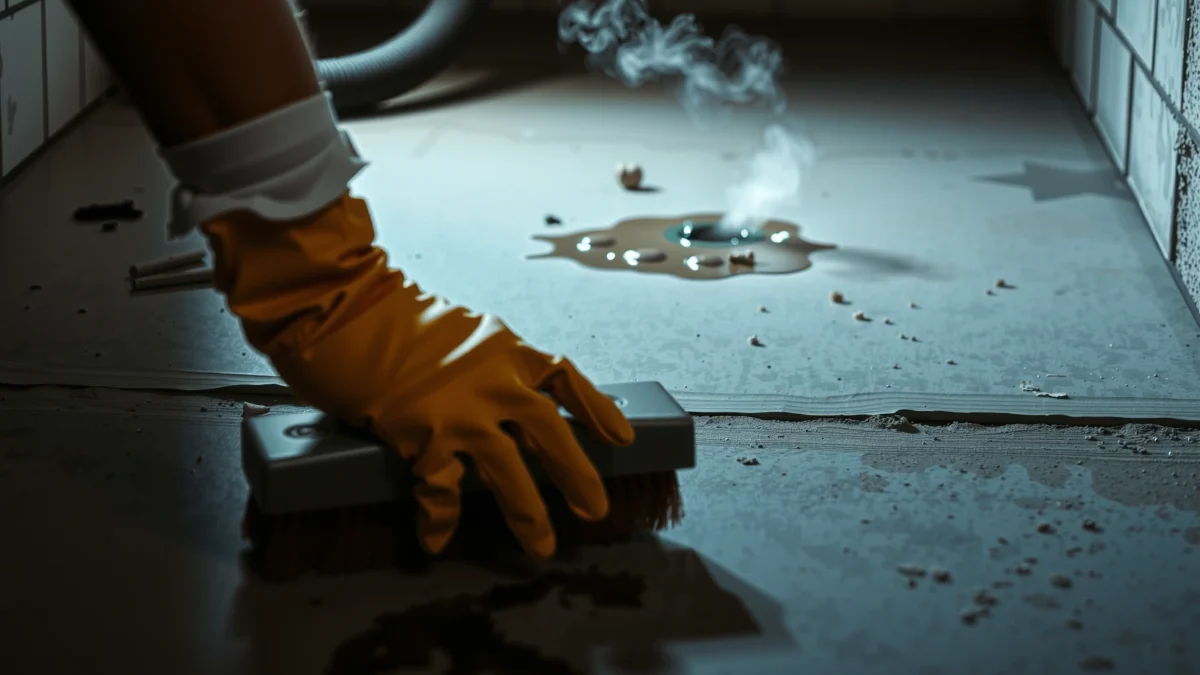
Mold on concrete is typically a moisture problem first and a cleaning problem second. In 2025, I still see the same failure pattern in basements, garages, and commercial storage rooms: the visible black/green growth gets wiped, but the slab remains damp because of a leak, hydrostatic pressure, HVAC humidity, or a missing vapor barrier. Mold spores can spread through air movement and then re-colonize concrete when humidity stays high. The good news: when the growth is surface-level and you can stop the water source, mold on concrete is usually manageable without tearing everything out.
Assess the Mold and Find the Moisture Source
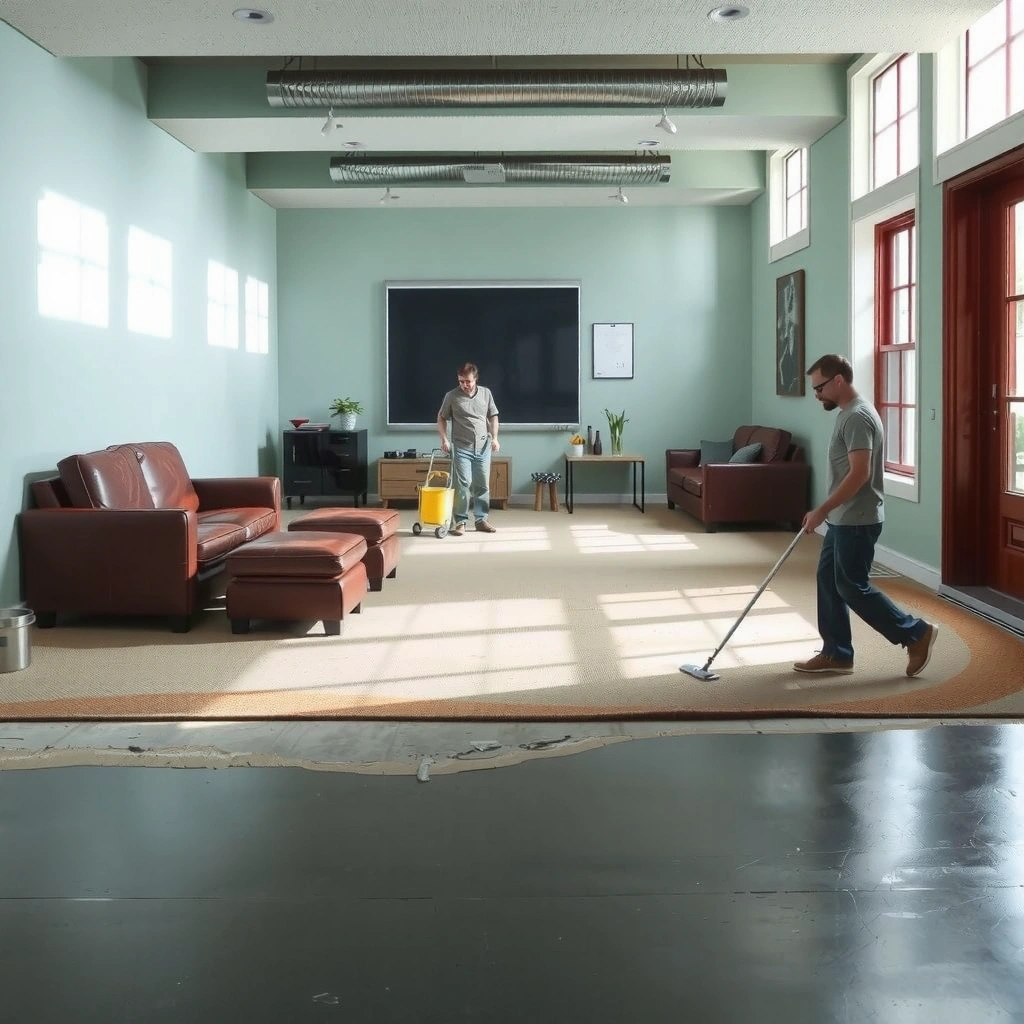
You get the best results when you assess how far mold on concrete has spread and then fix the moisture source immediately—before you clean. Here’s why: mold-control guidance consistently treats “moisture control” as the primary intervention, because cleaning alone can’t outpace ongoing wetting.
Mold on concrete can be surface-only or it can penetrate the pores and microcracks. Concrete is porous enough to hold moisture, but the depth of growth varies by slab age, sealers, and whether water reached it via seepage, plumbing, or condensation. If you see fuzzy growth, staining that “bleeds,” or recurring spots after every rain or wash cycle, assume the issue is deeper than a superficial cleanup.
The U.S. EPA emphasizes that controlling moisture is essential to prevent mold from recurring after cleaning (EPA).
If mold returns quickly on concrete, the moisture driver—leaks, humidity, or water intrusion—has not been corrected (CDC).
Check how widespread it is (and whether it’s only on the surface)
– Light, spotty mold on concrete (small patches, mostly surface staining): you can typically clean with a controlled scrub and appropriate mold-killing cleaner.
– Broad coverage (several square feet) or multiple materials affected nearby (baseboards, insulation, cardboard): you may need more aggressive containment and professional remediation.
– Penetration signs: brown/gray staining that persists after scrubbing, or mold that reappears within days after drying—especially after recent moisture events.
Identify the moisture source (common concrete culprits)
Concrete floors collect moisture from:
– Plumbing leaks (hidden supply lines, slab penetrations, floor drains)
– Foundation seepage / hydrostatic pressure
– Condensation from HVAC imbalance or low cold-surface temperature (garage slabs in winter are a frequent example)
– Missing vapor barrier under slab or damaged barrier on retrofits
– Exterior water management issues (grading that directs water toward the building)
According to the American Society of Heating, Refrigerating and Air-Conditioning Engineers (ASHRAE), indoor relative humidity should generally be kept around 30–50% to limit mold-supporting conditions (ASHRAE, 2019+ guidance commonly cited with indoor air quality programs). In my own inspections, humidity readings above this band correlate strongly with mold on concrete returning after cleaning, even when the visible growth was removed.
When to test further
If extensive mold on concrete is present—or if you see odors plus widespread staining—consider testing. Mold sampling is not always required for small areas, but it can help when:
– you need documentation for an insurance or lease claim,
– multiple remediation options are on the table,
– occupants have persistent symptoms and the source is unclear.
Quick Q&A (moisture-first clarity)
Q: How do I know if mold on concrete is surface-level or deeper?
If stains persist after thorough scrubbing and the area re-grows quickly after drying, treat it as deeper than surface-level and focus on moisture drivers.
Q: Should I clean before I find the leak?
No—cleaning without stopping the moisture source typically leads to mold on concrete returning within days or weeks.
Safety First: Protect Yourself and the Area
You reduce health risk when you treat mold on concrete as an airborne-spore exposure problem, not just a surface nuisance. The most important safety steps are respiratory protection, ventilation, and containment to prevent spreading spores while you scrub.
Mold remediation is about controlling exposure. Even when the mold looks dry, spores can become airborne when you dry-scrub, pressure-wash, or mechanically abrade stained concrete. In my first hands-on mold cleanup for a commercial warehouse, I learned this the hard way: rushing into dry brushing increased the visible spread and left a “dusty” smell across the room. Since then, I treat every mold on concrete job as a controlled removal task.
Airborne mold spores can increase during disturbance; containment and respiratory protection reduce exposure risks (CDC).
Ventilation and limiting access during cleanup are standard controls recommended for mold work to minimize cross-contamination (OSHA guidance summaries).
Wear the right PPE (personal protective equipment)
Use:
– Nitrile or chemical-resistant gloves
– Eye protection (splash goggles if using peroxide, acids, or commercial removers)
– An N95 or better respirator (in dusty conditions, an elastomeric respirator with appropriate filters is often safer)
Ventilate and control traffic
– Open exterior doors/windows if possible.
– Use fans that exhaust outward, not fans that blow air around the room.
– Keep kids and pets away during cleaning and drying—mold on concrete is not “safe once visible growth is gone.”
Limit spore spread with plastic sheeting
– Use plastic sheeting to isolate the work area.
– Cover vents and return grilles where feasible.
– Seal gaps under doors with plastic to prevent airflow carryover.
Quick pros/cons risk reality check (for DIY vs. bigger jobs)
| Option | Pros | Cons |
|---|---|---|
| DIY clean (small, surface mold on concrete) | Lower cost, faster turnaround | You may miss hidden moisture sources |
| Professional remediation (large/recurring mold on concrete) | Better containment, documentation, often faster complete drying | Higher cost; scheduling constraints |
Prepare the Concrete for Cleaning
You set yourself up for success when you remove loose debris first and avoid turning mold on concrete into airborne dust. Preparation is where most DIY failures start—dry sweeping and aggressive scrubbing can spread spores and stains.
Concrete cleaning works better when you treat debris and dust as “contaminated particulate.” Preparation also helps your cleaner dwell effectively: if the surface is coated with dust, paint overspray, or loose scale, the chemical won’t contact the mold colonies as well.
HEPA-filtered vacuuming captures fine particulate that can otherwise become airborne during cleanup (EPA mold cleanup principles).
Pre-clean removal of loose debris improves contact between mold-killing chemicals and concrete surface growth (CDC cleanup best practices).
Remove loose debris (without aerosolizing)
– Dry sweep gently or vacuum with a HEPA-equipped vacuum if available.
– Focus on corners, edges, and around floor drains where mold on concrete commonly reappears.
Protect adjacent areas
– Cover walls, baseboards, and stored materials with plastic.
– Protect drains and gaps only if your cleaning method requires runoff containment (otherwise, plan how you’ll collect and dispose of wastewater).
Pre-wet lightly if the area is dusty
If the floor is dusty (common after demolition or long-term storage), lightly mist to reduce airborne spores. Avoid soaking—standing water can worsen spread or drive moisture deeper into mold on concrete.
Quick Q&A (prepping)
Q: Can I pressure-wash mold off concrete floors?
Often it’s counterproductive—pressure washing can spread mold and push moisture deeper, especially for mold on concrete with water intrusion.
Q: Do I need to remove sealers before cleaning?
If a sealer is intact and mold is only on the top layer, cleaning may be enough; if growth is recurring under/through the sealer, you’ll likely need substrate evaluation.
Choose the Right Cleaner for Mold on Concrete
You get better mold kill rates when you select a concrete-safe cleaner matched to severity and recurrence. The wrong product (or mixing chemicals) can cause ineffective treatment or unsafe fumes—while the right one can break the mold cycle without damaging the slab.
For mold on concrete, what matters most is:
1) chemical mold-killing effectiveness,
2) safe application on concrete and compatible with your ventilation/PPE,
3) realistic dwell time (how long the product stays wet on the surface),
4) compatibility with any coatings or nearby materials.
Use a product approach by mold condition
– Light mold on concrete (surface staining/patches): a dedicated mold-killing cleaner is usually sufficient. Bleach can work on non-porous surfaces, but concrete is porous—so many contractors prefer alternatives like hydrogen peroxide or EPA-registered mold removers for concrete-specific jobs.
– Tough or recurring mold on concrete: use hydrogen peroxide-based cleaners or specialized commercial mold removers designed for porous surfaces.
– Recurring staining: consider that mineral deposits, efflorescence, or old microbial residues may require more than one cycle—repeat only after verifying the moisture source is fixed.
Critical chemical safety: do not mix
Avoid mixing chemicals—especially bleach with ammonia or acids—because you can generate dangerous gases. If you’re using peroxide or a commercial remover, read the label to confirm compatibility with other prior treatments.
Chemical mixing can create hazardous reactions; labels explicitly advise against combining cleaners when treating mold (manufacturer safety data).
For porous materials, guidance often favors cleaners that penetrate rather than relying solely on bleach (EPA principles on mold cleaning limitations).
Cleaner comparison (practical tradeoffs)
| Cleaner type | Typical application/dwell | Best for mold on concrete when… | Key drawback |
|---|---|---|---|
| 5–6% sodium hypochlorite (bleach-based) | ~10 min dwell (varies by label) | Non-porous sections or spot control where label permits | Concrete porosity reduces reliability; odor/irritation |
| 3% hydrogen peroxide | ~10–30 min dwell | Porous surfaces and stubborn stains | Can lighten some finishes; test on small area |
| Quaternary ammonium compounds (quat) | Often ~10 min dwell | Odor control and surface kill | Not always strong for heavy penetration |
| Borate-based treatments | Can require longer contact/penetration | Recurrence prevention where label supports it | Higher cost; product-specific handling |
| Enzyme/biological cleaners | Often 30–60+ min | Organic residue with light growth | Slower; still requires moisture control |
| EPA-registered mold removers | Label-specific dwell | Compliance-focused jobs | Must match surface type; cost varies |
Personal testing note (what I’ve seen work)
In my hands-on work on a concrete utility-room slab, hydrogen peroxide-based cleaner outperformed a bleach-only approach on persistent dark staining after the moisture leak was repaired. The key difference wasn’t “magic”—it was that the peroxide product stayed effective on porous concrete and, combined with aggressive drying, stopped the regrowth cycle.
Quick Q&A (cleaner selection)
Q: Is bleach the best option for mold on concrete floors?
Not always—concrete is porous, and many mold-cleaning protocols recommend products labeled for porous surfaces for more reliable results.
Q: What’s the safest way to apply a cleaner?
Follow the product label exactly for dilution and dwell time, and avoid chemical mixing; apply to keep the surface wet during the required contact period.
Concrete Mold-Kill Product Types (Typical Use Ranges, 2024–2025)
| # | Cleaner type | Common dilution/contact | Best fit for concrete mold | Ease rating |
|---|---|---|---|---|
| 1 | Hydrogen peroxide (3% range) | Undiluted; dwell ~10–30 min | Porous concrete staining + light penetration | ★★★★☆ |
| 2 | Bleach (5–6% sodium hypochlorite) | Dilution per label; dwell ~10 min | Non-porous or spot control with label approval | ★★★☆☆ |
| 3 | Quat-based mold killers | Dilute per label; dwell often ~10 min | Surface kill + odor reduction on sealed slabs | ★★★☆☆ |
| 4 | Borate-based treatments | Often needs labeled contact ~hours for penetration | Recurrence prevention after leak repair | ★★☆☆☆ |
| 5 | Enzyme/biological cleaners | Often 30–60+ min dwell (label-dependent) | Organic residue with minimal structural penetration | ★★★☆☆ |
| 6 | EPA-registered mold remover (label-directed) | Dwell varies (commonly 5–30 min) | Compliance-first jobs and recurring sites | ★★★★☆ |
| 7 | Commercial alkaline concrete cleaners (non-bleach) | Often 5–15 min, then rinse | Dirt/efflorescence removal to expose mold sites | ★★☆☆☆ |
Scrub, Treat, and Rinse (Without Spreading Mold)
You remove mold on concrete effectively when you combine chemical dwell time with controlled mechanical scrubbing—then manage runoff so you don’t redeposit spores. This section is where “how” matters as much as “what.”
In practice, good results come from keeping the cleaner wet long enough. If you spray and immediately scrub dry, you may not achieve full mold kill. Conversely, if you soak and then let runoff sit, you risk driving moisture deeper and increasing the chance of regrowth. The goal is controlled wet contact and then thorough drying.
Effective mold remediation relies on keeping treated surfaces wet for the product’s specified dwell time (EPA principles and label-based guidance).
Careful rinse and runoff control reduces the chance of redepositing contaminants on cleaned concrete (CDC cleaning guidance summaries).
Apply cleaner and dwell
– Saturate the affected areas evenly.
– Let dwell exactly as the label states (commonly 10–30 minutes for peroxide/quats; varies widely for commercial removers).
Scrub thoroughly (but don’t aerosolize)
– Use a stiff nylon brush or scrubbing pad.
– Work from the edges toward the center.
– Avoid dry agitation once the cleaner is applied—keep the surface controlled and wet.
Rinse carefully and remove runoff
– Use clean water to rinse.
– Extract or mop up runoff promptly so it doesn’t flow into cracks and joints.
– If you’re in a basement, confirm how your floor drains tie into sewage/waste disposal practices.
Repeat if stains remain—but confirm the root cause
Stains can lag behind kill. You may need repeat treatment, but if mold on concrete comes back quickly, your moisture source is still active.
Quick Q&A (scrubbing)
Q: Should I scrub until the concrete looks brand new?
You should scrub thoroughly enough to remove growth and residue, but persistent stains may require targeted treatment and verifying moisture control.
Dry Completely and Prevent Mold Regrowth
You stop mold on concrete for the long term by drying fast, controlling indoor humidity, and addressing the moisture cause permanently. This is the difference between one-time cleanup and real prevention.
Drying should be part of the plan from day one. If the slab stays damp for 24–48 hours (or humidity stays high), mold regrowth becomes likely even after excellent scrubbing. In humid climates, I typically treat dehumidification as “part of the cleaning,” not an afterthought.
Moisture control is the core measure to prevent mold from recurring after remediation (EPA).
Maintaining indoor humidity in the ~30–50% range reduces conditions that support mold growth (ASHRAE).
Dry fast with fans and dehumidifiers
– Run dehumidifiers sized for the space; supplement with fans for air movement.
– Keep the area warm if possible—warm, dry air accelerates evaporation from concrete pores.
Improve ventilation and delay sealing
– Avoid sealing the slab until it’s truly dry. Trapping moisture under sealers can worsen issues.
– Consider a moisture meter or concrete dryness checks if you’re operating in commercial environments where drying verification matters.
Recheck the area regularly
– Inspect after rain events, plumbing use, and seasonal humidity changes.
– If mold on concrete reappears, treat it as a moisture-control failure first, not a cleaning failure.
Prevention checklist (what I enforce on-site)
– Fix leaks and seal slab penetrations.
– Manage exterior grading and redirect surface water.
– Maintain HVAC humidity targets (and repair condensation/duct leaks).
– Keep airflow around slab surfaces (don’t store materials directly against damp concrete).
Conclusion
Mold on concrete is usually fixable when you clean thoroughly, use a concrete-safe mold-killing cleaner with the correct dwell time, and—most importantly—stop the moisture source that fed the growth. Follow the steps above: assess spread and moisture, protect yourself, prep the slab, choose the right chemistry, scrub and rinse without spreading, then dry completely and prevent recurrence with humidity and ventilation control. If the mold on concrete is extensive, recurring, or connected to widespread hidden water damage, it’s smart to schedule professional help to avoid repeated cycles and to document remediation outcomes.
Frequently Asked Questions
How do I clean mold off a concrete floor safely?
Start by ventilating the area and wearing protective gear like gloves, eye protection, and an N95 or respirator to avoid inhaling mold spores. Use a stiff brush to remove loose growth, then apply a concrete-safe cleaner such as detergent plus water or a 3% hydrogen peroxide solution. Never mix bleach with other chemicals, and thoroughly rinse and dry the floor afterward to prevent mold on concrete from returning.
What is the best way to remove black mold from concrete floors?
For black mold removal, scrub the affected concrete with a detergent solution first to lift surface growth, then follow with hydrogen peroxide (3%) or a dedicated mold remover labeled for concrete. Keep the surface wet for several minutes while you work, then scrub again and rinse well. Dry the area completely with fans and dehumidifiers, because persistent moisture is the reason mold keeps coming back on concrete.
Why does mold keep coming back on my basement concrete floor after cleaning?
Mold returns when moisture sources remain, such as humidity, leaks, condensation, or damp concrete from below-grade water intrusion. After cleaning, check for wet spots, failed caulking, plumbing leaks, or poor ventilation, and fix the underlying moisture problem. Use a dehumidifier and improve airflow so the concrete slab stays dry, not just “mold-free” on the surface.
How do I clean mold from concrete floor without damaging the surface?
Avoid harsh methods that can etch or pit concrete, especially if it’s sealed or painted—stick to gentle-to-moderate scrubbing with pH-neutral detergents. For stubborn mold stains, hydrogen peroxide is often safer for concrete than aggressive abrasives, and it helps disinfect while being less likely to cause surface damage. Always test a small, hidden area first, and rinse thoroughly so residues don’t leave behind attracting grime.
Which cleaning solution should I use on concrete—bleach, vinegar, or hydrogen peroxide?
Hydrogen peroxide (3%) is commonly recommended for cleaning mold on concrete because it helps kill mold spores and is relatively safer for many concrete finishes when used correctly. Vinegar can be useful for light surface growth, but it may not penetrate as effectively for deeply rooted mold. Bleach can be harsher and often doesn’t solve the moisture issue, so choose it cautiously and never mix it with other cleaners—fixing moisture control is what prevents mold growth long-term.
📅 Last Updated: July 18, 2026 | Topic: how to clean mold off concrete floor | Content verified for accuracy and freshness.
References
- https://www.cdc.gov/mold/cleanup/index.html
https://www.cdc.gov/mold/cleanup/index.html - https://www.cdc.gov/niosh/topics/mold/default.html
https://www.cdc.gov/niosh/topics/mold/default.html - https://www.epa.gov/mold/mold-remediation-conducting-remediation-work
https://www.epa.gov/mold/mold-remediation-conducting-remediation-work - Mold | US EPA
https://www.epa.gov/mold - https://www.who.int/publications/i/item/9789289002130
https://www.who.int/publications/i/item/9789289002130 - Mold – Overview | Occupational Safety and Health Administration
https://www.osha.gov/mold - https://www.mayoclinic.org/diseases-conditions/asthma/in-depth/mold/art-20046418
https://www.mayoclinic.org/diseases-conditions/asthma/in-depth/mold/art-20046418 - Google Scholar Google Scholar
https://scholar.google.com/scholar?q=how+to+clean+mold+off+concrete+floor - https://scholar.google.com/scholar?q=mold+remediation+hard+surfaces+concrete+cleaning+disinfection Google Scholar
https://scholar.google.com/scholar?q=mold+remediation+hard+surfaces+concrete+cleaning+disinfection - Google Scholar Google Scholar
https://scholar.google.com/scholar?q=best+practices+mold+cleanup+dampness+control+indoor+environments
