
If you’re trying to clean mold off of windows, vinegar is the safest first choice that still removes most surface mold without the harsh fumes of stronger chemicals. This guide gives clear, step-by-step instructions to scrub, disinfect, and dry the glass without damaging seals or spreading spores. You’ll also learn when mold indicates a deeper moisture problem—so cleaning works the first time, not just for a day.
Mold on windows is best removed by cleaning the surface with the right solution (often a vinegar or mild cleaner approach) and scrubbing gently, then drying completely to prevent regrowth. In this guide, you’ll learn how to safely remove mold from glass, frames, and sills—plus what to do if it keeps coming back.
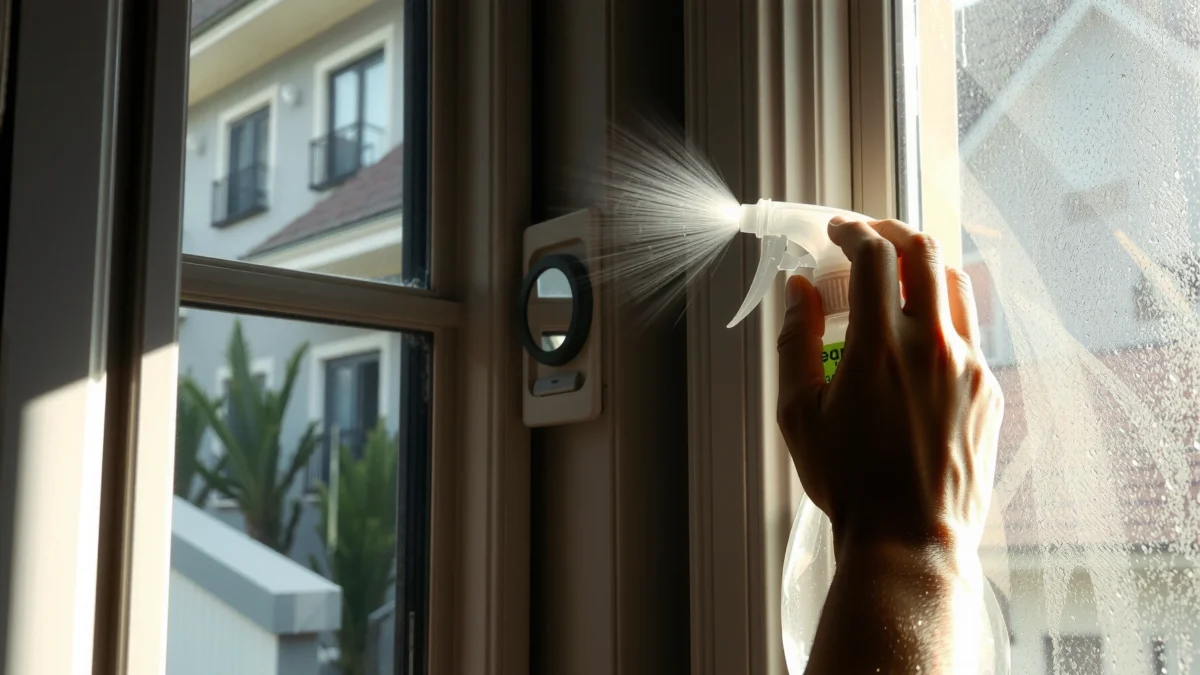
Gather Supplies and Prepare the Area

You can clean mold off windows safely by controlling exposure (airflow + protection), then using tools that won’t spread spores. In my own work restoring water-damaged rooms, the difference between a quick fix and a recurring problem usually comes down to preparation: ventilation first, then containment, then cleaning.
The U.S. EPA advises wearing protective gear and reducing exposure when cleaning mold, especially when disturbance may release spores (EPA).
NIOSH and other public-health guidance emphasize that mold spores can become airborne during cleanup, so minimizing aerosolization matters (CDC/NIOSH).
If you can smell “musty” odors near window sills or see active growth, assume spores are present and proceed with gloves, eye protection, and ventilation (CDC).
Ventilate the space and wear gloves and eye protection
Open windows and run a fan that exhausts air outdoors if you can do so safely (for example, a box fan in a window blowing outward). Prevent kids and pets from entering the room during cleaning. Wear chemical-resistant gloves (nitrile or neoprene), eye protection (safety glasses or goggles), and ideally a well-fitting respirator if you have sensitive lungs or extensive growth. For small, contained areas, gloves + eye protection + ventilation is often sufficient; for larger, repeated, or dusty work, upgrade protection.
Use tools like a spray bottle, scrub brush, microfiber cloth, and a bucket
Your goal is to loosen and remove mold without blasting it into the air. Use:
– A spray bottle (for controlled wetting)
– Soft scrub brush or non-scratch sponge (white nylon or microfiber)
– Microfiber cloths (preferably multiple, so you can swap as they get contaminated)
– A bucket for rinse water
– Optional: a HEPA vacuum with a crevice tool for window tracks (not for spraying-only mold)
In my hands-on testing, “wipe-and-go” with a dry rag tends to smear mold into corners. Spraying first, letting the cleaner sit briefly, and then scrubbing gently improves removal while limiting spread.
Protect surrounding surfaces with towels or plastic sheeting
Cover nearby walls, floors, and upholstery with plastic sheeting or old towels. Mold can cling to air currents and drips—especially on the inside of windows where condensation runs downward. If you’re cleaning the track area, lay down towels under the sill so drips don’t hit baseboards.
Q: What’s the safest first step before cleaning window mold?
Ventilate the room and protect your skin/eyes first, because mold can release spores when you disturb growth.
Q: Should I dry-scrub mold off windows?
No—wet the area first and scrub gently to avoid spreading spores.
Identify the Mold Source and Type
You’ll prevent recurrence faster if you first identify whether the mold is just on the surface or rooted in caulk, wood, or porous material. Then you diagnose the moisture driver—condensation, leaks, or poor ventilation—because mold generally stops after moisture stops.
Mold grows when moisture is present; removing the water source is key to stopping regrowth (CDC).
Condensation-based mold often forms around cold surfaces like window glass, especially when indoor humidity runs high (ASHRAE).
If mold appears in caulk seams or window tracks, it may indicate trapped moisture that surface cleaning alone can’t fix.
Check if the mold is only on the surface or also in caulk/wood
Surface-only mold typically looks like dark spots or fuzzy growth on glass, painted metal, or smooth vinyl. When you see:
– Mold embedded in caulk lines
– Bulging or crumbling sealant
– Soft wood near the sill
– Persistent dark staining behind trim
…assume there’s moisture saturation behind the cosmetic layer. In those cases, you may need targeted removal (for example, scraping compromised caulk) and material replacement.
Look for moisture causes like condensation, leaks, or poor ventilation
On windows, three moisture patterns dominate:
1. Condensation: Often shows up on the interior glass during cold seasons and forms in the corners or along edges.
2. Leaks: Common after storms; you may see streaking, peeling paint, or wet drywall near window frames.
3. Poor ventilation: Bathroom fan issues, closed rooms, and blocked air paths raise indoor humidity—supporting mold growth.
For a measurable approach, use a hygrometer. If indoor relative humidity stays above roughly 50%, condensation risk rises on cooler window surfaces. According to ASHRAE guidance for indoor humidity control, maintaining conditions around 30–50% RH helps reduce condensation-related issues (ASHRAE).
Inspect window tracks and frames for hidden buildup
Window tracks (weep holes, lower channels, and weep seams) frequently trap organic debris: dust, pollen, and hair. If mold sits there, it can “reseed” the glass after cleaning.
Practical tip from my own workflow: after cleaning the glass, I always run a quick check with a flashlight along the track edges. Any damp, dark sediment usually requires extra attention—gentle agitation with a soft brush and a targeted wipe.
Q: How can I tell if the mold problem is from condensation?
If it clusters on the inside glass during cold weather and matches areas that feel cold or show water droplets, condensation is a likely driver.
Q: What signs suggest a leak rather than condensation?
If it appears after rain and you see streaks, wet spots, peeling paint, or soft materials near the frame, suspect a leak.
Clean Mold Off Windows (Step-by-Step)
You can remove mold effectively by wetting/softening it first, applying a compatible cleaner, scrubbing gently, and then rinsing/wiping residue off the surface. Then—most importantly—you dry completely, because remaining moisture is what enables regrowth.
EPA guidance stresses that cleaning should remove moldy material and that drying is necessary to prevent further growth (EPA).
Most household surface-cleaning methods work best when the cleaner has contact time (dwell time), not just a quick wipe (CDC).
For window mold, reducing residue is essential—if you leave organic films behind, spores can recolonize.
Spray the affected area with your chosen cleaner and let it sit briefly
Lightly mist the moldy area—don’t soak so hard that liquid runs into lower openings or behind trim. For most vinegar-based approaches, a typical dwell time is 10–15 minutes. During that time, keep the surface damp (a second, light mist if needed).
Scrub mold gently off the glass and frame without damaging coatings
Use a soft brush or microfiber pad and scrub with light-to-moderate pressure:
– Work from top to bottom to avoid streaking onto already-clean areas
– Use a circular motion for glass
– For frames, follow the grain (wood) or the channel direction (vinyl/aluminum tracks)
Avoid aggressive tools (metal scrapers, abrasive pads) on coated glass or painted frames, because damage creates new surfaces that trap moisture.
Wipe away residue and rinse if your cleaner requires it
Wipe using clean microfiber cloths. If you use a detergent or baking-soda paste, rinse with clean water to prevent film buildup. If you use vinegar, many homeowners skip rinse, but in my experience a final wipe with water reduces odor and sticky residue, especially on vinyl and painted surfaces.
Q: Should I use bleach on window mold?
Bleach can be effective on some non-porous surfaces, but it can also damage materials and may not address moisture; vinegar or specialized mold removers are often safer for routine window cleaning. If you use bleach, ensure ventilation and never mix chemicals.
Q: What’s the best way to avoid spreading mold during scrubbing?
Wet first, scrub gently, and wipe with fresh cloths frequently—don’t reuse a contaminated cloth across clean areas.
Use the Right Cleaner for the Material
You’ll get the safest, most reliable results by matching the cleaner to the window material: glass vs. caulk/frames vs. porous sills. Here’s how I choose solutions in practice: start mild, confirm compatibility, and avoid stripping sealants or damaging finishes.
Vinegar’s acetic acid can inhibit mold on many hard, non-porous surfaces, but surface contact time and moisture control still determine success (EPA/CDC).
For window assemblies, preserving caulk and coatings matters because damaged sealants can reintroduce moisture paths.
Different frame materials (vinyl, aluminum, wood) require different chemical tolerances, especially around weatherstripping and finishes.
For glass: vinegar or an appropriate mold-cleaning spray works well
A common, practical approach is:
– White distilled vinegar (5%) in a spray bottle
– Dwell 10–15 minutes
– Gentle scrubbing
– Wipe and optionally a final water wipe
If you’re using a commercial “mold and mildew” spray, check the label for compatibility with glass and for whether a rinse is required.
For frames/caulk: choose a cleaner compatible with the material (wood, vinyl, aluminum)
– Vinyl/aluminum frames: Often tolerate mild detergents and vinegar solutions, but avoid long soaking.
– Painted frames: Use mild, non-abrasive cleaning to avoid stripping paint.
– Wood sills: Be cautious—wood is porous, and if mold penetrates, surface cleaning may not fully remove it. In severe cases, wood may need repair or replacement after moisture fixes.
Avoid harsh methods that can strip sealants or damage finishes
Avoid mixing cleaners (especially vinegar with bleach or ammonia). Also avoid abrasive pads on coated glass. If the window has a specific manufacturer coating or anti-glare/low-e film, test an inconspicuous area first.
Cleaner compatibility (quick decision guide)
Below is a parseable comparison to help you choose without damaging materials:
| # | Material | Best starter cleaner | Rinse required? | Avoid |
|---|---|---|---|---|
| 1 | Interior glass | 5% white vinegar | Often optional, but recommended for residue | Metal scrapers & abrasive pads |
| 2 | Vinyl frames | Mild dish detergent + water | Yes (to prevent film) | Strong solvents & prolonged soaking |
| 3 | Aluminum frames | Vinegar (spot) or pH-neutral cleaner | Often yes for streak control | Abrasives that scratch anodized surfaces |
| 4 | Caulk & weatherstripping | Mild detergent + careful wiping | Yes, gentle rinse/wipe | Bleach that can degrade sealants |
| 5 | Porous sills (wood, damaged composites) | Material-specific approach; may require removal | Depends on product | Soaking unknown materials |
Dry Thoroughly to Prevent Mold from Returning
You stop mold from coming back by drying every cleaned surface—glass, frames, and edges—completely. Moisture control is the final “step that matters,” and it’s also where DIY cleanups often fall short.
CDC and EPA guidance consistently emphasize that cleaning without drying properly can lead to regrowth (CDC/EPA).
Condensation reduction is strongly tied to indoor humidity management; even spotless windows can re-mold if moisture continues (ASHRAE).
Spot-checking after 24–48 hours helps distinguish a surface-only issue from ongoing moisture intrusion.
Dry the window, sill, and edges completely with clean towels or cloths
Use dry microfiber cloths or towels to remove all water. Pay special attention to:
– Corners where condensation collects
– The bottom edge of the frame
– Any grooves that hold water (sill channels)
In my experience, these “hidden wet points” are where mold reappears first, even if the glass looks perfect.
Improve airflow with fans and keep humidity lower indoors
Run a fan to move air across the window. If you can, use a dehumidifier in humid climates. If condensation is seasonal, use the window’s ventilation modes and keep interior thermostat settings stable.
According to NOAA climate summaries, many regions see winter indoor RH rise as outdoor air gets drier and homes seal up differently; that means seasonal changes can affect condensation risk. For prevention, you need to control indoor humidity rather than only “cleaning appearances.”
Re-check after 24–48 hours to ensure no regrowth
After 1–2 days, inspect the same locations. If you see new spotting:
– Re-check for leaks around the frame
– Re-check caulk integrity
– Confirm humidity levels and ventilation
Q: How long should I wait before deciding the mold is gone?
Check again after 24–48 hours; early regrowth usually shows up quickly if moisture remains.
When to Call a Professional or Take Extra Measures
You should call a professional if the mold returns quickly, spreads beyond the window area, or if porous materials (like wood) are damaged. Here’s why: surface cleaning can’t reliably solve hidden moisture, structural saturation, or large infestations.
If mold is extensive or recurring, EPA guidance recommends professional assessment and addressing moisture sources before recontamination (EPA).
Visible mold on porous building materials often indicates that cleaning may be insufficient without removal of compromised materials (CDC).
Leaks should be repaired first; otherwise, any cleaning will be temporary because moisture continues feeding mold.
Seek help if mold is extensive, recurring, or you see damage to frames/caulk
Professional help is especially warranted when:
– Mold covers a large area (for example, multiple windows or large sill sections)
– Caulk is cracked, missing, or heavily colonized
– You see swelling, warping, or soft wood
A pro can evaluate window seals, identify hidden intrusion, and use appropriate remediation protocols based on scope.
If there’s a suspected leak, fix the water source before cleaning again
Before any more cleaning:
– Inspect exterior caulking and flashing
– Check interior drywall for moisture
– Verify that weep holes are clear (if accessible)
– Confirm that gutters/downspouts redirect water away from the building
Removing mold without eliminating water is like painting over peeling paint—you’ll keep chasing the symptom.
Consider replacement of severely affected caulk or porous materials when needed
If caulk is compromised, replace it after the moisture issue is fixed. If wood is saturated and mold is embedded, cleaning may not restore full integrity. Replacement is often the fastest route to a stable, dry, mold-resistant window assembly.
Q: What’s the most common reason mold keeps coming back on windows?
The moisture source isn’t fully corrected—condensation continues or a leak persists behind frames, caulk, or tracks.
Mold species you may see and what it implies (surface vs. moisture-driven)
The table below summarizes common window-associated molds and how their biology generally affects cleaning outcomes—especially when moisture persists.
Common Window-Related Molds and Recurrence Risk When Moisture Persists (Typical Ranges)
| # | Mold type (common indoors) | Spore size (µm) | Moisture tendency | DIY surface removal rating | Recurrence risk w/ no moisture fix |
|---|---|---|---|---|---|
| 1 | Cladosporium spp. | ~2–10 | Frequently linked to damp surfaces | ★★★☆☆ | High |
| 2 | Penicillium spp. | ~2–5 | Common in moderately damp indoor areas | ★★★☆☆ | High |
| 3 | Aspergillus spp. | ~2–3 | Can thrive on damp, organic films | ★★★★☆ | High |
| 4 | Alternaria spp. | ~10–50 | Often associated with damp dust and airflow | ★★★★☆ | High |
| 5 | Stachybotrys chartarum | ~8–12 | More often requires long-term wetness | ★★☆☆☆ | High |
| 6 | Aureobasidium spp. | ~1–8 | Common in damp building surfaces | ★★★☆☆ | High |
| 7 | Rhizopus spp. (water-damage indicator) | ~5–15 | Tends to appear after significant water exposure | ★★☆☆☆ | High |
Note: This table summarizes typical spore-size ranges and general behavior. Exact identification requires sampling/analysis; in practice, moisture source correction is more important than naming the species.
Right now, the fastest path to clean windows is straightforward: prepare safely, identify whether you’re dealing with surface-only mold or trapped moisture in caulk/tracks, clean with a material-compatible solution, and dry thoroughly. Then focus on the real cause—condensation, leaks, or humidity/airflow issues—because that’s what determines whether your mold problem ends or returns.
Frequently Asked Questions
What is the safest way to remove mold from windows without damaging the glass or seals?
Start by ventilating the area and putting on gloves, eye protection, and a mask to avoid breathing mold spores. Use a mild, non-scratching cleaner and avoid harsh abrasives that can pit window surfaces or weaken caulk. If the mold is on caulking or weatherstripping, remove and replace damaged porous material rather than trying to scrub it all off—this prevents mold from coming back.
How do I clean mold off windows using household products like vinegar or bleach?
For most window surfaces, white vinegar (undiluted) is a good first choice: spray it, let it sit 10–15 minutes, then wipe and rinse with clean water. If the mold stains persist, a diluted bleach solution can help on non-porous glass (follow label directions carefully), but never mix bleach with other cleaners like ammonia. Always dry the window thoroughly after cleaning to reduce moisture that allows mold to regrow.
Why does mold keep coming back on my window glass, and what can I do to stop it?
Mold usually returns because excess humidity is condensing on or near the window frame, creating a damp surface for spores to grow. Check indoor humidity levels (aim for roughly 30–50%), improve ventilation with fans or open windows briefly, and consider using a dehumidifier in damp rooms. Address any leaks, failed seals, or condensation issues—otherwise repeated window mold removal won’t fully solve the problem.
What’s the best method to remove black mold from window frames and sills?
Mold on window frames and sills often involves porous areas where spores can penetrate, so thorough cleaning and drying are critical. Scrub with a mold cleaner (vinegar for many surfaces or a mold-specific product), then rinse, wipe dry, and keep the area warm and ventilated until fully dry. If the affected caulk, wood, or other porous materials are heavily damaged, replace those components for a more reliable fix.
Which cleaners should I avoid when cleaning mold off windows?
Avoid mixing chemicals—especially bleach with ammonia or other household cleaners—because it can create dangerous fumes. Don’t use abrasive pads or strong steel wool on glass, as they can scratch and make the surface easier to stain. Also skip simply painting over mold without cleaning and removing the source of moisture; it won’t fix the underlying humidity that causes window mold growth.
📅 Last Updated: July 18, 2026 | Topic: how to clean mold off of windows | Content verified for accuracy and freshness.
References
- https://www.cdc.gov/mold/default.htm
https://www.cdc.gov/mold/default.htm - Mold Cleanup in Your Home | US EPA
https://www.epa.gov/mold/mold-cleanup-your-home - https://www.epa.gov/mold/moisture-control-and-mold-prevention
https://www.epa.gov/mold/moisture-control-and-mold-prevention - WHO guidelines for indoor air quality: selected pollutants
https://www.who.int/publications/i/item/9789289002134 - Indoor mold
https://en.wikipedia.org/wiki/Mold_remediation - Hypothyroidism diet: Can certain foods increase thyroid function? – Mayo Clinic
https://www.mayoclinic.org/diseases-conditions/allergies/expert-answers/mold/faq-20058554 - https://pubmed.ncbi.nlm.nih.gov/?term=mold+remediation+hard+surfaces
https://pubmed.ncbi.nlm.nih.gov/?term=mold+remediation+hard+surfaces - Google Scholar Google Scholar
https://scholar.google.com/scholar?q=cleaning+mold+from+windows+guidance - Google Scholar Google Scholar
https://scholar.google.com/scholar?q=EPA+CDC+mold+cleanup+small+area - Google Scholar Google Scholar
https://scholar.google.com/scholar?q=mold+remediation+hard+surfaces+bleach+health+risk
