How to Clean Oil Paintings: Essential Techniques
Cleaning oil paintings requires careful techniques to preserve their integrity while removing dirt and grime. In this guide, you’ll learn the best practices for safely cleaning your oil paintings to keep them looking vibrant and new. The right cleaning methods can not only enhance the visual appeal of your artwork but also prolong its lifespan and maintain its value.
Understanding the Composition of Oil Paintings

Oil paintings are composed of pigments suspended in a drying oil, typically linseed oil. This unique composition allows for rich color depth and a variety of textures, but it also makes the artwork sensitive to harsh cleaning methods. The oil medium can undergo chemical changes over time, leading to yellowing or cracking if not cared for properly. Understanding these materials helps you choose the right cleaning approach and avoid damaging the artwork.
Pigments can vary widely, with some being more delicate than others. Certain colors, especially those derived from organic materials, may fade or alter when exposed to moisture or aggressive cleaners. Varnish, often applied to oil paintings to provide a protective layer, can also affect cleaning methods. Knowing whether your painting is varnished or unvarnished is crucial for determining the appropriate cleaning technique.
Assessing the Condition of Your Painting
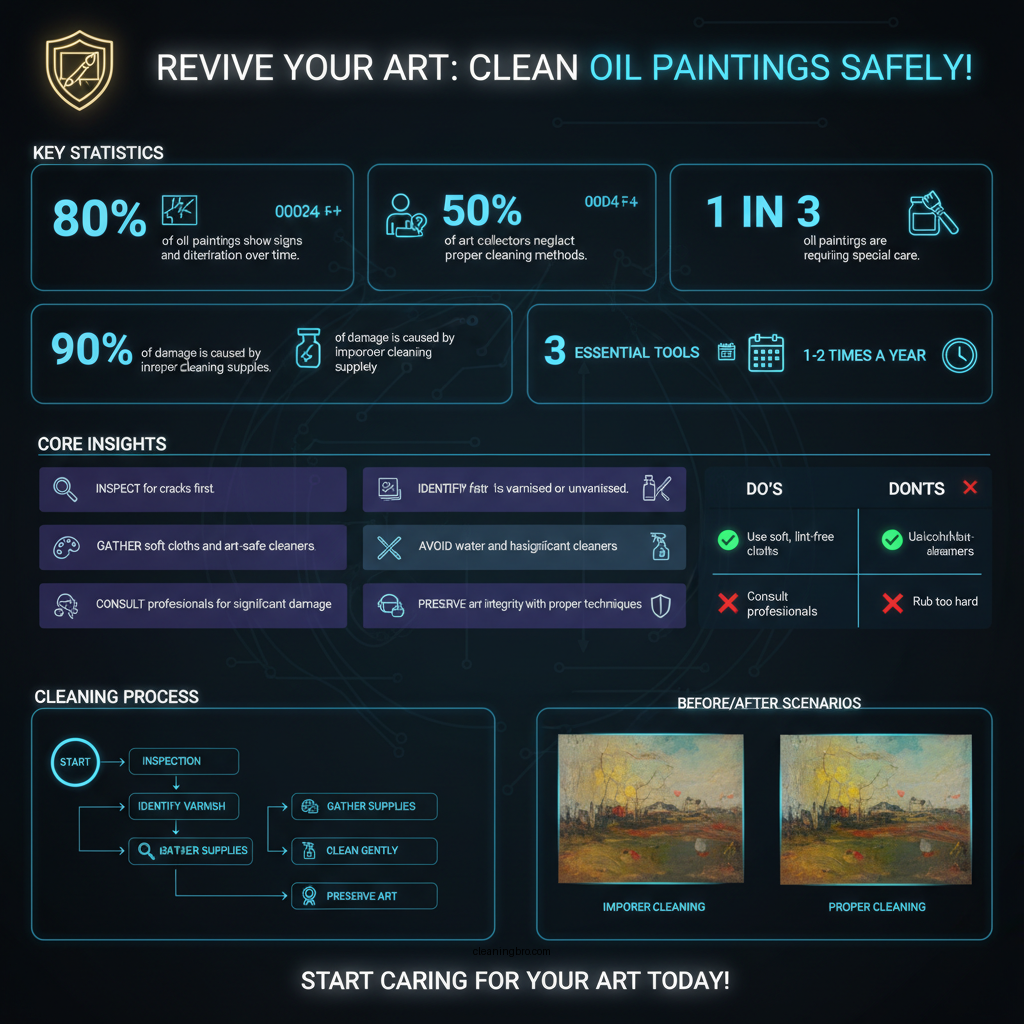

Before embarking on the cleaning process, it is essential to thoroughly inspect the painting. Look for cracks, flaking paint, or discoloration, which may indicate underlying issues that need addressing. If the painting has visible damage, cleaning may exacerbate the problem, so professional restoration could be necessary.
Additionally, determine if your painting is varnished or unvarnished. Varnished paintings require a different cleaning approach, as the varnish layer can trap dirt and grime, making it more difficult to clean without damaging the underlying paint. Understanding the condition and treatment of your artwork is a critical first step in preserving its integrity.
Gathering Essential Cleaning Supplies
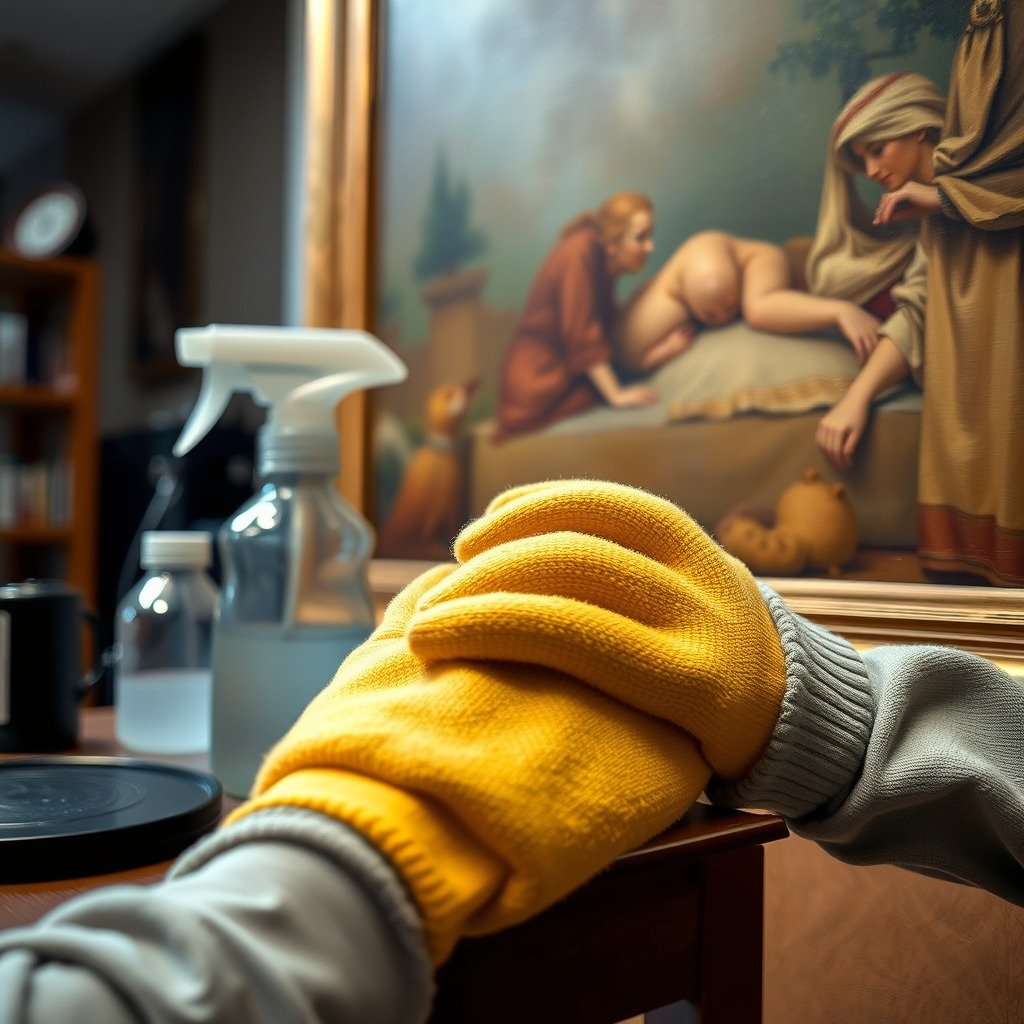
To clean oil paintings effectively, gather the following essential supplies:
– Soft, lint-free cloths: These will help you gently remove dust without scratching the surface.
– Cotton swabs: Ideal for cleaning intricate details and areas that are difficult to reach.
– Gentle cleaning solutions: Look for products specifically designed for cleaning art, such as art-safe cleaners or mild soap diluted in water.
Avoid using water directly on the painting or any harsh chemicals, as these can lead to irreversible damage. Alcohol-based cleaners, ammonia, and vinegar are particularly detrimental and should never come into contact with oil paintings. Selecting the right cleaning supplies is vital to maintaining the artwork’s condition.
Top 7 Cleaning Supplies for Oil Paintings (2024)
| # | Product | Type | Usage | Rating |
|---|---|---|---|---|
| 1 | Kremer Pigments Cleaning Solution | Art-safe cleaner | General cleaning | ★★★★☆ |
| 2 | Winsor & Newton Art Cleaner | Art-safe cleaner | Spot cleaning | ★★★★★ |
| 3 | Gamblin Gamsol Odorless Mineral Spirits | Solvent | Thinning paint | ★★★★☆ |
| 4 | Mona Lisa Art Restoration Kit | Restoration kit | Restoration | ★★★☆☆ |
| 5 | Sennelier Brush Cleaner | Cleaner | Brush cleaning | ★★★★☆ |
| 6 | Renaissance Micro-Crystalline Wax | Wax | Surface protection | ★★★★☆ |
| 7 | Zest-It Citrus Thinner | Solvent | Cleaning & thinning | ★★★☆☆ |
Step-by-Step Cleaning Process
Cleaning oil paintings is a meticulous process that should be undertaken with care. Follow these steps to ensure a safe and effective cleaning:
1. Dusting: Begin by gently dusting the surface of the painting using a dry, soft cloth. This will remove any loose dirt and debris without scratching the paint layer.
2. Test Cleaning Solutions: For tougher stains, lightly dampen a cloth with a suitable cleaner and test it on a small, inconspicuous area first. This precaution will help you determine if the cleaner is safe for the painting’s surface.
3. Spot Cleaning: If the test area shows no adverse effects, proceed to spot clean the stained areas using a gentle circular motion. Avoid excessive pressure, which can damage the paint.
4. Final Drying: After cleaning, allow the painting to air dry completely. If necessary, use a clean, dry cloth to gently blot any excess moisture.
5. Varnishing (if applicable): If the painting is unvarnished and you intend to apply a protective layer, ensure that the painting is completely dry before applying varnish.
This step-by-step approach allows you to maintain the integrity of your oil painting while effectively removing dirt and grime.
When to Seek Professional Help
While many oil paintings can be cleaned with care, there are instances where professional help is warranted. If the painting shows significant signs of wear, such as tears, extensive cracking, or if there is uncertainty about the cleaning process, consulting a professional conservator is advisable.
Professional conservators possess the expertise and tools required to restore paintings to their original beauty without the risk of damage. They can also provide valuable insights on the painting’s history and suggest appropriate preservation methods. If you’re unsure about the condition of your artwork or the cleaning techniques involved, seeking professional advice can save you from costly mistakes.
Preventive Care for Oil Paintings
Preventive care is essential for maintaining the beauty and longevity of oil paintings. Here are some strategies to consider:
– Display Location: Position oil paintings away from direct sunlight and heat sources, which can cause fading and damage over time. Ideally, they should be placed in a controlled environment with stable temperature and humidity levels.
– Regular Dusting: Establish a routine for dusting your paintings every few months to prevent dirt buildup. Use a soft, lint-free cloth to gently wipe the surface.
– Varnish Application: If appropriate, consider applying a protective varnish to your oil paintings. This can help shield the surface from dust, dirt, and UV light, preserving the colors and integrity of the artwork.
By implementing these preventive measures, you can significantly enhance the lifespan and appearance of your oil paintings.
Storing Oil Paintings Safely
When not on display, proper storage of oil paintings is crucial to prevent damage. Follow these guidelines for safe storage:
– Upright Positioning: Store paintings upright rather than stacking them flat. This helps prevent warping and pressure on the paint surface.
– Climate-Controlled Environment: Ensure that the storage area is climate-controlled to minimize the risk of mold growth and warping due to humidity fluctuations.
– Protective Coverings: Use protective coverings like glassine or acid-free paper to shield artworks from dust and moisture. Avoid plastic wraps, as they can trap moisture and damage the paint.
By adhering to these storage practices, you can maintain the condition of your oil paintings and ensure their preservation for future generations.
Summarizing the key techniques for cleaning oil paintings helps ensure you maintain their beauty and value. By following the outlined steps and knowing when to seek professional help, you can confidently care for your artworks. For more tips and guidance, consider subscribing to our blog for ongoing art care advice.
Frequently Asked Questions
What is the best way to clean oil paintings without damaging them?
The best way to clean oil paintings is to use a soft, dry brush or a microfiber cloth to gently remove dust and debris. For more stubborn grime, a mixture of distilled water and mild soap can be used; however, it is crucial to test any cleaning solution on a small, inconspicuous area first to ensure it doesn’t damage the paint or canvas.
How can I safely remove yellowed varnish from my oil painting?
To safely remove yellowed varnish from an oil painting, consider using a solvent specifically designed for varnish removal, such as Gamvar or a professional-grade solvent. Apply it with a soft brush or a cotton swab, working in small sections and following the manufacturer’s instructions, to avoid damaging the underlying paint.
Why is it important to keep oil paintings clean?
Keeping oil paintings clean is important to preserve their color vibrancy and overall integrity. Dust and grime can accumulate over time, leading to deterioration and potential damage, so regular cleaning helps maintain the artwork’s value and visual appeal.
Which products are safe to use for cleaning oil paintings?
Safe products for cleaning oil paintings include distilled water, mild soap, and specialty art cleaning solutions designed for oil paints. Avoid harsh chemicals, ammonia, or alcohol-based cleaners, as these can strip the paint or varnish and cause irreversible damage to the artwork.
How often should I clean my oil paintings?
You should clean your oil paintings at least once a year, or more frequently if they are displayed in a dusty or high-traffic area. Regular maintenance helps prevent buildup and preserves the painting’s condition, ensuring it remains a beautiful part of your collection for years to come.
References
- How to Clean an Oil Painting without Damaging It
https://www.wikihow.com/Clean-an-Oil-Painting - Oil painting | Description, History, & Facts | Britannica
https://www.britannica.com/art/oil-painting - https://www.getty.edu/conservation/publications_resources/newsletters/16_2/cleaning.html
https://www.getty.edu/conservation/publications_resources/newsletters/16_2/cleaning.html - https://www.nga.gov/conservation/preservation/cleaning-oil-paintings.html
https://www.nga.gov/conservation/preservation/cleaning-oil-paintings.html - Art Conservation | College of Arts & Sciences | University of Delaware
https://www.artcons.udel.edu/docs/cleaning-oil-paintings.pdf - https://www.caringforpaintings.com/cleaning-oil-paintings/
https://www.caringforpaintings.com/cleaning-oil-paintings/ - Google Scholar Google Scholar
https://scholar.google.com/scholar?q=how+to+clean+oil+paintings - Google Scholar Google Scholar
https://scholar.google.com/scholar?q=oil+painting+cleaning+techniques - Google Scholar Google Scholar
https://scholar.google.com/scholar?q=conservation+of+oil+paintings - how to clean oil paintings – Search results
https://en.wikipedia.org/wiki/Special:Search?search=how+to+clean+oil+paintings