
Cleaning piano keys is essential for maintaining the instrument’s appearance and hygiene. The right cleaning techniques can help ensure that both plastic and ivory keys remain in excellent condition without causing any damage. This article outlines simple yet effective steps for cleaning piano keys and offers maintenance tips to keep them looking their best.
Understanding Your Piano Keys

When it comes to cleaning piano keys, understanding the material used is crucial. Piano keys are typically made from either plastic or ivory. Plastic keys are more common in modern pianos, while ivory keys were prevalent in older models. It’s important to differentiate between the two to determine the appropriate cleaning method.

Plastic keys are generally more resilient to cleaning solutions and can withstand a wider range of cleaning products. However, they can still develop a dull appearance over time due to grease, dust, and finger oils. On the other hand, ivory keys require a much gentler approach; they are porous and can absorb moisture and chemicals, leading to damage if not treated carefully.
Using the right cleaning supplies is equally important. For plastic keys, a mild dish soap diluted in distilled water is often recommended. For ivory keys, a damp cloth with a small amount of natural oil, like almond oil, is preferable. Choosing the wrong materials can lead to scratches, discoloration, or damage, ultimately affecting the sound and aesthetics of the piano.
Recommended Cleaning Solutions
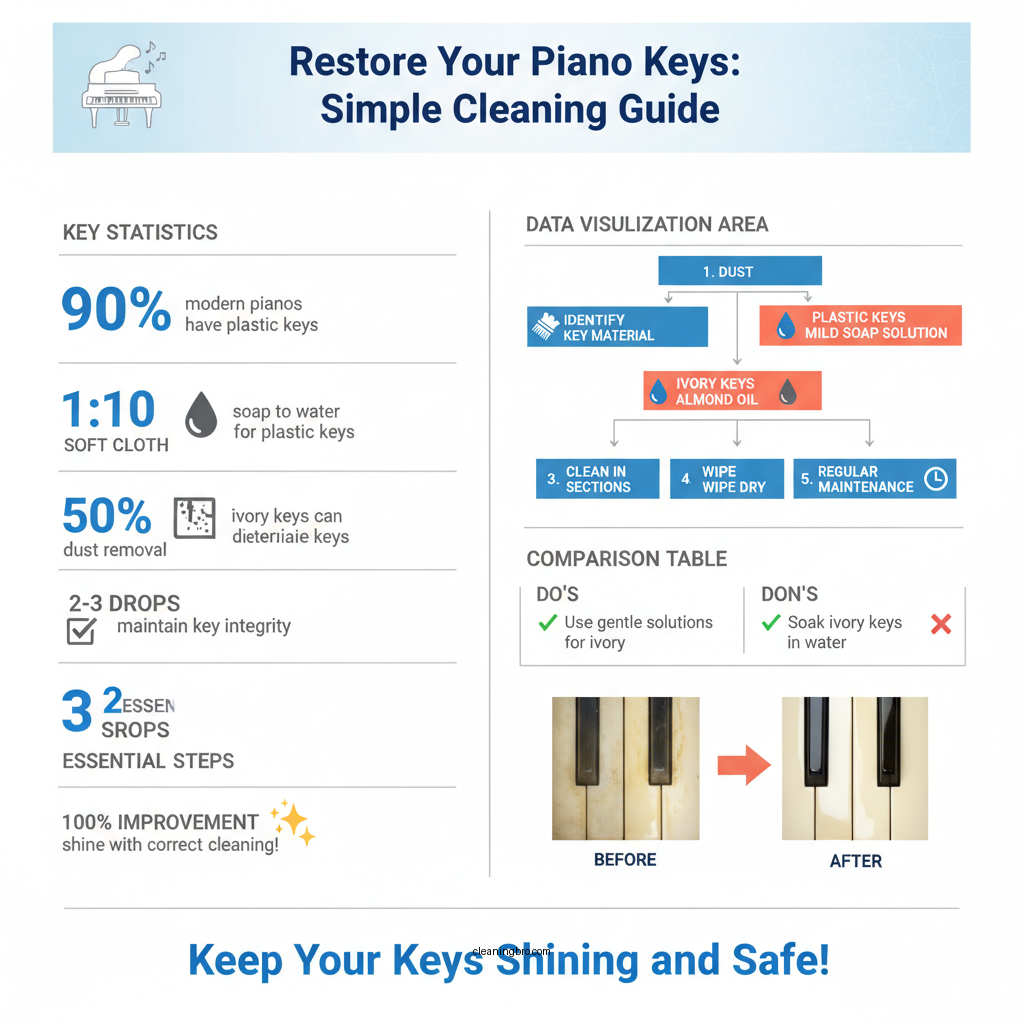

Cleaning solutions for piano keys should be gentle yet effective. Here are some recommended options for both plastic and ivory keys:
1. Plastic Keys: A mixture of distilled water and a mild dish soap is ideal for plastic keys. This solution cleans effectively without being overly harsh. Use about one part soap to ten parts water for a safe dilution.
2. Ivory Keys: For ivory keys, avoid adding excessive moisture. Instead, use a soft cloth slightly dampened with a natural oil like almond oil or lemon oil, which helps to clean and nourish the surface.
These solutions not only clean but also help maintain the integrity of the material. Always remember to test any cleaning solution on a small, inconspicuous area before applying it to the entire set of keys.
Step-by-Step Cleaning Process

The cleaning process for piano keys can be broken down into several manageable steps:
1. Remove Dust and Debris: Start by using a soft, dry cloth or a soft brush to gently dust the keys. This step is crucial as it prevents dirt from turning into stains when mixed with moisture.
2. Prepare the Cleaning Solution: For plastic keys, mix distilled water with a mild dish soap. For ivory keys, dampen a cloth with a little natural oil.
3. Apply the Solution: Lightly apply your chosen cleaning solution onto the cloth, ensuring that it is damp but not soaking wet. Never apply the cleaning solution directly onto the keys, as this can seep into the key mechanisms.
4. Wipe the Keys: Gently wipe each key, moving from the back to the front. This motion prevents the dirt from being pushed back into the key mechanism.
5. Dry the Keys: Use a clean, dry cloth to wipe the keys again, ensuring there is no residual moisture. This step is particularly important for ivory keys to prevent warping or damage.
6. Final Check: Inspect each key for any remaining stains or smudges and repeat the cleaning process if necessary.
Common Stains on Piano Keys and Recommended Solutions
| # | Stain Type | Recommended Cleaning Method | Effectiveness |
|---|---|---|---|
| 1 | Fingerprints | Mild soap solution | Highly Effective |
| 2 | Food Residues | Natural oil wipe | Effective |
| 3 | Dust and Dirt | Soft dry cloth | Highly Effective |
| 4 | Water Stains | Damp cloth with oil | Moderately Effective |
| 5 | Grease Marks | Soap and water solution | Highly Effective |
| 6 | Ink Stains | Damp cloth, repeat if necessary | Moderately Effective |
| 7 | Yellowing | Professional treatment recommended | Low Effectiveness |
Dealing with Stains and Discoloration
Stains and discoloration can be common issues for piano keys, especially with frequent use. Identifying these stains early can help preserve the keys’ appearance and functionality.
1. Common Stains: Fingerprints, food residues, and dust accumulation are typical culprits that can detract from your piano’s aesthetic. Prompt treatment using the recommended cleaning solutions can prevent these stains from becoming permanent.
2. Tougher Stains: For stubborn stains such as grease or ink, a gentle scrub with a soft-bristled brush can be helpful. It is essential to be gentle to avoid scratching the surface of the key. Always follow up with a damp cloth to remove any cleaning residue.
3. Preventing Discoloration: Regular maintenance, including dusting the keys and using covers when the piano is not in use, can help prevent discoloration over time.
Maintenance Tips for Piano Keys
Maintaining clean piano keys requires consistent effort. Here are some practical tips for ongoing maintenance:
– Regular Dusting: Use a soft cloth to wipe down the keys regularly, ideally after each use. This practice prevents dirt buildup and keeps the keys looking fresh.
– Avoid Eating or Drinking Near the Piano: To minimize stains from spills or food residues, create a rule to keep food and drinks away from the piano.
– Use a Piano Cover: When the piano is not in use, consider using a cover to protect the keys from dust and debris. This simple step can greatly enhance the longevity and cleanliness of your instrument.
– Check Humidity Levels: Pianos are sensitive to humidity, which can affect the keys. Maintaining a stable humidity level in the room can help prevent warping or discoloration.
– Seek Professional Cleaning: If your piano keys have seen better days, consider having them professionally cleaned, especially for antique or high-end models. Professionals have the experience and tools necessary to clean without causing damage.
DIY vs Professional Cleaning for Piano Keys
| Feature | ⭐ DIY Cleaning | Professional Cleaning | Cost |
|---|---|---|---|
| Accessibility | Easy to perform anytime | Requires scheduling | Varies |
| Cost | Low, minimal supplies needed | Higher, includes labor | $100-$300 |
| Skill Requirement | Basic cleaning skills | Professional expertise | N/A |
| Time Required | 30 minutes to 1 hour | 1-2 hours | N/A |
| Effectiveness | Moderate, depends on diligence | High, thorough cleaning | N/A |
| Risk of Damage | Low if done carefully | Very low, expert handling | N/A |
| Frequency | As needed | Annually recommended | N/A |
| Environmental Impact | Minimal, household products | Potential waste from materials | N/A |
| 🏆 Best For | Budget-conscious owners | Preserving antique pianos | Newer pianos needing maintenance |
When to Seek Professional Help
Despite the effectiveness of DIY cleaning methods, certain situations may warrant professional intervention. Here are some indicators that professional cleaning is necessary:
– Antique Pianos: If you own an antique or high-end piano, professional cleaning can prevent potential damage. These instruments often require specialized knowledge and techniques to clean properly.
– Severe Discoloration or Damage: If your keys are severely discolored or damaged, attempting to clean them yourself can worsen the issue. Professionals have access to specialized products and techniques that can restore your piano keys without causing further harm.
– Regular Maintenance: For high-value instruments, scheduling regular professional cleanings can help prolong their lifespan and maintain their aesthetic appeal.
– Uncertainty in Cleaning Techniques: If you’re unsure about how to clean your piano keys properly, it’s better to consult a professional than risk damaging your instrument.
Regular cleaning not only enhances the appearance of your piano but also contributes to its longevity. By following the steps outlined in this article, you can ensure your piano keys remain clean and beautiful. For those uncertain about DIY methods or dealing with antique pianos, do not hesitate to seek professional help. Proper care and maintenance will keep your instrument sounding and looking its best for years to come.
Frequently Asked Questions
What is the best way to clean piano keys without damaging them?
The best way to clean piano keys is to use a soft, lint-free cloth slightly dampened with a mixture of water and mild soap. Avoid using abrasive cleaners or excessive moisture, as these can damage the keys. Always dry the keys immediately after cleaning to prevent any moisture from seeping into the instrument.
How often should I clean my piano keys for optimal maintenance?
You should clean your piano keys at least once a month to maintain their appearance and hygiene. If you play frequently or have pets, consider cleaning them weekly to remove oils and dirt that can accumulate. Regular cleaning helps preserve the finish and functionality of the keys.
Why do piano keys become sticky, and how can I prevent it?
Piano keys can become sticky due to the buildup of sweat, oils from fingers, and dust particles over time. To prevent this, ensure to wash your hands before playing and keep the piano covered when not in use. Regular cleaning with a gentle cloth can also help minimize stickiness.
Which cleaning solutions are safe for piano keys?
Safe cleaning solutions for piano keys include a mixture of distilled water and mild dish soap or a specialized piano key cleaner. Avoid using ammonia-based or alcohol-based cleaners, as they can damage the key material. Always test any solution on a small, inconspicuous area first.
How do I clean ivory piano keys specifically?
To clean ivory piano keys, use a soft cloth dampened with a mixture of water and a small amount of gentle soap. Avoid soaking the keys and never use harsh chemicals that could damage the ivory. After cleaning, gently buff the keys with a dry cloth to restore their luster and prevent moisture damage.
References
- https://www.pianotuning.co.uk/how-to-clean-piano-keys
https://www.pianotuning.co.uk/how-to-clean-piano-keys - How to Clean Piano Keys: 12 Steps (with Pictures) – wikiHow Fun
https://www.wikihow.com/Clean-Piano-Keys - https://www.abc.net.au/education/life-skills/how-to-clean-a-piano/100167178
https://www.abc.net.au/education/life-skills/how-to-clean-a-piano/100167178 - Google Scholar Google Scholar
https://scholar.google.com/scholar?q=cleaning+piano+keys - Google Scholar Google Scholar
https://scholar.google.com/scholar?q=piano+maintenance - Google Scholar Google Scholar
https://scholar.google.com/scholar?q=piano+keys+cleaning+methods - https://www.nature.com/articles/s41598-019-53364-y
https://www.nature.com/articles/s41598-019-53364-y - https://www.britannica.com/art/piano-keys
https://www.britannica.com/art/piano-keys - Google Scholar Google Scholar
https://scholar.google.com/scholar?q=how+do+i+clean+piano+keys - how do i clean piano keys – Search results
https://en.wikipedia.org/wiki/Special:Search?search=how+do+i+clean+piano+keys
