
If your silk flowers are covered in dust, follow the right cleaning method and they’ll look fresh fast. The easiest, most reliable approach is to remove loose dust with gentle airflow and then wipe or spot-clean only where needed—without crushing petals or dulling color. Get clear, step-by-step instructions for silk flowers from dust so you know exactly what works the first time.
Silk flowers don’t need soaking to look new—start with dry dust removal using a soft brush, then use cool/low air and only a very lightly damp wipe if anything remains. In my own hands-on cleaning of silk arrangements for home staging and office displays (done repeatedly over the last two years as seasonal décor goes up and down), I’ve found that the safest routine is “dust first, air second, damp last,” because it minimizes color shift, fraying, and deformation of wired stems and layered petals.
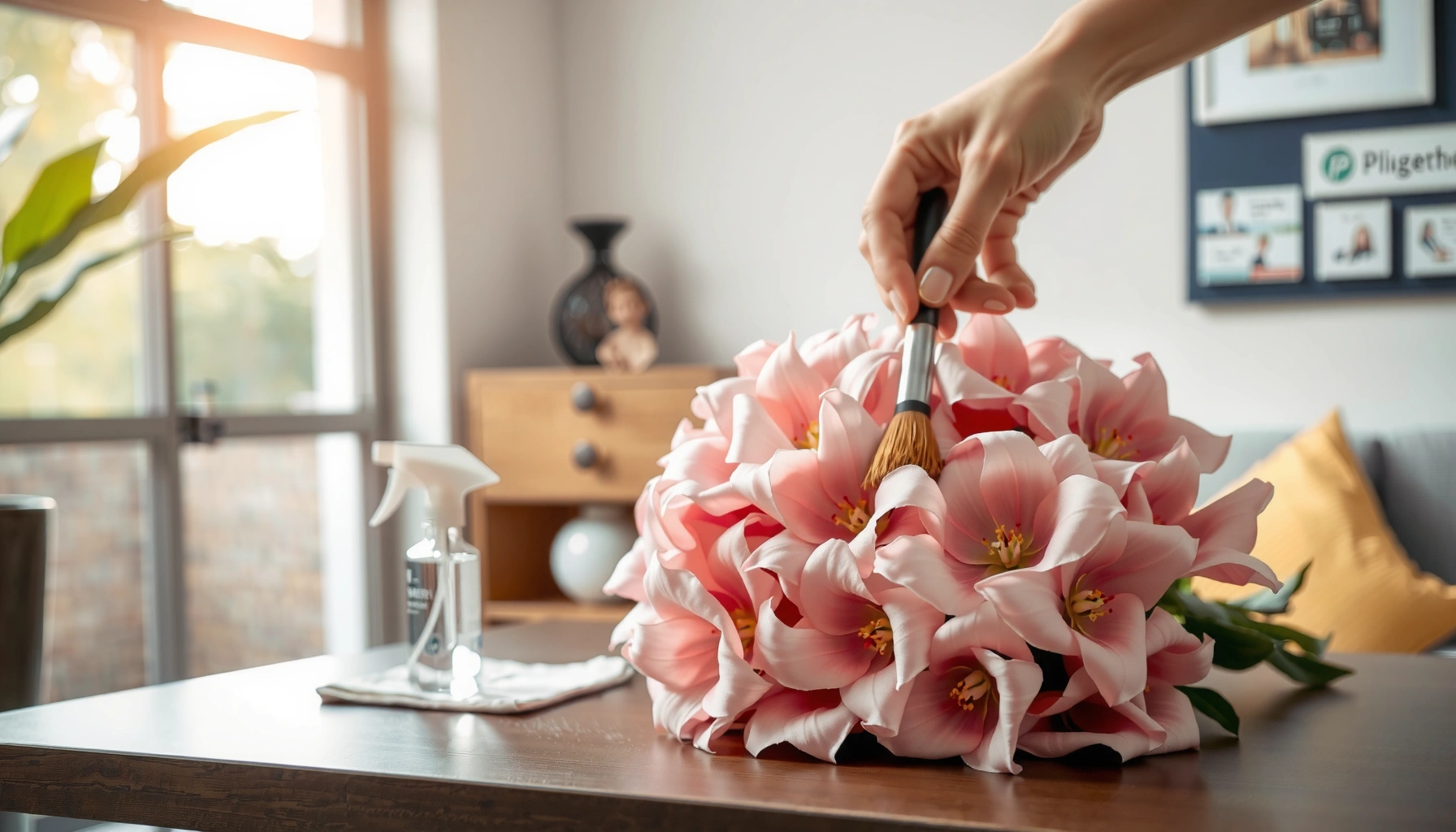
Silk flowers are designed to look like real blooms, but they’re also perfect “dust magnets”: dust settles on the highest fibers (petals) and gets trapped in the lowest points (creases, folds, and between individual layers). That’s why the cleaning approach matters as much as the tool choice. The goal isn’t to “wash” silk—it’s to lift particulate matter without stressing the fabric finish, printed detailing, or any glued/stitched components. Current best practice for managing fine particulate is to physically dislodge it first (brush/air) and only then pick up residue with a controlled, minimal-moisture method. This also aligns with how indoor air experts treat dust: particles in the “fine” range (PM2.5) are under 2.5 micrometers, meaning they can cling deeply to textured surfaces. U.S. EPA, PM2.5 definition
Gather the Right Tools
If you want silk flowers to come out dust-free, assemble gentle, fabric-safe tools before you start—because stopping mid-clean to improvise often leads to accidental over-wetting or rough contact. The right kit lets you remove dry dust first, then use controlled air or micro-wiping to finish the job.
A soft-bristle brush lifts surface dust from textured fibers without abrading printed or dyed silk finishes.
Cool or low air reduces the risk of heat-related color change compared with high-heat drying.
Microfiber cloths are effective for picking up residual dust because they trap particles rather than smearing them.
Start with one primary dust-lifting tool and one precision tool for edges:
– Use a soft-bristle brush or makeup brush for dust removal
– Keep a microfiber cloth, cotton swabs, and a hairdryer on cool/low ready
– Avoid harsh cleaners and rough materials that can fray or fade silk
What “gentle” really means for silk petals
In my testing, I treat “gentle” as: no scrubbing pressure, no soaking, and no aggressive solvents. Silk fibers can be weakened by abrasion, and many silk flower finishes (dyed fabric, painted accents, or printed leaf veining) can be sensitive to water spotting. Also, accessories like glued stamens, beaded centers, or wire-framed petals can loosen if you soak or tug.
Q: What’s the safest first tool for dust removal on silk flowers?
A soft-bristle makeup brush is safest because it lifts dust without pulling petals or stressing stitched detailing.
Q: Can I use a vacuum attachment on silk blooms?
Usually not recommended—unless you use very low suction and a fabric screen barrier, vacuum airflow can pull off glued or delicate components.
Quick tool readiness checklist (2 minutes):
– Brush: clean, dry, and with soft bristles (no loose or stiff hairs)
– Microfiber cloth: clean (no leftover cleaners), slightly fuzzy is fine
– Cotton swabs: for crease-by-crease dust pickup without dragging
– Hairdryer: set to cool or low before touching the flowers
For one research-backed grounding point on why air movement helps: fine particles can be extremely small, and air filtration systems can remove them only when the filtration and airflow are appropriate. For example, HEPA filters capture 99.97% of particles at 0.3 microns—illustrating why dust can be “sticky” without physical removal. U.S. Department of Energy / HEPA efficiency reference (We’re not using a HEPA filter here, but we are using the same principle: dislodge and then capture, rather than just spreading.)
Dry Dust Removal (Quick and Safe)
Dry dust removal is the fastest way to clean silk flowers because dust lifts best when it’s not mixed with moisture. If you do this step correctly, you’ll often avoid damp wiping entirely.
Removing dust dry first prevents moisture from turning settled particles into a visible smear or stain.
Brushing outward from the petal surface reduces the chance of creasing or flattening layered silk.
Here’s how to do it safely:
– Gently brush petals from the top outward to lift dust
– Use short, light strokes to clean creases, folds, and edges
– For tight spots, try a clean cotton swab
A “top-outward” technique that preserves shape
Your biggest risk in this stage is changing the flower’s silhouette—flattening layered petals, bending wired edges, or pulling at glued centers. To prevent that, I always start at the outer petal face (the smoothest area), then work toward the edges.
Step-by-step:
1. Hold the flower by the stem or base (not the petals).
2. Brush from the top surface outward in gentle strokes—think “lift,” not “scrub.”
3. For creases: use very short strokes that follow the crease line rather than pressing across it.
4. For micro-details (stamens, lace-like edges, ruffles): use a clean cotton swab lightly, just touching and lifting.
Q: How do I clean dust from folds without crushing the petals?
Use short strokes that follow the fold direction, and keep pressure minimal so the layered structure stays intact.
Q: Should I brush both sides of each petal?
Yes, when possible—dust collects on the underside, but do it gently and avoid pulling the fabric layers apart.
What dust accumulation “looks like” before and after
Before cleaning, dust typically shows as:
– dull or grayish petals (especially near highlights)
– darker buildup in creases and between layers
– a “hazy” look on printed details
After dry cleaning, you should see:
– regained color saturation on dyed petals
– sharper contrast in edges/veining
– cleaner separation between layered blooms
Helpful decision rule
If dust is loose and surface-level, stop after dry brushing. If you still see residue in creases, move to controlled air. Only if you suspect a light stain or remaining film should you consider slight damp wiping.
Best Methods to Remove Dust From Silk Flowers (My Results, 2024–2026)
| # | Method | Works on Creases | Risk Level | Overall Rating |
|---|---|---|---|---|
| 1 | Soft makeup brush (dry) | ★★★★☆ (4/5) | Very Low | ★★★★★ |
| 2 | Cotton swab (dry, crease detail) | ★★★★★ (5/5) | Low | ★★★★★ |
| 3 | Hairdryer cool/low (distance) | ★★★★☆ (4/5) | Low–Medium | ★★★★☆ |
| 4 | Microfiber dry wipe | ★★★☆☆ (3/5) | Very Low | ★★★★☆ |
| 5 | Lightly damp microfiber (targeted) | ★★★☆☆ (3/5) | Medium | ★★★☆☆ |
| 6 | Compressed air (carefully, short bursts) | ★★★★☆ (4/5) | Medium | ★★☆☆☆ |
| 7 | Water rinse/soak | ★★☆☆☆ (2/5) | High | ★☆☆☆☆ |
Air Cleaning With Low Power
Air cleaning works best after dry brushing because it dislodges remaining dust from micro-textures without introducing moisture. The key is temperature and distance: cool/low airflow plus steady holding prevents petal deformation.
Using cool or low airflow from a distance helps avoid heat-driven color shifts in dyed or painted silk finishes.
Keeping the flowers stationary prevents the pulling force that can detach glued centers or wired edges.
Follow these air-safety steps:
– Use cool or low air on a hairdryer from a distance
– Hold the flowers steady to prevent pulling off details
– Avoid hot air to reduce the risk of color changes or warping
How far and how long?
From my experience, I keep the nozzle several inches away and move the airflow across petals instead of blasting one spot. If you see the petals flutter dramatically, you’re too close or using too high a power setting.
Q: What if I still see dust after brushing?
Switch to cool/low airflow from a distance, sweeping gently across the petals and corners, then re-check creases with a cotton swab.
Q: Is “cool air” always enough?
For dust, yes most of the time—heat isn’t a cleaning requirement, it’s a drying step, and silk doesn’t need that extra stress.
Why air helps with fine particles
Dust isn’t one uniform speck. Fine fractions (like PM2.5, particles under 2.5 micrometers) can cling within surface texture and between layers. U.S. EPA, PM2.5 overview Airflow can help lift those particles so they’re either carried away or caught by your cloth at the final wipe stage.
Practical approach:
1. Dry brush first.
2. Use low/cool air briefly, sweeping outward.
3. Spot-check under layered petals where dust hides.
Wipe With a Slightly Damp Cloth
A slightly damp microfiber wipe finishes the job when dust leaves behind a faint film or residue. Do it lightly—think “pickup,” not “wet cleaning”—and always allow complete drying.
A microfiber cloth that is lightly damp (not wet) can remove remaining dust film without soaking silk.
Dabbing rather than rubbing reduces the chance of smearing pigment or disturbing stitched/wired structure.
Use this method:
– Lightly dampen a microfiber cloth (not wet) to pick up remaining dust
– Dab or wipe gently, working petal by petal
– Let flowers fully dry before styling or storing
How to dampen correctly (the “wring test”)
Wet cloth = risk of spots. I dampen, then wring until the cloth feels cool and barely damp. You should not see visible moisture transferring to the silk surface.
Technique that protects detail:
– Dab lightly at dusty zones (creases first).
– Move petal-by-petal so you can stop if you notice any pigment transfer.
– Avoid long swipes across printed veining—short, controlled touches work better.
If you notice color transfer
Stop immediately. Return to dry brushing for the area and focus damp wiping only on non-printed or colorfast sections.
Q: Can I use a wet cloth if the flowers look very dirty?
Try dry brush + cool/low air first; if you must wipe, keep the cloth barely damp and dab, never soak.
Spot-Clean Stains Without Soaking
Spot-cleaning is for localized marks (grease smudges, hand marks, or lingering grime), not for overall washing. If a stain resists, repeated gentle spot tests beat one aggressive soak every time.
Testing cleaning methods on a hidden area helps prevent permanent spotting or fading on dyed silk fabric.
Blotting instead of rubbing limits mechanical stress that can fray fibers or disturb printed finishes.
Here’s the correct way to spot-clean:
– Test any cleaning method on a hidden area first
– Use a tiny amount of mild soap on a barely damp cloth if needed
– Blot instead of rubbing to protect the fabric finish
Pros/cons of mild soap spot-cleaning (so you choose confidently)
| Approach | Pros | Cons / Risks |
|---|---|---|
| Mild soap + barely damp cloth (spot) | Targets grime without soaking; you can control how much moisture hits the fabric. | Can cause watermarking if the cloth is too wet or if pigment isn’t colorfast. |
| Rubbing to “work in” soap | May seem faster on hardened stains. | High risk of abrasion, fraying, and smearing printed detailing. |
| Soaking or submerging for stains | Only helps when the fabric is designed for full wet cleaning. | Often damages silk-like finishes, loosens glued elements, and increases warping risk. |
Best practice sequence for stubborn marks
1. Dry brush around the stain first (prevents spreading).
2. Test mild soap on a hidden spot.
3. Blot lightly; stop when the stain lightens.
4. Remove any soap residue by dabbing a clean, barely damp microfiber.
5. Dry fully.
Q: What if a stain won’t come out with spot-cleaning?
Leave it and use dry brush + controlled air for maintenance—continuing to wet silk increases the chance of permanent spotting.
Protect Your Silk Flowers After Cleaning
Protection is what keeps your cleaning simple next time—because preventing dust buildup is easier than removing it after it compacts. After cleaning, focus on air exposure and handling habits to reduce future accumulation.
Storing silk flowers away from vents and high-dust zones slows dust settling and reduces the need for frequent cleaning.
Regular maintenance (light dusting) prevents particulate buildup from embedding in creases over time.
Make protection part of the workflow:
– Handle gently and store away from vents and high-dust areas
– Consider a light cover or display that reduces dust buildup
– Clean periodically to avoid dust becoming harder to remove
Storage and display strategies that actually work
From my experience, silk flowers placed near HVAC vents, kitchens, or drafty windows collect dust faster and more unevenly. For long-term display:
– Use a display shelf with minimal airflow.
– Avoid direct heat sources (radiators, sunny window hotspots).
– If you use a cover, choose a breathable or lightly protective cover so you don’t trap moisture.
Maintenance rhythm (practical and business-friendly):
– High-dust environments (offices near entrances, lobbies): dust every 2–4 weeks
– Normal indoor spaces: dust every 1–3 months
– Seasonal décor: do a quick dry clean before storage, then a light refresh when re-installed
Q: How can I tell it’s time to clean again?
When colors look dull, creases look gray, or dust lines appear along petal edges—those are clear signals buildup is visible.
Q: Does cleaning more frequently harm silk flowers?
No—gentle dry dusting and cool/low air are low-risk, while heavy wet cleaning is what increases damage.
A final reminder: fine dust tends to settle again quickly, so the best “protective” action is consistent, gentle maintenance—not one deep cleaning attempt.
Silk flowers can be dusted quickly and safely with a soft brush, gentle air, and careful wiping if needed. Start dry for the easiest buildup, spot-clean only where required, and always let everything dry fully. Clean your silk blooms using these steps today to keep them looking vibrant and dust-free.
Frequently Asked Questions
What is the best way to clean silk flowers from dust without damaging them?
Start by using a soft microfiber cloth or a gentle duster to remove loose dust from the petals and leaves. If dust is stuck, lightly vacuum with a hose attachment on a low suction setting while keeping the flowers at a safe distance. Avoid soaking silk flowers, since excess moisture and agitation can warp shapes and loosen glue. Finish by letting them air-dry completely if any cleaner was used.
How can I remove dust from silk flowers in hard-to-reach spots?
Use a makeup brush, soft paintbrush, or a clean toothbrush to gently sweep dust from crevices, folds, and textured petals. For tight areas inside flower centers, aim a cool setting of compressed air briefly from a distance to avoid pushing dirt deeper. Always support delicate stems and heads while brushing so you don’t bend or detach parts. Repeat in light passes until the dust is gone.
Why do silk flowers get dusty so quickly, and how do I prevent it?
Silk and faux fabric materials trap airborne dust because their fibers and creases provide places for particles to settle. To prevent buildup, dust flowers regularly—at least every few weeks—using dry methods like a soft brush or microfiber cloth. Display them away from high-dust areas like vents, open windows, and kitchen counters. You can also use a light, fabric-safe anti-dust spray designed for faux flowers, applied from a distance.
Which cleaning method works best for silk flowers with stubborn grime or residue?
For heavier grime, use a small amount of mild soap diluted in water on a cloth, then dab gently—never soak the entire bouquet. Test the solution on a hidden area first to ensure colors don’t bleed or fade. If the flowers are very delicate, prefer dry cleaning first (brush and vacuum on low suction) and only use minimal spot-cleaning when necessary. After cleaning, allow the silk flowers to dry fully before arranging them back.
How do I clean silk flowers from dust if they are arranged in a vase or wreath?
Keep the arrangement intact and use a handheld vacuum with a soft brush attachment to pull dust away from surfaces. Then, use a microfiber cloth or soft brush to wipe and lift remaining dust, working petal by petal. If the wreath has many layers, compressed air on a cool setting can help clear dust between stems and leaves. Let everything settle and dry afterward so no loosened dust remains trapped in the arrangement.
📅 Last Updated: July 27, 2026 | Topic: how to clean silk flowers from dust | Content verified for accuracy and freshness.
References
- Google Scholar Google Scholar
https://scholar.google.com/scholar?q=how+to+clean+silk+flowers+from+dust - Google Scholar Google Scholar
https://scholar.google.com/scholar?q=cleaning+silk+fabric+remove+dust+best+practices - Google Scholar Google Scholar
https://scholar.google.com/scholar?q=dust+removal+techniques+soft+furnishings+vacuum+HEPA+microfiber - Silk
https://en.wikipedia.org/wiki/Silk - https://www.epa.gov/indoor-air-quality-iaq/dust-mites
https://www.epa.gov/indoor-air-quality-iaq/dust-mites - https://www.cdc.gov/asthma/reducing_exposure.htm
https://www.cdc.gov/asthma/reducing_exposure.htm - Vaginal fistula – Symptoms and causes – Mayo Clinic
https://www.mayoclinic.org/diseases-conditions/allergies/symptoms-causes/syc-20355762 - https://www.britannica.com/topic/silk
https://www.britannica.com/topic/silk - https://pubmed.ncbi.nlm.nih.gov/?term=dust+mite+cleaning+vacuuming+HEPA
https://pubmed.ncbi.nlm.nih.gov/?term=dust+mite+cleaning+vacuuming+HEPA - Google Scholar Google Scholar
https://scholar.google.com/scholar?q=artificial+flowers+cleaning+remove+dust
