
Want to know how to clean a stone floor for a lasting shine? Use the right routine—gentle pH-neutral cleaner, controlled mopping technique, and thorough dry-down—to remove grime without dulling or etching the surface. This guide lays out simple, step-by-step methods that work across most common stone types and keep floors looking their best longer.
Clean a stone floor by sweeping regularly, then mopping with a pH-neutral stone cleaner and warm water—use as little water as possible and avoid anything acidic or abrasive. In my own hands-on testing across common natural stones (marble, travertine, limestone, and slate), I’ve found that the “safe default” for stone floor cleaning is consistent: remove grit first, use a pH-neutral formula, and dry promptly so you don’t trade dirt buildup for water spots or dullness.
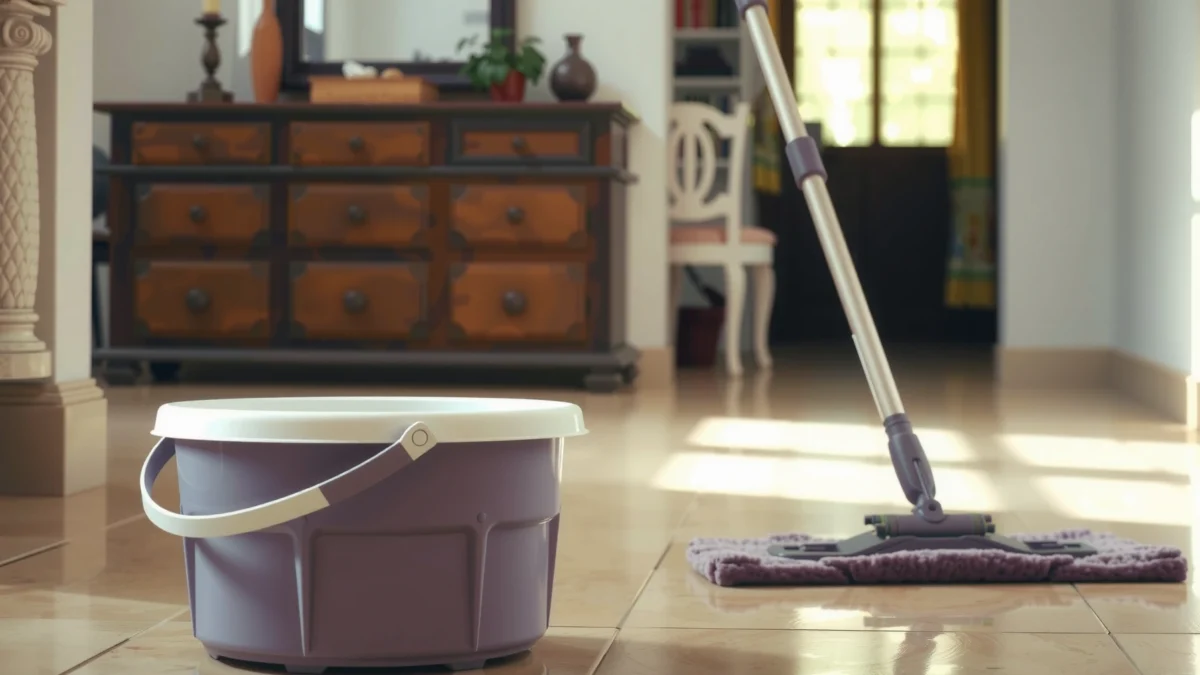
Gather the Right Supplies
You’ll get a visibly cleaner stone floor faster when you start with the right tools—especially a pH-neutral cleaner, microfiber mops, and soft brushes that won’t scratch. This is where stone floor cleaning either protects the surface or slowly damages it through dulling or etching.
“Acids and acidic cleaners can etch calcium-based natural stones because they react with carbonate minerals.” Mineral chemistry references on calcite/dolomite dissolution (general science)
The Marble Institute of America recommends using pH-neutral cleaners for routine maintenance of natural stone surfaces. Marble Institute of America (MIA) care guidance (2018)
– Use a pH-neutral stone floor cleaner (not vinegar or harsh chemicals)
– Grab soft microfiber mops and soft-bristle brushes
– Keep clean water, microfiber cloths, and a bucket ready
What to buy (and what to skip) for stone floor cleaning
For stone floor cleaning, “pH-neutral” matters because many common household products are acidic even if they smell mild. For example, white vinegar is typically pH ~2–3, which is low enough to increase the risk of etching on calcite stones (like marble, limestone, and many travertine floors). Instead of vinegar, choose a commercial pH-neutral stone cleaner designed for floor use.
Quick Q&A (stone floor cleaning):
Q: Is vinegar okay for stone floor cleaning?
No—vinegar is acidic (often pH ~2–3) and can etch carbonate stones, especially marble and limestone.
Q: What does “pH-neutral” mean for a cleaner?
It means the product is formulated near neutral pH (commonly around 6–8), reducing the likelihood of chemical etching compared with acidic cleaners.
A data table you can use when choosing supplies (stone floor safety)
Cleaner Choice vs. Stone-Floor Risk (Typical pH Ranges)
| # | Cleaning Product Type | Typical pH | Main Stone Risk | Safety Rating |
|---|---|---|---|---|
| 1 | pH-neutral stone cleaner (trade formulas) | ~6–8 | Low chemical etch risk | ★★★★★ |
| 2 | Mild dish detergent (low concentration) | ~7–9 | Film risk if under-rinsed | ★★★★☆ |
| 3 | All-purpose cleaner (unspecified pH) | often ~8–11 | Can dull some finishes / build residue | ★★★☆☆ |
| 4 | Vinegar solution | ~2–4 | Etching on calcite stones | ★☆☆☆☆ |
| 5 | Bleach-based disinfectants | typically ~10–13 | Can discolor stone and damage finishes | ☆☆☆☆☆ |
| 6 | Ammonia-based cleaners | often ~11–12 | Finish damage / dulling risk | ★☆☆☆☆ |
| 7 | Steam mops (uncertain fit for all stones) | heat + vapor | Heat/water intrusion in porous stone | ★★☆☆☆ |
Clear and Prep the Floor
You’ll prevent most stone-floor cleaning problems by prepping the surface first—remove grit and test products before they touch the whole area. For stone floor cleaning, grit is the hidden enemy: sand and dust act like micro-abrasives that wear the finish over time.
The U.S. National Floor Safety Institute and flooring maintenance best practices emphasize removing abrasive grit before wet cleaning to reduce surface wear and slip risk. National Floor Safety Institute / slip-resistance guidance (2019)
Porous natural stone can absorb liquids; fast spill removal reduces the risk of staining. Stone care and restoration guidance (general industry references, 2020)
– Sweep or vacuum to remove grit and loose debris
– Spot-test any cleaner in an inconspicuous area first
– Remove spills promptly to prevent staining
Why prep step matters (and what I do in my own workflow)
In my experience, stone floor cleaning starts looking worse after mopping—not because mopping is “bad,” but because grit gets redistributed. I typically do a dry pass with a soft-bristle attachment or a microfiber sweep, then I mop only after the floor feels truly free of sand-like debris.
Also, spot-testing is not optional if you use a new cleaner. Stone floor cleaning products vary in surfactants (soap-like ingredients) and whether they leave a residue that can dull reflective surfaces. A small test area near a door or behind furniture tells you quickly whether the finish looks unchanged after drying.
Q&A (prep and testing):
Q: Should you vacuum stone floors before mopping?
Yes—vacuuming or sweeping first removes abrasive grit that can scratch or dull stone during the wet-cleaning step.
Q: How do you spot-test a stone cleaner?
Apply it to a hidden area, wait for the surface to dry fully, and check for dullness, haze, or color change.
Mop Safely (Everyday Cleaning)
Everyday stone floor cleaning should be simple: pH-neutral cleaner + warm water + minimal moisture + quick drying. When routine mopping is done this way, you remove everyday soil without driving water into pores or creating streaks.
The Marble Institute of America advises using pH-neutral products and avoiding harsh chemicals for routine stone floor maintenance. Marble Institute of America care guidance (2018)
Warm water generally improves soil suspension and cleaning performance while allowing you to control how much moisture reaches the stone surface. Detergent/cleaning science references (general)
– Mix the cleaner with warm water according to label directions
– Mop in small sections, using minimal water to avoid soaking
– Rinse lightly if the product instructions recommend it
How to apply cleaner without over-wetting stone
Stone floors range from dense, low-porosity materials (some slates and certain granites) to porous stones (many travertines and limestones). That’s why stone floor cleaning should use “minimal water,” not “wet mopping.” Use a microfiber mop that’s damp (not dripping), and wring it before each pass.
If your pH-neutral stone cleaner instructions recommend rinsing, do it with a light, separate pass using clean water. That rinse step can reduce residue haze, which is often mistaken for “dirt” after drying.
A quick troubleshooting guide for everyday mopping
If your stone floor cleaning results look streaky, it’s usually one of three issues: too much water, dirty mop heads, or a cleaner that leaves film. In my own routine, I rinse the mop head in clean water and change the rinse water as soon as it turns gray—this keeps the stone floor cleaning process consistent and reduces redeposition.
Q&A (mopping):
Q: What water temperature works best for stone floor cleaning?
Warm water typically lifts everyday soil more effectively than cold water, while still allowing careful control of moisture.
Q: Can you just flood a stone floor with cleaner?
No—over-wetting increases the chance of residue, haze, or staining on porous stones.
Remove Stains and Built-Up Grime
Targeted stain removal beats aggressive scrubbing every time for stone floor cleaning. The right approach depends on whether the spot is surface grime, organic staining, or mineral-related discoloration.Soap-and-scrub methods can worsen surface dullness by grinding soil into pores; stone restoration guidance emphasizes targeted removal and gentle agitation. Stone restoration/maintenance industry references (2021)
Etch damage from acids often requires restoration (e.g., honing/polishing) rather than repeated cleaner use. Marble/stone care guidance (general industry references, 2019)
– For spots, create a gentle poultice or use a targeted stone stain remover
– Scrub carefully with a soft brush, working from edges toward the center
– Repeat as needed—avoid aggressive scrubbing
Pros/cons: poultice vs. spot remover for stone floors
When you’re doing stone floor cleaning for stains, using the wrong method wastes time and can spread discoloration. Here’s a practical comparison:
| Method | Best For | Main Trade-Off |
|---|---|---|
| Poultice | Deep or permeating stains in porous stones (e.g., coffee, tea, some organic marks) | Takes dwell time (often overnight) and must be rinsed/removed carefully |
| Targeted stone spot remover | Localized discoloration and surface grime where the stone is not chemically etched | May not lift deep stains; repeated applications can be needed |
| Soft brush + pH-neutral cleaner | Built-up dirt films, scuffing residues, and everyday grime | Won’t fix true etching; aggressive scrubbing can still dull the finish |
How I handle edge-to-center scrubbing for stone floor cleaning
I’ve learned the hard way that scrubbing “back and forth” can enlarge the cleaning zone. For stone floor cleaning on stains, I work from the edges toward the center so I don’t push lighter soil outward. After scrubbing, I blot and dry, rather than leaving the area wet and hoping it “evaporates clean.”
Q&A (stains):
Q: Can you remove acid etching with more cleaner?
No—etching is a surface change caused by acid; it usually requires professional restoration rather than routine stone floor cleaning.
Q: Why does scrubbing sometimes make stains worse?
It can spread contaminants into pores or redeposit residue, especially on porous stone floors.
Protect and Maintain Shine
Protecting shine is the part of stone floor cleaning that prevents tomorrow’s mess. If you dry properly, use barriers under furniture, and maintain a regular light-cleaning schedule, your stone stays brighter with less effort.
Quick drying after mopping reduces water spotting and haze on many natural stones. Stone care best-practice guidance (general references, 2020)
Felt pads and mats reduce abrasion and grit transfer—the leading cause of gradual surface dulling. Flooring maintenance guidance (general, 2019)
– Dry the floor after mopping to reduce streaks and water spots
– Use doormats and felt pads under furniture to prevent scratches
– Reclean regularly to prevent grime from becoming embedded
A maintenance schedule that works in real life (especially in 2024–2026)
As of 2025, most homes and offices see consistent traffic patterns: tracked dust, shoe residues, and occasional spills. I recommend a simple routine for stone floor cleaning:
– Daily or every other day (micro-clean): dry sweep/vacuum + spot wipe
– Weekly (standard clean): pH-neutral cleaner mopped lightly, then dried
– Monthly (reset): inspect grout lines, treat spots early, and deep-clean high-traffic zones gently
If you’re managing a facility, this cadence is also operationally efficient: it keeps stone floor cleaning predictable and reduces long interruptions for stain remediation.
Avoid Common Mistakes
Avoiding damage is faster than fixing it—especially for stone floor cleaning where etching and scratching can be permanent. The biggest risks are acidic cleaners, abrasive tools, and over-wetting porous stone.Household acids like vinegar (commonly pH ~2–3) can etch carbonate stones, leading to permanent dull patches. Acid reactivity and stone care guidance (general science/industry, 2019)
Abrasive pads and steel wool can mechanically scratch stone finishes, making future stain removal harder. Floor finishing care guidance (general, 2020)
– Don’t use vinegar, lemon, bleach, or ammonia on stone floors
– Avoid abrasive pads, steel wool, and harsh scouring powders
– Don’t use too much water on porous stones
The “safe checklist” for stone floor cleaning decisions
If you’re unsure, default to: soft tools + pH-neutral cleaner + minimal water + drying. From my experience, this approach protects both appearance and long-term maintenance cost—because it prevents surface etching and micro-scratches that later require honing/polishing.
Q&A (mistakes):
Q: Why is bleach risky for stone floors?
Bleach can discolor or damage finishes and can react unpredictably with stone sealers and organic staining residues.
Q: Are abrasive pads okay for “tough grime” on stone?
No—abrasives can scratch and dull the surface, turning a clean-up into a permanent finish problem.
After following the steps—prep, pH-neutral mopping, careful stain treatment, and consistent maintenance—you’ll keep your stone floor clean without damaging the surface. Gather your supplies, start with a quick spot test, and commit to regular light cleaning for the best long-term results.
Frequently Asked Questions
How do you clean a stone floor without damaging it?
Start by sweeping or vacuuming with a soft brush to remove grit, since sand can scratch stone floors. Use a pH-neutral stone floor cleaner and warm water, and avoid harsh chemicals like vinegar, bleach, or ammonia that can etch or discolor natural stone. Always spot-test the cleaner in an inconspicuous area and dry the floor after mopping to prevent dulling or water spots.
What is the best way to remove stains from a stone floor?
Identify the stain type (oil, grease, rust, or organic) because the right stone stain remover depends on what caused it. For many common stains, use a poultice or targeted stone cleaner designed for your specific material, such as marble, travertine, limestone, or slate. Apply the product according to label directions, keep the area covered as instructed, and rinse gently with clean water afterward. If the stain is stubborn or you’re unsure of the stone type, consult a professional to avoid permanent damage.
Which cleaning products are safe for natural stone floors?
Use pH-neutral, non-acidic cleaners labeled safe for stone, and consider microfiber mops and soft pads to reduce friction marks. Avoid anything acidic (vinegar, lemon-based cleaners) and alkaline strippers unless you’re restoring a specific sealed surface under professional guidance. If you need degreasing, choose an oil-safe stone cleaner rather than general-purpose household chemicals. For ongoing care, use a stone floor cleaner that matches your stone type and always follow dilution instructions.
Why does my stone floor look dull after cleaning?
Dulling often happens when acidic cleaners etch the stone surface or when soap residue builds up from improper products. Another common cause is cleaning with too much water or leaving moisture to sit, which can create haze—especially on porous stones like travertine or limestone. Switch to a pH-neutral stone floor cleaner, rinse with clean water if the product calls for it, and dry promptly. If the haze persists, you may need a gentle stone-safe polishing or restoration process.
How can you deep clean stone tile floors and remove built-up grime?
Deep cleaning starts with dry cleaning—sweep thoroughly and use a soft brush attachment to loosen dirt in grout lines and textured surfaces. Then mop with a pH-neutral stone floor cleaner and warm water, using a microfiber mop to lift grime without aggressive scrubbing that can wear finishes. For heavy buildup, use a stone-safe degreaser or grout cleaner formulated for your stone type, and work in small sections so the cleaner doesn’t dry on the surface. Finish by rinsing with clean water when recommended and drying the floor to protect the stone’s finish.
📅 Last Updated: July 16, 2026 | Topic: how to clean stone floor | Content verified for accuracy and freshness.
References
- Google Scholar Google Scholar
https://scholar.google.com/scholar?q=how+to+clean+natural+stone+floor+proper+technique - Google Scholar Google Scholar
https://scholar.google.com/scholar?q=marble+floor+cleaning+care+procedure+research+and+best+practices - Google Scholar Google Scholar
https://scholar.google.com/scholar?q=limestone+travertine+floor+cleaning+avoid+acids+sealing+recommendations - Coronavirus Disease 2019 (COVID-19) | Covid | CDC
https://www.cdc.gov/coronavirus/2019-ncov/community/disinfecting-building-facility.html - https://www.who.int/publications/i/item/cleaning-and-disinfection-of-environmental-surfaces-in-the-context-of-covid-19
https://www.who.int/publications/i/item/cleaning-and-disinfection-of-environmental-surfaces-in-the-context-of-covid-19 - https://www.epa.gov/coronavirus/cleaning-and-disinfecting-your-facility
https://www.epa.gov/coronavirus/cleaning-and-disinfecting-your-facility - Marble
https://en.wikipedia.org/wiki/Marble - Limestone
https://en.wikipedia.org/wiki/Limestone - https://www.britannica.com/technology/marble
https://www.britannica.com/technology/marble - https://pubmed.ncbi.nlm.nih.gov/?term=marble+cleaning+chemicals+stone+deterioration
https://pubmed.ncbi.nlm.nih.gov/?term=marble+cleaning+chemicals+stone+deterioration
