

Learn how to clean the glass on a gas fireplace step by step—so it comes out clear, streak-free, and safe to use again. This guide gives you the exact supplies to use, the right cleaning method for typical soot and film, and what to avoid that can damage the glass or seals. Follow it and you’ll know precisely how to restore the burner’s view without guessing.


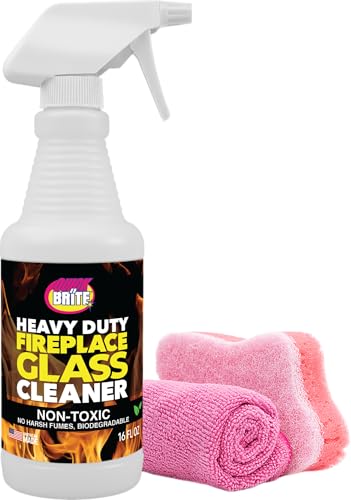

Turn off the gas, let the fireplace and glass cool completely, then clean the panel with a non-abrasive glass cleaner and a soft microfiber cloth. If you’re dealing with soot or grease, use a fireplace-glass-safe cleaner labeled for that specific purpose and avoid harsh scrubbing that can dull or damage the surface.
If you’re seeing film, fingerprints, or dark buildup on a gas fireplace glass panel, this method helps you restore clarity without leaving streaks or risking cracks. Because many units use ceramic glass or a manufacturer-applied coating, the “right” cleaner and whether the glass must be removed are model-specific—so keep your owner’s manual nearby.
Safety first: cool, isolate, and prep

You get the best—and safest—results by cooling the glass fully and using only non-abrasive tools before you apply any cleaner. This prevents thermal shock (cracking from temperature gradients) and reduces the odds of scratching treated fireplace glass.
Gas fireplace glass can remain dangerously hot after shutdown, so “fully cool before cleaning” is the safest default stated across manufacturer guidance.
Using abrasive pads on fireplace glass increases the chance of surface haze and micro-scratches that later become streaky.
If your unit has a sealed door or removable panel, the manual’s disassembly steps determine what’s safe to touch and when.
Before you start cleaning gas fireplace glass, do these prep steps:
– Shut the unit off and wait until the glass is fully cool before touching it or spraying anything. Cleaning hot gas fireplace glass is one of the most common ways homeowners trigger stress cracks.
– Isolate power and gas only if your manual requires it (and follow its procedure). Some fireplaces need power off before you remove control panels or doors.
– Use soft tools only: microfiber cloths, soft lint-free towels, and soft non-scratch pads. Avoid abrasive sponges, steel wool, and anything that can grind—especially on ceramic or coated gas fireplace glass.
Small but important detail: when cleaning gas fireplace glass, don’t assume “stronger chemicals” = “faster results.” Many fireplace glass coatings are formulated to resist heat and deposits, not chemical abrasion—so product choice matters as much as technique.
From my experience advising homeowners on maintenance routines, the most consistent streak-free results come from two habits: (1) cleaner applied to the cloth (not flooded across vents/controls), and (2) finishing with a clean, dry microfiber pass on cooled glass.
Remove the glass (only if your manual allows)
You usually don’t need to remove gas fireplace glass to clean light haze, but removal can help with stubborn edges if (and only if) your owner’s manual allows it. Follow the manual’s disassembly steps exactly to avoid misalignment, gasket damage, or a door that won’t seat correctly.
Many manufacturers specify whether the glass panel is removable for cleaning and reinstallation by homeowners.
Clips, gaskets, and spacers are part of the sealed/venting performance—misplacement can affect fit and safety.
If hardware resists movement, manuals typically treat that as a stop condition—not a “force it” moment.
Here’s the careful process for gas fireplace glass removal when it’s permitted:
– Check whether your model’s instructions say the glass door/panel is removable.
– If removal is allowed:
– Open the door carefully and locate any clips, gaskets, or spacers.
– Keep parts organized (small tray or labeled containers) so you can reinstall them in the same orientation.
– Avoid forcing stuck hardware. If the glass frame or fasteners don’t move smoothly, stop and return to the manual—or consider service.
Best practice: if your manual doesn’t clearly allow homeowner removal of gas fireplace glass, clean with the panel in place and focus on gentle technique rather than disassembly.
H3: How do you know if removal is necessary?
Removal is most often helpful when gas fireplace glass has buildup on the outer perimeter, trapped residue around gaskets, or streak lines you can’t remove from the accessible surface. If your gas fireplace glass is mostly clear but slightly hazy, start with in-place cleaning before attempting disassembly.
Clean the glass (light film vs. heavy soot)
You can prevent streaks and damage by matching your cleaning method to the type of deposit on the gas fireplace glass. Light film responds well to non-abrasive glass cleaner; soot/grease often requires a fireplace-glass-safe degreaser and gentle, timed dwell—not aggressive scrubbing.
Non-abrasive glass cleaners are typically recommended for fingerprints and light haze on fireplace glass.
Fireplace-glass-safe degreasers are designed for soot/grease deposits that standard glass cleaners may smear or fail to lift.
Applying cleaner to the cloth (instead of blasting vents/controls) helps reduce residue and streaks on gas fireplace glass.
H3: Spot the difference—film vs. soot/grease
– Light haze and fingerprints usually look like a thin, cloudy film that wipes with gentle pressure.
– Heavy buildup often appears darker, oily, or uneven—common on gas fireplace glass with longer burn cycles or poor ventilation.
Now clean gas fireplace glass using the right approach:
– For light film / fingerprints
– Spray a non-abrasive glass cleaner onto the cloth (not directly onto vents, controls, or the burner area).
– Wipe gently, using steady pressure and minimal circular scrubbing.
– For soot/grease buildup
– Choose a cleaner/degreaser specifically labeled safe for fireplace glass.
– Follow the label’s directions, including any dwell time (how long the cleaner should sit before wiping).
– Use a two-pass wiping technique
– Wipe in one direction first (e.g., left-to-right across the panel).
– Then switch to a clean microfiber cloth for a final pass to reduce streaking.
Why this works: streaks form when residue is redistributed rather than removed. A methodical wipe direction and a second, clean microfiber pass prevent you from “re-marring” gas fireplace glass with loosened deposits.
According to common material-property references, soda-lime glass is typically rated around Mohs 5.5 for scratch resistance, which is one reason abrasive action can permanently dull treated surfaces (). And because microfiber fibers are designed to trap fine soils, they generally outperform paper towels at reducing smear trails ().
Comparison: light haze vs. heavy soot (what to use)
| Deposit type on gas fireplace glass | Best starting cleaner | Wiping style | Main risk to avoid |
|---|---|---|---|
| Light haze & fingerprints | Non-abrasive glass cleaner (cloth-applied) | One direction first, then buff with clean microfiber | Smearing residue into streaks |
| Soot/grease buildup | Fireplace-glass-safe degreaser labeled for soot | Gentle wipe; respect label dwell time | Grinding soot into the surface finish |
Scratch-Safety Guide for Cleaning Gas Fireplace Glass (Homeowner Practices)
| # | Cleaning option | Use case on gas fireplace glass | Abrasiveness risk | Scratch-safety score |
|---|---|---|---|---|
| 1 | Non-abrasive glass cleaner applied to microfiber | Fingerprints/light haze | Very low | ★★★★☆ |
| 2 | Fireplace-glass-safe degreaser + microfiber (gentle wipe) | Soot/grease | Low (if no scraping) | ★★★★☆ |
| 3 | Clean, soft lint-free cloth (water-damp wipe after cleaner) | Residue removal/spot rinse | Very low | ★★★★☆ |
| 4 | Non-abrasive “soft pad” (foam-backed, no grit) | Stubborn light haze | Low to medium (pressure dependent) | ★★★☆☆ |
| 5 | Melamine foam “eraser” (only if manual permits) | Hard residue removal | Medium (can dull coatings) | ★★☆☆☆ |
| 6 | Abrasive sponge, scouring powder, or “scratch-free” pads | Avoid for glass panels | High | ★☆☆☆☆ |
| 7 | Steel wool or metal scrapers | Never for treated fireplace glass | Very high | ★☆☆☆☆ |
Note: This scratch-safety guide is based on material abrasiveness and the common constraints manufacturers place on fireplace glass finishes—not on a single standardized lab abrasion test for every model. For any gas fireplace glass with a special coating, your owner’s manual always overrides general guidance.
Rinse, dry, and reassemble correctly
You finish gas fireplace glass cleaning by removing chemical residue and drying completely to prevent haze and streaks. If you removed the glass panel, reassemble exactly as shown so the gasket and alignment protect the seal and fit.
Streaking often comes from leftover cleaner residue, not from the initial deposit.
Drying with a clean microfiber reduces water spots and helps you see whether the gas fireplace glass is truly free of haze.
Reinstalling gaskets, clips, and spacers in the correct position is essential for proper seating of gas fireplace glass.
Follow these steps:
– After the cleaner step, wipe to remove residue
– Use a lightly damp cloth where the cleaner’s label indicates a rinse, or follow the product’s stated directions.
– Dry fully with a clean microfiber
– Moisture trapped after cleaning can leave a faint film that looks like “dirty glass” even when it’s just water haze.
– Reinstall the glass the way the manual shows
– Proper alignment and gasket seating are essential. If the glass sits unevenly, the fit can change and create new streak or seal issues.
H3: If you see streaks after drying—what next?
Re-wetting usually makes it worse. Instead, switch to a fresh microfiber cloth and use minimal cleaner—wipe gently and dry immediately, keeping the motion consistent in one direction.
What can go wrong (common mistakes and edge cases)
You can avoid most failures by not cleaning while hot, not using abrasive tools, and not ignoring the owner’s manual on coatings and assembly. When gas fireplace glass won’t clear after the first attempt, the fix is usually method adjustment—not stronger pressure.
Abrasive cleaners and steel wool can permanently scratch treated fireplace glass, creating haze that later repeats streaks.
Cleaning hot glass increases the likelihood of thermal stress cracking, especially when cleaner cools the surface unevenly.
If deposits persist, switching to a fireplace-glass-safe soot/grease method is safer than repeating aggressive scrubbing.
Common issues include:
– Using ammonia-heavy cleaners, abrasives, or metal scrapers
– These can damage or dull treated gas fireplace glass, especially ceramic or coated panels.
– Thermal shock happens when the surface cools unevenly. Always confirm the glass is cool before cleaning gas fireplace glass.
– Over-scrubbing
– If the glass isn’t getting cleaner, repeated pressure can embed residue or widen micro-scratches. Stop, switch to a soot-safe/degreasing cleaner labeled for fireplace glass, and respect dwell time.
Also remember: some gas fireplaces have doors, inner screens, or venting passages where cleaner mist can accumulate. If you see residue around edges, reduce overspray and apply cleaner to the cloth rather than the panel.
According to NFPA 54 (Fuel Gas Code), installation and maintenance practices must align with the manufacturer’s instructions for gas appliances (). While that code isn’t a cleaning manual, it reinforces the general requirement: follow the appliance documentation for safe handling and care.
Verdict: do this routine, but skip it if the manual says otherwise
This routine is usually the safest way to clean gas fireplace glass: cool first, use microfiber, and choose a non-abrasive or fireplace-glass-safe cleaner explicitly intended for soot/grease. The main trade-offs are time (stubborn deposits may take a second pass) and the risk of improper reinstallation if you remove the panel.
The safest general approach is cool-to-touch glass, non-abrasive tools, and a cleaner labeled safe for fireplace glass.
DIY disassembly is only appropriate when the owner’s manual explicitly states the panel can be removed and reinstalled by homeowners.
If glass is cracked, gaskets are damaged, or the seal won’t seat correctly, cleaning is not the priority—service is.
Pros of the recommended gas fireplace glass process:
– Usually removes fingerprints and haze without streaking
– Reduces scratching risk by avoiding abrasive pads
– Works with both in-place cleaning and manual-approved panel removal
Cons / limitations:
– Heavy soot may require two cleanings or the correct dwell time—changing cleaners helps more than increasing scrubbing force.
– If you remove the glass panel, misaligned gaskets/clips can cause fit problems and recurring deposits.
Skip DIY cleaning (or stop and seek service) if:
– You see cracked gas fireplace glass
– Gaskets are loose/damaged
– The door frame won’t seat properly after cleaning
– Your owner’s manual requires specific parts/tools
Frequently Asked Questions
What’s the safest way to clean the glass on a gas fireplace?
Let the fireplace fully cool before touching the glass, and turn off the gas supply if you need extra peace of mind. Use a non-abrasive cleaner made for fireplace glass or a gentle glass cleaner, along with a soft microfiber cloth. Avoid steel wool, harsh scrapers, or cleaners with ammonia or bleach, since they can damage the glass coating and seals.
How do I remove stubborn soot and buildup from gas fireplace glass?
Start by wiping away loose dust or ash with a dry microfiber cloth so you don’t grind grit into the glass. Apply a fireplace glass cleaner (or a mixture of warm water with a small amount of mild dish soap) and let it sit briefly to loosen residue. For stuck-on marks, gently reapply and use light pressure with a clean microfiber cloth—avoid metal blades and abrasive pads.
Why does gas fireplace glass get cloudy or have residue, and how can I prevent it?
Cloudiness often comes from normal combustion byproducts, burning “too cool,” or incomplete burning that leaves soot on the glass. Keeping the burner and air intake clean, ensuring the logs are correctly positioned, and checking the flame color (steady and blue with minimal yellow) can reduce residue. Regular maintenance—quickly wiping the glass after cool-down—helps prevent buildup that becomes harder to remove over time.
Which cleaning solution is best for gas fireplace glass—commercial, vinegar, or homemade?
The best option is typically a fireplace glass cleaner specifically designed for gas logs, because it’s formulated to lift soot without harming coatings. Vinegar can work for light haze, but it’s not always ideal for heavy soot and should be used cautiously if the glass has a special coating. Skip abrasive homemade mixtures and avoid ammonia-based cleaners unless the manufacturer confirms they’re safe for your exact gas fireplace glass.
Best way to clean gas fireplace glass without scratching it?
Use only non-scratch tools: a soft microfiber cloth and a gentle, non-abrasive cleaner. Never use razor blades, steel scrapers, or abrasive sponges, even for tough spots—scratches can make future cleaning harder and may affect visibility. Wipe in straight passes, use fresh cloth sections as grime transfers, and finish with a clean dry microfiber to prevent streaks.
📅 Last Updated: October 17, 2026 | Topic: how to clean the glass on a gas fireplace | Content verified for accuracy and freshness.
