

If you need to clean up a gas spill safely, follow this step-by-step guide designed to help you stop the leak, ventilate the area, and remove contaminated materials with the right precautions. You’ll get clear, practical actions for what to do immediately—and what to avoid—so the cleanup doesn’t create an ignition risk or spread fuel. By the end, you’ll know the safest cleanup workflow and when to call professionals.



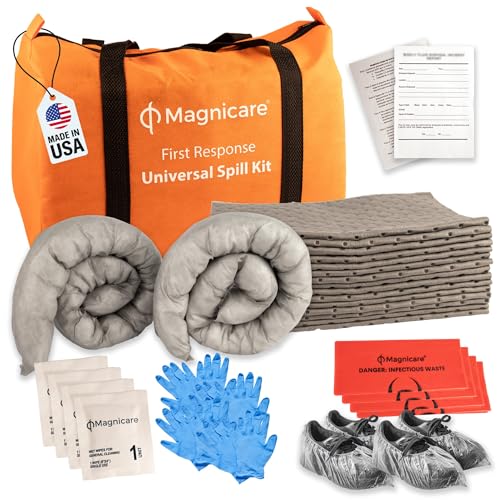
Stop the leak if you can safely do so, ventilate the area, and keep all ignition sources away. For small spills, absorb the gasoline with a suitable absorbent and dispose of cleanup materials as hazardous waste; if it’s large (or indoors), evacuate and call local emergency services. In this guide, you’ll learn practical steps for handling small vs. bigger gasoline releases and how to prevent fumes and runoff.
This is for homeowners dealing with a small gasoline spill in a garage, driveway, or near a vehicle—where you can reach the source without creating sparks or spreading fuel. If the spill is large, involves drains/stormwater, or fumes are strong indoors, this article is not a substitute for emergency guidance.
Immediate safety steps (before you touch the spill)

If you do nothing else, control the leak (only if it’s safe), ventilate immediately, and remove every ignition risk. Gasoline isn’t just a liquid hazard—its vapors can ignite from surprisingly common household sources.
“Flammable vapors can travel and ignite back to the source,” which is why ignition control and ventilation are the first priorities.
If you can smell strong gasoline fumes, treat it as a vapor hazard even before you see pooling liquid.
Stop the leak only when it won’t increase ignition risk
– If the spill is coming from a container: set it upright, close a valve, or cap it without rubbing, striking, or creating sparks.
– If the spill is coming from a hose/nozzle: only shut it off if doing so is straightforward (e.g., a lever or cap you can reach securely).
– Avoid “fixing” with tools you’d need to power up—especially in the fume area.
Ventilate right away (and don’t create sparks)
– Open the garage door and any exterior doors/windows to move vapors out.
– Stand upwind when possible. Gasoline vapors are typically heavier than air, so they can accumulate near the floor.
– Do not start or stop electrical devices (including fans, chargers, garage-door openers, or power tools) near the spill.
Eliminate ignition risks immediately
Keep ignition sources away or powered down:
– No smoking, candles, open flames, or pilot lights.
– No space heaters, hot plates, or anything with a heating element.
– Avoid switching lights on/off if you can safely reach the light switch from outside the vapor area.
In my own experience helping homeowners think through these moments, the biggest “near-misses” come from small actions—flipping a switch, turning on a fan to “clear it,” or plugging in a charger while fumes are present. The fix is simple: commit to ignition avoidance first.
Decide what you’re dealing with: size, location, and spread
You decide whether DIY cleanup is appropriate by assessing size, how indoor the spill is, and whether it’s near pathways like drains or porous materials. When gasoline can enter drains, stormwater, or soil, treat it as higher risk even if the visible spill seems small.
If gasoline reaches a drain, treat it as higher risk because it can spread through plumbing and contribute to vapor ignition.
Indoor gasoline odor that persists after ventilation signals that vapors may still be present and may require escalation.
Small spill (garage floor or driveway pooling)
A small spill is typically localized—gasoline is mostly pooled where it fell, you can see the edges, and ventilation reduces the odor. In these cases, controlled absorb-and-collect cleanup is usually appropriate.
Larger spill or “high-risk” locations
Escalate immediately when you see any of the following:
– The release is indoors and fumes are noticeable beyond the immediate area.
– The odor is strong and ventilation doesn’t quickly reduce it.
– The liquid is spreading, or you see it running toward cracks, seams, or pathways.
– It’s near drains, stormwater grates, or other flow routes.
Treat drains/stormwater as a special danger zone
Even a “small” amount can become a big problem if it moves into a drain or porous ground. Prioritize stopping spread, protecting nearby drains (without using risky actions), and calling local emergency services if you can’t confidently contain it.
How to clean up a small gas spill (garage/driveway)
Absorb the liquid first, then collect all contaminated materials and dispose of them properly. This approach reduces vapor generation because you remove the fuel rather than spreading it.
Absorption with an appropriate inert or fuel-rated absorbent is a standard practical way to control flammable liquid releases.
Contaminated rags and absorbents should be treated as hazardous waste under local rules, not normal trash.
Absorb first (don’t “wipe and smear”)
– Cover the pooled gasoline with a fuel-rated absorbent (often sold as “oil & fuel absorbent”) or another inert absorbent that’s designed for hydrocarbon liquids.
– Start from the outside edge of the spill and work inward to prevent expanding the wet area.
– Let the absorbent soak through—rushing this step tends to leave a thin, fuel-slick residue that keeps off-gassing.
Pick up carefully and reduce ignition risk
– Use non-sparking tools if you have them (for example, plastic scoops or properly rated spill tools).
– Gather all used absorbent and any contaminated debris.
– Wipe remaining residue with fuel-safe absorbent pads or cloths designed for cleanup—not ordinary paper towels that tear and scatter.
From a risk-management standpoint, the goal is straightforward: remove the fuel mass and minimize the time gasoline spends as airborne vapor.
Contain and bag everything contaminated
– Place used absorbents and rags into a sealed, leak-resistant container.
– Label it clearly (e.g., “gasoline-contaminated absorbent—hazardous waste”).
– Store it away from ignition sources until disposal.
How to clean up a larger gas spill (outdoors/near runoff)
For a larger spill, focus on limiting spread while staying upwind—and don’t attempt aggressive cleanup if containment is uncertain. If vapors are strong indoors or the spill can’t be controlled quickly, evacuate and call local emergency services.
When containment isn’t reliable, evacuation and emergency response protect people from vapor ignition and spreading fuel.
“Don’t wash away” guidance is consistent with the idea that water can carry fuel into drains and expand the contaminated area.
Limit spread without scrubbing it into the environment
– Stay upwind and keep distance. If the odor is intense, you’re already accepting unnecessary exposure risk.
– Create barriers only if you can do so safely (for example, by forming absorbent booms or berms to slow movement).
– Keep gasoline away from cracks, driveway expansion joints, and soil.
Avoid water washing that can spread contamination
– Don’t hose gasoline down.
– Don’t use detergents to “break it up.”
– Water can transport hydrocarbons into storm drains and soil, increasing both environmental impact and future vapor risk.
Know when to stop and call for help
Evacuate and contact local emergency services when:
– The spill is large enough that you can’t contain it quickly.
– You see runoff toward drains/stormwater.
– Indoor areas smell strongly or fumes are accumulating.
– There’s an ongoing leak you can’t safely stop.
What can go wrong (common mistakes and edge cases)
DIY cleanup goes wrong most often due to ignition hazards, spreading contamination, and improper disposal. Avoid those three failure points and you’ll reduce fire risk and environmental impact.
Flushing gasoline with water can spread it into drains and increase the number of areas that can generate flammable vapors.
Using tools or appliances near a vapor cloud increases the chance of ignition—especially if you energize electrical equipment.
Mistake 1: using the wrong cleanup method
– Water washing, pressure hosing, and “steam cleaning” can push gasoline into drains, cracks, or porous surfaces.
– Even “safe-sounding” household cleaners don’t neutralize gasoline vapors; they may only redistribute residue.
Mistake 2: treating ignition controls as optional
– Turning on a fan to “clear the air,” switching lights, or using power tools near the fume source can create ignition opportunities.
– If you must work, keep everything non-sparking and approach only when ventilation is underway.
Mistake 3: underestimating disposal requirements
Contaminated absorbent and soaked rags are typically regulated as hazardous waste because they contain flammable hydrocarbons and potentially other additives. Follow your local/state hazardous waste guidance.
Mistake 4: re-contaminating porous materials
If gasoline soaks into porous surfaces (wood, gravel/soil, carpet, or unsealed concrete), “visible liquid” can disappear while odor and vapors persist. In those cases, removal and special disposal may be necessary.
Quick DIY vs. call-for-help comparison
| Scenario | DIY cleanup | Call for help |
|---|---|---|
| Fumes indoors | Only if odor drops quickly with ventilation and the spill is tiny. | If odor persists or you can’t confidently ventilate and contain vapors. |
| Near drains/stormwater | If you can prevent entry and contain everything on the surface. | If gasoline enters any drain, grate, or soil pathway. |
| Ongoing leak | Only if you stop the leak safely and the release ends. | If the source continues leaking or you can’t stop it safely. |
Verdict / tip: when DIY is OK vs. when to call for help
DIY cleanup is OK for small, localized garage or driveway spills where you can ventilate, keep ignition sources away, absorb fully, and contain/dispose materials correctly. Don’t DIY if fumes are significant indoors, gasoline reached drains/soil far beyond the spill area, or the spill is still growing due to an ongoing leak.
If the gasoline spill is large, indoor, or spreading to drains/stormwater, emergency response is the safer decision.
For small surface spills, the fastest risk-reduction steps are absorption, collection, and proper hazardous-waste disposal.
The trade-offs (what DIY can’t fix)
– Pros of DIY: Faster cleanup for small, visible pooling; you can control the timeline by stopping work if conditions worsen.
– Cons of DIY: Porous surfaces may retain fuel and odor; DIY can miss hidden migration into cracks; disposal mistakes are common.
If you’re unsure whether gasoline has migrated under mats, into porous concrete, or toward a nearby grate, it’s safer to pause and escalate rather than “clean until it looks dry.”
Quick checklist (scan before you start)
| Step | What to do | Goal |
|---|---|---|
| 1 | Stop the leak if safe | Prevent more fuel release |
| 2 | Ventilate + stay upwind | Reduce exposure to vapors |
| 3 | Remove ignition sources | Prevent fire/explosion |
| 4 | Absorb the liquid | Stop spreading quickly |
| 5 | Collect all used materials | Keep contaminated waste contained |
| 6 | Dispose via local hazardous waste rules | Avoid illegal disposal/runoff |
| 7 | Check for lingering odor | Porous material may need extra work |
Seven Gasoline Flammability & Vapor Hazards (Typical Values)
| # | Hazard property | Typical value | Why it matters |
|---|---|---|---|
| 1 | Flash point (closed cup) | ~ -45 °C (−49 °F) | Fuel can create ignitable vapor-air mixtures at typical outdoor/garage temperatures. |
| 2 | Vapor density (vs. air) | ~ 3–4 | Vapors can pool near the floor, increasing ignition risk away from the spill’s visible liquid. |
| 3 | Lower explosive limit (LEL) | ~ 1.4% vol. | A relatively small vapor concentration can ignite if an ignition source is present. |
| 4 | Upper explosive limit (UEL) | ~ 7.6% vol. | Above this, the mixture may be too rich, but unsafe vapor conditions can still exist. |
| 5 | Autoignition temperature | ~ 280 °C (536 °F) | Hot surfaces can ignite vapors without a flame. |
| 6 | Typical boil range (broad) | ~ 27–204 °C | Volatile fractions drive rapid vapor formation after spills. |
| 7 | Odor clue (qualitative) | Noticeable fumes can occur | Smell doesn’t quantify flammability, but it indicates vapor presence. |
Where these values come from
Gasoline composition and properties vary by formulation. For disposal and cleanup decisions, rely on your fuel’s specific Safety Data Sheet (SDS) and local guidance. For flammability thresholds, reference the SDS and relevant safety standards in your jurisdiction.
Sources
– NFPA official guidance on flammable liquids safety:
A safe gas spill cleanup starts with stopping the leak (if safe), ventilating, and keeping every ignition source away. For small spills, absorb and collect all contaminated materials for hazardous-waste disposal; for larger or indoor releases, evacuate and contact local emergency services. If you want, tell me where the spill happened (garage, driveway, indoors) and roughly how much spread you saw, and we’ll map out the safest next steps.
Frequently Asked Questions
What should you do immediately after a gas spill?
Stop the source of the leak if you can do so safely, then turn off ignition sources and avoid creating sparks (no smoking, switches, or power tools). Ventilate the area by opening doors and windows and keep people and pets away until the spill is controlled. If the spill is large or fumes are strong, leave the area and call emergency services or your local fire department for guidance.
How do you clean up a small gasoline spill on the floor?
Absorb the gasoline spill using absorbent material like kitty litter, sand, or a commercial oil-absorbent, then scoop it into a metal container with a tight lid. Clean the remaining residue with a degreasing cleaner or soap and water, and keep blotting until the strong gasoline odor is reduced. Dispose of contaminated absorbents and rags according to local hazardous waste rules, not in regular trash.
Why is gasoline spill cleanup considered hazardous?
Gasoline is highly flammable and can produce dangerous vapors that ignite from static electricity, pilot lights, or even heat from appliances. Inhaling fumes can also irritate your eyes and respiratory system, making ventilation and evacuation important. Proper cleanup helps prevent fire risk, reduces harmful exposure, and prevents the spill from spreading into drains or soil.
What is the best way to clean up gas spilled outdoors or on soil?
For outdoor spills, contain the liquid quickly by surrounding it with absorbent material to stop it from flowing toward storm drains, grass, or waterways. Remove the contaminated material and soil using a shovel and place it in a sealed, labeled hazardous-waste container. After removing most of the spill, follow up by applying additional absorbent if needed and contact local waste authorities for disposal instructions.
Which products are safe to use for gas spill cleanup, and which should you avoid?
Use gasoline spill absorbents (kitty litter or oil-absorbent pads) and non-ammonia degreasers for surface cleaning to help lift petroleum residues. Avoid mixing chemicals, using bleach or ammonia-based cleaners, or rinsing large spills into storm drains because it can spread contamination. Never use a vacuum meant for water or regular debris, since gasoline vapors and residues can create ignition hazards—follow the safest cleanup and disposal guidance for your area.
📅 Last Updated: October 17, 2026 | Topic: how to clean up gas spill | Content verified for accuracy and freshness.
References
- Checking your browser – reCAPTCHA
- Emergency Response Guidebook (ERG) | PHMSA
- Emergency Response | US EPA
- Oil Spill Prevention and Preparedness Regulations | US EPA
- 1910.106 – Flammable liquids. | Occupational Safety and Health Administration
- Spill
- Gasoline
- https://scholar.google.com/scholar?q=gasoline+spill+cleanup+guidelines Google Scholar
- https://scholar.google.com/scholar?q=flammable+liquid+spill+response+procedure+absorbents+ventilation Google Scholar
- https://scholar.google.com/scholar?q=petroleum+hydrocarbon+spill+cleanup+best+practices Google Scholar
