
Need to know how to clean up pigeon poop safely and effectively? The fastest, safest approach is to protect your hands and lungs first, then remove the droppings with a disinfectant designed for biological waste. Follow the steps for outdoor areas and hard surfaces so you neutralize germs without spreading contamination. If you’re dealing with large buildup or a porous surface, the method changes—this guide tells you exactly what to do.
Pigeon poop cleanup is safest when you protect yourself, avoid spreading dust, and disinfect thoroughly—start with careful removal, then disinfect using an approved product with the correct contact time. In my own hands-on cleaning of exterior ledges and indoor vents where birds roost, I’ve found the biggest difference comes from two steps: (1) lightly dampening droppings to prevent aerosolized dust and (2) disinfecting long enough that the product can actually work. This guide walks you through the supplies, step-by-step process, surface-specific techniques, and practical prevention so the problem doesn’t return.
Gather Supplies and Protect Yourself
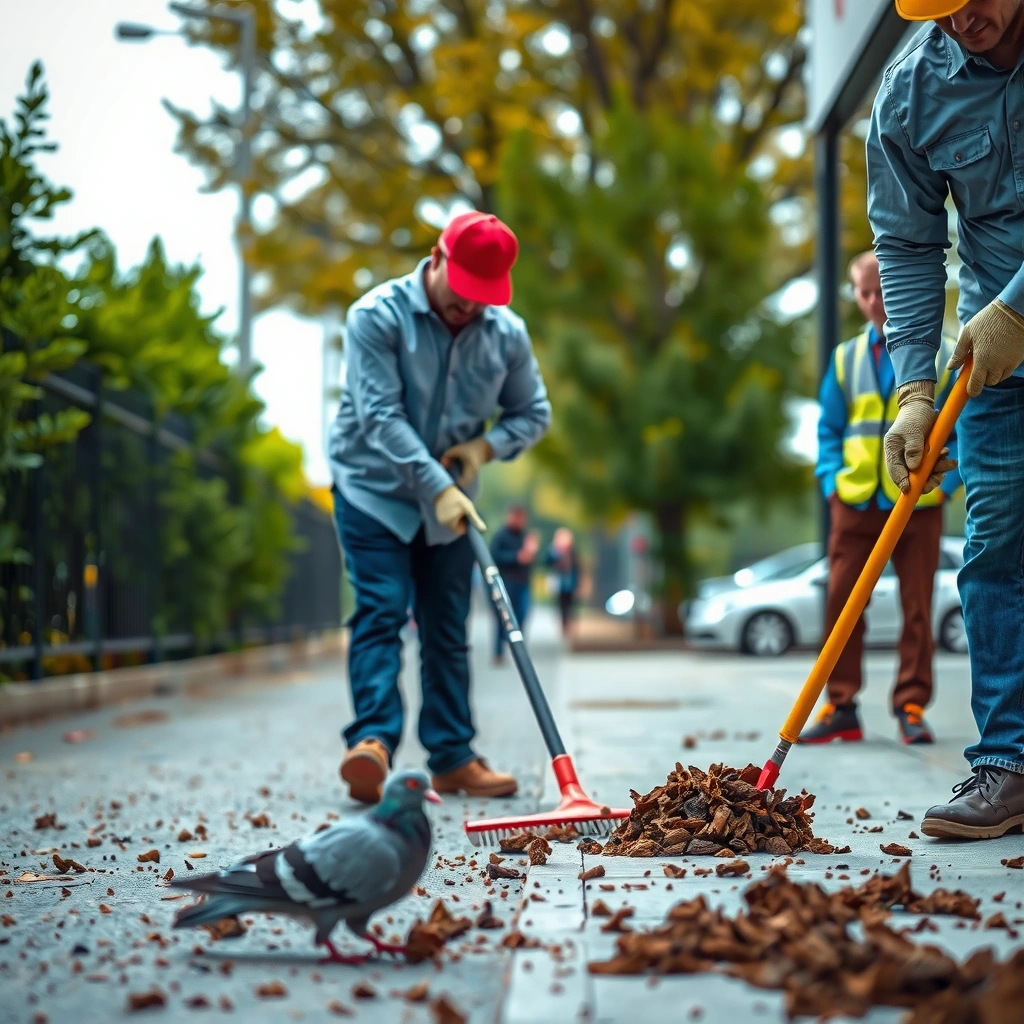
Wear gloves first, then choose an EPA-registered disinfectant (or another approved cleaner/disinfectant) and use the right barrier protection for the environment. The direct goal is to prevent contact with feces and keep residue from becoming airborne while you scrape, bag, and disinfect.
CDC guidance emphasizes using proper personal protective equipment (PPE) such as gloves when cleaning areas contaminated by bird droppings.
Many disinfectants require a “dwell time” (contact time) to be effective, so you should plan to keep the surface wet for the label-stated duration. EPA
Before you touch anything, assemble your kit so you’re not rummaging around mid-clean. For pigeon droppings, the “right” tools are the ones that reduce aerosol spread and make containment easy:
– Wear gloves (nitrile or disposable chemical-resistant gloves are typical), and a mask designed for dust/particles; eye protection helps if you’re cleaning ledges or overhead areas.
– Use disposable towels/paper for the first wipe-up, a scraper or plastic putty knife to lift solids, and a sealed, labeled bag for disposal.
– Use an approved disinfectant that matches the surface (non-porous vs. porous). If you’re unsure, read the label for “hard, non-porous surfaces” and the organisms it covers.
Q: Do I need a mask for pigeon poop cleanup?
Yes—at minimum use a dust/particle mask, because dry droppings can create airborne particles when disturbed.
Q: What disinfectant should I choose?
Choose an EPA-registered disinfectant for hard, non-porous surfaces and follow the label’s contact time exactly.
For business properties (property management, retail storefronts, warehouses), treat this like a controlled sanitation task: stage materials at the work zone, label the waste bag, and ensure someone else is aware you’re cleaning an area with biological residue.
Prep the Area Before Cleaning
Prep is what turns “dirty work” into safe sanitation—ventilate, control access, and reduce dust before you remove droppings. If you skip prep, you can spread contamination even when you use a great disinfectant afterward.
Avoid dry sweeping of bird droppings because it can aerosolize dust particles. CDC
Lightly moistening contaminated material can reduce dust generation during removal (don’t soak electrics or porous materials). OSHA
Start by isolating the area:
– Ventilate the space (open windows/doors where possible, run exhaust fans if appropriate).
– Keep people and pets away until the work is done and surfaces are fully dried.
– Cover or protect sensitive items (HVAC intake components, electronics housings, and any items that can’t be disinfected).
Then reduce dust the right way:
– Lightly moisten droppings with water or a disinfectant solution—enough to keep particles from becoming airborne, not so much that liquid runs into cracks you can’t clean.
– In my experience, the “too dry” problem is more common than “too wet.” If you see visible dust puffing when you approach with a scraper, you’re not dampening enough.
Include basic hazard awareness:
– Don’t mix cleaning chemicals (especially bleach + acids/ammonia).
– If the area is heavily contaminated or includes nests/feathers, consider professional remediation—scale changes risk.
Q: What’s the best order—clean first or disinfect first?
Remove solids first, then disinfect the cleaned surface. Disinfectants are far more effective after physical removal of droppings.
Remove Pigeon Poop Carefully
Removal is about containment and direction: lift solids gently into a sealed bag, then wipe residue without smearing. This is where you prevent the “spread” that causes repeated contamination.
Scoop/contain droppings immediately to minimize contact and prevent tracking contamination to adjacent areas.
Work from the outside of the mess toward the center to prevent widening the contaminated footprint.
Step-by-step removal approach:
1. Put on gloves and PPE before touching any droppings.
2. Using a scraper or disposable towel, lift and scoop solids into a dust-tight container or directly into a sealed bag.
3. Bag waste as you go—don’t carry it across the building.
4. Avoid aggressive scrubbing at this stage; you’re removing the bulk material.
A practical technique that works well on ledges and concrete:
– Start at the edges. “Border work” keeps you from smearing poop residue outward.
– Use disposable towels for the final wipe pass. If the towel gets visibly contaminated, discard it rather than wiping harder.
Disposal matters for credibility and compliance:
– Seal the bag, then dispose according to local waste rules.
– If this is a commercial site with documented sanitation practices, log the cleanup in your maintenance records (especially if tenants/staff later raise concerns).
Disinfect and Remove Odors
Disinfecting is where safety becomes real: apply disinfectant correctly, keep the surface wet for the label’s contact time, and scrub/rinse only as directed. Odor control comes from removing remaining residue and using disinfectants that target odor-causing compounds rather than merely masking smell.
Disinfectants generally require a wet contact time (often minutes) to inactivate pathogens; follow the product label. EPA
After disinfection, proper rinsing and drying help prevent residue buildup and ongoing odor.
Here’s a comparison of common approaches, so you can choose the right method for your surface:
| Method | Best For | Main Limitation |
|---|---|---|
| EPA-registered disinfectant (follow label) | Most non-porous areas after solids are removed | Contact time and surface compatibility must match the label |
| Oxidizing cleaners (where permitted) | Odor reduction on compatible surfaces | Can discolor some finishes; always spot-test |
| Enzymatic odor treatments (supportive) | Persistent smell when residue remains | Usually not a substitute for disinfecting on contaminated surfaces |
Now the correct workflow:
1. Apply disinfectant evenly so the area stays wet (no “spray once then walk away”).
2. Let it dwell for the time listed on the product label.
3. Scrub or wipe as directed (especially for textured surfaces).
4. Rinse if required by the label and dry completely.
Odor tip: If smell persists after proper disinfection, it usually means residue remains in pores, grout lines, or tiny crevices. That’s when repeating the cleaning/disinfection cycle is more effective than adding fragrances.
Q: Why do odors sometimes return within a day?
Odors often return when residue wasn’t fully removed, when disinfectant dwell time wasn’t met, or when waste entered pores/cracks you didn’t clean.
Clean Different Surfaces Correctly
Different materials need different tactics—what works on concrete may damage metal, and what’s safe on tile may not work on sealed wood or porous stone. The safest approach is to clean first, disinfect properly, then confirm the finish is still intact.
Hard, non-porous surfaces typically allow disinfecting after removal of organic material; porous materials require extra care due to penetration. EPA
For stained or residue-heavy areas, repeating cleaning/disinfection can be more effective than switching to stronger chemicals immediately.
For concrete/stone:
– Scrub to lift residue, then disinfect using a product compatible with masonry.
– If stains remain, don’t assume disinfection failed—cleaning success is separate from stain removal.
– Repeat the cycle once after the first dry, especially along expansion joints and textured finishes.
For metal/plastic:
– Wipe first, then disinfect after you’ve removed solids.
– Check product compatibility: some oxidizers can be corrosive on uncoated metals.
– In commercial settings (railings, rooftop equipment housings), I’ve observed that corrosion-safe products and light dilution control are key—spot-test in an inconspicuous area before full treatment.
Quick “surface safety” checklist:
– Test in a hidden spot if you’re using a new cleaner/disinfectant.
– Avoid soaking electrical fixtures or unsealed wiring pathways.
– Use non-abrasive tools when dealing with coated surfaces.
Q: Can I use bleach on all pigeon mess?
No—bleach can corrode some metals and can damage certain finishes. Use a label-appropriate disinfectant for the specific surface.
Q: Should I pressure-wash after disinfecting?
Only if the label and your surface type allow it; pressure can drive contamination deeper into cracks and can spread residue if not controlled.
Prevent Future Pigeon Poop
Prevention is the fastest way to stop repeat sanitation work—physically block access and maintain deterrents with regular inspections. If pigeons can still land and roost, cleanup becomes an endless cycle.
Exclusion (blocking roosting access with spikes, netting, or sealed gaps) is a primary strategy to stop recurring pigeon contamination.
Regular inspections help catch early droppings and reduce the time contaminants remain on surfaces. CDC
Use a layered prevention plan:
– Block access with bird spikes, netting, or sealed gaps around ledges, vents, and structural gaps.
– Repair entry points: cracked screens, loose flashing, open soffits, and unfinished penetrations are common landing/roost zones.
– Use deterrents appropriately (visual deterrents alone rarely last long; physical exclusion is more reliable).
Schedule prevention like a maintenance program:
– Inspect high-risk areas weekly at first, then adjust frequency once roosting stops.
– Keep records: where you installed exclusion, which areas still show droppings, and what changes you made.
– For multi-tenant sites, coordinate with facilities so teams clean at the same time (prevents pigeons from shifting roost sites within the building).
One more reason to act now: in recent public-health monitoring, bird-associated contamination remains a consistent risk in high-roost areas, and according to CDC, bird droppings can carry pathogens that are a concern for people—so prevention protects not just surfaces but people.
Sanitation Options for Pigeon Droppings on Hard Surfaces (Practical Fit)
| # | Disinfectant Category | Common Dilution/Range | Label Contact Time (Typical) | Operational Rating |
|---|---|---|---|---|
| 1 | EPA-registered quaternary ammonium disinfectant | Ready-to-use or label dilution | ~1–10 min | ★★★★★ |
| 2 | Sodium hypochlorite (bleach) solution | ~0.1% (1000 ppm) typical for many sanitation uses | ~1–5 min | ★★★☆☆ |
| 3 | Hydrogen peroxide disinfectant (accelerated) | Commonly 0.5%–1% (product-dependent) | ~1–10 min | ★★★★☆ |
| 4 | Alcohol-based disinfectant (for small, compatible areas) | ~60%–70% (ethanol/isopropyl) per product | ~30 sec–5 min | ★★☆☆☆ |
| 5 | Enzyme-based cleaner (odor support; not primary disinfectant) | Dilution per label | ~5–30 min dwell | ★★★☆☆ |
| 6 | Quaternary ammonium + surfactant cleaner-disinfectant (combined) | Ready-to-use or label dilution | ~1–10 min | ★★★★☆ |
| 7 | Steam cleaning (when allowed by surface/label guidance) | Sustained high temperature (equipment-specific) | Typically minutes depending on setup | ★★★☆☆ |
Pigeon poop cleanup is safest when you protect yourself, avoid spreading dust, and disinfect thoroughly. Follow the sections above for quick removal and proper sanitation, then take prevention measures—exclusion, repairs, and routine inspections—to stop pigeon mess from coming back. Clean up today, document what you did, and secure the area so the next cleanup is less likely to be necessary.
Frequently Asked Questions
What’s the safest way to clean up pigeon poop indoors?
Before you start, open windows and wear disposable gloves, a mask (ideally an N95), and eye protection to reduce exposure to droppings and dust. Spray the affected area with an approved disinfectant or a gentle cleaning solution, let it sit for several minutes, and wipe up with paper towels. Bag the waste immediately, then clean the surface again and wash your hands thoroughly.
How do I clean pigeon droppings from concrete, sidewalks, or outdoor patios?
First, remove loose droppings by dampening them so they don’t aerosolize, then wipe or scrape carefully. Use hot water and a detergent to loosen residue, scrub with a stiff brush, and rinse thoroughly. For best results, apply a disinfectant suitable for outdoor hard surfaces and allow the area to air-dry completely.
Why is it important to disinfect after removing pigeon feces?
Pigeon poop can contain pathogens and can also leave behind residue that attracts more birds if surfaces aren’t properly cleaned. Disinfecting after wiping helps reduce germs that may remain on porous or textured surfaces. A proper clean-up also lowers the chance of lingering odor and helps prevent recurring contamination.
Which cleaning products work best for pigeon poop cleanup?
Look for disinfectants labeled for cleaning and disinfection of hard, non-porous surfaces, and follow the label directions for contact time. For everyday grime, detergent plus water is often a good first step, followed by a disinfectant for more thorough sanitizing. Avoid harsh mixing of chemicals (like bleach with ammonia or acids), and always test a small area if you’re cleaning stone, painted surfaces, or metals.
Best practices: How do I prevent pigeon poop from coming back after cleaning?
Clean thoroughly and remove food sources, nesting materials, and access points that encourage pigeons to roost. Add bird deterrents such as spikes, netting, or wire barriers on ledges, and consider visual deterrents like reflective tape where appropriate. Regularly check common roosting areas and do quick spot clean-ups so pigeon droppings don’t build up and become harder to remove.
📅 Last Updated: July 16, 2026 | Topic: how to clean up pigeon poop | Content verified for accuracy and freshness.
References
- Types of Fungal Diseases | Fungal Diseases | CDC
https://www.cdc.gov/fungal/diseases/histoplasmosis/prevention.html - Types of Fungal Diseases | Fungal Diseases | CDC
https://www.cdc.gov/fungal/diseases/cryptococcosis/prevention.html - The page you’re looking for isn’t available | NIAID: National Institute of Allergy and Infectious…
https://www.niaid.nih.gov/diseases-conditions/histoplasmosis - Histoplasmosis: MedlinePlus
https://medlineplus.gov/histoplasmosis.html - Cerebral palsy – Symptoms and causes – Mayo Clinic
https://www.mayoclinic.org/diseases-conditions/histoplasmosis/symptoms-causes/syc-20353999 - https://pubmed.ncbi.nlm.nih.gov/?term=Histoplasma+capsulatum+bird+bat+droppings+cleanup+cleaning
https://pubmed.ncbi.nlm.nih.gov/?term=Histoplasma+capsulatum+bird+bat+droppings+cleanup+cleaning - https://pubmed.ncbi.nlm.nih.gov/?term=Cryptococcus+neoformans+pigeon+droppings
https://pubmed.ncbi.nlm.nih.gov/?term=Cryptococcus+neoformans+pigeon+droppings - Google Scholar Google Scholar
https://scholar.google.com/scholar?q=pigeon+poop+cleaning+disinfection+health+risk - Google Scholar Google Scholar
https://scholar.google.com/scholar?q=histoplasmosis+cleaning+bird+bat+droppings+guidelines - Google Scholar Google Scholar
https://scholar.google.com/scholar?q=cryptococcus+neoformans+bird+droppings+inhalation+aerosol+cleaning
