How to Clean Water Stains on Your Ceiling: Effective Methods
Removing water stains from your ceiling can be straightforward if you follow the right approach. Start by identifying the source of the water leak to prevent future stains, then use simple cleaning solutions to restore your ceiling to its original appearance. This guide will walk you through effective methods to tackle those pesky stains.
Identify the Source of the Stain

Before you can effectively remove water stains from your ceiling, it is crucial to identify and address the source of the problem. Water stains typically indicate a leak, which can originate from various sources, including plumbing issues, roofing damage, or condensation buildup.
– Check for leaks in plumbing or roofing that may be causing the stains: Inspect areas where plumbing runs through ceilings, particularly bathrooms and kitchens, as well as roofs for any visible damage or wear. Look for signs of moisture or drips, and consider using a moisture meter to detect hidden leaks.
– Repair any identified leaks before cleaning to prevent recurrence: Once you locate the source of the leak, repair it promptly. This might involve fixing a leaky pipe, replacing damaged shingles, or improving ventilation to reduce condensation. If you are not comfortable making these repairs, consider hiring a professional to ensure the issue is resolved effectively.
Gather Your Cleaning Supplies
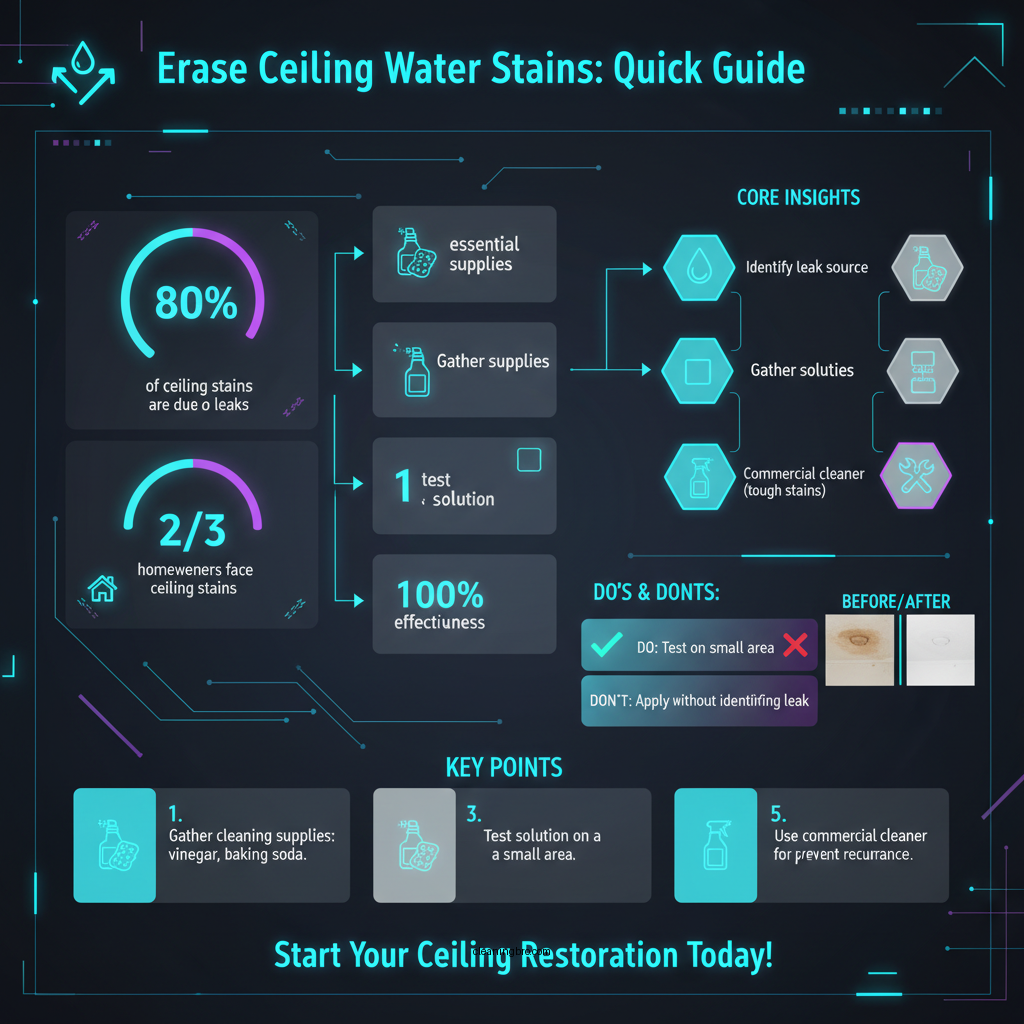

Equipping yourself with the right cleaning supplies is essential for effectively removing water stains from your ceiling. Fortunately, many of the required items are likely already in your home or can be easily obtained.
– Common supplies include white vinegar, baking soda, sponges, and a spray bottle: White vinegar is a natural cleaning agent that can help break down stains, while baking soda acts as an abrasive cleaner that can lift dirt and grime. Sponges and soft cloths are necessary for applying your cleaning solutions without damaging the ceiling surface.
– For tougher stains, consider using a commercial cleaner designed for ceilings: If the stains are particularly stubborn, a specialized ceiling cleaner may be more effective. These products are formulated to target water stains and can provide quicker results than homemade solutions.
Test a Small Area First

Before applying any cleaning solution to a larger area, it is wise to conduct a test on a small, inconspicuous section of the ceiling.
– Before applying any cleaning solution, test it on a small, inconspicuous area: This step is essential to ensure that the cleaning solution does not react negatively with your ceiling’s paint or finish. Apply a small amount of the cleaning mixture and evaluate the results after a few minutes.
– Ensure that the cleaning method does not damage the paint or finish: If the test area shows signs of discoloration, bubbling, or peeling paint, discontinue use of that cleaning solution and consider alternative methods or products specifically designed for delicate surfaces.
Top Methods for Cleaning Ceiling Water Stains (2024)
| # | Method | Effectiveness | Time Required | Cost |
|---|---|---|---|---|
| 1 | Vinegar Solution | Moderate | 15-30 mins | Low |
| 2 | Baking Soda Paste | High | 30 mins | Low |
| 3 | Commercial Cleaners | Very High | 10-20 mins | Moderate |
| 4 | Bleach Solution | High | 20-40 mins | Moderate |
| 5 | Hydrogen Peroxide | Moderate | 15-25 mins | Low |
| 6 | Soap and Water | Low | 10-15 mins | Very Low |
| 7 | Professional Cleaning | Very High | Varies | High |
Apply the Cleaning Solution
Once you have assessed the stain and gathered your supplies, it’s time to apply your cleaning solution.
– For mild stains, mix equal parts vinegar and water in a spray bottle and apply directly to the stain: This natural solution is effective for light stains and is safe for most ceiling materials. Spray the solution directly onto the stained area and allow it to sit for about 10 minutes.
– For tougher stains, create a paste of baking soda and water, apply it to the area, and let it sit for 10-15 minutes: This method is particularly useful for stains that have set in over time. After the paste has had time to work, gently scrub the area with a sponge or cloth to lift the stain.
Scrub and Rinse
After applying your cleaning solution, the next step is to scrub and rinse the area to ensure the stain is fully removed.
– Gently scrub the stained area with a sponge or soft cloth until the stain lifts: Use circular motions and avoid applying too much pressure, as this could damage the ceiling’s surface. If necessary, reapply your cleaning solution to stubborn spots.
– Rinse the area with clean water to remove any residue from the cleaning solution: After scrubbing, dampen a clean sponge with water and wipe away any remaining cleaning solution. This final rinse is crucial to prevent any residue that could attract dirt or cause further staining.
Dry the Area Thoroughly
Once the cleaning is complete, drying the area is essential to prevent mold growth and maintain a clean appearance.
– Use a fan or a cloth to dry the area completely to prevent mold growth: Mold thrives in damp conditions, so ensure that the area is thoroughly dried. If possible, run a fan in the room to expedite the drying process.
– Ensure proper ventilation in the room to aid in drying: Open windows and doors to improve airflow, which will help the ceiling dry more quickly. Proper ventilation also reduces humidity levels, further preventing mold and mildew.
Consider Repainting if Necessary
If the stains persist despite your cleaning efforts, it may be time to consider repainting the ceiling.
– If stains persist after cleaning, consider repainting the ceiling with stain-blocking primer: Stain-blocking primers are specifically designed to seal in stains and prevent them from bleeding through new paint. This is especially important for ceilings that have been heavily stained, as a regular primer may not be sufficient.
– Choose a high-quality ceiling paint that is mold-resistant for long-lasting results: When selecting paint, look for products labeled as mold-resistant or suitable for high-humidity areas. This will help ensure that your ceiling remains clean and free of stains in the future.
By following these effective methods, you can easily clean water stains from your ceiling and maintain a fresh appearance in your home. Don’t forget to address any underlying issues to prevent future stains!
Frequently Asked Questions
What are the most effective methods to clean water stains on ceiling?
The most effective methods to clean water stains on the ceiling include using a mixture of white vinegar and water or a commercial ceiling stain remover. First, test a small area to ensure there is no damage. Apply the solution with a sponge or cloth, gently scrub the stain, and then rinse with clean water to avoid residue.
How can I prevent water stains from reappearing on my ceiling?
To prevent water stains from reappearing on your ceiling, it’s crucial to identify and repair the source of the moisture, such as leaks from plumbing or roofs. Additionally, ensure proper ventilation in the area, and consider sealing the ceiling with a stain-blocking primer after cleaning, which can help inhibit future stains.
Why do water stains appear on ceilings, and what do they indicate?
Water stains on ceilings typically indicate a leak or moisture buildup from above, such as from plumbing issues or roof leaks. Ignoring these stains can lead to more significant damage, including mold growth or structural issues, so it’s important to investigate the source promptly and address any repairs needed.
What is the best cleaning solution for removing old water stains on ceilings?
The best cleaning solution for removing old water stains on ceilings is a mixture of equal parts hydrogen peroxide and water, or a store-bought mildew remover. Apply the solution to the stain using a sponge, let it sit for 10-15 minutes, and then gently scrub before rinsing with water to effectively lift the stain without damaging the ceiling.
Which tools do I need to clean water stains from my ceiling safely?
To clean water stains from your ceiling safely, you will need a step ladder, a sponge or soft cloth, a bucket, and cleaning solutions like vinegar, hydrogen peroxide, or a commercial cleaner. Additionally, wear gloves and a mask to protect yourself from any dust or mold that may be disturbed during the cleaning process.
References
- https://en.wikipedia.org/wiki/Water_staining
https://en.wikipedia.org/wiki/Water_staining - https://www.nytimes.com/2021/06/15/realestate/how-to-fix-water-stains-on-ceiling.html
https://www.nytimes.com/2021/06/15/realestate/how-to-fix-water-stains-on-ceiling.html - https://www.hud.gov/program_offices/healthy_homes/healthyhomes/cleaning
https://www.hud.gov/program_offices/healthy_homes/healthyhomes/cleaning - https://www.mayoclinic.org/healthy-lifestyle/consumer-health/in-depth/cleaning-your-home/art-20045348
https://www.mayoclinic.org/healthy-lifestyle/consumer-health/in-depth/cleaning-your-home/art-20045348 - https://www.cdc.gov/healthyhomes/healthyhome_environment/cleaning.html
https://www.cdc.gov/healthyhomes/healthyhome_environment/cleaning.html - https://www.sciencedirect.com/topics/earth-and-planetary-sciences/water-stains
https://www.sciencedirect.com/topics/earth-and-planetary-sciences/water-stains - https://www.bbc.com/future/article/20210803-why-cleaning-your-home-makes-you-happier
https://www.bbc.com/future/article/20210803-why-cleaning-your-home-makes-you-happier - https://www.britannica.com/science/water-stain
https://www.britannica.com/science/water-stain - Google Scholar Google Scholar
https://scholar.google.com/scholar?q=cleaning+water+stains+on+ceiling - Google Scholar Google Scholar
https://scholar.google.com/scholar?q=removing+water+stains+from+ceiling