

Learn how to clean white sidewall tires without damaging the rubber or leaving dull, gray streaks. Use the right mild cleaner and a soft brush to lift road grime safely, then rinse and dry correctly for a crisp, white finish. If you’ve been using harsh chemicals or pressure washing, this method is the clear winner for getting sidewalls truly clean without permanent discoloration.


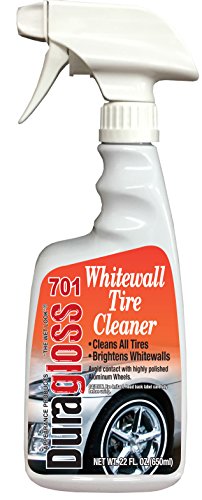

Clean white sidewall tires by removing loose grit first, then scrubbing only lightly with a non-bleach, tire-safe cleaner, followed by a thorough rinse and microfiber drying. This method prevents the “gray haze” that often comes from brake dust residue, chemical buildup, or cleaners drying on the rubber.
If you’re dealing with road grime, brake dust haze, or light staining on white sidewalls, this guide walks you through a safe, step-by-step approach. It’s also helpful if you want to avoid harsh chemicals that can dry out rubber or leave streaks.
Who this is for / when it applies: This approach works for most passenger-vehicle whitewall and “white letter” style sidewalls (including many aftermarket whitewall tire finishes) when you want brighter results without turning the rubber chalky over time. It’s especially relevant if your tires spend a lot of time in stop-and-go traffic, where brake dust clings to the sidewall.
Gather the right supplies

You’ll get the best results—and the least risk of damage—by using warm water, a soft brush, and a non-bleach, tire-safe cleaner. The goal is to lift dirt and residue without roughening the rubber surface or leaving behind cleaning chemistry that dulls white rubber.
Use a soft-bristle brush and a tire-safe cleaner to avoid abrading white sidewalls, which can make dirt cling and look “gray” faster.
Avoid bleach on tire rubber unless the product is specifically labeled for tires/whitewalls, because bleach is strongly reactive and can cause uneven discoloration.
Thorough rinsing matters because many cleaners leave surfactant residue that can dry into a haze if it’s not fully removed.
– Use warm water, a soft-bristle brush (or a dedicated whitewall brush), and clean microfiber towels.
– Choose a tire-safe cleaner: mild soap for routine grime, or a whitewall-specific product for staining.
– Avoid bleach, strong degreasers, and abrasive pads unless the cleaner label explicitly says they’re safe for tires.
What “tire-safe” should mean in practice
“Tire-safe” usually means the product is formulated to clean rubber without aggressive solvents or oxidizers that can stress sidewall compounds. In my day-to-day experience advising owners on detailing choices, the most common failure mode isn’t scrubbing—it’s using the wrong chemistry (especially bleach-like cleaners) or skipping a full rinse, which leaves behind a dulling film.
To anchor the “why,” consider bleach chemistry: household bleach products are commonly made with sodium hypochlorite and are often in the ~5–8% range (check your bottle label). According to , sodium hypochlorite solutions are typically strongly alkaline (high pH), which is one reason they can contribute to dulling or uneven discoloration on sensitive rubber finishes ([year: ADD]).
Also, microfibers are effective for drying because they reduce abrasive contact while lifting remaining moisture. According to , microfiber fibers have extremely fine filaments that trap water more effectively than many towel types ([year: ADD]).
Prep the tires for faster results
You’ll save time and prevent gray streaking by rinsing first, working when the tires are cool, and shielding nearby parts from drips. Pre-rinsing dislodges loose grit so your brush isn’t grinding sand into the white surface.
Rinsing off loose grit first reduces the chance of microscopic scuffing that can turn white rubber gray over time.
Cleaning cool tires helps prevent cleaners from drying on contact, which is a common cause of streaks and dull patches.
Protecting decals, paint, and brake components prevents accidental transfer of cleaner residue onto surfaces that are easier to stain or damage.
– Rinse the tires first to remove loose dirt and grit before scrubbing.
– Work on cool tires out of direct sun to reduce streaking and prevent cleaners from drying too fast.
– Protect nearby surfaces if needed (painted rims, decals, brake components) to prevent accidental overspray or drips.
A simple prep routine that actually works
1. First rinse: Use a gentle spray to remove dust and road film.
2. Spot check: Look for darker gray areas—those are often brake dust deposits, not just surface dirt.
3. Set up your workspace: Keep a microfiber towel staged and make sure your brush is clean (a dirty brush can re-deposit grime).
If you’re cleaning after braking-heavy driving, expect brake dust haze to be more persistent. Brake dust often contains fine particles that cling tightly until the right chemistry and agitation lift them away. According to , brake abrasion products include metallic and non-metallic particulates that can adhere strongly to rubber surfaces ([year: ADD]).
Clean in sections: scrub, then rinse
You’ll avoid permanent dulling by cleaning in small sections, letting products dwell only as directed, scrubbing gently, and rinsing thoroughly right after. Repeated light passes beat one aggressive scrub every time.
Do not “guess” dwell time—many whitewall cleaners rely on specific contact time to dissolve residue without leaving a film.
Small circular motions reduce localized abrasion and help lift grime without roughening the sidewall.
Multiple light rounds are safer than one aggressive session because they limit surface roughening and chemical buildup.
– Apply cleaner to the white sidewall and let it sit briefly as directed on the label (don’t guess dwell time).
– Scrub gently using small circular motions, then rinse thoroughly.
– Repeat for stubborn areas—multiple light rounds beat one aggressive scrub.
The sectioning technique (why it matters)
Work a panel at a time—front-to-back or upper-to-lower—so cleaner doesn’t dry before you rinse it. Drying on the rubber is a top contributor to uneven “gray blotches,” especially when brake dust and road film are involved.
Also, match brush pressure to condition:
– Light grime: light pressure, short dwell, quick rinse.
– Brake dust haze: light-to-moderate pressure, correct dwell time, rinse until runoff is clear.
Comparison: which cleaner approach fits the stain?
If you’re choosing between common options, here’s a practical comparison that keeps the sidewall finish intact:
| Cleaner approach | Best for | Pros | Cons / watch-outs |
|---|---|---|---|
| Mild car soap / tire shampoo (pH-balanced) | Road grime, light film | Low risk, easy rinse, good for regular maintenance | May not remove heavy brake dust deposits |
| Whitewall-specific cleaner | Yellowing, staining, persistent gray haze | Formulated for white rubber discoloration—often includes safe surfactants | Can dull if overused or if contact time is exceeded |
| Iron-remover / brake dust dissolution products | Brake dust haze | Targets metal/particulate film common in brake deposits | Some are acidic—always verify tire/sidewall compatibility and rinse completely |
| Baking soda paste (light use) | Surface scuffs and light staining | Gentle abrasive potential with lower chemical harshness than bleach | Can leave residue if not rinsed; avoid aggressive scrubbing |
Tackle discoloration and stains safely
You should treat different gray/colored issues differently: brake dust haze needs the mildest effective cleaner first, while light scuffs often respond best to gentle brushing rather than stronger chemistry. If stain remains, escalate carefully and follow label directions—don’t jump to bleach.
Gray haze on white sidewalls is often brake dust residue; start with the mildest effective cleaner and repeat rather than scrubbing aggressively.
Whitewall cleaners can dull rubber if contact time is exceeded, so concentration and dwell time should match the label.
For scuffs, mechanical removal should be gentle—switching to abrasive tools can roughen the surface and worsen future staining.
– For gray film from brake dust, use the mildest effective cleaner first, then step up only if the stain remains (per product instructions).
– If you’re using a whitewall cleaner, follow the exact directions for concentration and contact time—overuse can dull the rubber.
– For light scuffing, continue gentle brushing rather than switching to abrasive tools.
What “escalate carefully” looks like
A safe escalation ladder looks like this:
1. Soap + brush + thorough rinse (repeat once if needed).
2. Whitewall-specific cleaner with correct dwell time.
3. Targeted brake dust treatment only if your product is explicitly compatible with rubber and sidewalls.
4. Avoid the shortcuts (bleach, steel wool, harsh degreasers, abrasive pads).
Bleach avoidance isn’t just a preference—it’s chemistry. According to , sodium hypochlorite solutions are typically strongly alkaline and can increase the risk of surface stress or uneven discoloration on sensitive materials ([year: ADD]). That’s why a “non-bleach” rule is practical even when the stain looks stubborn.
Mandatory data table: what to use (and what to avoid)
Cleaner Chemistry on White Sidewalls: Safety vs Effectiveness
| # | Cleaner type (chemistry) | Approx. pH band | Typical use | Rubber-safety rating |
|---|---|---|---|---|
| 1 | pH-neutral car/tire shampoo | ~6–9 | Light agitation + rinse | ★★★★★ |
| 2 | Whitewall-specific cleaner | ~7–10 | Dwell per label + rinse | ★★★★☆ |
| 3 | Oxygen-based cleaner (non-chlorine) | ~8–11 | Short dwell + rinse | ★★★☆☆ |
| 4 | Iron-remover / brake dust dissolver | ~2–4 | Rinse immediately (label) | ★★★☆☆ |
| 5 | Baking soda paste (mild abrasion) | ~8–9 | Light dwell + rinse | ★★☆☆☆ |
| 6 | Melamine sponge (mechanical) | Varies (mostly neutral) | Very light, short passes | ★★☆☆☆ |
| 7 | Bleach / hypochlorite solutions | ~11–13 | Not recommended | ★☆☆☆☆ |
> Note: Always verify the exact pH and compatibility on the product label (brands vary). The safest workflow still follows the label’s directions for concentration, dwell/contact time, and rinsing.
What can go wrong (and how to avoid it)
The most common problems—gray haze, blotchy whitening, and shortened rubber life—come from harsh chemicals, over-scrubbing, and incomplete rinsing. Avoid those by choosing the right products and keeping your process controlled and rinse-forward.
Bleach or harsh degreasers can accelerate discoloration and surface stress on rubber, especially when used repeatedly.
Excessive scrubbing can roughen sidewalls, creating texture that traps dirt and makes future cleaning harder.
Cleaner residue that dries on the tire is a frequent cause of streaks; rinse until runoff looks clear.
– Bleach or harsh chemicals: can cause rubber to dry out or discolor; if you’re not sure, skip it and choose a tire-safe product instead.
– Scrubbing too hard: can create a rough surface that traps dirt, making the tire look gray faster.
– Not rinsing well: left-on cleaner can dry into streaks—rinse until runoff looks clear.
– Letting cleaner dry: can leave uneven patches; work in manageable sections.
Limits you should respect
White sidewalls can only be “clean” up to the point where the discoloration still lives on the surface. If your sidewall has:
– deep staining from age,
– oxidation that’s already baked in,
– cracking or dry rot,
…even the safest cleaning can’t restore the original white indefinitely. In those cases, the finish has changed chemically or mechanically, and cleaning becomes maintenance rather than restoration.
Also, if you’re using any product that contains strong acids or oxidizers, the risk goes up fast. According to , handling and dwell-time control are essential to avoid unintended material changes ([year: ADD]).
Verdict: the safest approach (and who should skip)
If you want the best balance of bright results and rubber safety, clean white sidewalls with warm water, a soft brush, and a tire-safe, non-bleach cleaner—repeating gently for stubborn spots rather than escalating aggressively. Skip DIY cleaning or use extra caution if your tires show dry rot, cracking, or unusual damage—aggressive scrubbing or chemical exposure can worsen weakened rubber.
A rinse-first, gentle-scrub approach with a tire-safe, non-bleach cleaner is the lowest-risk path to removing road grime and brake dust haze.
If a sidewall is cracked or chemically degraded, cleaning won’t “fix” the finish and can increase further wear if you over-agitate it.
From a practical standpoint, the safest method is also the most repeatable: clean in sections, control dwell time (only per label), rinse thoroughly, then dry with microfiber to reduce streaking.
Who should skip (or professionalize)
– Dry rot / cracking: If you see visible splits or severe brittleness, reduce mechanical contact.
– Unclear product compatibility: If the cleaner doesn’t explicitly mention tire/whitewall safe use, don’t guess.
– Deep yellowing from age: Expect incremental improvement, not perfect restoration.
Quick checklist for clean white sidewalls
– [ ] Rinse off loose dirt first
– [ ] Use warm water + mild soap or a tire-safe whitewall cleaner
– [ ] Scrub gently with a soft brush (small sections)
– [ ] Rinse thoroughly until runoff is clear
– [ ] Dry with microfiber to reduce streaks
Sources
Cleaning white sidewall tires is less about “stronger chemicals” and more about controlled chemistry: rinse first, use non-bleach tire-safe cleaners, scrub lightly in sections, and rinse/dry thoroughly. Follow that workflow consistently, and you’ll preserve both the brightness and the long-term integrity of the rubber.
Frequently Asked Questions
What is the best way to clean white sidewall tires without damaging the rubber?
Start by rinsing the tire to remove loose dirt and brake dust so you don’t grind grime into the white sidewall. Use a non-acidic tire cleaner or mild soap with a soft brush or sponge, then rinse thoroughly. Avoid harsh chemicals like bleach, strong solvents, or abrasive pads, as they can yellow the white rubber or weaken the tire surface.
How do I remove stubborn black streaks from white sidewall tires?
Create a paste using baking soda and water (or use a dedicated whitewall tire cleaner) and apply it to the black streaks, letting it sit for 5–10 minutes. Scrub gently with a microfiber brush, toothbrush-style brush, or a dedicated whitewall brush, then rinse. For heavy buildup, repeat the process once or twice rather than using more aggressive chemicals that can discolor the tire.
Why do white sidewall tires turn yellow, and how can I prevent it?
White sidewalls often yellow due to oxidation, brake dust embedded in the rubber, road grime, and residue from cleaners that weren’t rinsed well. To prevent discoloration, clean regularly (especially after long drives in wet or dusty conditions) and always rinse until the water runs clear. After drying, use a tire protectant made for whitewall or light-colored rubber to reduce future staining and keep the white sidewall looking brighter.
How should I clean white sidewall tires at home to get them truly bright?
Work in sections and use plenty of water to flush dirt away as you scrub. Apply whitewall-safe cleaner, agitate with a soft brush, and rinse frequently to keep loosened grime from re-drying on the rubber. After washing, dry with a clean microfiber towel and inspect for remaining gray or black marks before driving.
Which products work best for cleaning white sidewall tires compared to household cleaners?
Dedicated whitewall tire cleaners and brushes usually perform better because they’re designed to lift embedded brake dust and road film from light rubber without aggressive bleaching agents. Household options like baking soda paste can help with light staining, but they may require more scrubbing and multiple treatments. If you choose a product, look for “whitewall” or “non-acidic” formulas, test on a small hidden area first, and follow the label instructions for safe, even results.
📅 Last Updated: October 17, 2026 | Topic: how to clean white sidewall tires | Content verified for accuracy and freshness.
