How to Clean Your Boat Hull: A Step-by-Step Guide
Cleaning your boat hull is vital for preserving both its performance and appearance. Regular cleaning helps eliminate algae, barnacles, and other debris that can affect the vessel’s speed and fuel efficiency. This comprehensive guide will provide you with the necessary tools, techniques, and steps to clean your boat hull efficiently and safely, ensuring it remains in optimal condition for your time on the water.
Understanding the Importance of Hull Cleaning

Regular cleaning of your boat hull is not merely a cosmetic concern; it has practical implications for the vessel’s performance. When marine growth such as algae and barnacles accumulate on the hull, they create drag, which can significantly slow down the boat. This drag not only affects your speed but can also lead to increased fuel consumption, making your outings less economical. A clean hull, on the other hand, improves hydrodynamics, ensuring that your boat moves smoothly through the water, thus enhancing fuel efficiency and overall performance. Furthermore, a well-maintained hull is crucial for protecting the boat’s surface and preventing long-term damage.
Preparing to Clean Your Boat Hull
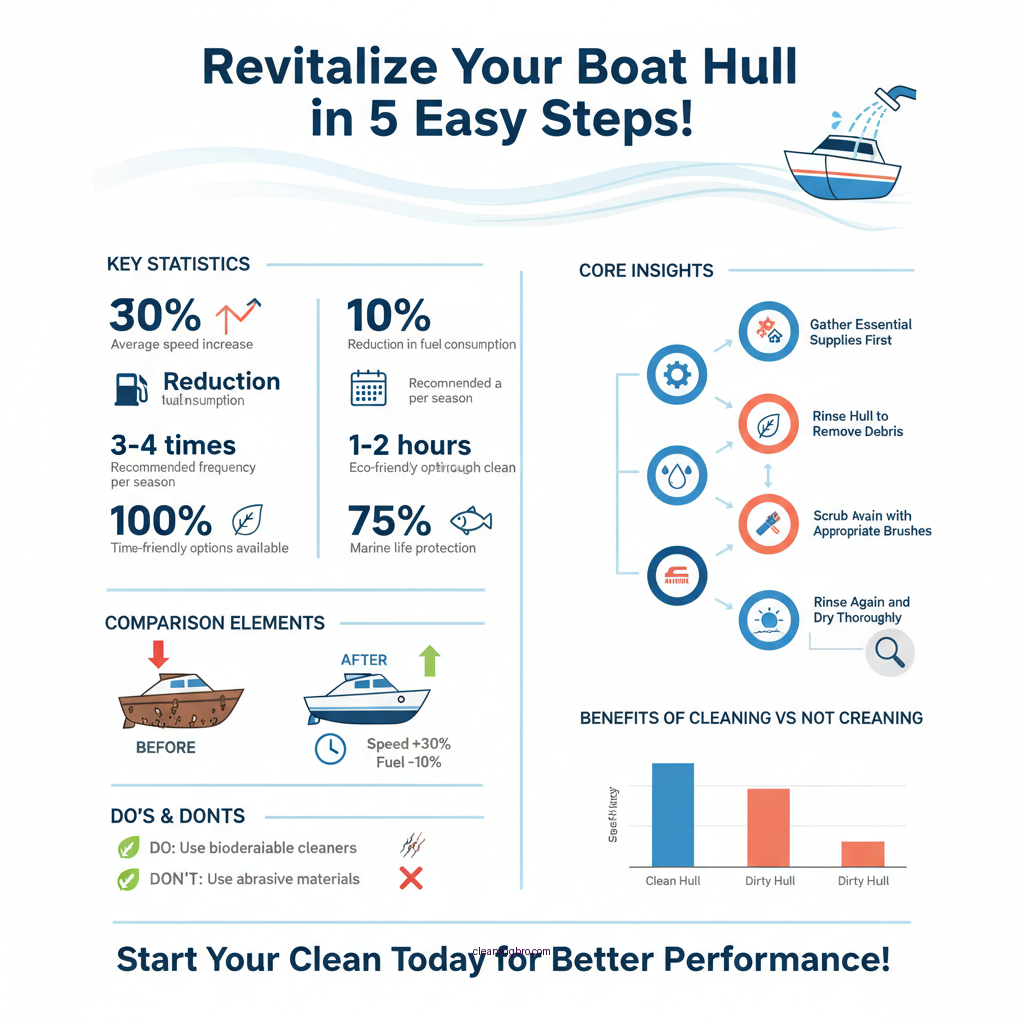

Before you start the cleaning process, it’s essential to gather all necessary supplies. You will need the following items:
– Scrubbing Brushes: Different types of brushes are available, such as soft for fiberglass and stiffer ones for tougher materials.
– Cleaning Solutions: Use boat-specific cleaners or eco-friendly alternatives.
– Protective Gear: Gloves, goggles, and a mask are recommended to safeguard against chemicals and debris.
Selecting the right location for cleaning is also crucial. Ideally, you should clean your hull out of the water or at a marina equipped with cleaning stations. This ensures that you can thoroughly access the hull while minimizing environmental impact.
Safe and Eco-Friendly Cleaning Solutions

When it comes to cleaning solutions, always choose biodegradable products that minimize harm to marine life. Many traditional cleaning solutions contain harmful chemicals that can leach into the water, posing risks to aquatic ecosystems. For a more eco-friendly option, consider homemade solutions using vinegar, baking soda, or even lemon juice. These natural ingredients are effective at breaking down grime and can be just as efficient as commercial cleaners without the associated environmental risks.
Step-by-Step Cleaning Process
1. Rinse the Hull: Start by rinsing the hull thoroughly with fresh water to remove loose dirt and debris. This initial step helps prevent scratching the surface during scrubbing.
2. Apply Cleaning Solution: Choose your cleaning solution and apply it evenly across the hull, focusing on areas with visible growth or stains. Allow it to sit for a few minutes to break down the grime.
3. Scrub the Hull: Using the appropriate brush for your hull material, scrub the surface in a circular motion. For fiberglass hulls, a soft brush is advisable, while tougher materials may require a stiffer brush.
4. Rinse Again: After scrubbing, rinse the hull thoroughly again to remove all cleaning solution and loosened debris.
5. Dry the Hull: If possible, dry the hull with a soft cloth to prevent water spots and streaks.
Addressing Stains and Tough Deposits
For stubborn stains or tough deposits, specialized tools like hull scrubbers or a pressure washer can be incredibly helpful. A pressure washer can remove more significant buildups, but care should be taken to avoid damaging the hull. In cases of extensive barnacle growth or oxidation issues, it may be wise to consult professional cleaning services that specialize in marine maintenance. They have the tools and expertise to address more severe cases without risking damage to your boat.
Post-Cleaning Maintenance Tips
Once your hull is clean, it’s important to apply a protective coating or wax. This can help repel dirt and grime, making future cleanings easier and less frequent. Moreover, regular maintenance is essential; schedule cleanings based on your boating frequency and the environmental conditions in which your boat operates. Regular inspections can help identify any potential issues before they become significant problems.
Troubleshooting Common Cleaning Issues
During the cleaning process, you may encounter common issues such as scratches or gel coat damage. Identifying these problems early allows for timely repairs, which can include using a marine-grade repair kit to fill in scratches or buff out minor imperfections. Preventing future buildup can be achieved by regularly applying protective coatings and ensuring proper storage practices when the boat is not in use.
Top 7 Boat Cleaning Products (2024)
| # | Product | Type | Eco-Friendly | Effectiveness Rating |
|---|---|---|---|---|
| 1 | Star Brite Boat Wash | Liquid | ✅ | ★★★★☆ |
| 2 | Meguiar’s Marine RV Wash | Liquid | ✅ | ★★★★★ |
| 3 | 3M Marine Cleaner | Spray | ✅ | ★★★★☆ |
| 4 | Star brite Hull Cleaner | Liquid | ✅ | ★★★★☆ |
| 5 | Boat Bling Hot Sauce | Spray | ✅ | ★★★★★ |
| 6 | Rejex Polymer Sealant | Liquid | ✅ | ★★★★☆ |
| 7 | YachtClean Hull Cleaner | Liquid | ✅ | ★★★★☆ |
Effectiveness of Different Cleaning Methods
Manual Cleaning vs Pressure Washing vs Professional Services
| Feature | ⭐ Manual Cleaning | Pressure Washing | Professional Services |
|---|---|---|---|
| Cost | Low | Medium | High |
| Time Required | 5+ hours | 2-3 hours | 1-2 hours |
| Effectiveness | Good | Very Good | Excellent |
| Equipment Needed | Brushes, Cleaner | Pressure Washer | None |
| Environmental Impact | Low | Medium | Low |
| Safety Risks | Medium | Low | Very Low |
| Skill Level Required | Low | Medium | Professional |
| Best for | DIY enthusiasts | Quick clean | Thorough cleaning |
| 🏆 Best For | Affordability | Efficiency | Professional Results |
Maintaining a clean boat hull is crucial for performance and aesthetics. By following the steps and tips outlined in this guide, you can ensure your hull remains in excellent condition, ready for every boating adventure. Remember to use eco-friendly products and commit to regular cleanings to extend the lifespan of your vessel. Happy boating!
Frequently Asked Questions
How often should I clean my boat hull?
It’s recommended to clean your boat hull at least once a month, especially during the boating season. Regular cleaning helps prevent the buildup of algae, barnacles, and other marine growth that can affect performance and fuel efficiency. In addition, if your boat is docked in brackish or saltwater, more frequent cleaning may be necessary to avoid corrosion and damage.
What are the best products for cleaning a boat hull?
The best products for cleaning a boat hull include biodegradable boat cleaners, acid-based hull cleaners for tough stains, and soft-bristle brushes to avoid scratching the surface. Look for eco-friendly options that are safe for marine life, and avoid bleach and harsh chemicals that can damage your boat’s finish. Additionally, using a good wax or sealant after cleaning can protect the hull from future grime.
How do I remove stubborn stains from my boat hull?
To remove stubborn stains from your boat hull, start by applying a specialized hull cleaner or a mixture of vinegar and baking soda to the affected area. Let it sit for a few minutes to penetrate the stain, then scrub gently with a non-abrasive sponge or brush. For particularly tough stains, a pressure washer on a low setting can be effective, but always test in an inconspicuous area first to avoid damage.
Why is it important to clean my boat hull regularly?
Regular cleaning of your boat hull is crucial for maintaining its appearance and performance. A clean hull reduces drag in the water, enhancing fuel efficiency and speed, while also preventing the growth of barnacles and algae that can lead to costly repairs. Furthermore, consistent maintenance helps uphold the value of your boat and ensures compliance with local environmental regulations.
Which tools do I need for effective boat hull cleaning?
For effective boat hull cleaning, you will need a soft-bristle brush, a sponge, a bucket, and a pressure washer if possible. Additionally, having a good-quality marine cleaner, a scraper for tough growth, and protective gear like gloves and goggles will enhance safety and efficiency. Investing in a hull polishing pad can also help achieve a glossy finish after cleaning.
References
- Hull (watercraft)
https://en.wikipedia.org/wiki/Boat_hull - https://www.boatsafe.com/how-to-clean-your-boat-hull/
https://www.boatsafe.com/how-to-clean-your-boat-hull/ - https://www.extension.purdue.edu/extmedia/FNR/FNR-448-W.pdf
https://www.extension.purdue.edu/extmedia/FNR/FNR-448-W.pdf - https://www.nap.edu/catalog/2219/cleaning-and-maintenance-of-boats
https://www.nap.edu/catalog/2219/cleaning-and-maintenance-of-boats - https://www.sciencedirect.com/topics/agricultural-and-biological-sciences/boat-hull
https://www.sciencedirect.com/topics/agricultural-and-biological-sciences/boat-hull - https://www.uscg.mil/Portals/0/Images/BoatingSafety/BoatHullCleaning.pdf
https://www.uscg.mil/Portals/0/Images/BoatingSafety/BoatHullCleaning.pdf - Google Scholar Google Scholar
https://scholar.google.com/scholar?q=how+to+clean+boat+hull - Google Scholar Google Scholar
https://scholar.google.com/scholar?q=boat+hull+maintenance - Google Scholar Google Scholar
https://scholar.google.com/scholar?q=marine+hull+cleaning+techniques - how to clean boat hull – Search results
https://en.wikipedia.org/wiki/Special:Search?search=how+to+clean+boat+hull