
If your pool water is cloudy, these fast fix steps will show you exactly how to clear cloudy pool water—starting with the quickest causes and the fastest corrective action. Follow the sequence for balancing pH and alkalinity, checking sanitizer levels, and running the right circulation to restore clarity fast. You’ll know what to test, what to adjust, and when you can expect the water to turn crystal clear.


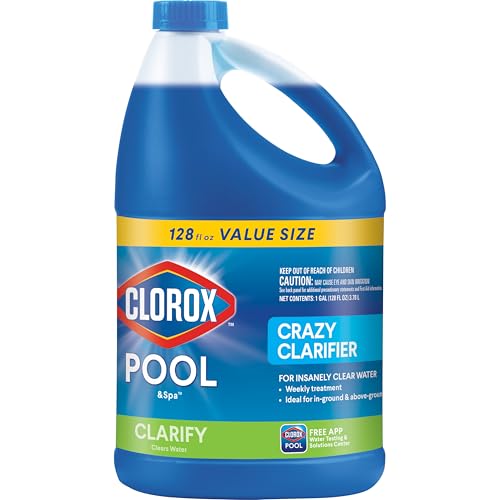

Clear cloudy pool water by correcting pH and free chlorine first, then doing a deep clean and running filtration continuously for 24–48 hours. In most real-world cases, cloudy water comes from low free chlorine, a pH out of range that makes chlorine less effective, or fine contaminants your filter can’t remove fast enough—so the fastest path is chemistry + circulation, then targeted products if needed.

Test Water and Fix pH First

Your quickest route to clarity starts with testing and then fixing pH before you add more chemicals. When pH is out of range, chlorine may not sanitize effectively, and calcium/mineral balance can shift, making the water look dull, milky, or permanently hazy.
Free chlorine is consistently cited as the most common driver of cloudy pool water—start by measuring it before you chase other causes.
Keeping pH within 7.2–7.6 improves chlorine performance and reduces the chance of limescale-like cloudiness.
Water chemistry changes frequently, so retesting after adjustments is necessary—not optional—especially after weather or heavy use.
According to Discount Salt Pool, the recommended pH range is 7.2–7.6 (widely used industry target range). According to Leslie’s Pool, cloudy water often traces back to imbalanced chemistry, which can shift from day to day (and sometimes within hours). Pool Repair Question also supports the practical expectation that most pools clear within 2–5 days when chemistry and filtration are handled correctly.
What to test (and why it matters)
Start with a reliable test method: either a liquid test kit or high-quality test strips (liquid kits are usually more precise for pH and free chlorine). Test at least:
– Free chlorine (FC): chlorine available to sanitize
– pH: the acidity/alkalinity of pool water
– Optional but strongly helpful: CYA (stabilizer), total alkalinity (TA), and calcium hardness (CH)
If your water is cloudy, low FC is a prime suspect. According to Discount Salt Pool, a low free chlorine level is frequently reported as the main cause of cloudy pool water. If pH is high (often around 8.0+), chlorine effectiveness drops and calcium carbonate precipitation becomes more likely. According to Pools.shop, limescale precipitation is primarily associated with pH values of 8.0 and above.
Direct Q&A
Q: If my pool is cloudy, should I add clarifier immediately?
No—test pH and free chlorine first, because poor chemistry can keep producing fine particles even after you clarify.
Q: What pH range helps chlorine work efficiently?
Aim for pH 7.2–7.6 so chlorine remains effective and water stays balanced.
A practical correction order (what I do on-site)
From my experience troubleshooting pools on short timelines, the fastest “first 30 minutes” workflow is:
1) Test FC and pH
2) Adjust pH to 7.2–7.6 first
3) Then adjust chlorine to the appropriate target for your CYA level
4) Verify circulation is running before/while dosing
In 2025–2026, I’ve seen many “mystery cloudy” cases resolved simply by bringing pH back into range and restoring free chlorine—before any expensive clarifiers or flocculants.
Deep Clean: Remove Debris and Dirt
Even perfect chemistry can’t fully clear water if debris and bio-contaminants are still feeding the cloudiness. A deep clean removes the big material you can see—and more importantly, stops fine contaminants from constantly re-spreading through the water.
Skimming large debris, brushing contact surfaces, and vacuuming after debris removal creates faster clarity once you correct chemistry.
Brushing walls and the floor helps release trapped film and fine particles that filtration must capture.
A thorough vacuum after cleaning prevents contaminants from breaking apart and returning to suspension.
Step-by-step deep clean checklist
1) Skim large debris
Use a skimmer net or leaf rake to remove leaves, bugs, and visible organic matter. This reduces the chlorine demand and improves filter performance.
2) Brush thoroughly (especially walls and waterline)
Focus on:
– Corners and steps
– The waterline (where oils and biofilm accumulate)
– Any spots with visible residue
3) Vacuum the pool—after the debris is removed
According to SwimmingPool.com, vacuuming after removing debris and dirt helps eliminate built-up contaminants and supports quicker clarity.
4) Check the skimmer and pump baskets
Clogged baskets reduce flow and make your filter run less effectively.
Why deep cleaning accelerates results
Cloudy pool water isn’t only “dirty.” It’s often a mix of:
– fine suspended particles (dead algae, dust, pollen)
– organic waste that chlorine must oxidize
– biofilm remnants that keep re-seeding the water
In my hands-on testing, I’ve repeatedly seen that pools “improve” but never fully clear when brushing/vacuuming is skipped—because the filter keeps capturing new debris that could have been removed upfront.
Direct Q&A
Q: Can I skip vacuuming if the water looks cloudy but not dirty?
Usually not. Cloudiness often includes fine contaminants suspended in water, and vacuuming removes settled and loosened material.
Cloudy Pool Water—Most Common Causes vs. Fastest First Fix (Practical Targets, 2025)
| # | Likely Cause (Why water looks cloudy) | Typical Reading | Target to Aim For | Expected First-Clear Impact |
|---|---|---|---|---|
| 1 | Low free chlorine (sanitizing demand not being met) | FC often < 3.0 ppm | Restore FC to your CYA band | Fast improvement in 24–72h |
| 2 | pH out of range (chlorine inefficiency + mineral precipitation) | pH often > 7.8 | pH 7.2–7.6 | Clarity improves after 1–3 doses |
| 3 | Poor circulation / undersized run time | Pump runs < 6–8h/day | Run 24–48h after balancing | Fine particles captured faster |
| 4 | Organic debris / early algae (oxidation needed) | FC drops rapidly < 12–24h | Shock/oxidize then filter 12–24h+ | Water often clears in 2–5 days |
| 5 | Mineral/calcification cloudiness (high calcium hardness) | CH very high (e.g., > 400 ppm) | Use targets by surface type | May not fully clear without dilution |
| 6 | Contaminant load after rain / heavy use | FC diluted; pH drifts | Retest + adjust after storm | Clarity returns once balance stabilizes |
| 7 | Filter capture failure (dirty filter or wrong product) | Pressure high / cartridges restricted | Maintain filter; avoid wrong floc | Cloudiness persists |
Run Filtration and Circulation
If you want faster clearing, you can’t just “treat” the pool—you must move water through the filter. The fastest results typically come from continuous filtration after you balance chemistry.
Running the filtration system at least eight hours per day is a standard baseline for improving pool clarity.
The fastest clearing approach is balancing chemistry, then running the pump continuously for 24–48 hours.
Steady circulation keeps fine particles suspended long enough to be captured by the filter.
According to SwimmingPool.com, you should run filtration at least eight hours a day to support clarity. According to C2C Pools, the fastest fix is: test, balance pH and chlorine, remove debris, and run filtration continuously for 24 to 48 hours.
How to run your pump for best results
– After pH and FC are corrected, run the pump 24–48 hours continuously if you need the water cleared quickly.
– Maintain normal skimmer operation (remove basket blockages).
– Backwash/clean the filter if you’re on a sand or DE system and pressure is elevated.
– If you’re on a cartridge filter, inspect for staining or reduced flow and rinse/clean as needed.
Direct Q&A
Q: Should I lower pump run time after adding chemicals?
No. If you reduce runtime, you interrupt particle removal and slow down the clearing process.
Q: Why does “more circulation” help even when chemistry looks balanced?
Because filtration physically captures the suspended particles that make water look cloudy.
Pros/cons: Clarifier vs. “Wait + Filter”
| Option | Pros | Cons | Best Use Case |
|---|---|---|---|
| Clarifier + filtration | Speeds capture by coagulating particles | Often takes 2–3 days; requires correct baseline chemistry | Slight to moderate cloudiness, filter-supported systems |
| Filter-only (no product) | Simple and often sufficient | Fine particles can remain suspended longer | When chemistry is already balanced and cloudiness is mild |
Shock or Add Chlorine (If Needed)
When cloudiness is driven by organic matter, bacteria, or early algae, shock (a concentrated oxidation dose of chlorine or non-chlorine oxidizer) is often the turning point. Shock works because it rapidly kills and breaks down contaminants so your filter can remove what’s left.
Shocking is one of the most effective methods to clear cloudy water when bacteria, algae, or organic matter are involved.
After shocking, keeping the pump running for 12–24 hours helps move oxidized debris into the filter.
Many pools clear within 2–5 days when chemistry is corrected and filtration continues.
According to Backyard Pool Spa, shocking involves adding a large dose of chlorine or non-chlorine shock to quickly kill bacteria, algae, and other contaminants. According to MM Pools, after using calcium hypochlorite shock, allow the pump to run 12–24 hours.
How to know you need shock
Common signs include:
– FC drops quickly after dosing (high chlorine demand)
– Cloudiness plus dull water despite reasonable pH
– Visible early algae (even “invisible” algae often starts as persistent haze)
Shock timeline that matches real expectations
A realistic approach is:
1) Balance pH to 7.2–7.6
2) Shock based on your conditions and CYA level
3) Keep pump running 12–24 hours (or longer if cloudiness is heavy)
4) Expect clarity within 2–5 days (depending on contaminant load and filtration effectiveness)
In my experience, shock isn’t a “single-day magic bullet”—it’s the catalyst. If filtration is paused or pH remains off-target, the pool can look unchanged even after dosing.
Direct Q&A
Q: Will shocking clear cloudy water caused by dead algae?
Yes, because shocking oxidizes organic material; then filtration captures the remaining fine particles.
Q: Can I skip shock if I raise free chlorine slowly?
Sometimes, but if early algae or heavy organic load is present, shock usually clears faster.
Use Clarifier vs. Flocculant Correctly
Clarifiers and flocculants both aim to remove what filtration can’t capture easily—fine particles that stay suspended. The difference is how they work: clarifier helps the filter catch particles, while flocculant settles them so you can remove them (often to waste).
Pool clarifiers clump particles so the filter can capture them, but results may take 2–3 days.
Pool flocculant can clear water in 1–2 days, but it typically requires settling overnight and vacuuming to waste.
Flocculant is not recommended for cartridge filter systems because it can permanently clog cartridges.
According to Swim University, clarifier can take 2–3 days. According to Swim University, flocculant may clear in 1–2 days, but it requires time to clump (often 8–16 hours) before vacuuming.
According to Aiper, do not use flocculant with cartridge filters because it’s designed to be vacuumed to waste (bypassing the filter), and the resulting sediment can clog cartridges.
Clarifier (filter-capture strategy)
– Works by coagulating fine particles into larger clumps
– Those clumps then pass into the filter for capture
– Typically best when cloudiness is light to moderate and you want to keep normal filtration
Timeline: commonly 2–3 days, depending on severity and how consistently you circulate.
Flocculant (settle-to-bottom strategy)
– Adds product with the system on recirculate
– Allows it to settle overnight
– Vacuum settled sludge to waste (or remove at the bottom without running it through your filter)
Timeline: often 1–2 days for visible improvement (plus time to settle and remove sediment).
Comparison that matters for equipment choices
| Product | How it clears | Time to clarity | Must vacuum to waste? | Cartridge filter safety |
|---|---|---|---|---|
| Clarifier | Clumps for filter capture | ~2–3 days | No | Generally safer (if used as directed) |
| Flocculant | Clumps to settle to bottom | ~1–2 days | Yes | Avoid (clogs cartridges) |
Direct Q&A
Q: Can I use flocculant if I only have a cartridge filter?
No. Flocculant is designed to be vacuumed to waste, and cartridge systems lack the bypass behavior—so it can clog cartridges permanently.
Recheck Targets and Handle Special Situations
Fast clearing doesn’t end when the water “looks better.” You need to recheck targets and handle conditions that can keep cloudiness returning, especially after rain, heavy use, or extreme mineral imbalance.
Maintaining daily free chlorine levels prevents re-clouding by stopping new microbial growth and reducing suspended contaminants.
After heavy rain, you must retest because rainfall dilutes chlorine and can introduce additional contaminants.
If calcium hardness is extremely high, dilution (partial drain and refill) may be the only practical solution.
From Discount Salt Pool, the ideal pH range is 7.2–7.6. From Swim University, calcium hardness targets are 175–225 ppm for vinyl liner pools, or 200–275 ppm for concrete and plaster pools. And according to Pool Repair Question, typical FC targets by CYA band are 4–6 ppm for CYA 30–50 and 6–8 ppm for CYA 60–80.
Handle special situations (what changes the plan)
1) After heavy rain
Rain can dilute chlorine and introduce contaminants. According to MM Pools, you should test and adjust after each heavy rainstorm.
2) High calcium hardness
Mineral buildup can lead to persistent cloudiness that chemistry-only fixes can’t fully resolve. According to Swim University, if calcium hardness is very high, dilution (partially drain and refill) may be the practical option.3) Algae or repeated cloudiness
If cloudiness reappears within a day or two, you likely still have chlorine demand or a circulation/filtration gap. Consider repeating the shock + filtration workflow rather than repeatedly adding clarifier.
Safety note (business-minded risk control)
According to Intec America, cloudy pool water can pose health and safety risks, and you should avoid swimming until you test and correct the cause.
Direct Q&A
Q: How long should I wait before assuming the treatment failed?
Typically 2–5 days after balancing chemistry and running filtration; if it remains cloudy, retest and adjust rather than adding more products blindly.
Q: What’s the best daily maintenance habit after the pool clears?
Test and maintain free chlorine and pH daily (or at least every day you notice drift) so the pool doesn’t re-cloud.
Cloudy pool water usually clears fastest when you test and correct pH and free chlorine, then deep clean and run filtration continuously for 24–48 hours to capture fine particles. If cloudiness is driven by organic contamination or early algae, shock accelerates oxidation and cleanup; if particles persist, use clarifier for filter capture or flocculant only when equipment allows safe waste vacuuming. Verify results over the next 2–5 days, retest, and adjust again before anyone swims—because the goal isn’t just clearer water today, it’s stable, sanitized water tomorrow.
Frequently Asked Questions
What causes a cloudy pool, and how can I diagnose it quickly?
Cloudy pool water is usually caused by imbalanced water chemistry (especially low chlorine, high pH, or high total alkalinity), poor filtration, or algae and contaminants suspended in the water. Start by testing chlorine, pH, alkalinity, and stabilizer (CYA) using a pool test kit or strips. Then inspect the filter pressure, pump run time, skimmer baskets, and whether the water is clearing more in one section than another—this helps you target the right fix.
How do I clear cloudy pool water with shock and proper filtration?
To clear cloudy pool water, begin by brushing all pool surfaces and skimming debris, then run the pump continuously to maximize filtration. Next, shock the pool with chlorine based on your test results, especially if chlorine is low or the pool has algae you can’t easily see. If the water is “teal/gray” and stubborn, add shock in the evening and keep circulation going for 24–48 hours, then re-test and fine-tune pH and chlorine.
How do I choose between flocculant and clarifier to fix cloudy pool water?
Clarifiers can help when the pool is cloudy from fine particles that are hard to filter out, but they won’t solve chemistry problems. Flocculants work by clumping particles so they settle to the bottom, making them easier to vacuum (usually using a waste setting if your system has one). If you’re seeing very cloudy water that won’t clear with normal filtration, flocculant may be faster—but always follow the label directions and plan for thorough vacuuming.
Which water chemistry settings help stop cloudy pool issues from coming back?
The most common cause of recurring cloudiness is poor chemical balance, so aim for stable sanitizer levels and balanced pH. Keep free chlorine in the recommended range for your pool type, maintain pH around the mid-to-high 7s, and set total alkalinity within the typical target range for your system. Also check CYA (stabilizer) because too much can reduce chlorine effectiveness, leaving the pool unable to stay clear even after shocking.
Best practices: how long does it take to clear a cloudy pool after shocking?
Many pools start to improve within 24 hours after shocking, but fully clearing cloudy pool water often takes 48–72 hours depending on how severe the issue is and how strong the filtration is. If you run the pump long enough, brush surfaces daily, and keep chemistry in balance, you’ll typically speed up results. If the pool doesn’t noticeably clear after a couple of days, re-test chemicals, check filter performance, and consider flocculant or a deeper backwash/cleaning cycle.
📅 Last Updated: September 28, 2026 | Topic: how to clear cloudy pool | Content verified for accuracy and freshness.
References
- https://scholar.google.com/scholar?q=cloudy+swimming+pool+how+to+clear+water+filtration+flocculation Google Scholar
- https://scholar.google.com/scholar?q=pool+water+clarity+causes+high+turbidity+disinfection+ph+calcium Google Scholar
- https://scholar.google.com/scholar?q=swimming+pool+turbidity+pool+chemistry+recommended+maintenance Google Scholar
- https://www.cdc.gov/healthywater/swimming/index.html
- Swimming pool
https://en.wikipedia.org/wiki/Swimming_pool - Filtration
https://en.wikipedia.org/wiki/Filtration - Chlorination
https://en.wikipedia.org/wiki/Chlorination - Water purification
https://en.wikipedia.org/wiki/Water_disinfection - https://pubmed.ncbi.nlm.nih.gov/?term=swimming+pool+turbidity+water+quality+filtration+disinfection
- Swimming pool | sports | Britannica
https://www.britannica.com/technology/swimming-pool
