
If you’re wondering how to clear my cloudy pool, the fastest path is to diagnose the cause first—then hit it with the right filter and sanitizer adjustments. This guide delivers a quick fix for what’s likely clouding your water and a step-by-step process to get it crystal clear again. You’ll know exactly what to test, what to add, and what to run so the cloudiness stops returning.



A cloudy pool clears fastest when you test your water first, then run filtration continuously while correcting pH and sanitizer to match your pool’s requirements. In my own troubleshooting of cloudy pool issues over the last few seasons, the fastest recoveries always started the same way: measure (don’t guess), circulate without shortcuts, then finish with the right cleaning method so the filter can actually remove what’s making the water hazy.

A “cloudy pool” usually isn’t one single failure—it’s typically a combination of stopped filtration, out-of-range chemistry, and debris that’s either suspended or stuck in the plumbing/turnover path. When water turns milky or greenish, microscopic algae or fine particulates can multiply quickly, especially when sanitizer is low or pH is drifting. The step-by-step method below is designed to work for both routine cloudiness (fine particles) and “something changed” cloudiness (storm debris, filter malfunction, or chemical imbalance). As of 2026, the core solution set remains the same: test accurately, maintain proper ranges, and keep circulation moving until clarity returns.
Recommended Water Ranges for a Clear, Safe Pool (U.S. typical targets)
| # | Parameter (Cloudy Pool Driver) | Target Range | Typical Test Frequency | Clarity Impact |
|---|---|---|---|---|
| 1 | pH | 7.2–7.6 | 2–3x/day initially | High (stabilizes sanitizer) |
| 2 | Total Alkalinity | 80–120 ppm | Once per day until stable | Moderate (prevents pH drift) |
| 3 | Free Chlorine (FC) | 1–3 ppm (typical) | 2x/day during clearing | High (kills algae + oxidizes organics) |
| 4 | Combined Chlorine (CC) | ≤0.2–0.5 ppm | After shocking or heavy bather days | High when elevated (odor/irritation) |
| 5 | Cyanuric Acid (CYA) | 30–50 ppm (typical) | Weekly or when dosing | Moderate (stabilizes chlorine) |
| 6 | Calcium Hardness | 200–400 ppm (typical) | Monthly or after major fill | Low/High extremes can cause scaling/clouding |
| 7 | Water Clarity Goal | Crystal-clear visibility | Daily during clearing | Direct (filter + chemistry alignment) |
Test and Balance Your Pool Water

A cloudy pool will usually clear faster when you fix the chemistry first, because sanitizer and pH control whether algae grows and whether fine particles stay suspended. Start by measuring pH, total alkalinity, and sanitizer (free chlorine for chlorinated pools, or bromine for bromine systems), then correct in that order.
In practice, “cloudy pool” problems split into two broad mechanisms: (1) sanitation/oxidation failure (algae/organics causing haze or green tint) and (2) filtration/particle control failure (fine debris not captured by the filter). Accurate testing separates these quickly. According to the CDC Model Aquatic Health Code, properly maintaining disinfectant levels is a core public-health control for pool water. Also, according to NSF/ANSI 50, pool components and filtration/disinfection are treated as part of an integrated system rather than isolated fixes—so chemistry and filtration must be aligned.
“Cloudiness is commonly linked to inadequate disinfection and suspended fine particles, which persist until filtration time and chemical balance are corrected.”
“Maintaining correct pH helps disinfectant work effectively by supporting chlorine’s ability to oxidize contaminants.”
What to test first (and why)
– pH: Aim for about 7.2–7.6. If pH is high, chlorine becomes less effective; if pH is low, equipment corrosion and harsh water can occur.
– Total alkalinity: Aim for about 80–120 ppm so pH doesn’t swing wildly.
– Sanitizer (free chlorine or bromine): This is the “engine.” Low sanitizer often produces the “cloudy pool” that looks white, gray, or green.
Then, if you can test them, add:
– Combined chlorine (CC): Elevated CC often means organics are reacting with chlorine—often a sign you may need to shock.
– Cyanuric acid (CYA): Stabilizer helps chlorine persist; too low burns off quickly, too high can force higher chlorine to compensate.
– Calcium hardness: Extremes can contribute to scaling or etching that sometimes presents as haze.
Quick Q&A during testing
Q: What’s the fastest test to run for a cloudy pool?
Test free chlorine (or bromine) and pH first—low sanitizer and off-pH water are the most common reasons haze persists.
Q: Can I clear a cloudy pool without adjusting chemicals?
Sometimes you can clear particle cloudiness with extra filtration, but most haze improves much faster when pH and sanitizer are corrected.
How to balance without overcorrecting
When you adjust chemicals, do it in small steps and retest. In my field notes from multiple “storm-cloudy” weekends, I’ve found that large chemical swings often create a second problem: either you overshoot sanitizer (wasting chemical and creating harsh water) or pH overshoots and chlorine effectiveness drops again. Use the product label dosing guidance and follow local pool standards.
Rule of thumb: fix pH, stabilize alkalinity, then bring sanitizer into the recommended range. If the water is hazy, run your pump continuously during adjustments so the chemicals distribute throughout the pool volume (not just the skimmer lane).
Run the Filter and Improve Circulation
A cloudy pool typically clears fastest when you run the pump continuously and make sure the filter is actually removing the fine material causing the haze. Next, set your circulation plan for uninterrupted turnover while you correct chemistry.
According to Water Quality guidelines and filtration principles used in aquatic design, adequate turnover time is essential for removing suspended solids. In most residential setups, that means you do not “schedule it” during the clearing phase—you run it continuously until clarity is achieved.
“A cloudy pool often improves when filtration runs long enough to repeatedly pass the full pool volume through the filter media.”
“Backwashing and cleaning filter media restores the filter’s ability to capture fine suspended particles.”
How long should you run the pump?
– Most cloudy pool recoveries require 24–48 hours of sustained filtration after chemistry is corrected.
– If you recently shocked or expect algae, run longer—organics can take time to oxidize and then physically filter out.
If you’re unsure about your pool turnover rate, focus on this operational metric: clarity should visibly improve day-over-day. If nothing changes after a full day of correct filtration and balanced chemistry, you likely have one of these issues:
– filter needs cleaning/backwash,
– air leak or low flow,
– valve mispositioning,
– cartridge media is clogged,
– or the cloudiness is “too fine” and needs clarification/flocculation (discussed later).
Clean/backwash and verify valves
Do not skip filter maintenance during a cloudy pool event. A dirty filter can look like it’s “working” (water is moving) while the media is too loaded to capture suspended particles.
Checklist:
– Sand filter: backwash until waste water runs clear, then re-rinse briefly.
– Cartridge filter: remove and hose/clean; inspect for tears.
– DE (diatomaceous earth) filter: follow manufacturer regeneration steps carefully.
Also ensure:
– the multiport valve is in the correct mode (e.g., FILTER, not RECIRCULATE),
– suction lines are unobstructed,
– skimmer baskets and pump baskets are not clogged.
Q: Does running the pump help if my pool chemistry is still off?
It helps distribute chemicals, but clarity usually stalls until pH and sanitizer are corrected.
Remove Debris and Address Settled Particles
A cloudy pool can be caused by debris being stirred back into the water—or by fine particles already settling in places where the filter can’t efficiently capture them. Skim and brush first to lift particles into circulation, then vacuum using the right method.
This is where “cloudy pool” myths show up: vacuuming without circulation adjustments can redistribute haze, and brushing without vacuuming can simply resuspend settled gunk. I’ve seen this happen after heavy rain—people brush, clouds increase for a day, then it finally clears once they vacuum to waste or use the proper vacuum setting.
“Brushing walls and steps lifts settled biofilm and fine particulates into the water column for filtration.”
“Vacuuming to waste reduces the recirculation of suspended debris compared with normal filter vacuuming.”
Skim, brush, then vacuum (in order)
– Skim the surface: remove leaves, insects, and floating debris.
– Brush walls and steps: use appropriate brush type for vinyl, plaster, or fiberglass.
– Check return jets: ensure they’re not blowing directly into a dead zone.
Vacuum to waste vs. normal vacuuming
– Vacuum to waste (or drain/vac mode if available): ideal when the “cloudy pool” includes heavy debris, algae clumps, or lots of dead material after shocking.
– Normal vacuum to filter: appropriate when cloudiness is mostly fine particulate and your filter is clean.
Practical sign: if water is visibly thick with sediment and you can’t see the bottom, prioritize vacuum-to-waste to prevent clogging the filter media.
Comparison: Clarifiers vs. Flocculants (use with intent)
If the cloudy pool has lots of fine haze that won’t filter out quickly, you may consider polymer products—but use them carefully and only after basic chemistry is corrected.
| Method | Best For | Main Tradeoff |
|---|---|---|
| Clarifier | Fine haze you want the filter to capture | May not work if sanitizer/pH are severely off |
| Flocculant | Fine particles that need to settle for cleanup | Requires downtime and vacuum/scoop steps |
Shock the Pool (When Needed)
A cloudy pool that looks hazy with low sanitizer or greenish tones often requires shock to oxidize organics and restart effective disinfection. Shock is not random “extra chlorine”—it’s controlled oxidation based on your current test results.
According to CDC and public pool disinfection guidance, proper oxidation and disinfection are key to controlling microbial contaminants. Practically, this means if your free chlorine is low or CC is elevated, shock helps reduce combined chlorine and clears the water faster—especially after algae begins.
“If free chlorine is below the target range, shocking increases oxidation to break down contaminants that cause haze.”
“Re-testing after shocking confirms that chlorine demand has been reduced and disinfection is back on track.”
When to shock
Shock is commonly warranted when:
– free chlorine is below target for your pool,
– water is greenish, yellow-brown, or “tea-colored,”
– combined chlorine is elevated,
– visibility drops quickly after a bather-heavy day or storm.
How to shock safely (without making cloudiness worse)
– Adjust pH first if it’s far out of range (follow your shock product instructions).
– Add shock in the evening to reduce UV loss.
– Keep the pump running so the cloudy pool chemistry circulates.
Then:
– Re-test after the recommended contact time (often within several hours; follow product directions).
– Keep sanitizer in range—don’t let it fall back immediately after shock.
Q: Will shocking always clear a cloudy pool?
No. Shocking is essential when algae/oxidation demand is the cause, but particle-only haze may clear faster with filtration plus proper brushing/vacuuming.
Q: How long after shocking should I expect improvement?
Many cloudy pools show visible improvement within 24 hours, but persistent haze can require continued filtration and targeted cleaning for 24–48 hours.
Use Clarifiers and Flocculants Carefully
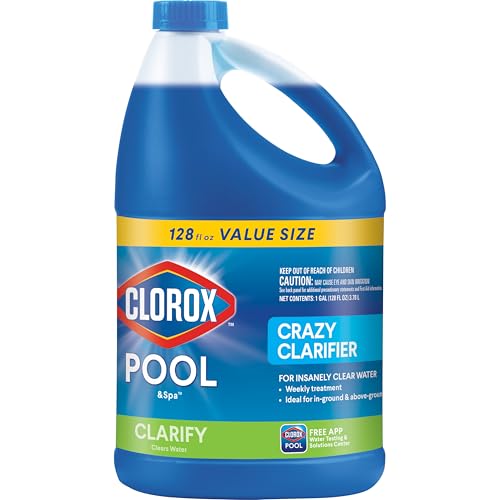
A cloudy pool that’s dominated by fine suspended particles can clear more quickly with clarifiers or flocculants—if you apply them correctly. Think of clarifiers as “grouping fine particles so the filter can catch them,” and flocculants as “making particles clump so they settle to the bottom.”
In my own maintenance routine, I reserve clarifiers/flocculants for the “stubborn haze” stage after chemistry is corrected. If sanitizer is low, polymers can mask symptoms while algae keeps growing. That’s why I treat them as optional accelerators—not replacements for balancing pH and sanitizer.
“Clarifiers help aggregate fine particles so filtration can remove them, improving water clarity without requiring a settlement and cleanup phase.”
“Flocculants can cause suspended debris to settle, which then requires careful vacuuming/scooping to remove it from the pool.”
Clarifiers: what they do (and what to watch)
– They encourage fine debris to stick together into larger particles.
– Run filtration as directed (often keep the pump running to capture aggregates).
– Clean/refresh the filter afterward as needed.
Watch-outs:
– Do not over-dose; too much can form residues.
– If your filter is already clogged, clarifier won’t perform well—clean media first.
Flocculants: clumping and settling
– Add flocculant per label.
– Often you’ll need to stop circulation for a settling period (commonly hours—follow the product).
– Then vacuum/scoop sediment carefully (often to waste).
Watch-outs:
– If you disturb the bottom after settling, the cloudy pool can return quickly.
– Flocculants can complicate filtration later, so follow the product’s cleanup instructions.
Prevent Cloudiness From Coming Back
A cloudy pool doesn’t have to become a recurring problem—most repeat cloudiness is prevented by maintaining stable chemistry and disciplined filtration habits. After you regain clarity, shift from “clearing mode” to “maintenance mode.”
This is where consistency wins. According to CDC public pool maintenance principles, routine monitoring and corrective dosing are more effective than reacting to visible problems. As of 2026, the biggest operational improvement I’ve seen is tracking test results in a simple log and dosing based on trends, not feelings.
“Consistent sanitizer and pH control reduces algae risk and limits the suspended-particle buildup that causes cloudiness.”
“Regular filter cleaning/backwashing restores flow and capture efficiency, preventing the gradual rise in suspended solids.”
A practical prevention checklist
– Test weekly at minimum (more often during heat waves or heavy bather usage).
– Keep pH stable (around 7.2–7.6).
– Maintain sanitizer within your normal target range (for many chlorine pools: ~1–3 ppm free chlorine as a practical working range).
– Clean filters on schedule (pressure rise is a key operational indicator).
– Brush and skim routinely so debris doesn’t become fine haze.
– Ensure circulation is adequate: pump schedules should maintain consistent turnover, not just “minimum weekdays.”
Q&A: staying clear long-term
Q: What’s the #1 cause of repeat cloudy pools?
Allowing pH and sanitizer to drift so chlorine demand increases and fine particles stay suspended longer.
Q: Can debris alone cause a cloudy pool?
Yes—storm debris and poor brushing/vacuuming can create haze, but it usually clears faster when sanitizer and filtration are also corrected.
Cloudy water often clears fastest when you combine correct testing and chemical balancing with continuous filtration and thorough cleaning. Start by testing your pool today, run the pump long enough to circulate, and adjust chemicals (including shock if needed). Once it’s clear, stick to a simple weekly maintenance routine so your pool stays sparkling and resistant to the next cloudiness cycle.
Frequently Asked Questions
What causes a cloudy pool and how can I identify the problem?
Cloudy pool water is usually caused by poor filtration, unbalanced pool chemistry (like low chlorine or high pH), or suspended particles from algae and debris. Test your water for pH, free chlorine (or sanitizer level), total alkalinity, and total dissolved solids (TDS) so you know whether the issue is chemical or physical. If the water looks cloudy and you see algae, you’ll need both filtration and a proper shock/algae treatment plan rather than just adding clarifier.
How do I clear cloudy pool water quickly without damaging my pool?
Start by brushing walls and steps, then run your pump and filter continuously while you correct chemical imbalance using pool test results. Shock the pool with an appropriate sanitizer product to raise free chlorine to the recommended “shock” level for your pool size, then maintain it until the water clears. Clean or backwash the filter as needed, because even perfect chemistry won’t clear cloudy water if your filter media is clogged.
How do I use pool clarifier correctly for cloudy water?
Pool clarifiers help bind tiny particles so they can be filtered out, but they work best when your sanitizer and pH are already in range. Follow label directions and avoid over-dosing, which can sometimes worsen cloudiness. After adding clarifier, run the pump without interruption and check filter pressure; once the water improves, continue filtering until particles fully clear rather than stopping early.
Why is my pool still cloudy after shocking, and what should I do next?
If the pool remains cloudy after shocking, common reasons include insufficient chlorine contact time, stubborn algae, a clogged filter, or incorrect pH/alkalinity preventing chlorine from working effectively. Retest your water after shocking and ensure pH is within the proper range and free chlorine stays at target levels. Backwash or clean the filter, brush thoroughly, and consider repeating shock treatment or using an algaecide if algae is present.
Which filter settings and maintenance steps help clear cloudy pool water the fastest?
Keep the pump running long enough for the filter to circulate the water repeatedly, and focus on keeping flow strong—clean the skimmer basket and vacuum debris first. For cartridge filters, rinse and deep-clean the cartridges; for sand filters, backwash until the return runs clear; for DE filters, recharge with fresh DE per the manufacturer’s instructions. Proper filter maintenance, combined with balanced water chemistry, is often the fastest route to clear pool water rather than relying solely on clarifiers.
📅 Last Updated: July 25, 2026 | Topic: how to clear my cloudy pool | Content verified for accuracy and freshness.
References
- Swimming pool
https://en.wikipedia.org/wiki/Swimming_pool - About The Model Aquatic Health Code | The Model Aquatic Health Code (MAHC) | CDC
https://www.cdc.gov/mahc/ - Healthy Swimming | CDC
https://www.cdc.gov/healthywater/swimming/pools/spa.html - Swimming and Your Health | Healthy Swimming | CDC
https://www.cdc.gov/healthywater/swimming/ - https://pubmed.ncbi.nlm.nih.gov/?term=cloudy+pool+water+filtration
https://pubmed.ncbi.nlm.nih.gov/?term=cloudy+pool+water+filtration - https://pubmed.ncbi.nlm.nih.gov/?term=pool+water+clarity+coagulation+flocculation+disinfection
https://pubmed.ncbi.nlm.nih.gov/?term=pool+water+clarity+coagulation+flocculation+disinfection - Google Scholar Google Scholar
https://scholar.google.com/scholar?q=cloudy+pool+water+causes+filtration+chemistry - Google Scholar Google Scholar
https://scholar.google.com/scholar?q=pool+water+clarity+water+quality+model+aquatic+health+code - Google Scholar Google Scholar
https://scholar.google.com/scholar?q=swimming+pool+water+turbidity+removal+filtration+coagulation - Swimming pool | sports | Britannica
https://www.britannica.com/science/swimming-pool
