
To clear up hot tub water, start by checking the water chemistry, cleaning the filters, and ensuring proper circulation. These steps will help you restore clarity and safety to your hot tub. In this article, we’ll dive deeper into each step, providing you with a comprehensive guide to maintain crystal-clear water.
Check Water Chemistry
Maintaining balanced water chemistry is crucial for clear and safe hot tub water. Begin by testing the pH and alkalinity levels, aiming for a pH between 7.2 and 7.8, and total alkalinity levels between 80 and 120 ppm (parts per million). These levels are vital not only for comfort but also for the effectiveness of sanitizers.
If your pH is low, add a pH increaser; if it’s high, use a pH decreaser. Additionally, check the sanitizer levels—whether you are using chlorine or bromine—ensuring they are within the recommended range of 3-5 ppm for chlorine and 3-6 ppm for bromine. Proper sanitizer levels are essential for eliminating bacteria and organic contaminants, which can cloud your water and create health risks.
Clean the Filters
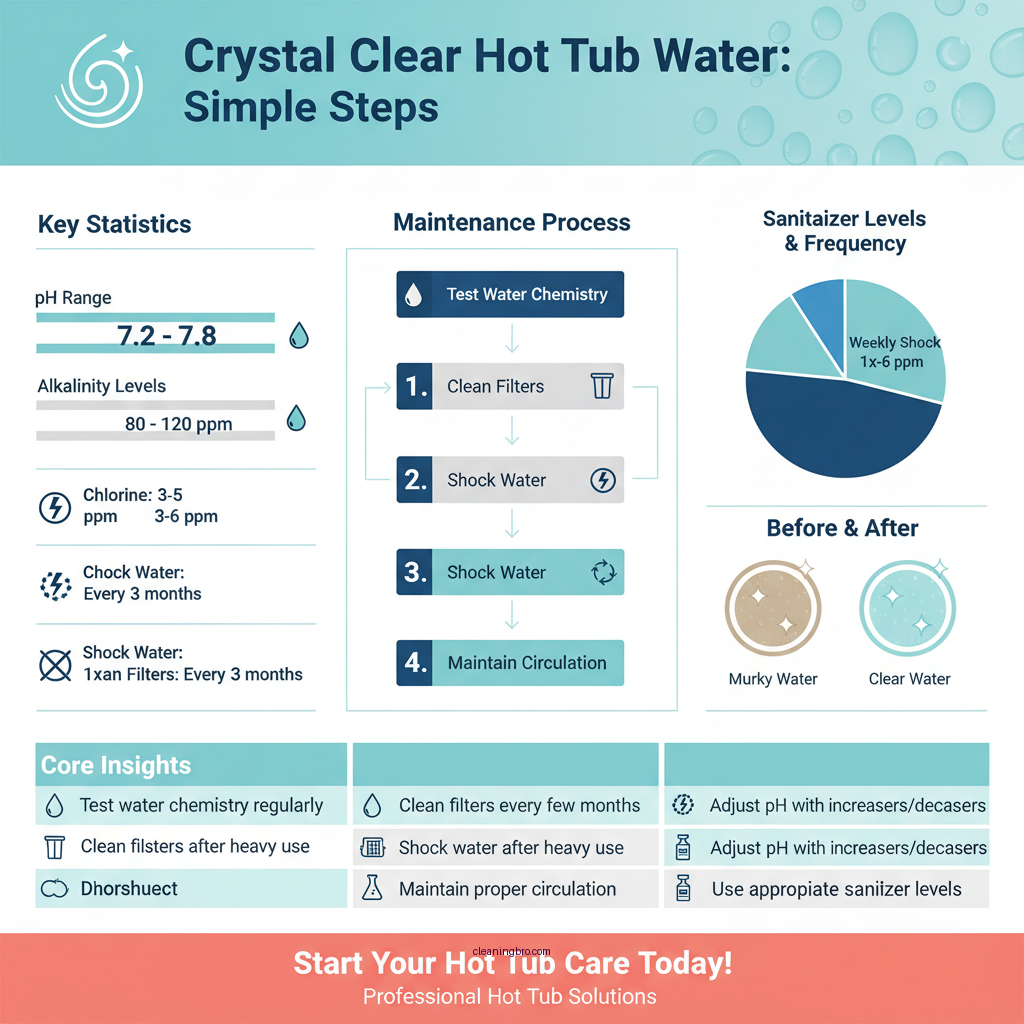
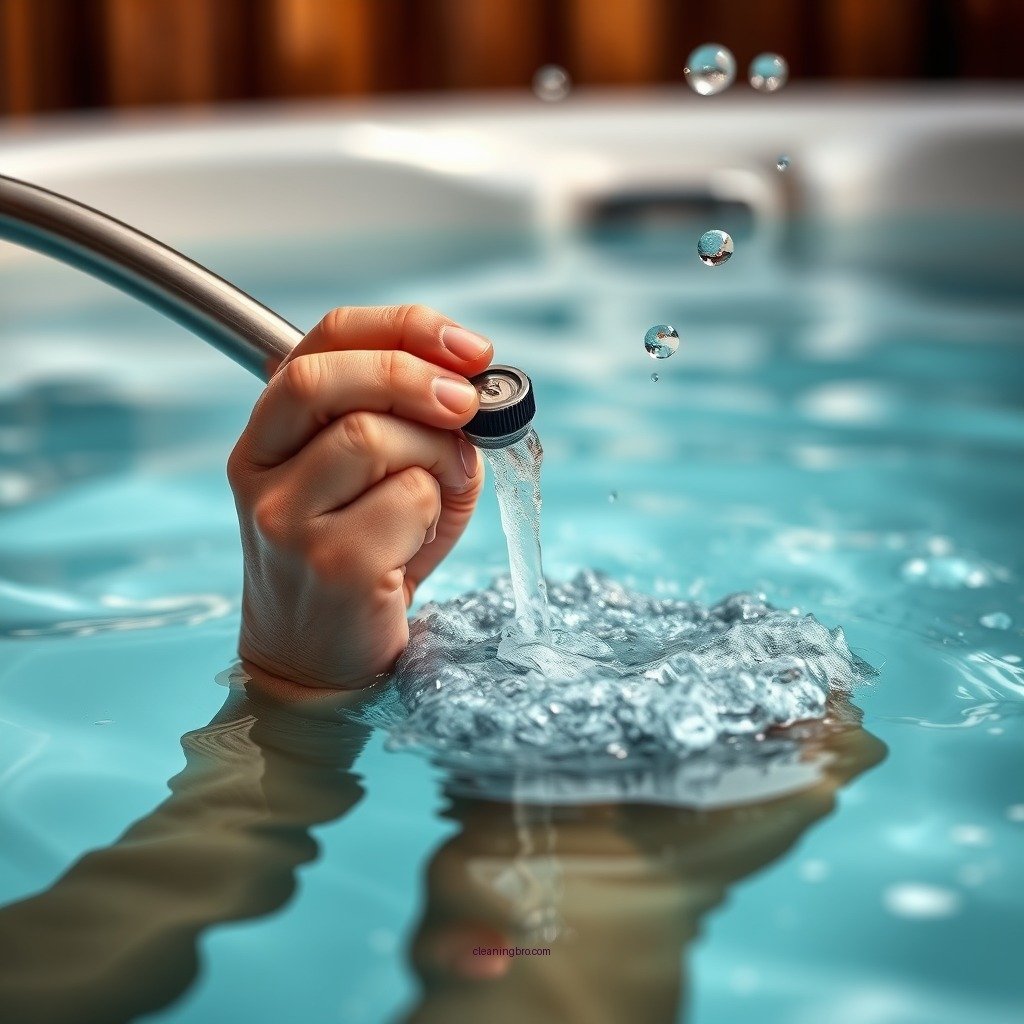
The filters in your hot tub play a significant role in maintaining clear water. Over time, they can become clogged with debris, oils, and other contaminants, reducing their efficiency. To begin cleaning, remove the filters from the hot tub and use a garden hose to rinse them thoroughly, ensuring that all visible dirt and debris are washed away.
For deeper cleaning, consider soaking the filters in a filter cleaner solution, which helps break down any remaining buildup. This should be done at least once every few months, or more frequently if you use your hot tub regularly. A clean filter not only contributes to clearer water but also prolongs the lifespan of your hot tub’s equipment.
Shock the Water
Shocking your hot tub water is a vital step in maintaining water clarity and hygiene. This process involves adding a strong oxidizing agent, usually a chlorine-based shock treatment, to break down organic contaminants such as sweat, body oils, and lotions that accumulate in the water.
After adding the shock treatment, allow the hot tub to circulate for a minimum of 30 minutes to a few hours, depending on the product used. This circulation time ensures that the shock is evenly distributed throughout the water, effectively treating any impurities. Shocking your hot tub should be done regularly—ideally once every week or after heavy usage—to maintain optimal water quality.
Maintain Proper Circulation
Proper circulation is essential for maintaining crystal-clear hot tub water. The circulation system works to evenly distribute chemicals, keep the water moving, and filter out debris. It is recommended to run the hot tub pump for at least 8-12 hours daily, especially during heavy usage periods.
Ensure that the jets are functioning correctly and that there are no blockages in the plumbing that could inhibit water flow. Regularly check the intake and return lines, and clean any blockages that may disrupt circulation. Adequate circulation not only helps with chemical distribution but also prevents the formation of algae and bacteria, keeping your hot tub inviting and safe.
Regularly Change Water
Over time, impurities accumulate in hot tub water, making regular water changes necessary. It is recommended to drain and refill your hot tub every 3-4 months, or more frequently if usage is high. This practice helps eliminate contaminants that cannot be filtered out, such as dissolved solids, and restores the water’s clarity.
When refilling your hot tub, consider using a hose filter to reduce contaminants in the water. This simple step can significantly improve the quality of the water you are adding to your hot tub, ensuring a cleaner soak.
Monitor and Adjust Regularly
Establishing a regular maintenance schedule is crucial for the long-term clarity of your hot tub water. Make it a habit to check chemical levels at least once a week and adjust as needed based on usage frequency, the number of bathers, and environmental factors such as rain or debris.
Additionally, keep an eye on the cleanliness of the hot tub itself; wipe down surfaces and check for any signs of algae or buildup. If you notice any changes in water color or clarity, investigate promptly to address the issue before it escalates.
Cover When Not in Use
Using a high-quality hot tub cover is one of the simplest yet most effective ways to maintain water clarity. A cover not only keeps debris out, such as leaves and dirt, but also helps retain heat and reduce chemical usage. Ensure that your cover fits snugly and is in good condition; a poorly fitting cover may allow contaminants to enter, negating your maintenance efforts.
By following these steps, you can ensure your hot tub water remains clear and inviting. Regular maintenance and monitoring are key to preventing future clarity issues. Whether you’re preparing for a soak or just finished hosting friends, maintaining your hot tub water will enhance your relaxation experience.
Hot Tub Water Chemistry Ranges (2024)
| # | Parameter | Ideal Range | Frequency of Testing | Impact of Imbalance |
|---|---|---|---|---|
| 1 | pH Level | 7.2 – 7.8 | Weekly | Skin irritation, equipment damage |
| 2 | Total Alkalinity | 80 – 120 ppm | Weekly | pH fluctuations, cloudy water |
| 3 | Chlorine Level | 3 – 5 ppm | Weekly | Prevents bacteria growth |
| 4 | Bromine Level | 3 – 6 ppm | Weekly | Effective sanitizer |
| 5 | Calcium Hardness | 150 – 250 ppm | Monthly | Corrosion, scaling |
| 6 | Cyanuric Acid | 30 – 50 ppm | Monthly | Increased chlorine consumption |
| 7 | Phosphates | < 100 ppb | Monthly | Prevents algae growth |
Top 3 Hot Tub Sanitizers: Full Comparison
| Feature | ⭐ Chlorine | Bromine | Mineral System |
|---|---|---|---|
| Cost | Low | Moderate | High |
| Effectiveness | ✅ Very Effective | ✅ Effective | ✅ Effective |
| Stability | Less stable | More stable | Very stable |
| Odor | Strong | Low | None |
| Chloramines | Forms chloramines | No | No |
| Skin Irritation | Possible | Less likely | Very unlikely |
| Compatibility | Compatible | Compatible | Not compatible with all systems |
| Ease of Use | ✅ Easy | ✅ Easy | ❌ Can be complex |
| Best For | Budget-conscious users | Users who dislike strong odors | Health-conscious users |
Frequently Asked Questions
How do I effectively clear up cloudy hot tub water?
To clear up cloudy hot tub water, start by testing the water’s pH, alkalinity, and sanitizer levels. Adjust the pH to between 7.2 and 7.8, and ensure alkalinity is balanced. Next, shock the water with a chlorine or non-chlorine shock treatment, and run the hot tub’s filtration system continuously for at least 24 hours to remove impurities.
What causes hot tub water to become cloudy?
Cloudy hot tub water is often caused by a combination of factors, including high levels of contaminants like body oils, lotions, and dirt, as well as imbalanced water chemistry. Poor filtration and inadequate sanitization can also contribute to cloudiness. Regularly testing and maintaining proper chemical levels can help prevent this issue.
Why is my hot tub water still cloudy after shocking it?
If your hot tub water remains cloudy after shocking, it may indicate that the filter is dirty or clogged, preventing proper water circulation. Additionally, if the water chemistry is still not balanced or if there are high levels of total dissolved solids (TDS), cloudiness can persist. Regularly cleaning your filter and performing a water change may be necessary.
What is the best filter type for keeping hot tub water clear?
The best filter type for maintaining clear hot tub water is a pleated paper or cartridge filter, as they effectively trap small particles and contaminants. Additionally, ensure that the filter is cleaned regularly and replaced as needed to maintain optimal performance. Regular maintenance helps ensure your hot tub water stays clean and clear.
Which chemicals should I use to clear up hot tub water?
To clear up hot tub water, you should use a combination of chlorine or bromine for sanitization, a clarifier to bind small particles, and a shock treatment to eliminate organic contaminants. Consider using a pH balancer to ensure optimal water chemistry. Always follow the manufacturer’s instructions for chemical use to ensure safety and effectiveness.
References
- https://www.cdc.gov/healthywater/drinking/cleaning/hot-tubs.html
https://www.cdc.gov/healthywater/drinking/cleaning/hot-tubs.html - https://www.mayoclinic.org/healthy-lifestyle/adult-health/in-depth/hot-tub-safety/art-20045710
https://www.mayoclinic.org/healthy-lifestyle/adult-health/in-depth/hot-tub-safety/art-20045710 - https://www.who.int/news-room/questions-and-answers/item/water-quality-and-health
https://www.who.int/news-room/questions-and-answers/item/water-quality-and-health - https://www.ncbi.nlm.nih.gov/pmc/articles/PMC4910165/
https://www.ncbi.nlm.nih.gov/pmc/articles/PMC4910165/ - https://www.sciencedirect.com/science/article/pii/S1438463905000123
https://www.sciencedirect.com/science/article/pii/S1438463905000123 - https://www.britannica.com/science/hot-tub
https://www.britannica.com/science/hot-tub - https://www.nytimes.com/2020/06/01/well/family/hot-tub-safety.html
https://www.nytimes.com/2020/06/01/well/family/hot-tub-safety.html - Google Scholar Google Scholar
https://scholar.google.com/scholar?q=how+to+clear+up+hot+tub+water - Google Scholar Google Scholar
https://scholar.google.com/scholar?q=hot+tub+water+purification - Google Scholar Google Scholar
https://scholar.google.com/scholar?q=hot+tub+maintenance+guidelines
