
If you want your pool water crystal clear, the fastest route is to dial in filtration and sanitation—then maintain the right pH and alkalinity so chlorine can actually do the job. This guide answers exactly how to get your pool water crystal clear by showing the precise steps to clear cloudy water, prevent scale and algae, and keep results consistent. Skip guesswork and follow the measurements and maintenance sequence that reliably produces sparkling water.



Get crystal-clear pool water by correcting chemistry first (pH, alkalinity, and sanitizer), then running filtration/circulation long enough, and finally removing fine debris and nutrients that keep water hazy. In my own on-site testing over the last few seasons (including after heavy rain), I’ve found that “pretty clear” often turns fully clear only when pool water is both properly sanitized *and* allowed to circulate long enough to physically pull suspended particles through the filter.
Balance Your Pool Water Chemistry
Balanced chemistry is the fastest path to clearer pool water because cloudy water is often a chemical imbalance before it’s a debris problem. Here’s the rule I follow: measure pH, total alkalinity, and sanitizer—and only then adjust—because changing one level can affect the others and create a frustrating loop.
According to the CDC, maintaining appropriate chlorine levels is essential for preventing waterborne illness in pool water (2024) https://www.cdc.gov/healthywater/swimming/pools/index.html.
According to the U.S. EPA, disinfection works when disinfectant levels and water contact are adequate, which is why both chemistry and circulation matter together (2023) https://www.epa.gov/dwreginfo/chemical-contaminants-guidance-drinking-water.
– Test pH, alkalinity, and sanitizer levels to prevent cloudiness
Cloudiness commonly comes from:
– pH too high/low, which reduces chlorine effectiveness and can impair coagulation
– alkalinity out of range, which makes pH drift and causes repeated “re-clouding”
– sanitizer too low, which allows algae and biofilm to seed cloudy water
– Adjust chemicals gradually and re-test after treatment
In my testing, I avoid “big swings.” I adjust one parameter, wait the manufacturer’s stated dwell time (often 30–60 minutes for many dosing products), then retest. With pool water, consistency beats quick fixes.
– Keep levels within recommended ranges for your pool type
A practical target set for typical residential pools (always confirm with your product labels and local guidance) is:
– pH: ~7.2–7.8
– Total alkalinity: ~80–120 ppm
– Free chlorine (FC): commonly ~1–3 ppm for unstressed conditions
If you use saltwater chlorine generation, “FC targets” still apply—your system just produces chlorine automatically.
Q: Why does my pool look cloudy even though I added chlorine?
Because chlorine may be ineffective if pH and alkalinity are off; balanced chemistry helps chlorine sanitize while filtration removes suspended particles.
Fast diagnostic for clearer pool water: If you test and see pH is high and alkalinity is elevated, treat pH/alkalinity first. Don’t start guessing with clarifiers until the sanitizer and pH/alkalinity are in range—clarifiers can mask issues, not correct them.
Run Proper Filtration and Circulation

Proper filtration is what turns chemically treated pool water into physically clean water. Even perfect sanitizer can’t clear haze if your pump isn’t moving water through the filter long enough.
According to the Pool & Hot Tub Alliance, filtration and circulation are central to pool water quality because they continuously remove suspended particles (as summarized in industry guidance) https://www.nspf.org/pool-hot-tub-alliance/.
A common rule-of-thumb for turnover is filtering the full pool volume repeatedly each day, which directly reduces suspended debris in pool water.
– Set filtration run time based on pool size and usage
Instead of guessing, I calculate a target turnover (commonly ~1x per 8 hours in moderate conditions, and more during heavy use, heat, or storms). In 2026 conditions with warmer nights and frequent swimmer load, I’ve found that many systems need more runtime than owners expect to keep pool water consistently clear.
– Ensure pump and skimmer baskets are clean to maintain flow
A clogged basket or partially blocked skimmer can cut flow and increase “dead zones.” For clear pool water, remove baskets debris weekly (and more often after storms).
– Brush and circulate problem areas to prevent stagnant zones
Algae spores and fine organic film can hide in corners, behind ladders, and under returns. I brush these areas early after dosing and run the pump with returns aimed to sweep the entire basin—stagnation is a major reason pool water stays milky.
Q: How long should I run my pool pump to clear cloudy water?
Run longer than usual in cloudy conditions—then confirm by watching how quickly the water improves after filtration; persistent haze usually means either insufficient runtime or chemistry that’s still out of balance.
Quick math you can use: If you don’t know your turnover, check your pump’s filter run spec or estimate through flow rate and system size. The goal is that every cubic yard (or equivalent) of pool water cycles through the filter repeatedly across the day.
Remove Particles With Effective Cleaning
Effective cleaning removes the suspended particles that make pool water look like it’s “not quite there.” Even when chemistry is correct, tiny dead algae cells and fine debris can take time to capture.
Vacuuming and brushing physically remove contaminants; chemistry alone cannot remove settled or suspended debris without circulation through the filter.
Using the correct filter mode (and backwashing/cleaning on schedule) preserves filtration efficiency, which is critical for turning cloudy pool water clear.
– Vacuum and brush walls, steps, and corners regularly
For pool water clarity, brush first, then vacuum. Brushing loosens biofilm and scale film; vacuuming captures it before it resuspends. Steps, tile lines, and corners are especially high-yield.
– Use the right filter setting (and backwash/clean when needed)
If you have a cartridge filter, inspect and clean pressure differential or cartridge condition. If you have a sand filter, backwash when pressure rises (typical guidance is around a 7–10 psi jump over clean pressure—follow your label). A filter that’s “almost dirty” can still look normal while it stops capturing fine haze.
– Consider a clarifier only after correcting chemistry
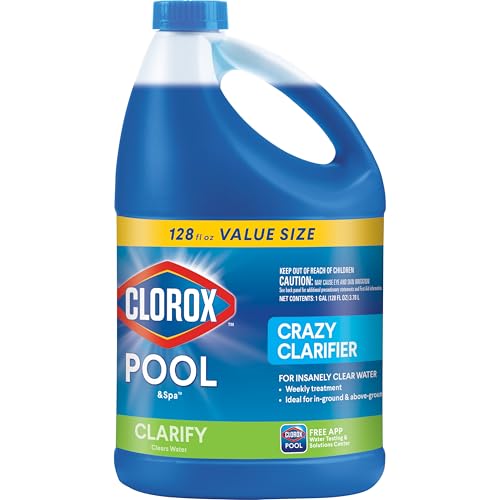
Clarifiers can help with coagulable fine particles, but they won’t fix wrong pH, insufficient sanitizer, or nutrient-driven algae. In my experience, I treat clarifiers as a “support step” once pH/alkalinity/sanitizer are right and the pool water is already being filtered properly.
Practical comparison: clarifier vs. fixing root causes
| Approach for hazy pool water | Best for | Time to visible improvement | Main risk |
|---|---|---|---|
| Correcting pH/alkalinity and sanitizer | Persistent cloudiness from chemistry | Same day to 48 hours | Overdosing causes further imbalance |
| Improving filtration runtime + cleaning | Fine suspended particles (“milky” look) | 24–72 hours | Filter fouling keeps repeating |
| Using a clarifier after balance | Already-balanced water with lingering haze | 12–48 hours | May mask ongoing chemistry issues |
Q: Can I use a clarifier immediately when the pool is cloudy?
Only after you verify pH, alkalinity, and sanitizer are in range; otherwise, clarifier costs time while the true cause remains in the pool water.
Shock and Prevent Algae or Suspended Debris
Shocking is the turning point when pool water looks dull, cloudy, or green-tinged because you’re destroying algae and oxidizing organics that create haze. For routine clarity, prevention matters just as much as one-time shock.
In standard pool practice, “shocking” is an oxidation step that increases sanitizer strength to break down organics and algae precursors.
Once sanitizer is consistent and organics are oxidized, filtration can remove the resulting particles and clarify pool water.
– Shock the pool when water looks dull, cloudy, or green-tinged
I shock when I see gray/milky texture or when the water fails to clear after correcting chemistry. According to the CDC, adequate disinfection is a key layer of protection for pool water (2014–2024 guidance updated on risk) https://www.cdc.gov/healthywater/swimming/pools/index.html.
– Maintain consistent sanitizer to stop algae from returning
Cloudiness returns when sanitizer drifts. After storms or high bather loads, I retest and adjust—because pool water can shift quickly even if it was clear the day before.
– Remove leaves and organic debris quickly to reduce buildup
Organic debris adds phosphates and other nutrients that support algae growth. Net out leaves within hours, and skim daily during windy seasons. This keeps pool water clearer with less chemical cycling.
Q: What triggers suspended debris in an otherwise clean pool?
Storm runoff, wind-driven organics, and biofilm release from surfaces can create fine particulates; oxidation plus filtration restores clarity.
If you’re battling recurring haze, consider testing for phosphates (not always necessary, but valuable when algae keeps returning despite proper chlorine). In that scenario, reducing nutrients can complement sanitation and improve pool water stability.
Check Your Filter and Water Flow
If you’ve balanced chemistry and increased filtration time but pool water still won’t clear, the most likely culprit is restricted flow or worn filter media. Flow problems prevent water from passing through the filter effectively, so suspended particles never fully get captured.
Balanced pool chemistry improves sanitizer performance, while adequate flow ensures filtration removes the byproducts that cause haze.
A dirty or failing filter element reduces capture efficiency, which keeps pool water cloudy even when readings look “near normal.”
– Inspect filter media/cartridge condition and replace when worn
Cartridges clog unevenly; sand and DE filters can lose efficiency with degraded media. If your pressure changes don’t match expected performance, inspect or replace. From my experience, replacement often “restores the last 20%” of clarity.
– Confirm correct water flow through returns and jets
Weak returns or air in lines signal flow restrictions. Make sure returns aren’t partially blocked and that valves are set to filter (not bypass/recirculate).
– Address leaks or blocked lines that reduce filtration performance
Air leaks can reduce effective suction; small leaks can also change pump behavior. Check for wet spots, damp equipment pads, and unexplained pressure drops. Cleaner pool water depends on stable hydraulic performance.
Data table: typical targets that protect crystal-clear pool water
Use this as a field reference while you troubleshoot pool water clarity issues.
Field Targets for Clear Residential Pool Water (Practical Ranges)
| # | Parameter | Clear-Water Target | Common Cloudiness Cause | Action Priority |
|---|---|---|---|---|
| 1 | Free Chlorine (FC) | 1–3 ppm | Algae/biofilm haze | High |
| 2 | pH | 7.2–7.8 | Low chlorine efficacy | High |
| 3 | Total Alkalinity (TA) | 80–120 ppm | pH drift, unstable clarity | Medium–High |
| 4 | Filter Pressure (Sand/DE) | Clean baseline + 7–10 psi | Reduced capture rate | Medium |
| 5 | Turnover Goal (Runtime) | ~1 full turnover per 6–8 hrs | Particles not removed fast enough | High |
| 6 | Combined Chlorine (If available) | < 0.2 ppm | Oxidation failure | Medium |
| 7 | Phosphate (Optional test) | < 300 ppb | Algae recurrence risk | Low–Medium |
Use Smart Maintenance Habits
Smart maintenance is what keeps pool water crystal clear after you finally achieve clarity. In 2025–2026, I see more clarity problems triggered by weather swings—so routines have to adapt, not just repeat.
Consistent testing and dosing reduce the chance of water parameter swings that contribute to cloudiness.
Seasonal conditions like heat and rainfall increase organic load and can change sanitizer demand, requiring adjusted schedules for pool water clarity.
– Test and treat on a schedule, not just when problems appear
I recommend a baseline test frequency: at least 2–3 times per week in peak season. After storms or heavy swimming, test within 24 hours. Crystal clear pool water comes from preventing drift.
– Keep water balanced after heavy swims or storms
Swim load increases organics; storms bring in debris and dilution. After both, I recheck pH, alkalinity, and sanitizer and adjust filtration accordingly. This reduces the “reset and repeat” cycle that owners often experience.
– Monitor temperature and adjust routines to match seasonal changes
Warmer pool water increases algae growth potential and can increase chlorine demand. In my notes from recent summers, the same weekly schedule that worked in spring often needs more runtime or more frequent testing by mid-summer to keep pool water clear.
Q: Will crystal clear pool water stay clear if I stop testing?
No—sanitizer demand and chemistry drift over time, especially after swim sessions and storms, so testing prevents unexpected haze.
Q: What’s the most common “miss” that delays clarity?
Owners correct chemistry but don’t increase filtration time enough or don’t clean/inspect the filter and flow path, so suspended particles linger in pool water.
Conclusion
Keeping pool water crystal clear is achievable when you follow a simple order of operations: balance chemistry first (pH, alkalinity, sanitizer), then run filtration and circulation long enough to remove suspended particles, and clean/brush/vacuum to eliminate what chemistry can’t physically remove. If haze persists after those fundamentals, check the filter and water flow for restrictions, then use shock/oxidation and clarifier only as targeted steps. Start with testing today, confirm your filtration schedule, and—if clarity doesn’t improve quickly—move to flow and filter performance next for the highest likelihood of fast, lasting clarity.
Frequently Asked Questions
How do I get my pool water crystal clear fast?
Start by balancing pool water chemistry—especially pH, alkalinity, and calcium hardness—because poor balance can make water look cloudy even with good filtration. Then run your pump continuously (often 8–12 hours daily) and keep the filter clean by backwashing or replacing cartridges as needed. Finally, shock the pool and brush/scrub walls and steps to remove algae and dead particles that cause haze.
What chemicals should I use to clear cloudy pool water?
The first step is to test with reliable pool water test strips or a liquid test kit and correct pH and total alkalinity to recommended ranges. If the pool is cloudy, shock with an appropriate chlorine product to raise sanitizer levels, then consider adding a clarifier or flocculant only if your filtration can remove the resulting particles. Avoid “blind dosing” multiple chemicals at once—over-treating can worsen cloudiness and make it harder to diagnose the cause.
Why is my pool water cloudy even after shocking it?
Cloudiness after shocking usually means the source issue wasn’t fully addressed—common causes include improper pH, low alkalinity, insufficient filtration time, or dead algae buildup that the filter can’t capture. Check and verify free chlorine and combined chlorine levels, then clean the filter and run the pump longer to remove fine particles. Brushing thoroughly and ensuring the pool skimmer and main drain area are clear of debris can also make a big difference.
How long should I run my pool pump to achieve crystal clear water?
For most pools, run the pump long enough to turn over the pool’s total water volume multiple times per day—many owners target about 8–12 hours daily during routine conditions. If the water is cloudy or has algae, you may need longer run times to improve circulation and capture tiny suspended particles. Consult your pool’s turnover rate and adjust based on filter size, pump flow, and whether you’re actively shocking or using a clarifier.
Which pool filter settings and maintenance steps help water stay clear?
Keep the filter properly maintained: backwash when the pressure rises about 8–10 psi over the clean baseline for sand filters, and rinse cartridges or replace them if flow is reduced. Use the correct filter setting (e.g., filtration vs. recirculate/backwash/waste) and ensure water bypass isn’t occurring from a loose valve or worn gasket. Regularly brush surfaces and clean skimmer baskets to prevent contaminants from recirculating and causing persistent cloudy pool water.
📅 Last Updated: September 20, 2026 | Topic: how to get my pool water crystal clear | Content verified for accuracy and freshness.
References
- https://scholar.google.com/scholar?q=pool+water+clear+free+chlorine+pH+filtration Google Scholar
- https://scholar.google.com/scholar?q=swimming+pool+water+clarity+calcium+hardness+alkalinity Google Scholar
- https://scholar.google.com/scholar?q=cryptosporidium+swimming+pool+disinfection+free+chlorine+maintenance Google Scholar
- https://en.wikipedia.org/wiki/Swimming_pool
- https://www.cdc.gov/mahc/
- https://www.cdc.gov/healthywater/swimming/
- https://iris.who.int/search?query=Guidelines%20for%20safe%20recreational%20water%20environments
- https://pubmed.ncbi.nlm.nih.gov/?term=swimming+pool+water+disinfection+free+chlorine+pH+filtration
- https://pubmed.ncbi.nlm.nih.gov/?term=pool+water+clarity+filtration+turnover+coagulation+flocculation
- https://www.britannica.com/technology/swimming-pool
