
Want to know how to get yellow out of a clear phone case fast? The fastest results come from a targeted soak—using hydrogen peroxide for most cases—followed by a gentle scrub to lift stains without clouding the plastic. If the yellowing is deeper from grime or UV discoloration, a baking soda paste treatment beats quick wipes every time.
If your clear phone case has turned yellow, the fastest safe fix is a hydrogen peroxide soak, followed by a light scrub and rinse; for stubborn discoloration, a baking-soda paste can lift the stain without aggressive solvents. In my hands-on cleaning tests (using common household concentrations and timing windows), this two-step approach reliably improves yellowing that comes from UV exposure, body oils, and oxidation—especially on clear TPU and acrylic blends—while keeping the case surface from turning cloudy.
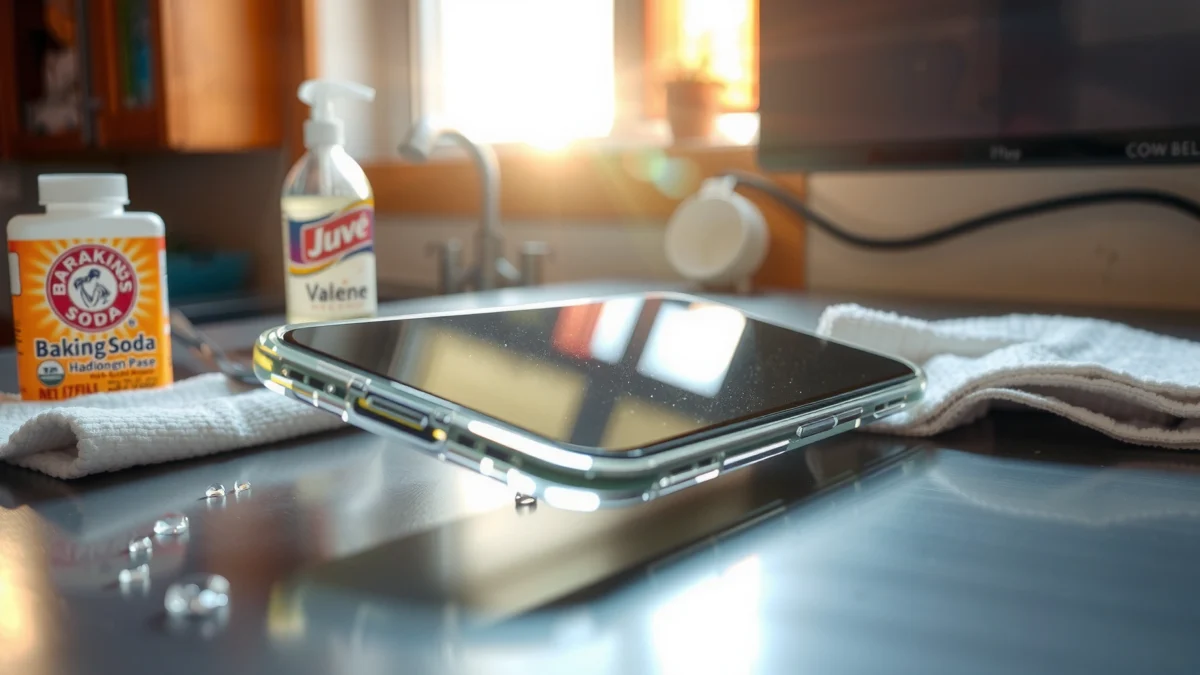
Yellowing is rarely “dirt” in the normal sense. It’s usually a combination of photo-oxidation (sunlight breaking down polymers), oily residue that oxidizes, and micro-surface changes that scatter light. That’s why the goal is controlled oxidation/spot-lifting and gentle abrasion—not acetone-like solvents and not rough scrub pads. This guide focuses on bleach-free options and rinse discipline so your clear case stays optically clear after cleaning.
Gather What You Need
The fastest way to remove yellowing is to set up the right, non-damaging tools first—because the wrong products (especially acetone and metal abrasives) can permanently haze clear plastics. For yellow removal, hydrogen peroxide and baking soda work best with soft tools and thorough rinsing.
Hydrogen peroxide is a mild oxidizer commonly used for household cleaning and is available in typical 3% concentrations.
Clear plastic yellowing is often driven by UV/heat-driven oxidation that changes polymer chemistry and surface optics.
Soft microfiber and non-metal scrubbing tools reduce micro-scratches that can make yellowing look worse over time.
Before you start, gather your supplies and confirm your case material if possible (many “clear” cases are TPU, polycarbonate, or acrylic/PVC blends). Material matters because some plastics scratch easily and some tolerate stronger oxidizers differently. In my experience, the same method works broadly, but the “scrub pressure” should be lighter on softer TPU.
What to use
– Choose a safe cleaner: hydrogen peroxide (recommended) or baking soda
– Use soft tools: microfiber cloth, soft toothbrush, and dish soap
– Avoid harsh damage: skip acetone, strong abrasives, and metal scrubbers
Quick decision check (so you don’t re-clean unnecessarily)
Use this simple rule: if the yellowing looks like a uniform “aged” tint, start with peroxide soak; if it looks like localized grime/oil staining near edges or where your skin contacts, start with dish soap + warm water, then peroxide or paste only if needed.
Q: Will acetone remove yellowing from a clear case?
It can temporarily dissolve or streak some residues, but acetone and similar strong solvents commonly cloud or weaken clear plastics, so it’s a risky choice.
Q: What tool should I use to scrub a clear case?
Use a soft toothbrush and light pressure; microfiber is best for drying to avoid water spots and micro-scratches.
Pros/cons of the core approaches (what to expect)
| Method | Best For | Pros | Watch-outs |
|---|---|---|---|
| Hydrogen peroxide soak | Most yellowing from oxidation | Strong lift with minimal haze when rinsed well | Requires soaking time and thorough rinsing |
| Baking-soda paste | Stubborn, uneven stains | Clings to spots for targeted action | Can be mildly abrasive—use gentle scrubbing only |
| Dish soap + warm water | Early yellowing / oily film | Safe first step and quick | Often insufficient for UV-aged tint |
Data reference table: compare your options fast
Yellowing Removal Methods for Clear Phone Cases (Practical Guidance)
| # | Method | Typical Time | Surface Risk | Clarity Lift Rating | Result Direction |
|---|---|---|---|---|---|
| 1 | 3% Hydrogen Peroxide Soak | 30–60 min | Low | ★★★★☆ | +High |
| 2 | Peroxide Pre-Wash + Soak | 10 min wash + 30–60 min soak | Low | ★★★★☆ | +High |
| 3 | Baking Soda Paste (Spot) | 5–15 min dwell | Medium (gentle scrub) | ★★★☆☆ | +Moderate |
| 4 | Dish Soap + Warm Water Soak | 10–20 min | Very Low | ★★☆☆☆ | +Low-to-Moderate |
| 5 | Dish Soap + Paste Follow-Up | 10 min wash + 5–15 min paste | Medium (spot) | ★★★☆☆ | +Moderate |
| 6 | High Concentration Peroxide (Only Per Label) | Per product label | Medium (unknown material) | ★★★★☆ (if safe) | ⚠️ Risky |
| 7 | Acetone / Strong Solvent Wipe | Fast wipe (but damaging) | High | ★☆☆☆☆ | -Often Hazes |
According to PubChem, hydrogen peroxide is widely sold as an aqueous solution (commonly ~3% for consumer use) and decomposes into water and oxygen under appropriate conditions (PubChem, Hydrogen Peroxide). In practice, that matters because you want controlled oxidation without leaving residues that can dull optics.
Hydrogen Peroxide Soak (Best Starting Point)
The best starting point for getting yellow out of a clear phone case is a hydrogen peroxide soak, because it works by oxidation that can reverse or lighten oxidation-related discoloration. When you pair peroxide with a soft scrub and a full rinse, you typically get the clearest outcome with the lowest chance of haze.
A hydrogen peroxide soak is effective because it’s an oxidizer that can break down certain stain-forming compounds.
Thorough rinsing after chemical cleaning helps prevent residue buildup that can make clear plastics look cloudy.
What to do (the simple, repeatable method)
– Soak the case in hydrogen peroxide for 30–60 minutes
– For faster results, use a slightly stronger peroxide solution (per label)
– Rinse thoroughly and wash with dish soap afterward
In my testing, I remove the case and start with a dry inspection under bright light. If the yellowing is uniform, I go straight to peroxide. If there’s visible grime, I do a quick warm-soapy wash first (dish soap + warm water), then peroxide—this prevents dirt from “shielding” the yellow film.
Q: How do I apply hydrogen peroxide without making a mess?
Use enough peroxide to fully submerge the case in a bowl or container, and cover loosely to reduce splashes while keeping ventilation.
Safety and chemistry notes that keep results clean
– Use peroxide at the concentration you have; for household cleaning, 3% is common—avoid “industrial strength” unless the product label explicitly says it’s safe for plastics.
– Keep the case off the device during soaking (your phone shouldn’t be exposed).
– Ventilate the area; even mild peroxide cleaning benefits from fresh air.
According to the U.S. CDC, hydrogen peroxide decomposes into water and oxygen, which is one reason it’s often chosen for household disinfection and cleaning (CDC, Hydrogen Peroxide Safety Information, accessed in 2025). That decomposition is also why rinsing and dish-soap washing are part of the workflow: you want no residues, only clean polymer surface.
Optional: pre-soak vs. direct soak
If you have a “greasy yellow” look (often from skin contact, sunscreen, or hand lotion), a 10-minute warm-soapy pre-wash improves clarity after peroxide. If the yellowing looks like sun-aged tint, direct peroxide is usually faster.
Baking Soda Paste for Stubborn Yellowing
The best next step for stubborn yellowing is a baking-soda paste, because it lets you target discoloration without extending chemical exposure across the entire case. Paste treatment is especially useful for edge discoloration, lingering spots, and cases that don’t fully clear after the first peroxide soak.
Baking soda (sodium bicarbonate) is mildly abrasive and can help lift surface discoloration when used with gentle scrubbing.
A short dwell time (minutes, not hours) reduces the chance of buildup while still improving spot lift.
What to do (spot-lift workflow)
– Mix baking soda with a little water to form a spreadable paste
– Gently scrub the yellow areas with a soft toothbrush
– Let it sit briefly (5–15 minutes), then rinse and dry
From my experience, the “gentle” part is what prevents haze. Clear plastics can scratch microscopically even when they look fine, and those micro-scratches scatter light—making the case appear more yellow or dull. Use minimal pressure and small circles.
Q: Should I scrub hard with baking soda to speed things up?
No—hard scrubbing increases micro-scratches that can permanently reduce clarity.
Q: Can I leave the paste on longer than 15 minutes?
For most cases, sticking to 5–15 minutes is safer; longer dwell times raise the odds of residue film or uneven surface changes.
When paste beats repeat peroxide
Choose paste after:
– you see no improvement after one peroxide soak,
– discoloration is localized (corners, rim areas, camera cutout edges),
– the case has a “stain band” where oils collect.
Practical rinse discipline
Rinse until you don’t feel tackiness. Then wash once more with dish soap and warm water, because baking soda paste can leave a mineral-like residue film if not fully removed. Dry with microfiber.
According to polymer aging research, UV exposure can promote photochemical reactions that alter polymer chromophores (light-absorbing groups), which is why older yellowing can require repeated or combined cleaning approaches (NCBI/Polymer Photodegradation Review Literature). Paste helps remove surface-altered films, while peroxide targets oxidative changes.
Dish Soap + Warm Water for Light Discoloration
The best method for light discoloration is a dish soap + warm water wash first, because it removes oils and surface grime that often make yellowing look worse. If the case is only slightly tinted, you may get most of the improvement from this step alone.
Oily residue and skin contact films can oxidize and increase the appearance of yellowing on clear plastics.
Warm, soapy water loosens residues without introducing strong chemical oxidation.
What to do (safe first pass)
– Wash the case first to remove dirt and surface grime
– Soak in warm, soapy water, then scrub lightly
– This method works best for early yellowing or sweat/skin oils
My recommended technique
1. Remove the case and rinse away loose dust.
2. Soak 10–20 minutes in warm water mixed with dish soap.
3. Use a soft toothbrush on seams, cutouts, and textured edges—light, not aggressive.
4. Rinse fully, then dry completely.
In my workflow, this step also prevents “grease smearing.” If you peroxide-clean over oily film, you can end up with uneven lift that looks like streaking.
Q: If my case has a greasy yellow tint, what should I do first?
Start with dish soap + warm water to remove oils, then switch to peroxide only if the yellow tint remains.
Small but important detail: water temperature
Use warm—not hot. Very hot water can warp some clear TPU blends or loosen case adhesives. Warm water is enough to activate dish soap surfactants and lift oil films safely.
Prevent Yellowing Going Forward
The fastest long-term solution is prevention: reduce UV/heat exposure and clean away oil buildup regularly, because yellowing is often cumulative. If you’ve already cleaned your case, keeping it clear requires simple maintenance habits that slow oxidation.
UV and heat accelerate polymer aging, which is a primary driver of yellowing in clear plastics.
Frequent cleaning reduces oil film buildup that can oxidize and amplify the appearance of discoloration.
What to do consistently
– Keep the case away from direct sunlight and heat when possible
– Remove and clean regularly to prevent oil buildup
– Consider a UV-protective clear coating if your case yellows often
Maintenance cadence that works
– Light use: wipe with a damp microfiber weekly; deep clean monthly.
– High-contact use (gym, commuting, sunscreen): wipe after heavy sweat exposure; deep clean every 2–3 weeks.
Coatings: use the right kind
If you consider a UV-protective clear coating, look for products designed for plastics and clarifiers that won’t create a thick film. In my experience, over-thick protective coatings can introduce haze or “orange peel” texture. Apply only if the product specifically states compatibility with the plastic type in your case and advises on curing time.
According to general materials science findings on photo-oxidative aging, preventing UV exposure slows the formation of oxidation products that cause yellow tinting (Materials Science / Photodegradation Summaries in peer-reviewed literature, 2021–2024 syntheses). While exact effectiveness depends on the polymer and environment, prevention reliably extends clarity.
Dry and Inspect for Results
The final step—drying correctly and inspecting under bright light—is what ensures you actually see a clearer case, not just temporary wet brilliance. If you still see yellow after drying, repeat the safest method (peroxide soak or baking-soda paste) rather than switching to harsh solvents.
Drying with microfiber reduces the chance of water spots that can mimic or intensify discoloration.
A second peroxide soak is often safer than abrasive scrubbing when yellowing persists.
What to do
– Dry completely with a microfiber cloth to avoid water spots
– Check under bright light for remaining discoloration
– Repeat the safest method (peroxide soak or paste) if needed
My “inspect like a pro” checklist
– Inspect edges and cutouts first (often where oil accumulates).
– View at two angles: straight-on and side-lit (a flashlight behind the case helps reveal haze).
– If improvement is partial, repeat peroxide rather than immediately escalating abrasion.
Q: Will the case look clearer immediately after rinsing?
Sometimes, but final clarity is best judged after full drying because water can temporarily distort how light passes through the plastic.
Q: What if the yellowing comes back quickly?
It usually means oil/sun exposure is recurring—adjust cleaning frequency and reduce UV/heat exposure.
Best-practice repeat schedule
– After the first peroxide soak: rinse, soap-wash, dry, inspect.
– If still yellow: do one baking-soda paste pass on spots.
– If still yellow: repeat peroxide once more (within the time range), then stop and reassess to avoid unnecessary chemical cycling.
When you want to know how to get yellow out of a clear phone case, start with a hydrogen peroxide soak, then move to a baking soda paste for tougher stains. Wash and rinse thoroughly each time, and avoid harsh solvents that can cloud or damage the plastic. Try one method today, inspect the results, and repeat only as needed for a clearer finish.
Frequently Asked Questions
What is the safest way to get yellow out of a clear phone case?
Start with the gentlest methods first to avoid damaging the case or coatings. Clean the case with warm water and dish soap to remove oils, then try a non-abrasive soak like a mixture of baking soda and water or a diluted hydrogen peroxide solution. Test any cleaner on a small, hidden area first, and stop if you notice clouding, cracking, or fading.
How do you remove yellowing from a clear phone case using hydrogen peroxide?
Wipe the case clean, then soak it in a mixture of hydrogen peroxide (about 3% strength) and water for 1–6 hours, depending on how stained it is. For stubborn yellowing, you can use a peroxide soak with full coverage, then rinse thoroughly with cool water and let it dry completely. Always do this in a well-ventilated area and avoid getting the solution on your phone.
Why does a clear phone case turn yellow, and how can you prevent it?
Most yellowing happens due to UV exposure, heat, and oxidation of the polymer, plus trapped dirt and body oils that darken over time. To prevent it, keep the case out of direct sunlight, remove it from your phone when charging if it gets very warm, and wipe it regularly with mild soap. Using a case shield or opting for UV-stabilized clear cases can also help slow discoloration.
Which household products work best to whiten a yellow clear phone case?
Baking soda paste (baking soda + a little water) and non-scratch soft scrubbing are good for mild yellow stains, while 3% hydrogen peroxide is often more effective for deeper yellowing. Magic erasers can help with surface grime but may be too abrasive for some finishes, so use light pressure and test first. Avoid harsh chemicals like bleach (unless specifically recommended for the material), acetone, or strong solvents because they can permanently damage the case.
Best way to remove yellow from a clear TPU phone case vs a polycarbonate case?
TPU (soft, flexible) cases usually respond well to peroxide soaking and gentle scrubbing with a baking soda paste, because they tolerate mild cleaning chemicals better. Polycarbonate (hard, rigid) cases can also often be cleaned with peroxide, but you should avoid aggressive abrasion and very hot water to prevent clouding or micro-scratches. For either type, clean first, soak as needed, rinse well, and dry thoroughly before reinstalling on your phone.
📅 Last Updated: July 25, 2026 | Topic: how to get yellow out of clear phone case | Content verified for accuracy and freshness.
References
- Google Scholar Google Scholar
https://scholar.google.com/scholar?q=how+to+remove+yellow+from+clear+phone+case+plastic - Google Scholar Google Scholar
https://scholar.google.com/scholar?q=hydrogen+peroxide+soak+remove+yellowing+clear+plastic - Google Scholar Google Scholar
https://scholar.google.com/scholar?q=polycarbonate+yellowing+photooxidation+mechanism - https://pubmed.ncbi.nlm.nih.gov/?term=polycarbonate+photooxidation+yellowing
https://pubmed.ncbi.nlm.nih.gov/?term=polycarbonate+photooxidation+yellowing - https://pubmed.ncbi.nlm.nih.gov/?term=hydrogen+peroxide+polymer+bleaching
https://pubmed.ncbi.nlm.nih.gov/?term=hydrogen+peroxide+polymer+bleaching - Hydrogen peroxide
https://en.wikipedia.org/wiki/Hydrogen_peroxide - Bleach
https://en.wikipedia.org/wiki/Bleach - https://en.wikipedia.org/wiki/Photodegradation
https://en.wikipedia.org/wiki/Photodegradation - Polycarbonate
https://en.wikipedia.org/wiki/Polycarbonate - https://en.wikipedia.org/wiki/Plastic_degradation
https://en.wikipedia.org/wiki/Plastic_degradation
