Washing Grout Without Damage
You can wash grout without damage by using gentle brushes with firm bristles and pH-balanced cleaners safe for grout. Avoid harsh chemicals like bleach or acids that weaken grout over time. Start by sweeping or vacuuming to remove dirt, then apply mild natural solutions, like castile soap or diluted vinegar, sparingly. Over-scrubbing or ignoring sealing can cause wear, so treat grout with care. If you want to protect and maintain your grout effectively, there’s more helpful guidance ahead.
Understanding Grout Material and Its Vulnerabilities
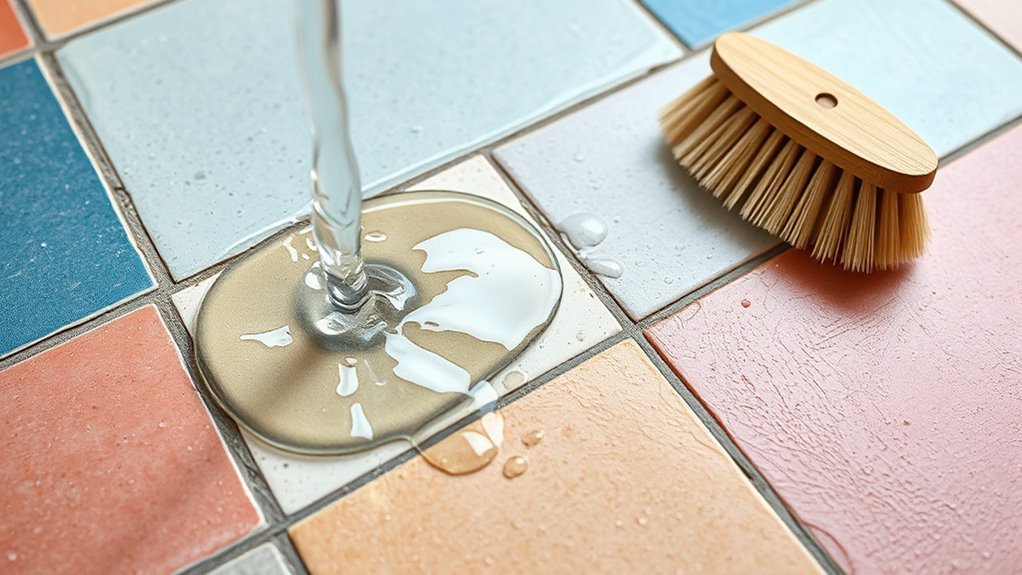
Before you start cleaning grout, it’s important to understand what it’s made of and how it can be damaged. Grout composition typically includes cement, sand, and water, which sets into a porous material that holds your tiles together. Knowing this helps you appreciate its grout durability—while it’s sturdy, it’s also vulnerable to harsh chemicals and abrasive scrubbing. If you’re aiming for freedom from damaging your floors, you’ll want to avoid anything that eats away at the grout’s structure or wears it down over time. When you grasp these vulnerabilities, you’re equipped to treat your grout gently yet effectively, preserving its strength and keeping your tiles securely in place for the long haul. Respecting grout’s nature means freedom to clean without fear.
Essential Tools and Supplies for Safe Grout Cleaning
Having the right tools and supplies makes grout cleaning both safer and more effective. You’ll want quality grout brushes that reach into tight seams without scratching your tiles. Look for brushes with firm, yet gentle bristles designed specifically for grout to avoid damage. When it comes to cleaning agents, choose ones that are pH-balanced and safe for your grout type—harsh chemicals can cause wear or discoloration. Avoid bleach or acidic cleaners unless you’re certain they won’t harm your surface. Gloves and protective eyewear are smart additions, keeping you free to work confidently. By equipping yourself with the right grout brushes and safe cleaning agents, you maintain your freedom to clean thoroughly without worrying about irreversible damage. This way, you take control of your grout’s health with ease.
Preparing Your Grout Surface for Cleaning
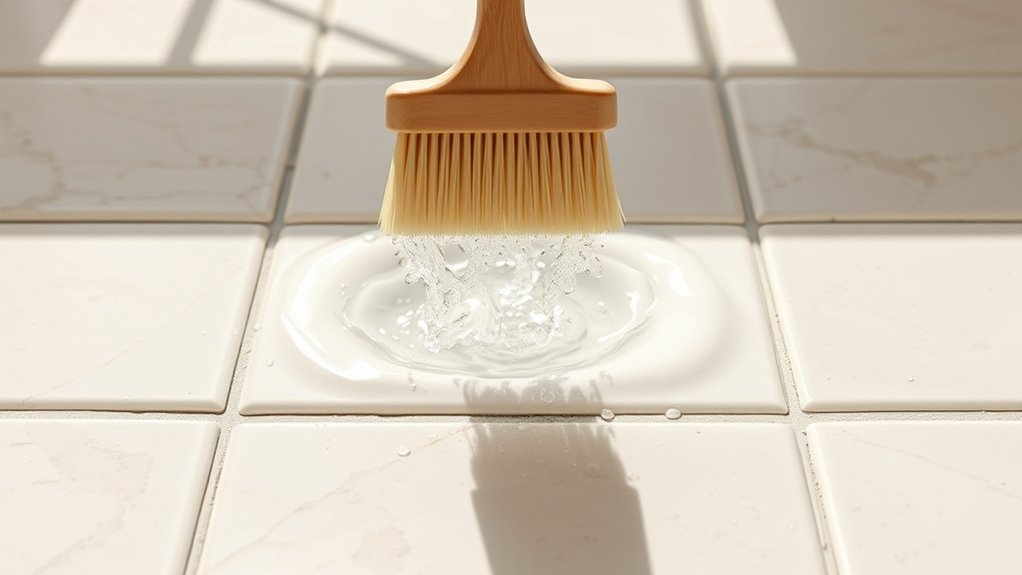
To get your grout ready for cleaning, you’ll need to clear away any loose dirt, dust, or debris that could interfere with your cleaning solution. Start by sweeping or vacuuming the area thoroughly. Next, perform a surface inspection to identify any cracks, loose grout, or stains that may require special attention. This step is essential for protecting your grout and ensuring effective cleaning. Use a simple pre cleaning checklist to stay organized: remove furniture or obstacles, sweep the floor, and check grout condition. Taking these steps gives you the freedom to clean confidently without causing damage. Preparing your grout surface carefully sets the foundation for a successful, damage-free washing process you’ll be proud of.
Natural Cleaning Solutions That Protect Grout
While many commercial cleaners can be harsh on grout, natural solutions offer a gentler way to keep your grout clean without causing damage. By choosing eco friendly cleaners, you not only protect your grout but also reduce harmful chemicals in your home. Simple ingredients like castile soap, lemon juice, or essential oils can effectively clean while preserving grout integrity. These options provide grout protection by maintaining its strength and preventing erosion over time. Using natural cleaners lets you enjoy fresh, spotless grout without sacrificing your health or the environment. Embracing these methods gives you freedom from harsh chemicals and the peace of mind that your grout will stay intact and beautiful longer. You can keep your space clean and safe, all while supporting eco friendly practices.
Using Baking Soda and Vinegar Safely on Grout
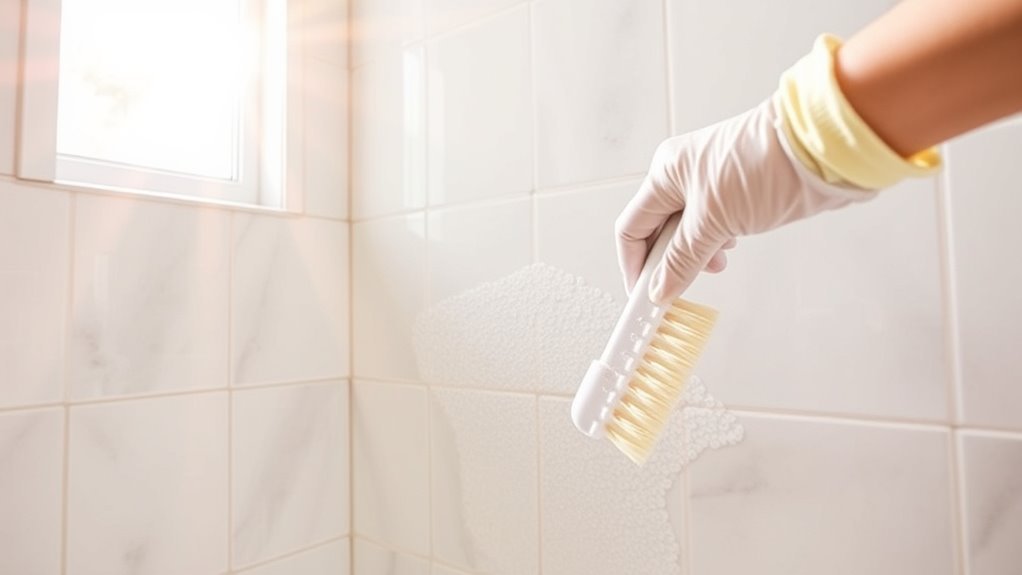
Natural cleaners like castile soap and lemon juice are great, but you might also have baking soda and vinegar on hand for grout cleaning. Baking soda benefits include gentle abrasion and odor neutralizing, making it perfect for scrubbing grout without damage. Vinegar properties, such as its acidity, help break down mineral deposits and grime effectively. To use them safely, sprinkle baking soda on the grout, then spray with diluted vinegar—let it fizz for a few minutes. Avoid letting vinegar sit too long, as its acidity can wear down grout if overused. Rinse thoroughly with water afterward to remove residue. This combo gives you freedom to clean powerfully yet gently, preserving your grout’s integrity while keeping it fresh and bright.
Tips for Avoiding Common Grout Cleaning Mistakes
Even if you’ve got the right cleaning agents, mistakes during grout cleaning can easily damage the surface or reduce its lifespan. To keep your grout looking fresh without restricting your freedom, avoid these common pitfalls:
- Ignoring grout sealing: Skipping sealing leaves grout porous, making it prone to stains and wear. Seal your grout after cleaning to protect it and extend its life.
- Over-cleaning: Cleaning frequency matters. Too often can wear down grout, too little allows buildup. Find a balance that keeps your grout clean without overdoing it.
- Using harsh tools or chemicals: Avoid abrasive brushes or strong acids that can erode grout. Stick to gentle cleaners and soft brushes designed for grout care.
Follow these tips to maintain your grout’s integrity and enjoy a carefree cleaning routine.
Maintaining Clean Grout Without Frequent Deep Cleaning
Since frequent deep cleaning can wear down grout over time, you’ll want to focus on simple daily habits that keep it looking fresh without heavy scrubbing. Incorporating grout sealing techniques helps protect grout from stains and moisture, reducing the need for intense cleaning. Plus, sticking to routine maintenance tips like wiping spills immediately and using gentle cleaners preserves its integrity. Here’s a quick guide to keep your grout pristine while enjoying your freedom from constant upkeep:
| Routine Task | Benefit |
|---|---|
| Seal grout annually | Prevents stains and damage |
| Wipe spills promptly | Stops dirt buildup |
| Use mild cleaning agents | Protects grout surface |
Frequently Asked Questions
Can Sealed Grout Be Cleaned With Bleach Safely?
You can clean sealed grout with bleach, but it’s risky since bleach might eventually wear down the sealant, affecting grout maintenance. If you want to keep your freedom from constant repairs, try bleach alternatives like hydrogen peroxide or baking soda—they’re gentler and still effective. These options help maintain your grout’s integrity while keeping your space fresh, so you won’t feel chained to harsh chemicals or frequent cleanings.
How Often Should Grout Be Resealed After Cleaning?
For fantastic floor freshness, focus on grout maintenance tips to keep your tiles tidy and tough. You should reseal grout about every one to three years, depending on traffic and exposure. This resealing frequency helps prevent stains and damage, giving you the freedom to clean without worry. Keep an eye on your grout’s condition—if water stops beading or dirt clings, it’s time to reseal and reclaim your clean, confident space.
Is Steam Cleaning Safe for All Grout Types?
You might wonder if steam cleaning effectiveness works for every grout type. While steam cleaning is powerful and eco-friendly, it isn’t always compatible with all grout types. Softer or older grout can be damaged by high heat and pressure. So, before you plunge into it, check your grout’s durability. Knowing grout type compatibility helps you enjoy freedom in cleaning without risking damage—smart choices keep your tiles looking fresh and strong.
Can Grout Color Be Restored Without Regrouting?
You might think your only option is regrouting, but what if there’s a way to revive that faded color without the mess? With grout restoration techniques like color sealing and stain-resistant coatings, you can bring your grout back to life. Color enhancement methods, such as grout paint or dyes, can refresh the look and give you freedom from costly repairs. So, why settle when you can easily restore?
What Is the Best Way to Remove Mold From Grout?
When tackling mold removal from grout, you want to keep your grout maintenance simple and effective. You can mix equal parts white vinegar and water in a spray bottle, spray the moldy grout, and let it sit for 10 minutes. Then, scrub gently with a soft brush and rinse with warm water. This method helps you maintain your grout without harsh chemicals, giving you freedom from mold while preserving your tiles.