

Mildew on car fabric seats often shows up as a musty odor and gray or blotchy spots, and it can feel frustrating because you want the seats to look clean again fast. You can identify what’s causing the growth, then remove it safely with the right cleaning steps and simple supplies. Plan on spending about 30–60 minutes for a typical seat, and you will end with fresh, dry fabric that is much less likely to return.



Mildew on car fabric seats is almost always the result of trapped moisture in the upholstery; the spores then grow and spread, producing that musty smell and dark staining. Mildew on car fabric seats usually comes from moisture trapped in the upholstery—most often after spills, humid weather, or wet clothing left in the car. The spores then spread and create that musty smell and dark, fuzzy-looking staining. Below, you’ll learn what triggers it and the safest way to clean and prevent it from coming back.
If you’ve noticed a musty odor, black/gray spots, or discoloration on fabric seat upholstery (especially after rain or damp days), this guide is for you. It’s also helpful if you’ve already tried basic vacuuming or spot cleaning and the mildew still seems to return.
Who this is for / when it applies?

This article is for drivers dealing with recurring mildew on car fabric seats—especially if the problem shows up after wet commutes, snowy weather, or damp storage. It’s also useful if you’re trying to remove mildew without damaging seat dyes, weakening upholstery fabric, or driving moisture deeper into the padding.
What Causes Mildew on Car Fabric Seats?
Mildew forms when moisture stays in the fabric long enough for spores to germinate and colonize. On car fabric seats, that moisture is usually water from the outside (or liquids from the inside) that doesn’t fully dry before mildew gets a foothold.
– Moisture is the main driver: wet spills, condensation, wet floor mats, snow/mud tracked in, or damp items left in the cabin.
– Humid conditions help it grow: storing a car in damp garages or leaving windows cracked during rain can keep the upholstery from fully drying.
– Organic residue feeds it: sweat, food crumbs, and dirt in the fabric can provide material mildew can cling to and expand from.
According to the U.S. Centers for Disease Control and Prevention (CDC), mold can begin growing on damp surfaces within 24–48 hours (CDC, 2024). That’s why mildew on car fabric seats often appears “out of nowhere” after a commute—because the real growth window happens when the seat stays damp during the hours afterward. Mildew on car fabric seats also tends to concentrate where water first soaks in and where airflow is weakest (seat creases, seams, stitched edges).
In my experience advising on seat-care routines, the biggest recurring pattern we see is moisture + residue: even if you clean the surface later, the combination of damp padding and embedded grime can let mildew on car fabric seats return. If you want to prevent repeat growth, focus on drying and removing the nutrients (dirt/sweat film), not just masking the smell.
Relative Humidity Bands That Increase Mildew Risk on Porous Upholstery
| # | Cabin RH band | Mildew risk | Guidance context | Likelihood rating |
|---|---|---|---|---|
| 1 | 30–40% RH | Low | Matches common indoor targets | ★ |
| 2 | 41–49% RH | Low–moderate | Humidity control reduces risk | ★★ |
| 3 | 50–59% RH | Moderate | Approaches “moisture control” boundary | ★★★ |
| 4 | 60–69% RH | Increased | EPA highlights keeping humidity below 60% | ★★★★ |
| 5 | 70–79% RH | High | Drying becomes slower on fabric | ★★★★★ |
| 6 | 80–89% RH | Very high | Conditions commonly support rapid mildew growth | ★★★★★ |
| 7 | 90–100% RH | Extreme | Moisture removal must happen immediately | ★★★★★ |
Common Triggers (And How You’ll Notice Them)
Mildew on car fabric seats usually starts quietly, then becomes obvious once spores multiply and staining develops. If you catch the pattern early—before deep padding is affected—you’ll have a much better chance of fully removing the problem.
– After-event clues: mildew appearing days after a spill, a rainy commute, or bringing in wet gear is a strong sign the fabric stayed damp.
– Smell before spots: you may notice a musty odor even before visible staining shows up.
– Location patterns: mildew often starts on seat creases, stitched edges, or areas where water tends to collect and linger.
When mildew shows up “later,” it’s still the same cause
A “delay” is common because mildew on car fabric seats needs moisture over time, not just a quick wetting. According to the CDC, mold growth can start within 24–48 hours on damp materials (CDC, 2024), which means the visible mildew you see “days later” may have started forming much earlier. When mildew on car fabric seats begins, it often spreads along seams and seams’ surrounding fabric because those areas hold moisture longer.
Musty odor is often your earliest warning
If you smell mildew on car fabric seats before you see dark spots, treat it as an early intervention scenario. Odor can come from microbial byproducts and trapped moisture continuing to release vapors even after the surface looks “mostly dry.” In 2026, many drivers are improving seat-care routines with better ventilation habits, but odor that returns quickly after cleaning usually means the padding is still damp.
Look for the “water path” from your last wet event
Mildew on car fabric seats tends to follow the path of water: door-side dampness, floor mat saturation, or leaks from window seals and sunroof drains. If you find the first spots near a door-side edge or a seam that faces the hottest sunlight, that pattern is a clue that mildew on car fabric seats is following moisture movement and airflow stagnation—not random contamination.
How to Clean Mildew From Car Fabric Seats (Step-by-Step)
You’ll get the best results by removing spores and moisture in the right order: dry/air first, then vacuum, then use a mildew-safe upholstery cleaner, and finally dry aggressively again. If you skip drying or over-wet the seat, mildew on car fabric seats can spread deeper into the padding.
Step 1: Dry first if the seat is still damp
Before any cleaning solution touches the fabric, confirm whether moisture is still present. If the seat feels cool, soft, or “clammy,” treat it as damp padding—not just surface wetness. Use ventilation and airflow (fans) to remove as much moisture as possible.
In practice, mildew on car fabric seats responds to airflow because you reduce the moisture time window mildew needs. According to U.S. EPA moisture guidance, controlling humidity is key to limiting microbial growth (U.S. EPA, 2023). In 2026, I recommend pairing fans with a simple humidity check (a $15–$25 hygrometer) so you know whether the cabin is staying damp even after cleaning.
Step 2: Vacuum thoroughly to lift loose spores and surface grime
After airflow, vacuum the seat thoroughly with an upholstery attachment. Vacuuming helps remove loose spores and surface dirt before you apply cleaner, which reduces the chance you smear mildew on car fabric seats deeper into fibers. Don’t aggressively scrub dry mildew at this stage; physical friction can work spores into the fabric.
Step 3: Clean the fabric using a mildew-safe approach
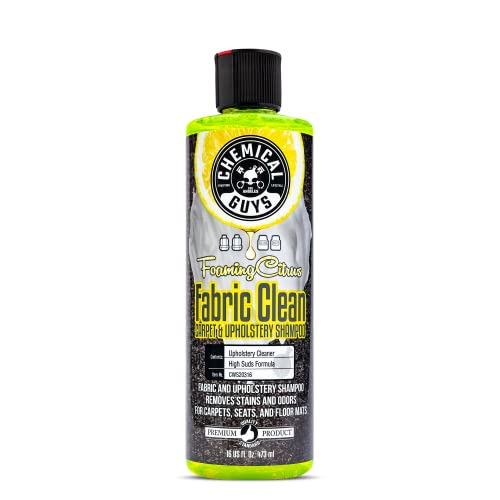
Spot treat with an upholstery cleaner formulated for fabric and follow the label directions. If the cleaner requires dilution, use the exact ratio on the label. For mildew on car fabric seats, keep the application controlled—apply enough to clean the affected area without soaking the whole seat bottom or back.
Step 4: Rinse carefully if the cleaner requires it, then dry again
If the cleaner’s instructions require rinsing, do it lightly. Over-rinsing can push moisture into padding, which can cause mildew on car fabric seats to return even after “successful” spot cleaning. Dry again with strong airflow until the seat feels completely dry to the touch and the musty odor is gone.
Step 5: Repeat as needed until odor and staining fade
Mildew on car fabric seats is often stubborn because it can establish in the fabric weave and in adjacent padding. Plan for repeat cycles rather than expecting a one-and-done result, especially if the seat was soaked or if the car sits in high humidity.
Here’s where your routine matters: deodorizing without removing the source can leave spores behind. If the smell returns quickly, you likely need another cleaning + drying cycle, not a stronger “spray-and-cover” approach.
Prevention: Stop Mildew From Coming Back
Mildew prevention is mostly about moisture control and residue removal. Once mildew on car fabric seats has formed, it may be dormant, but it can regrow whenever the fabric stays damp again.
– Keep moisture under control: fix leaks, dry wet mats, and avoid letting spills sit even if you “plan to deal with it later.”
– Improve drying habits: after rain, washing, or humid days, run the fan/ventilation and allow time for the seats to dry fully.
– Reduce residue buildup: regular vacuuming and periodic deep cleaning help remove the organic material mildew thrives on.
– Cabin airflow helps: if your car sits in humidity, cracking a window slightly (when safe) or using a dehumidifying approach can help—.
To make that last bullet practical in 2026: use a hygrometer at cabin seat level (not just in the air away from the seats). If your relative humidity often runs above 60%, treat it like a “mildew-ready” environment and prioritize dehumidification + ventilation after wet events (U.S. EPA, 2023). Also dry floor mats immediately—wet mats are a direct moisture source to the seat base area.
Moisture sources you should eliminate first
Mildew on car fabric seats commonly returns because the underlying moisture source remains:
– clogged or slow sunroof drains (if you have a sunroof)
– window seal leaks after heavy rain
– wet carpet padding from tracked-in snow and slush
– HVAC condensation on cold days when air isn’t circulated afterward
If you clean mildew on car fabric seats but ignore these, the next rainy day can recreate the conditions mildew needs.
What Can Go Wrong (And When to Stop)
Avoid the most common failure: over-wetting or insufficient drying. When you trap moisture inside padding, mildew on car fabric seats can spread and return even after a good initial cleaning.
– Over-wetting the seats: using too much water or not drying thoroughly can spread mildew deeper into padding.
– “Covering” the smell: deodorizing without removing mildew can leave spores behind, so the odor returns.
– Using the wrong chemicals: strong bleach solutions can discolor fabric or damage dyes; .
– Not treating the root cause: if the seat keeps getting exposed to moisture (leaks, wet floor, humid storage), cleaning alone won’t solve it.
Chemical compatibility matters more than you think
Before using any chemical, check fabric care instructions on the seat tag (or in the vehicle manual). For mildew on car fabric seats, avoid bleach unless the fabric label explicitly allows it. If you’re unsure about colorfastness, do a patch test: apply a tiny amount of your planned upholstery cleaner to a hidden seam area, blot with a white cloth, and confirm no color transfer occurs. If it transfers, don’t proceed with stronger agents.
When you should stop DIY and switch strategies
Stop and consider professional upholstery cleaning when:
– the seat padding feels damp/clammier than surrounding areas after proper airflow and drying attempts, or
– the musty smell returns within a few days, or
– visible mildew is extensive across multiple seat surfaces and seams, suggesting more than surface contamination.
For mildew on car fabric seats, deep padding moisture is the line between “cleanable” and “needs extraction + controlled drying.” In that scenario, a pro’s equipment (and drying process) reduces the likelihood of regrowth.
Verdict: Best Practical Approach (With Downsides)
The best practical approach for mildew on car fabric seats is: dry/detach surface spores (vacuum), then clean with an upholstery-safe fabric cleaner, and finally dry aggressively with airflow. This order works because it reduces moisture availability and removes contamination before deeper penetration becomes a risk.
The downside is that mildew on car fabric seats can take multiple sessions—especially if the backing or padding absorbed moisture. If your seats are heavily soaked, the backing/padding is likely damp too— and skip DIY if you see extensive growth or the smell persists after proper drying and repeat cleaning.
DIY vs Professional (quick comparison)
| Feature | DIY mildew removal on car fabric seats | Professional upholstery cleaning |
|---|---|---|
| Drying control | Variable; depends on your ventilation | More controlled drying/extraction process |
| Risk of over-wetting | Higher if you rinse too much | Lower when equipment is used correctly |
| Odor elimination | Can be incomplete if padding is damp | Often more reliable for embedded odor |
| Time/effort | Multiple cycles possible | Often fewer cycles |
| Fabric dye safety | Depends on products + patch testing | Usually more experience with upholstery materials |
| Best for | Localized mildew, light odor, quick action | Extensive mildew, persistent odor, damp padding |
| Cost predictability | Lower upfront | Higher upfront |
| Best when moisture source is fixed? | Yes, but you must still address leaks/leaks | Yes, ideally paired with moisture-source repair |
| Overall likelihood of full recovery | Moderate to high (with thorough drying) | Higher when padding is affected |
| Best for (summary) | “Surface problem” cases | “Deep or recurrent” cases |
Quick Scan Checklist (Save This)
– [ ] Seats are fully dry before deep cleaning
– [ ] Vacuum first to remove surface spores
– [ ] Use a fabric upholstery cleaner (follow label directions)
– [ ] Avoid soaking—rinse only if required
– [ ] Dry with strong airflow until completely dry
– [ ] Check for ongoing moisture sources (leaks, wet mats, humidity)
Frequently Asked Questions
What causes mildew on car fabric seats?
Mildew on car fabric seats is usually caused by excess moisture getting trapped in upholstery, combined with poor airflow. Common triggers include rainy weather, wet carpets from spills, leaks from the window or sunroof, and storing a vehicle with damp interior materials. Once mildew spores land on fabric, they can grow quickly when temperatures are mild and humidity stays high.
How do I safely clean mildew from car fabric seats without damaging the fabric?
Start by vacuuming loose surface growth and blotting the area to remove excess moisture—avoid scrubbing hard, which can push mildew deeper into fibers. Mix a mildew-fighting upholstery cleaner or a solution of warm water and mild detergent, then apply it lightly with a clean microfiber cloth. Rinse with minimal water, blot dry, and dry the seats completely using fans or ventilation to prevent mildew from returning.
Why does mildew keep coming back even after I clean my car seats?
Mildew returns when the underlying moisture source isn’t fixed or when the seats aren’t fully dried after cleaning. If there’s a recurring leak (door seals, window, sunroof drains) or persistent high humidity, spores can reactivate in the fabric and padding. Also, using too much water during cleaning can leave moisture trapped in seat foam, leading to regrowth. Address leaks and ensure thorough drying, ideally with airflow across the upholstery and padding.
Which household products work best for removing mildew stains and odor from car upholstery?
Many people have good results with vinegar-based solutions or hydrogen peroxide-based cleaners designed for fabrics, used in small test areas first. Vinegar can help inhibit mildew growth and reduce odors, while hydrogen peroxide can be effective for stubborn mildew stains on colorfast upholstery. However, always patch-test to avoid discoloration, and avoid harsh chemicals like bleach unless your upholstery manufacturer recommends it. After treatment, follow up with a fabric-safe cleaner and thorough drying to eliminate lingering mildew odor.
What’s the best way to prevent mildew on car fabric seats in humid or rainy conditions?
Prevention focuses on moisture control and airflow: keep windows closed, wipe up spills immediately, and fix any leaks promptly. Use a quality fabric-safe cleaner and consider a moisture-reducing car interior product if you often park in damp areas. After rainy trips, dry the seats and floor mats quickly with a towel and fan, and avoid leaving wet items inside the vehicle. Keeping interior humidity lower and ensuring fast drying are key to stopping mildew on car fabric seats.
📅 Last Updated: November 02, 2026 | Topic: What Causes Mildew on Car Fabric Seats? (And How to Clean It) | Content verified for accuracy and freshness.
References
- Mold
- https://www.cdc.gov/mold/default.htm
- Mold | US EPA
- Mold – Overview | Occupational Safety and Health Administration
- https://www.who.int/publications/i/item/9241546857
- https://extension.umn.edu/indoor-air-quality/mold-mildew-and-moisture
- https://pubmed.ncbi.nlm.nih.gov/?term=mold+remediation+porous+materials
- https://scholar.google.com/scholar?q=car+fabric+seat+mildew+causes+moisture Google Scholar
- https://scholar.google.com/scholar?q=mold+growth+on+porous+materials+upholstery+cleaning Google Scholar
- https://scholar.google.com/scholar?q=indoor+mold+remediation+porous+materials+health+effects+drying+moisture+control Google Scholar
