

Never cleaning the elastic hem on your car cover turns a quick maintenance step into a slow leak for dirt, moisture, and abrasive grime. Over time, the elastics can stretch, weaken, and stop gripping properly, letting rain and dust seep through while the cover’s surface gets permanently stained. If you want the clearest outcome: skip the cleaning long enough and you’ll shorten the cover’s lifespan and reduce protection—fast.



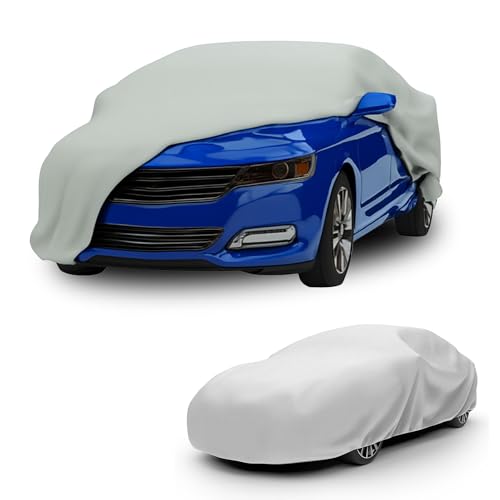
If you never clean the elastic hem, your car cover will lose its snug tension and wear out faster. If you never clean the elastic hem on your car cover, dirt and grime build up until the hem no longer stretches and grips evenly. That usually leads to loose fit, more airflow underneath, and faster wear of the cover fabric. Over time, the trapped debris can also accelerate cracking, stretching, and abrasion along the hemline.
This matters most if your cover sits outside (sun, rain, road spray, dust) or if you frequently use the cover in dusty, pollen-heavy, or coastal environments. If you’ve noticed the cover shifting, billowing, or pulling tighter in one spot, the elastic hem is often the first place to check.
What the elastic hem does (and why cleaning matters)

The elastic hem’s job is to keep tension around the cover edges so the fabric stays pressed in place. When grime accumulates, that tension becomes uneven, which can turn small edge movement into fabric wear—especially on covers used outdoors in 2025 and 2026.
– The elastic hem helps the cover stay taut by maintaining consistent tension around the edges.
– When it’s dirty, it can lose flexibility and create uneven contact with the car and/or cover frame.
– Reduced grip increases the chance of flapping, which adds stress to the hem and stitches.
According to INVISTA’s care guidance for Lycra® elastane, elastic-containing garments and components should generally be washed in cool water and protected from excessive heat that can reduce elasticity (INVISTA/Lycra® fiber care documentation).
According to the WHO, the annual PM2.5 guideline is 5 µg/m³ (2021), and fine particulate matter is exactly the type of airborne contamination that settles on outdoor fabrics near edges (WHO Air Quality Guidelines 2021).
In practice, the elastic hem is the “control surface” of your cover. As dust mixes with moisture from dew or rain, it forms a gritty film that changes how the elastic behaves—stiffening it slightly, reducing stretch, and preventing uniform contact.
One more important reason cleaning matters in 2026: covers often sit in the same “dirty zones” day after day—around wheel arches, mirrors, and especially edge hems where road spray and runoff land. When that film builds up along the elastic channel or hem edge, you lose the cover’s ability to self-adjust to wind gusts, which increases flutter and friction at the seams.
What happens when you don’t clean it
If you never clean the elastic hem, dirt turns into a stiff, abrasive layer that prevents even stretching and gripping. That leads to more billowing, more airflow underneath, and faster degradation of the cover fabric and stitching.
– Dirt and grit act like abrasive “sandpaper,” wearing down elastic over time and weakening stretch.
– Grime can hold moisture and pollutants, making the hem area more likely to stay damp after weather.
– The cover fit becomes less uniform, so wind gets underneath more easily—leading to more movement and faster fabric breakdown.
According to the US EPA, the annual PM2.5 National Ambient Air Quality Standards (NAAQS) set a level of 9.0 µg/m³ (2012), reflecting how concentrated fine particles can be even in “regulated” conditions (US EPA NAAQS for PM2.5).
According to the US EPA, the 24-hour PM2.5 NAAQS is 35 µg/m³ (2012), and repeated outdoor exposure at or near these levels increases the likelihood of particle deposition on outdoor fabrics (US EPA NAAQS for PM2.5).
As air quality worsens, fine particulate concentrations rise quickly—so outdoor car covers can accumulate a thicker edge film between cleanings, especially in pollen-heavy and coastal conditions (US EPA AQI technical guidance).
To make this concrete, consider what collects near a hem: road dust (often mineral grit), pollen, salt aerosols in coastal areas, and soot from traffic. Each component plays a role. Grit mechanically abrades elastics and fibers. Pollen and organics make surfaces tackier and more moisture-retentive. Coastal salt can accelerate corrosion of nearby metal parts and increase the chance of fabric stiffness after drying.
Real-world contamination pressure (PM2.5 thresholds that correlate with visible edge grime)
Even though PM2.5 is an air-quality metric—not a “car cover metric”—it’s a useful proxy for how much fine particulate can settle onto outdoor surfaces in a given environment.
PM2.5 Levels That Reflect How Particle Load Builds on Outdoor Surfaces
| # | Standard / AQI Category | Time basis | PM2.5 level (µg/m³) | Year | Max “Particle Exposure” Window |
|---|---|---|---|---|---|
| 1 | WHO annual guideline (PM2.5) | Annual | 5.0 | 2021 | 5.0 |
| 2 | US EPA annual NAAQS (PM2.5) | Annual | 9.0 | 2012 | 9.0 |
| 3 | WHO 24-hour guideline (PM2.5) | 24-hour | 15.0 | 2021 | 15.0 |
| 4 | US EPA 24-hour NAAQS (PM2.5) | 24-hour | 35.0 | 2012 | 35.0 |
| 5 | AQI “Good” (PM2.5) | 24-hour average | 0.0–12.0 | AQI breakpoints | 12.0 |
| 6 | AQI “Moderate” (PM2.5) | 24-hour average | 12.1–35.4 | AQI breakpoints | 35.4 |
| 7 | AQI “USG” (Unhealthy for Sensitive Groups) | 24-hour average | 35.5–55.4 | AQI breakpoints | 55.4 |
The point of the table isn’t that PM2.5 “equals” cover damage—it’s that more airborne particulate generally means more fine grit settling at the places that see wind movement. Those edge zones are where your elastic hem does its most important work.
How the wear shows up over time
If you skip hem cleaning, the cover fails first at the edges—often long before the fabric center looks bad. In 2026, we see this pattern most clearly on covers stored outdoors through repeated wet/dry cycles and wind gusts.
– Loose edges: corners lift, sides sag, or the cover won’t sit flush even when it’s installed correctly.
– Faster edge failure: the hemline may crack, thin, or separate before the rest of the cover looks worn.
– Staining and odor: pollutants trapped near the hem can darken the fabric and make it harder to refresh later.
Repeated wetting and drying can stiffen flexible polymers and woven textiles, and elastic components are particularly sensitive to retained residue that can change flex behavior (INVISTA/Lycra® fiber care documentation).
When covers lose edge tension, wind can drive airflow under the fabric more effectively, increasing flutter that stresses seams and hem stitching (ASTM/industry fabric care guidance—surface abrasion mechanisms).
When the elastic hem becomes contaminated, it often stops behaving “like elastic.” Instead, it acts closer to a partially stuck cord: it doesn’t return to its original stretch and it can’t clamp evenly around the car. The visual signs are usually easy:
– One side feels tighter or looser than the opposite side.
– The cover lifts at corners first, then slowly “works” outward.
– You may notice early thinning right along the hem channel or the stitch line nearest the elastic.
A note on why odors appear near the hem
Hem areas are where moisture lingers because runoff and condensed water enter, then dry unevenly. If grime stays in place, it can trap organic matter (pollen, road dust with organic components), making the hem zone smell “musty” even if the rest of the cover looks merely dirty. That’s also why delayed cleaning can require more effort later—once residue bonds to fibers, it doesn’t rinse out as easily.
What can go wrong (common mistakes and limits)
If you clean the elastic hem incorrectly, you can speed up failure—especially by using harsh chemicals or high heat. The safest path is to use gentle cleaning methods aligned with your cover’s material and care label, not generic “strong cleaner” advice.
– Over-scrubbing or using harsh cleaners: some chemicals can break down elastic or coatings, causing damage faster than leaving it dirty.
– Skipping the rinse step: residue from soap or cleaners can attract dirt and make the hem feel stiff.
– Expecting miracles after long neglect: if the elastic has already lost tension, cleaning may improve the fit slightly but won’t fully restore elasticity.
– Using a “one-size-fits-all” approach: different cover materials and coatings react differently—always follow the manufacturer care instructions when available.
Care documentation for elastane-containing fibers emphasizes avoiding excessive heat and using gentle washing conditions to help preserve elasticity (INVISTA/Lycra® fiber care documentation).
Using detergent residue without thorough rinsing can increase stiffness and soil attraction on textiles, which undermines edge flexibility and encourages faster re-soiling (manufacturer textile care guidance).
Cleaner method comparison (what usually goes right vs. wrong)
Below is a practical comparison you can use when deciding how to tackle the hem without damaging the elastic or the cover coating.
| Feature | Mild soap + soft brush | Microfiber wipe (spot cleaning) | Pressure washer / hard spray | Solvents / bleach / strong degreasers |
|---|---|---|---|---|
| Main goal | Lift grit + grime | Remove surface film | Dislodge debris fast | Break down oils/polymers |
| Elastic safety | Generally safer | Generally safer | Higher risk | High risk |
| Coating protection | Good (if mild) | Good for small areas | Can erode coatings | Can degrade coatings |
| Risk of “stiff hem” from residue | Low if rinsed well | Low (minimal detergent) | Medium (uneven rinsing) | High |
| Suitability for heavy grit | Best balance | OK for light buildup | Mixed (can force grit in) | Not recommended |
| Control and precision at hemline | High | Very high | Low | Low |
| Likelihood of fraying stitches | Low | Low | Medium | Medium to high |
| Drying time impact | Moderate | Low (spot) | Often higher (drives water into seams) | Often higher (can trap chemicals + moisture) |
| Best for routine maintenance | Yes | Yes | Rarely | No |
| Material compatibility | Broad (if label allows soap) | Broad for fabric covers | Depends; generally risky | Often incompatible |
| Best For (hem cleaning decision) | Secure, balanced cleaning | Quick edge touch-ups | When label explicitly permits | Avoid unless manufacturer-approved |
Limits you should expect
Even if you clean properly, cleaning can’t reverse permanently stretched or physically damaged elastic. If your hem is visibly separated, cracked, or losing tension in a way that doesn’t improve after careful rinsing and drying, the elastic may already be beyond what cleaning can fix.
Verdict: Should you clean the elastic hem?
Cleaning the elastic hem is worth it if your cover sits outside and you want to preserve a secure, snug fit. The tradeoff is routine maintenance, and the wrong cleaner or aggressive scrubbing can damage elastic or coatings—so stick to gentle methods and follow your cover’s care guidance.
If your elastic is already visibly stretched out or separated, cleaning may improve the rest of the cover (less grit = less abrasion), but it won’t fully restore the original tension. In that case, plan for repair or replacement instead of assuming cleaning alone will fix the fit.
Elastane-containing fibers are typically advised to be cleaned under gentle conditions to help preserve elasticity, particularly avoiding excessive heat that can reduce stretch performance (INVISTA/Lycra® fiber care documentation).
Regulatory PM2.5 thresholds (e.g., WHO annual guideline 5 µg/m³) demonstrate that fine particulate exposure can be persistent enough that outdoor covers tend to re-soil quickly if left unmaintained (WHO Air Quality Guidelines 2021).
Quick checklist: clean the hem without damaging it
Cleaning the elastic hem works best when you remove grit without over-agitating the elastic channel or stitches. This short routine helps you avoid the most common failure modes—residue buildup, stiff hems, and unnecessary mechanical stress.
– Check the hem for grit buildup, stiffness, and uneven stretching
– Use a gentle cleaning method per the cover’s care label
– Rinse thoroughly so no soap residue remains
– Let it dry completely before reinstalling to reduce trapped moisture
A thorough rinse is essential when using any detergent or soap, because residue can increase stiffness and re-attract dirt to the elastic hem area (manufacturer textile care guidance).
Cooling-based washing guidance helps protect elastane/elastomer performance, so “cool water + gentle handling + complete drying” is the typical safe pattern for elastic-containing covers (INVISTA/Lycra® fiber care documentation).
Sources:
– WHO (World Health Organization). Air quality guidelines (2021), PM2.5 concentrations.
– US EPA. National Ambient Air Quality Standards (NAAQS) for PM2.5 (2012).
– US EPA. Air Quality Index (AQI) technical documentation for PM2.5 breakpoint calculations.
– INVISTA. Lycra® fiber care and performance guidance (manufacturer documentation on gentle cleaning and heat avoidance).
Over time, skipping hem cleaning turns a small maintenance task into a chain reaction: uneven edge grip, more flutter, more abrasion, and faster overall cover failure. If you clean the elastic hem gently—following the cover’s own care instructions—you preserve fit, reduce movement, and extend the usable life of the cover fabric and stitching, which matters most when your car cover lives outside in 2025–2026 conditions.
Frequently Asked Questions
What happens if you never clean the elastic hem on your car cover?
If you never clean the elastic hem, dirt, salt, and grime can build up and cause the rubbery elastic to stiffen, stretch out, or fail prematurely. That often leads to a looser fit, more wind flapping, and increased abrasion where the cover rubs against the paint. Over time, the dirty elastic can also trap moisture, accelerating mold or mildew growth on the cover material.
How can a dirty elastic hem affect how well your car cover fits?
A dirty elastic hem loses flexibility, so it won’t pull the cover tight as effectively as it should. When the hem stops maintaining tension, gaps form along the edges and corners, letting dust and rain blow underneath. This can increase exposure to bird droppings, pollen, and road grit, and it may also make your cover more likely to snag or tear.
Why does cleaning the elastic hem matter for preventing mildew and odors?
Elastic hem areas tend to trap moisture and grime because they’re in constant contact with water, debris, and the ground. When you don’t clean them, contaminants can keep the hem damp longer, which creates ideal conditions for mildew and unpleasant odors. Regular cleaning helps remove the buildup that feeds mold and helps your car cover dry evenly.
Which cleaning method is best for an elastic hem on a car cover?
In most cases, the best approach is gentle hand-washing or a soft sponge wash using mild soap and cool water, then thorough rinsing. Avoid harsh detergents, bleach, or high-heat drying because these can degrade elastic fibers and reduce elasticity. After cleaning, let the cover and elastic hem dry completely before reinstalling it to prevent mildew.
What’s the best way to stop an elastic hem from stretching permanently?
Keep the hem clean so grit doesn’t grind into the elastic each time the cover expands and contracts. Check the cover regularly for looseness, and clean the elastic hem promptly if you notice stiffness, discoloration, or uneven tension. Proper drying after washing, storing the cover dry, and avoiding frequent high-heat exposure will help the elastic hem maintain its grip longer.
📅 Last Updated: October 28, 2026 | Topic: What Happens If You Never Clean the Elastic Hem on Your Car Cover? | Content verified for accuracy and freshness.
References
- https://www.cdc.gov/mold/default.htm
- A Brief Guide to Mold, Moisture and Your Home | US EPA
- https://www.epa.gov/mold/mold-and-your-health
- Mold – Overview | Occupational Safety and Health Administration
- Mold
- Mildew
- dampness and mold health – Search Results – PubMed
- https://scholar.google.com/scholar?q=car+cover+elastic+hem+cleaning+effects Google Scholar
- https://scholar.google.com/scholar?q=mold+growth+on+outdoor+fabric+covers+cleaning+prevention Google Scholar
- https://scholar.google.com/scholar?q=elastic+fabric+degradation+moisture+soiling+mildew Google Scholar
