Pre-Holiday Cleaning Checklist for Pet Mess
To get your home guest-ready, start by vacuuming pet hair from furniture and carpets with the right attachments and techniques. Deep clean pet bedding and toys using gentle detergents, then freshen musty odors with baking soda or natural sprays. Don’t forget to sanitize feeding areas and litter boxes, and swiftly treat any accidents with enzymatic cleaners. Regular grooming will minimize shedding, while wiping down walls and vents keeps everything tidy. Keep going to discover more helpful tips for a thorough pet-friendly clean.
Assess and Remove Pet Hair From Furniture and Carpets

Pet hair can quickly accumulate on your furniture and carpets, especially with shedding seasons approaching. To reclaim your space, start by evaluating the types of furniture fabrics you have—leather, microfiber, or cotton each require specific care. Use a high-quality vacuum with adjustable settings to adapt to these fabrics; for example, low suction protects delicate materials while still capturing hair. Employ vacuum techniques like slow, overlapping strokes to lift embedded fur effectively. Don’t forget to swap vacuum attachments for corners and crevices where hair hides. If you want freedom from constant pet hair battles, maintaining a regular vacuum schedule tailored to your home’s fabrics helps keep surfaces clean and inviting. Using vacuum attachments designed for tight spaces can make reaching hidden pet hair easier and more efficient. This practical approach guarantees you enjoy your holidays without pet hair stress.
Deep Clean Pet Bedding and Toys
Since your furry friends spend so much time resting and playing with their bedding and toys, keeping these items clean is essential for their health and comfort. Start by checking the care labels on bedding materials to guarantee you use the right washing method. Machine-washable beds are easiest—use a gentle detergent free from harsh chemicals to protect your pet’s skin. For non-washable items, spot clean with a pet-safe solution. Don’t forget to deep clean toys regularly to maintain toy hygiene; soft toys can usually go in the washer, while hard toys should be scrubbed with warm, soapy water. Dry everything thoroughly to prevent mold or mildew. By taking these focused steps, you’re creating a cleaner, healthier environment where your pets can relax freely and safely during the holidays. Using natural cleaning solutions helps avoid harmful chemical residues and keeps your pet’s environment safe.
Eliminate Pet Odors With Natural Deodorizers

Although your home might feel fresh after cleaning, lingering odors from your furry companions can still be noticeable. To truly refresh your space, turn to natural odor eliminators that are gentle yet effective. You want solutions that respect both your freedom to enjoy your home and your pet’s safety. Try these pet safe fragrances and methods:
- Sprinkle baking soda on carpets and upholstery, let it sit, then vacuum thoroughly.
- Use a mixture of white vinegar and water in a spray bottle to neutralize odors on hard surfaces.
- Place bowls of activated charcoal around rooms to absorb unwanted smells naturally.
- Diffuse essential oils like lavender or eucalyptus, ensuring they’re non-toxic to pets.
These natural deodorizers help you reclaim a fresh, inviting environment without harsh chemicals. For enhanced odor control, combine baking soda and vinegar to tackle tough pet stains and smells effectively.
Clean and Disinfect Pet Feeding Areas
Before the holidays get busy, make sure to remove any leftover food from your pet’s bowls to prevent bacteria buildup. You’ll want to wash and sanitize their feeding dishes regularly with warm, soapy water or a pet-safe disinfectant. Keeping these areas clean not only protects your pet’s health but also helps maintain a fresh, inviting space for mealtime.
Remove Food Residue
A thorough cleaning of your pet’s feeding area is essential to keep them healthy and comfortable during the busy holiday season. Removing food residue not only prevents pests but also maintains a hygienic environment aligned with your pet’s feeding schedule. Here’s how you can effectively tackle leftover food:
- Wipe down surfaces immediately after each meal to prevent buildup.
- Check food storage containers for spills or crumbs that might attract insects.
- Sweep or vacuum around the feeding spot daily to catch hidden debris.
- Use pet-safe cleaning solutions to gently remove stubborn residue without harming your pet.
Sanitize Bowls Regularly
Keeping your pet’s feeding area free from food residue is a great start, but regular sanitizing of their bowls takes cleanliness a step further. To truly sanitize feeding spaces, wash bowls daily with hot, soapy water, then rinse thoroughly. Once a week, disinfect them using a pet-safe solution—diluted white vinegar or a mild bleach mix works well. This step prevents harmful bacteria buildup that could affect your pet’s health. Consistent bowl maintenance not only protects your furry friend but also keeps your home fresh and odor-free. Remember, clean bowls mean your pet can enjoy meals without risk, giving you peace of mind. By incorporating this simple habit, you’re embracing freedom from worries about germs and creating a healthier environment for both you and your pet.
Address Accidents on Hard Floors and Rugs
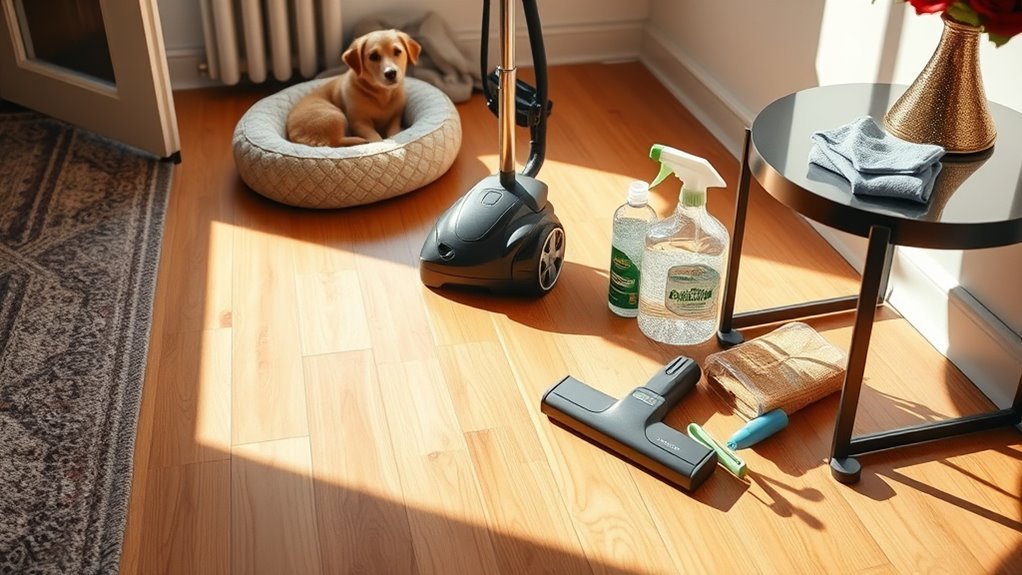
Tackling even one pet accident on hard floors or rugs can feel overwhelming, especially when you’re preparing for the holidays. To keep your space fresh and inviting, start by acting quickly to prevent stains and odors. For hardwood care, gently blot the area to avoid spreading moisture and use a cleaner designed for wood floors. When it comes to rug maintenance, try the following:
- Blot the spill immediately with a clean cloth, avoiding rubbing
- Use an enzymatic cleaner to break down organic stains and odors
- Rinse with cold water and blot dry thoroughly
- Air-dry rugs completely before placing them back
Regular use of enzyme cleaners ensures thorough removal of stains and helps neutralize odors effectively.
Wash Pet Blankets and Throws
When washing your pet’s blankets and throws, picking a gentle detergent without harsh chemicals will protect their sensitive skin. To tackle stubborn stains, pre-treat the fabric with a pet-safe stain remover, letting it sit before washing. After cleaning, air drying or using a low-heat setting helps maintain the softness and durability of these cozy items. Regular cleaning of pet toys and accessories prevents bacteria buildup and helps maintain a healthy home environment, especially in multi-pet households where pet hair removal is essential.
Choosing the Right Detergent
Although it might seem straightforward, choosing the right detergent for washing your pet’s blankets and throws is essential to avoid skin irritation and keep fabrics fresh. You want a product that’s gentle yet effective, respecting both your pet’s sensitive skin and the environment. Consider these factors to make the best choice:
- Opt for eco friendly options to reduce chemical exposure and environmental impact.
- Check for hypoallergenic formulas to prevent irritation or allergic reactions.
- Think about scent preferences; unscented or lightly scented detergents are usually safest.
- Avoid detergents with harsh chemicals, dyes, or fabric softeners that can leave residues.
Effective Stain Removal Tips
Choosing the right detergent sets a solid foundation for keeping your pet’s blankets and throws clean, but stubborn stains often require a bit more attention. Start with a targeted stain treatment—apply it directly to the affected area and let it sit for 10-15 minutes before washing. This helps break down pet oils, dirt, and odors effectively. When you wash, use warm water if the fabric allows, as it boosts cleaning techniques without damaging fibers. Avoid overloading your machine; your blankets need room to move so stains can lift properly. For persistent stains, repeating the process or gently scrubbing with a soft brush can make a big difference. These careful steps free you from lingering messes, ensuring your pet’s cozy items come out fresh and ready for holiday cuddles.
Drying Methods for Fabrics
Since pet blankets and throws often retain moisture deep within their fibers, drying them thoroughly is essential to prevent mildew and odors. To keep your fabrics fresh and in great shape, here are some effective drying techniques you can use:
- Air dry in a well-ventilated area to avoid heat damage and maintain fabric integrity.
- Use a low heat setting if you prefer machine drying to protect delicate fibers.
- Add dryer balls to help fluff the fabric and speed up drying time.
- Avoid direct sunlight for colored fabrics to prevent fading.
Groom Pets Regularly to Minimize Shedding
Regularly grooming your pets is one of the most effective ways to keep shedding under control, especially before the holiday season when you want your home to look its best. During shedding seasons, your pets naturally lose more hair, so using the right grooming tools like slicker brushes or deshedding combs can make a huge difference. Set a routine that fits your schedule—just 10-15 minutes every few days can greatly reduce loose fur. Be gentle and patient; grooming should be a calming experience for both of you. Not only does this minimize mess, but it also promotes healthy skin and strengthens your bond. Taking these small steps grants you more freedom to enjoy a clean, inviting home without constant fur cleanup. Using vacuum attachments designed for pet hair regularly complements grooming by removing hair from furniture and floors.
Clean and Organize Litter Boxes or Pet Toilets
Keeping your pets well-groomed helps reduce shedding, but maintaining a fresh, odor-free home also means paying close attention to their litter boxes or pet toilets. For effective litter box organization and toilet maintenance, you’ll want to follow a simple routine that keeps your space clean and your pets comfortable.
- Empty and dispose of waste daily to prevent odors and bacteria buildup.
- Scrub the box or toilet thoroughly with pet-safe cleaners weekly.
- Replace litter or pads regularly to maintain hygiene and freshness.
- Arrange the boxes in quiet, accessible spots to encourage use and ease cleaning.
- Regularly sanitize the area and allow it to air dry to prevent mold and ensure a healthy environment, following best practices for regular maintenance.
Wipe Down Walls and Baseboards for Stains and Smudges
You’ll want to start by spotting common pet stains like muddy paw prints, nose smudges, or occasional dribbles on your walls and baseboards. Using gentle, pet-safe cleaning solutions is key to removing these marks without harming your furry friends or your paint. Keep a microfiber cloth handy to carefully wipe away grime while protecting your surfaces. Regularly wiping down surfaces is an important part of establishing a consistent cleaning routine to maintain a neat and fresh home environment.
Identify Common Pet Stains
Although pet stains on walls and baseboards can be easy to overlook, they often accumulate unnoticed and can cause lasting damage or odors. Recognizing common stain types is key to tackling them effectively. You’ll want to inspect areas where your pet frequents, identifying stains by their appearance and smell. Here are typical pet stain types you might find:
- Urine stains: Yellowish discoloration with a distinct odor
- Nose smudges: Greasy marks from wet noses
- Paw prints: Muddy or dusty imprints on lower walls
- Saliva stains: Slightly sticky or shiny patches from licking
Understanding these stain types helps you choose the right cleaning methods later, ensuring you restore your walls and baseboards without damage—giving you freedom from worry and a fresher home.
Choose Effective Cleaning Solutions
Since pet stains and smudges can vary in composition and severity, selecting the right cleaning solution is essential to avoid damaging your walls and baseboards. You’ll want to opt for eco friendly cleaners that are gentle yet effective, ensuring no harsh chemicals harm your paint or finishes. Pet safe solutions are vital—not just for your furry friends’ health but also to prevent any lingering odors or residues that could attract more messes. Start by testing a small area to confirm compatibility, then gently wipe down affected surfaces with a soft cloth or sponge. This careful approach lets you restore your space without sacrificing safety or the environment, giving you the freedom to enjoy a fresh, clean home before the holidays.
Freshen Up Air Vents and HVAC Filters
When pet dander and dust accumulate in your air vents and HVAC filters, they can considerably reduce indoor air quality and trigger allergies for both you and your furry friends. Regular HVAC maintenance is vital to keep your home fresh and healthy. Here’s how you can take control:
Pet dander and dust in vents can worsen allergies—regular HVAC care keeps your home fresh and healthy.
- Replace HVAC filters every 1-3 months to trap pet hair and dust effectively.
- Vacuum air vents gently to remove buildup without damaging the system.
- Schedule professional HVAC inspections to verify your system runs efficiently.
- Use air purifiers in high-traffic pet areas to further improve air quality.
- Keeping your filters clean also helps maintain energy efficiency and reduces utility costs.
Frequently Asked Questions
How Far in Advance Should I Start Pre-Holiday Pet Cleaning?
You should start your preparation timeline about two weeks before the holidays to avoid last-minute stress. Begin with daily cleaning tips like vacuuming pet hair and spot-cleaning accidents right away. This way, you’ll maintain a fresh space without feeling overwhelmed. Breaking tasks into manageable steps lets you enjoy your freedom while keeping your home welcoming. Staying consistent helps prevent buildup, so you can relax and focus on the fun holiday moments ahead.
What Cleaning Supplies Are Safest Around Pets?
Remember, “Better safe than sorry” when it comes to cleaning around your pets. You should stick to natural cleaning solutions like vinegar, baking soda, and gentle castile soap, as they’re less likely to irritate your furry friend. Look for pet safe products labeled specifically for animals, avoiding harsh chemicals like bleach or ammonia. This way, you keep your home fresh and your pets safe, letting you enjoy a clean, worry-free space freely together.
Can Certain Pet Foods Reduce Mess and Odors?
You’ll find that certain pet foods can actually help with odor control and reduce mess. By focusing on pet nutrition that includes high-quality proteins and fiber, you can improve your pet’s digestion and minimize smelly waste. Look for formulas designed to promote gut health and reduce gas—these make cleanup easier and your home fresher. It’s all about choosing foods that support your pet’s well-being while giving you more freedom from constant messes.
How to Keep Pets Calm During Cleaning?
Imagine your pet, peacefully curled up in a cozy corner while you clean. To keep them calm during cleaning, use calming techniques like gentle petting or soothing music. Provide pet distractions such as chew toys or puzzle feeders to engage their mind, giving you freedom to clean without stress. These simple steps create a serene environment, helping your furry friend feel safe and relaxed as you tackle your chores together.
Are There Pet-Friendly Air Fresheners to Use During Holidays?
Yes, you can definitely find pet-friendly air fresheners with natural scents that won’t harm your furry friends. Look for products made with essential oils like lavender or chamomile, but avoid ones with toxic oils such as tea tree or eucalyptus. You could also create your own by diluting safe essential oils in water and using a spray bottle. This way, you keep your home fresh without compromising your pet’s safety or your freedom to enjoy the holidays stress-free.